

Compression socks work by applying graduated pressure to your calves and lower legs, improving blood circulation and reducing muscle vibration during and after running. This increased circulation helps deliver oxygen-rich blood to working muscles and speeds up the removal of metabolic waste products like lactate, which can reduce soreness and fatigue. If you’re a runner dealing with calf soreness, mild shin splints, or just wanting an edge in recovery, compression socks can genuinely help—though they’re not a magic solution for every leg problem.
A typical runner might put on 20-30 millimeters of mercury (mmHg) compression socks after a long run to help their calves recover faster. Some runners report noticeably less soreness the next morning, while others find the biggest benefit comes during endurance events when fatigue accumulates. The catch is that compression socks work best when paired with solid training habits and adequate recovery—they amplify what you’re already doing right, rather than fix poor training practices.
Table of Contents
- How Do Compression Socks Support Your Calves During Running?
- Compression Levels and Choosing the Right Pressure for Calf Support
- Compression Socks for Recovery Versus Performance During Runs
- Fitting and Wearing Compression Socks Properly for Maximum Calf Benefit
- Common Issues and Limitations With Compression Socks for Calves
- Compression Socks and Specific Calf Conditions
- The Future of Compression Technology for Runners
- Conclusion
- Frequently Asked Questions
How Do Compression Socks Support Your Calves During Running?
Compression socks apply measured pressure that‘s highest at the ankle and gradually decreases up the leg. This graduated design mimics the natural pumping action your calf muscles create when they contract, essentially acting as an external muscle pump. When you’re running, especially for longer distances, your calves work intensely to push off the ground with each stride, and this sustained effort can lead to inflammation and microscopic muscle damage. The compression helps prevent blood from pooling in your lower legs, which reduces swelling and the sensation of heaviness runners often feel in their calves after hard workouts.
The mechanism is straightforward: improved venous return (blood flowing back to your heart) means less fluid accumulation in the tissues, better nutrient delivery, and faster removal of waste products. Studies show that runners wearing compression socks during recovery have measurably lower inflammation markers in their blood compared to control groups. However, the benefits are modest—you’re looking at perhaps 5-10% improvement in recovery speed, not a dramatic transformation. The real value comes from consistent use over weeks and months rather than a single wear.

Compression Levels and Choosing the Right Pressure for Calf Support
Compression strength is measured in millimeters of mercury (mmHg), and this is where many runners get confused. Light compression (8-15 mmHg) is mostly for general circulation and mild discomfort—think airplane socks or everyday wear. Moderate compression (15-20 mmHg) is what most runners use for recovery and mild calf soreness. Graduated compression for athletic use typically ranges from 20-30 mmHg, which is where you get real performance benefits without the discomfort of medical-grade compression. Medical-grade compression (30+ mmHg) exists for legitimate conditions like deep vein thrombosis or severe lymphedema, and you shouldn’t wear these without a doctor’s recommendation.
The problem is that higher compression isn’t always better. Wearing 30 mmHg socks when 20 mmHg would suffice can actually be uncomfortable during running—your calves may feel constricted, and some runners report cramping. The sweet spot for most recreational runners is 20-25 mmHg, which provides meaningful support without the tightness that makes wearing them a chore. If you have a previous calf injury or are recovering from a strain, you might benefit from the higher end, but start conservatively and work up if needed. Wearing compression socks that are too tight can also restrict movement slightly, so you want to feel supported without feeling squeezed.
Compression Socks for Recovery Versus Performance During Runs
There’s an important distinction between wearing compression socks for recovery and wearing them during running. Most runners see the best results using compression socks after their workout—putting them on for at least 2-4 hours in the evening or before bed on training days. This allows the improved circulation to actively work on clearing inflammation while your muscles are adapting to the stress you just placed on them. The evidence for wearing compression during the actual run is much weaker; most studies show minimal performance benefits during exercise, though some runners report feeling less calf fatigue toward the end of long efforts.
A marathoner might wear compression socks for the 3-4 hours after finishing a race, when inflammation is actively being created and blood flow is critical for recovery. The same runner probably wouldn’t wear compression socks during the marathon itself, as the benefits wouldn’t justify the distraction or potential discomfort. Some ultramarathon runners do wear them during multiday efforts, but this is partly for the psychological comfort rather than proven physiological advantage. The recovery window is where compression socks excel—that’s when you should prioritize wearing them.
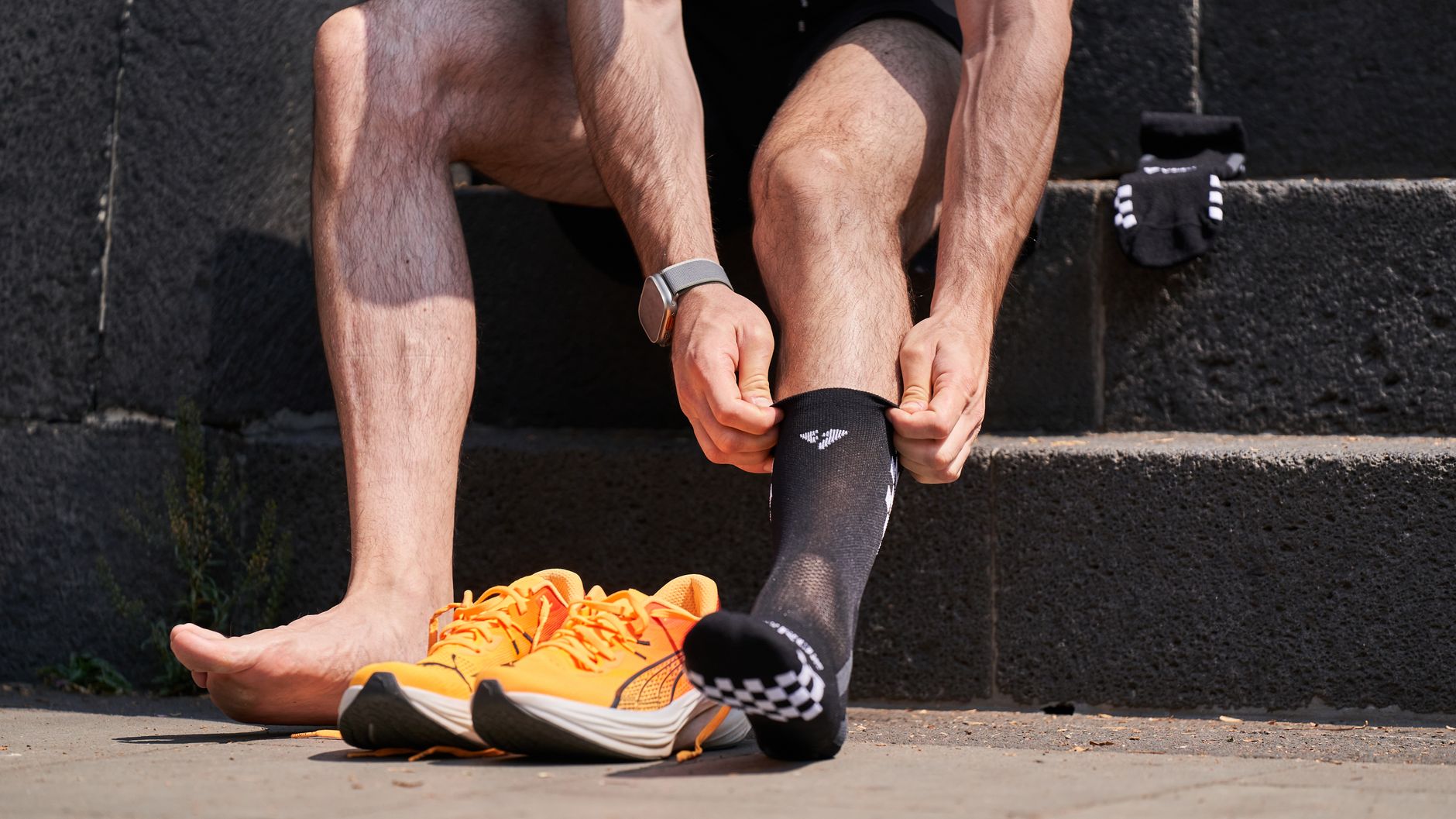
Fitting and Wearing Compression Socks Properly for Maximum Calf Benefit
Getting the right fit matters more than most runners realize. Compression socks that are too loose won’t provide adequate pressure and essentially become regular socks. Socks that are too tight can create pressure points, restrict circulation in a damaging way, or simply be so uncomfortable you won’t wear them consistently. The rule of thumb is that you should be able to slide one finger under the fabric at the calf—snug but not painfully tight. Most quality compression sock brands come in specific size ranges, and you should measure your foot and calf circumference before ordering.
The best practice is to put on compression socks when your legs are least swollen, typically in the morning before you’ve been standing all day. This makes it easier to get them on without struggling, and they’ll be more comfortable throughout wear. Some runners make the mistake of trying to put on compression socks after a run when their calves are already slightly swollen, which creates unnecessary friction and frustration. You can wear compression socks for 3-4 hours straight without issue, but beyond that on the same day, you’re seeing diminishing returns. Taking them off for a few hours before bed lets your skin breathe and prevents any potential irritation.
Common Issues and Limitations With Compression Socks for Calves
Compression socks won’t fix structural problems like a calf strain, compartment syndrome, or chronic tendinitis—these require medical evaluation and targeted treatment. If you have sharp pain in your calf, especially pain that worsens with activity, compression socks can actually mask the problem and delay you getting proper help. Some runners assume that compression socks will let them train through injuries, which is false and potentially dangerous. Compression might reduce soreness temporarily, but it’s not healing anything; you still need adequate rest and possibly physical therapy.
Another common misconception is that compression socks will prevent all types of calf injuries. They help with muscle soreness and minor inflammation, but they don’t strengthen your calves or address underlying biomechanical issues like overpronation or tight hip flexors that might be contributing to calf problems. If you’re dealing with recurring calf issues, you need to look beyond compression socks at your training volume, running form, stretching routine, and possibly see a sports medicine doctor. Additionally, if you have sensitive skin, certain compression sock materials can cause irritation or small areas of chafing where seams sit on your calves, so trying a pair before committing to regular use makes sense.

Compression Socks and Specific Calf Conditions
For mild delayed-onset muscle soreness (DOMS) in the calves after a hard workout, compression socks are one of the more evidence-backed interventions. Many runners notice they feel noticeably less sore the day after a long run or track workout when they’ve worn compression socks consistently. They’re also useful if you have mild shin splints that’s causing secondary calf soreness from compensatory muscle tension.
The same compression that helps blood flow also provides a gentle support that can reduce the sensation of heaviness and the urge to favor one leg. However, if you’re dealing with actual calf strain or a tear, compression socks are a temporary comfort measure at best, not a treatment. You’d need to follow the standard injury protocol: rest, ice, compression (yes, medical compression), elevation, and gradual return to activity. The compression socks discussed here for athletic recovery are different from the medical compression used acutely in injury treatment—athletic socks are about ongoing support and circulation, while medical compression in the acute phase is about controlling swelling and bleeding within the tissue.
The Future of Compression Technology for Runners
Compression sock technology has advanced significantly over the past decade, with companies experimenting with better moisture-wicking fabrics, graduated pressure that adjusts based on movement, and integration with wearable sensors that track your recovery metrics. Some newer designs use zoned compression that puts more pressure on specific areas like the Achilles tendon or medial calf, tailored to where most runners experience tightness. These innovations are making compression socks more comfortable and potentially more effective, though the core mechanism hasn’t changed.
Looking ahead, we’ll likely see more personalized compression recommendations based on individual biomechanics and training data, rather than everyone defaulting to the standard 20-25 mmHg range. Some runners might benefit from targeted compression only in certain areas, while others might need different compression levels on different days depending on their training load. For now, the current generation of compression socks remains a solid, evidence-supported tool in any runner’s recovery toolkit, even if the improvements are incremental rather than transformative.
Conclusion
Compression socks can meaningfully reduce calf soreness and support recovery after hard runs, particularly when worn consistently over weeks and months. The benefits are modest but real—expect maybe 5-10% improvement in how quickly your calves feel less sore, combined with the psychological benefit of actively doing something for your recovery. For most runners, 20-25 mmHg graduated compression socks worn for 2-4 hours after workouts represents the sweet spot between benefit and comfort.
The key is viewing compression socks as one component of smart recovery, not a shortcut around proper training practices or a solution for actual injuries. They work best alongside good sleep, adequate hydration, thoughtful training progression, and consistent stretching. If you’re dealing with calf soreness that’s consistent or worsening, start with a quality pair of athletic compression socks and give them 3-4 weeks of consistent use to assess whether they help your particular situation.
Frequently Asked Questions
Can I wear compression socks while running?
Most runners see better results wearing them for recovery after running rather than during the run itself. The evidence for performance benefits during running is minimal, and some runners find them uncomfortable when actively exercising. Recovery is where compression socks excel.
How long should I wear compression socks each day?
Wearing them for 2-4 hours after your workout is ideal, when inflammation and soreness are most active. You can wear them longer if comfortable, but beyond 4-5 hours you hit diminishing returns. Give your skin a break for several hours before bed.
Will compression socks fix my calf pain?
They can reduce soreness from hard workouts and provide support during recovery, but they won’t fix structural injuries, strains, or tendon problems. If you have sharp or worsening calf pain, get it evaluated by a doctor rather than relying on compression socks.
What compression level should I choose?
For athletic recovery, 20-25 mmHg is the standard range for most runners. Light compression (15-20 mmHg) works for daily wear, while 30+ mmHg is medical-grade and requires medical guidance. Start in the middle range and adjust based on comfort.
Can compression socks cause any problems?
Well-fitting compression socks are safe for most people when used as described. Too-tight socks can cause numbness, skin irritation, or cramping. If you have circulatory issues or previous DVT, consult your doctor before using athletic compression socks.
How soon will I notice improvement in calf soreness?
Some runners notice less soreness after their first few uses, while others need 2-3 weeks of consistent wear to detect a difference. Individual response varies, so give them a fair trial rather than judging after a single use.
1 thought on “Compression Socks for Calf Support”
Comments are closed.