Optical heart rate sensors are getting measurably better. Independent research from 2026 shows that leading wearables now track your heart rate with impressive precision during runs, with the most accurate devices registering biases of less than 1 beat per minute compared to clinical-grade monitors. This represents a significant leap from just a few years ago, when wearable heart rate accuracy was notoriously inconsistent and often unreliable during high-intensity exercise. The improvement isn’t accidental. Device makers are investing heavily in sensor technology, and the global optical heart rate sensor market reflects this momentum.
Valued at $1.52 billion in 2025, the market is projected to reach $3.74 billion by 2034, signaling that consumers and manufacturers alike recognize the value of accurate heart rate data for training and health monitoring. For runners specifically, this means the watch or armband you buy today will likely deliver more trustworthy data than what was available even eighteen months ago. These improvements matter because your heart rate is one of the most actionable metrics in your training. Whether you’re building aerobic capacity, tracking recovery, or making sure you’re not overtraining, you need to know your actual heart rate—not a guess. Optical sensors, which use light to detect blood flow patterns, have become the mainstream standard in sports watches, and they’re finally delivering the accuracy that runners have been waiting for.
Table of Contents
- How Are Optical Heart Rate Sensors Actually Getting Better?
- Accuracy Measurements: Which Devices Are Actually Most Reliable?
- Armband Sensors vs. Wrist-Based Watches: Which Works Better for Runners?
- Choosing the Right Device for Your Training
- The Variability Problem—Why Your Heart Rate Reading Fluctuates
- What the Market Shift Means for Future Sensors
- Looking Ahead—Where Optical Heart Rate Technology Is Headed
- Conclusion
How Are Optical Heart Rate Sensors Actually Getting Better?
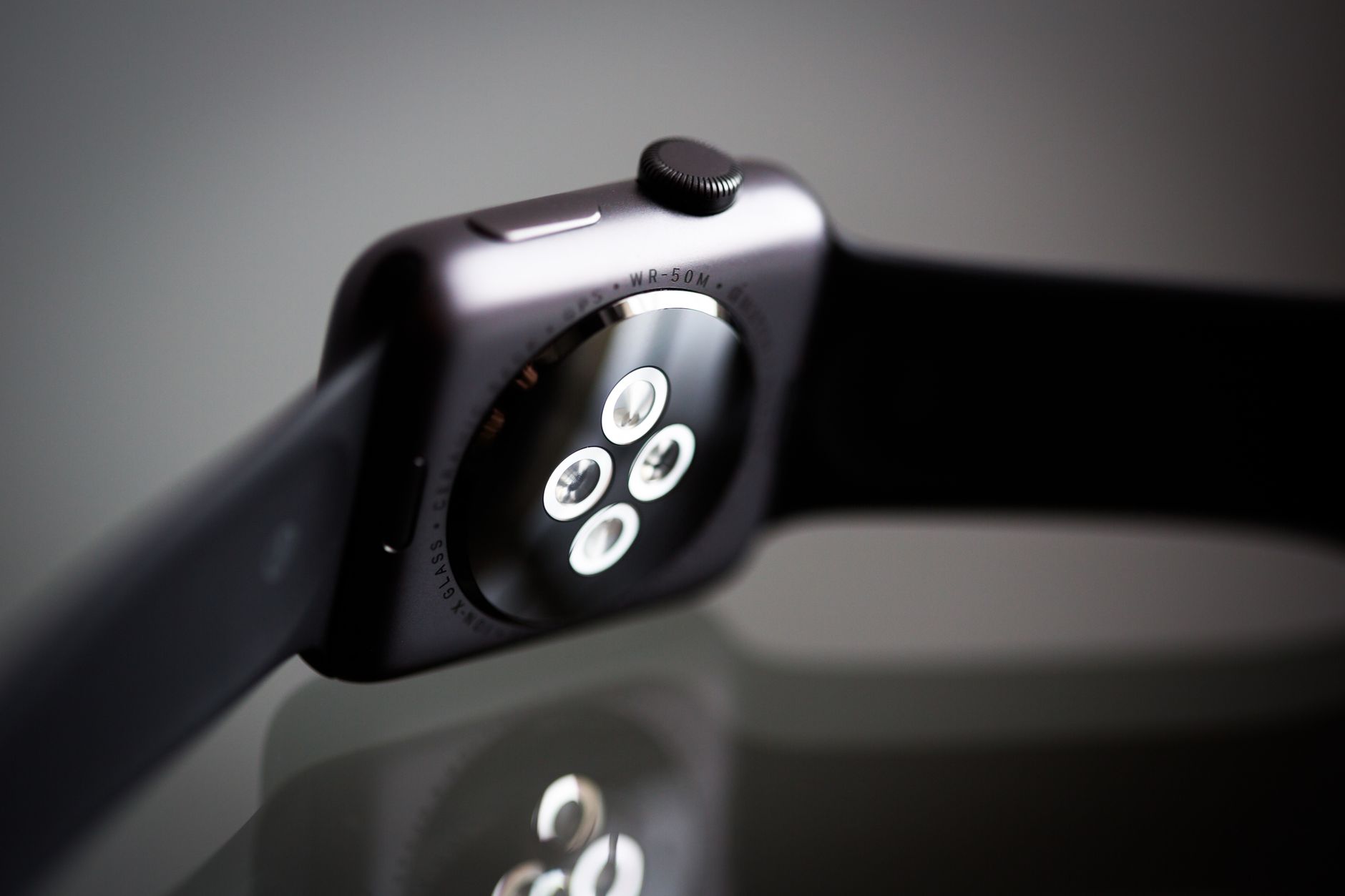
The technical advances happening right now involve both hardware and signal processing. Researchers are moving beyond simple LED-based designs toward hybrid photoplethysmography (PPG) systems that combine organic light-emitting diodes with circular organic photodetectors. These new systems harvest light more efficiently, reducing noise in the signal and making it easier to distinguish your actual heartbeat from background motion and skin reflectance. One key finding from 2026 research: a 50% LED duty cycle paired with a 250 Hz sampling rate produces the most accurate readings, giving engineers a specific target to optimize around.
Multi-wavelength LED systems are also expanding across the market. Your skin tone affects how well optical sensors work—darker skin absorbs more light, which has historically made some sensors less accurate for people with deeper skin tones. New designs that use multiple wavelengths of light can compensate for these differences, improving accuracy across the entire population. This is a real limitation that older single-wavelength sensors had, and addressing it makes optical sensors more genuinely useful for everyone.

Accuracy Measurements: Which Devices Are Actually Most Reliable?
When researchers at major institutions tested current wearables against clinical chest-strap monitors during both rest and exercise, the results showed clear winners. The Apple Watch demonstrated a bias of just -0.62 beats per minute, while garmin devices showed -0.91 bpm—both effectively negligible for training purposes. Fitbit devices, by contrast, showed a bias of -3.44 bpm with roughly twice the variability of the top performers, meaning they’re less consistent across different measurements. The difference matters: if you’re trying to stay in a specific heart rate zone during a run, a 3-4 bpm error is enough to throw off your training intent.
The limitation here is that accuracy isn’t consistent across all conditions. Wrist-based sensors (which account for most consumer watches) perform noticeably better at moderate intensities than at very high intensities. Your wrist moves more during a hard sprint, and the sensor has to work harder to distinguish heartbeat from motion artifact. This is where armband sensors, like those in the Polar Verity Sense, show their advantage—placing the sensor on muscle-rich tissue on your biceps delivers accuracy comparable to chest straps, while wrist sensors start to drift as you push harder. For speed work and intervals, this difference becomes measurable.
Armband Sensors vs. Wrist-Based Watches: Which Works Better for Runners?
Polar’s Verity Sense exemplifies the armband approach and earned an Editors’ Choice Award in 2026 for good reason. By placing the optical sensor directly against muscle rather than bone and tendons, armbands avoid much of the motion artifact that degrades wrist measurements during intense running. In validation studies across different environmental conditions, the Verity Sense consistently outperformed wrist-worn devices from other manufacturers, particularly during tempo runs and interval sessions. The tradeoff is obvious: an armband is less convenient than a watch, less fashion-forward, and adds another device to your training kit.
Wrist-based sensors remain dominant because they’re integrated into watches that do everything—notifications, navigation, music, sleep tracking. The Apple Watch and Garmin Fenix 8 (which uses Garmin’s new-generation Elevate Gen 5 sensor) are practical tools for everyday wear, and their optical accuracy has genuinely improved to the point where they’re suitable for most training purposes. If you’re doing steady-state runs at conversational pace, the difference between a wrist watch and an armband is negligible. The moment you move to threshold or VO2 max work, the advantage tilts toward armbands or chest straps, but many runners never push hard enough regularly to notice.
Choosing the Right Device for Your Training
For most runners, either a Fitbit Charge 6 or Google Pixel Watch 2 represents a solid choice if you want to prioritize reliability across variable conditions. Both scored highest in recent validation studies and offer good battery life plus practical features like GPS and training metrics beyond just heart rate. They’re also reasonably priced compared to premium options. Neither will give you armband-level precision during hard efforts, but they’ll track your training patterns accurately enough to guide your program.
If you do structured intervals or threshold work regularly—say, more than once per week—consider the investment in either a dedicated armband sensor or a chest-strap monitor used alongside your watch. The Polar Verity Sense costs more upfront but delivers the accuracy that makes workouts repeatable and truly data-driven. For casual runners building base miles, the incremental accuracy gain doesn’t justify the extra device. The key is matching the sensor to your training style, not just picking whatever’s trendy.
The Variability Problem—Why Your Heart Rate Reading Fluctuates
Even the most accurate optical sensors show beat-to-beat variability, and this trips up many runners who expect instant, rock-solid numbers. Your actual heart rate naturally varies slightly as your autonomic nervous system responds to immediate effort levels and environmental factors. A wrist-based sensor might show 168, then 170, then 166 over three consecutive seconds—that’s not the sensor failing, it’s capturing real variation.
The issue comes when that variability exceeds what’s real, which is where the lower-accuracy devices create problems. Fitbit’s higher standard deviation (more than twice that of Apple or Garmin) means you’ll see bigger swings that don’t reflect actual changes in your physiology. This makes it harder to trust the data when you’re trying to train at a specific intensity. Some of this is unavoidable with wrist-based sensors during high-intensity running, but knowing the device’s typical accuracy—its bias and variability—helps you interpret the numbers sensibly rather than chasing phantom variations.

What the Market Shift Means for Future Sensors
The rapid growth projected for optical sensors (more than doubling by 2034) is attracting investment from major tech companies and specialized biotech firms alike. This competition is speeding up innovation cycles. The hybrid PPG systems and multi-wavelength designs being published in research journals today are likely to filter into consumer devices within 18-24 months.
Integration with AI-based signal processing is also becoming more common, using machine learning to filter out motion noise and improve accuracy during dynamic activities. What this means practically: if you bought a wearable three years ago and it was mediocre, a new purchase today will almost certainly be noticeably better. The baseline is genuinely rising, not just in flagship devices but across price points. Budget options are catching up to premium devices more than they used to, though the top performers still maintain a measurable edge.
Looking Ahead—Where Optical Heart Rate Technology Is Headed
The next frontier in optical heart rate sensing involves not just accuracy but integration with other biomarkers. Research labs are exploring how PPG signals can also measure blood oxygen, skin temperature, and even stress hormones through optical analysis. If those advances make it to consumer devices, you might get continuous health monitoring from a single wearable without needing multiple sensors.
For runners specifically, the trend toward armband-level accuracy in smaller, watch-like form factors is underway. Companies are working on optical sensor placement and housing designs that minimize motion artifact without requiring the bulk of a dedicated armband. Within a few years, you might have a wrist watch that delivers near-armband accuracy—at which point the choice becomes purely about features and integration, not about fundamental sensor quality.
Conclusion
Optical heart rate sensors have moved beyond “good enough for casual tracking” into territory where they’re genuinely useful for serious training. The top devices now measure with sub-1 bpm accuracy, multi-wavelength designs are addressing past inequities in sensor performance across skin tones, and the underlying technology continues to evolve. For runners who track their workouts, this means the data in your watch is increasingly trustworthy as actual information about your training, not just a noisy approximation.
The practical takeaway: if you’re currently using an older wearable or a mid-tier device with known accuracy issues, upgrading to a 2026 model from a top manufacturer is genuinely worth considering. Match the device type (watch vs. armband) to how hard and how often you train, and you’ll have a tool that actually informs better training decisions. The sensor improvements happening right now aren’t just marketing increments—they’re real, measurable, and they matter for your running.