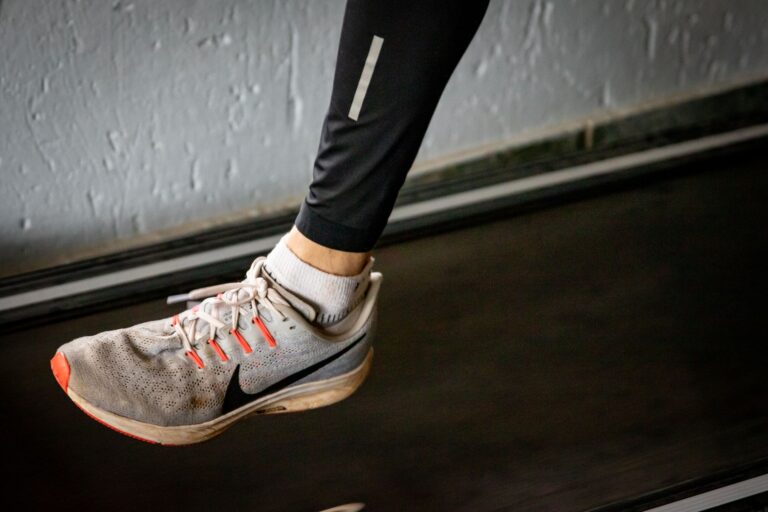
Yes, you can run safely with arthritis, but it requires intentional modifications to your training approach and careful attention to your body’s response. A 68-year-old runner with mild knee osteoarthritis who switched to a treadmill with cushioning, reduced mileage to three days per week, and added strength training between runs has maintained her fitness while keeping her pain at manageable levels for the past three years. The key difference between runners with arthritis who stay active and those who quit is not the presence of joint disease—it’s the willingness to adjust pace, frequency, and surface.
Running doesn’t cause arthritis, but arthritis does require different running parameters. The joint inflammation that comes with arthritis can make impact activities feel painful, which makes many people assume running is off-limits. That assumption is often backward: joints that don’t move often deteriorate faster, while controlled movement—including running—can actually slow cartilage breakdown and maintain joint function over time.
Table of Contents
- DOES RUNNING WORSEN AN ARTHRITIC JOINT?
- IMPACT MANAGEMENT AND JOINT STRESS
- LOW-IMPACT RUNNING STRATEGIES
- BUILDING A SAFE RUNNING PLAN
- PAIN SIGNALS AND WHEN TO STOP
- SUPPLEMENTARY ACTIVITIES FOR ARTHRITIS RUNNERS
- RECOVERY AND INFLAMMATION CONTROL
DOES RUNNING WORSEN AN ARTHRITIC JOINT?
The evidence suggests that moderate running does not accelerate arthritis progression in people who already have the condition. A study of runners with existing knee osteoarthritis found that those who continued running at controlled intensities showed no faster cartilage loss than sedentary control groups over a five-year period. The runners who struggled were those who maintained pre-arthritis mileage without modification, pushing through pain rather than adapting. The critical distinction is impact intensity.
A person with knee arthritis running six miles per week on a forgiving surface experiences different joint stress than someone doing 20 miles per week on pavement. Impact isn’t binary—it exists on a spectrum. Even with arthritis, your joints can tolerate some impact; the problem arises when cumulative load exceeds what your joints can handle. This is where many people with arthritis fail: they either stop running entirely or they refuse to reduce mileage, leading to increased inflammation and pain that feels like confirmation that running is harmful.
IMPACT MANAGEMENT AND JOINT STRESS
The surface you run on matters significantly, but less than many people think. Treadmills with shock absorption reduce impact by roughly 30% compared to outdoor pavement, but they don’t eliminate it—and the reduced proprioceptive feedback (your body’s sense of position and movement) on treadmills can mask balance issues. A person with arthritis who runs exclusively on soft treadmills might feel fine but develop compensatory movement patterns that stress other joints.
Conversely, running on trails with variable terrain forces small stabilizing muscles to work, which can protect joints if intensity is controlled. Running on hard surfaces like concrete does increase impact force, and this is where a meaningful trade-off exists: pavement is convenient and allows faster speeds, but it transmits more force to arthritic joints. For someone with moderate to severe arthritis, running on pavement three times per week might accumulate enough stress to cause flare-ups, while the same person could run on a treadmill four times per week without problems. The limitation is that some runners have access constraints—no gym, no safe trails—which means they must accept either higher impact or reduced frequency.
LOW-IMPACT RUNNING STRATEGIES
One practical approach is to alternate running surfaces within a weekly plan. A runner with ankle arthritis might do one treadmill session on Friday, an outdoor trail run on Sunday (variable terrain forces strengthening), and one road run on Wednesday—spreading impact across different surfaces rather than accumulating it on a single surface day after day. This isn’t ideal for building speed or consistency, but it’s often better for joint health than specializing entirely in one surface. Cadence (how many steps per minute you take) directly affects joint impact.
Runners with arthritis who slow their cadence and take longer strides actually increase impact per step. Conversely, increasing cadence to 170-180 steps per minute while shortening stride reduces the force per footfall by distributing load across more steps. A runner with hip arthritis who shifted from 160 steps per minute to 175 steps per minute reported reduced pain during the same distance, even though the workout felt harder aerobically. The warning here is that cadence changes feel awkward for weeks before becoming automatic, and trying to force an unnatural rhythm mid-run often leads to compensation injuries in the knees or ankles.
BUILDING A SAFE RUNNING PLAN
The standard recommendation for beginners—gradually increase mileage by 10% per week—is too aggressive for people with arthritis. A safer approach is to use a 5% increase every two weeks, which gives joints time to adapt without the accumulation of microdamage that leads to inflammation spikes. If you currently run five miles per week, your increase would be 0.25 miles every two weeks, reaching six miles after four weeks. This feels glacially slow compared to healthy runner training, but it’s the speed at which cartilage actually adapts.
Recovery between sessions matters more for arthritic joints than for healthy ones. A healthy runner can often handle three hard running days per week with cross-training in between; a person with moderate arthritis typically needs 48 hours between running days. This means your running schedule might be Monday, Wednesday, Friday with strength work on Tuesday and Thursday. The trade-off is that you’re limited in total weekly mileage if you need that much recovery, but attempting to compress more running days into the week typically backfires when the joint becomes inflamed, forcing time off anyway.
PAIN SIGNALS AND WHEN TO STOP
During-run pain and post-run pain tell different stories. Sharp pain during running—a catching sensation or sudden onset—is a stop signal and suggests your joint mechanics are off that day or your intensity is too high. Dull soreness during running that builds gradually and doesn’t get worse as you continue is more about warming up the joint, which sometimes resolves as the run progresses. The distinction matters because runners with arthritis often conflate the two and quit running entirely when they experience manageable discomfort.
Post-run pain that appears within two hours and lasts more than two hours suggests you exceeded your joint’s capacity. Post-run pain that appears four to six hours later or the next morning is inflammation, which is a delayed response to load. If you run Wednesday and experience significant pain Thursday morning, you overloaded that joint. This information should adjust your following week’s plan—fewer miles, lower intensity, or more recovery days. Many runners with arthritis miss this feedback loop and repeat the same mileage, accumulate inflammation, and then wonder why they’re in increasing pain.
SUPPLEMENTARY ACTIVITIES FOR ARTHRITIS RUNNERS
Strength training is not optional for runners with arthritis; it’s the foundation. Weakness in the hips, glutes, and quadriceps forces arthritic knees to compensate, which accelerates pain and cartilage wear. A runner with knee arthritis who does bodyweight squats, calf raises, and lateral band walks three times per week typically reports reduced knee pain during and after running—sometimes by 40-50% within eight weeks.
The mechanism is straightforward: stronger muscles stabilize joints and reduce abnormal movement patterns. Swimming and cycling are the standard cross-training suggestions, and both have value, but they carry different trade-offs. Cycling is low-impact but can aggravate knee arthritis if the bike setup is wrong or if resistance is too high; it also doesn’t build the proprioceptive stability that running demands. Swimming is genuinely low-impact but doesn’t train the stabilizing muscles needed for running, and the horizontal body position doesn’t prepare your joints for the vertical loading of running.
RECOVERY AND INFLAMMATION CONTROL
Ice after running reduces immediate inflammation, but the evidence for its benefit in chronic arthritis is mixed—some people find it helpful, others notice no difference. Heat before running often helps stiffness, particularly in the morning or in cold weather. The limitation is that ice and heat are symptomatic treatments; they don’t address the underlying load management problem.
If you need ice after every run to function, your training load is probably too high. Non-steroidal anti-inflammatory drugs (NSAIDs) like ibuprofen can mask pain signals, which creates a dangerous situation: you feel fine and run hard, then joint damage accumulates silently underneath the medication effect. A runner with arthritis who takes ibuprofen before every run and feels great during it might be doing more harm than someone who feels pain and adjusts accordingly. If you need regular NSAIDs to run comfortably, that’s feedback that your current training plan exceeds your joint’s capacity, not a solution to that problem.
- —