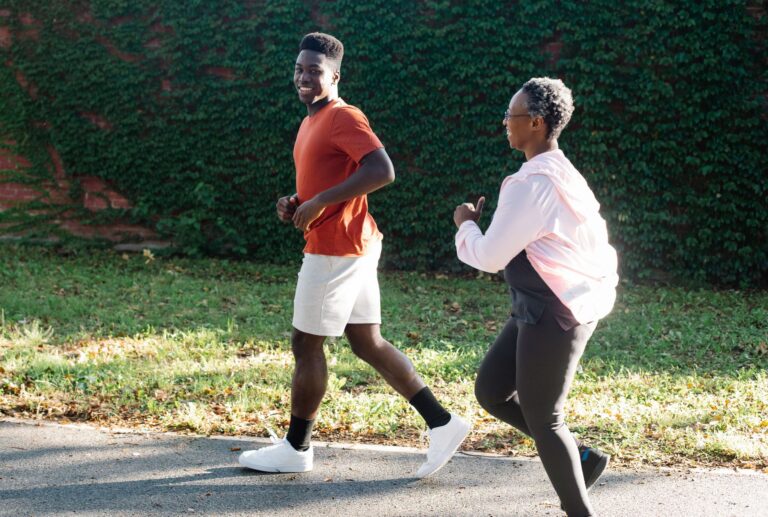
Your fitness level is not predetermined by your age. A 55-year-old runner who trains consistently can outperform a sedentary 25-year-old by almost every fitness metric—cardiovascular endurance, strength, flexibility, and speed. What matters is what you do with your body, not when you were born. This isn’t motivational platitude; it’s rooted in decades of exercise science showing that adaptation to training happens at every age, from your 20s through your 80s. The real driver of fitness is consistency, training stimulus, and lifestyle choices. A 62-year-old who runs 30 miles per week will have better aerobic capacity than a 30-year-old who runs five miles weekly.
Age influences how quickly you recover and which adaptations take longer, but it doesn’t create an impassable ceiling on performance. The narrative that “fitness is a young person’s game” has become outdated, replaced by evidence from masters runners, ultra-endurance athletes in their 60s, and everyday gym-goers who are stronger at 50 than they were at 35. Age does bring real changes to how your body responds to training. Muscle protein synthesis slows after about age 30, recovery takes longer, and injury risk increases without proper form and programming. But these are modifiable factors, not destiny. Understanding how aging actually affects fitness—and what you can control—is the key to staying competitive with yourself regardless of your age.
Table of Contents
- How Does Age Actually Affect Athletic Performance?
- The Role of Genetics, Training, and Lifestyle Choices
- Masters Athletes and Real-World Evidence
- Adapting Your Training Program for Your Age
- Recovery, Injury Prevention, and the Aging Process
- Nutrition and Body Composition as You Age
- The Long-Term Outlook for Lifelong Fitness
- Conclusion
- Frequently Asked Questions
How Does Age Actually Affect Athletic Performance?
Age affects fitness through several measurable physiological changes. VO2 max, your body’s ability to use oxygen, declines roughly 10% per decade after age 25, but this decline accelerates dramatically in sedentary people and slows dramatically in those who train. A 60-year-old competitive runner might have a VO2 max of 45-50 mL/kg/min, while a sedentary 30-year-old might manage only 35. The difference isn’t age—it’s training volume and intensity. Similarly, muscle mass decreases with age through a process called sarcopenia, losing roughly 3-5% per decade after 30 in untrained adults. But resistance training directly counteracts this.
A 70-year-old lifter who has trained consistently can maintain muscle mass nearly identical to their 45-year-old self who doesn’t train. Connective tissue becomes less elastic and heals more slowly with age, which is real and requires programming adjustments, but it’s not a barrier to fitness—it’s a design constraint. The most significant age-related change is recovery time. A 25-year-old might recover fully from a hard workout in 24-36 hours; a 55-year-old might need 48-72 hours. This doesn’t mean the 55-year-old can’t do the same workout—it means spacing workouts differently, prioritizing sleep and nutrition, and programming strategically. Elite masters athletes factor in longer recovery windows and train accordingly, achieving remarkable performances. This is a limitation to work around, not a reason to quit.

The Role of Genetics, Training, and Lifestyle Choices
While genetics do influence your fitness ceiling—your muscle fiber type distribution, mitochondrial density potential, and baseline aerobic capacity are partly inherited—training choice is far more powerful than your genetic hand. Someone born with a genetic predisposition for endurance won’t become a runner without years of training, and someone without that genetic gift can still become a strong runner through consistent work. The evidence is striking: in longitudinal studies following runners over 20-30 years, those who maintained consistent training through middle age and beyond had fitness levels comparable to their younger years, while those who quit training experienced rapid declines. The difference between a 50-year-old with high fitness and one with low fitness isn’t primarily genetics or age—it’s cumulative training history and current training volume. A sedentary 50-year-old can improve their fitness dramatically in 12 weeks with a solid program, sometimes improving by 20-30% in cardiovascular markers.
Lifestyle compounds these factors. Sleep, nutrition, stress management, and consistency matter far more than age. A 48-year-old who sleeps eight hours nightly, eats adequate protein, trains intelligently, and manages stress will almost certainly outperform a 28-year-old doing the opposite. This is the limitation many people miss: you can’t out-train a bad lifestyle, and age makes this even more true. The metabolic cost of poor recovery practices increases with age, making shortcuts progressively more expensive.
Masters Athletes and Real-World Evidence
Masters competitors—athletes over 40 or 50—provide the clearest proof that age doesn’t decide fitness level. The Boston Marathon includes hundreds of runners over 60; some run sub-three-hour marathons, which puts them in the top 10% of all marathon runners regardless of age. Women in their 70s complete ultra-marathons. Men in their 60s run sub-five-minute miles. These aren’t genetic anomalies or elite rarities; they’re the result of consistent training, smart programming, and refusing to accept age-based limitations. Consider the example of Ed Whitlock, who became the first person over 70 to break three hours in the marathon, running a 2:54:48 at age 74.
He achieved this not through special genetics or radical training methods, but through consistency and decades of steady running. More relevant than the elite example: age-group records at marathons, 10Ks, and road races are regularly broken by athletes over 50, 60, and even 70. These athletes trained intelligently, adapted their methods to their bodies, and stayed healthy long enough to continue improving. The inverse is also true: young runners who don’t train, or who train inconsistently, plateau quickly and perform worse than older athletes who train consistently. A 35-year-old recreational runner who averages 20 miles per week will not beat a 55-year-old averaging 40 miles per week in a 10K, regardless of age. The data is clear: training matters far more than age, and age-group records continue to fall as more people challenge age-based assumptions.

Adapting Your Training Program for Your Age
Rather than asking “can I stay fit at my age,” the better question is “how should I train at my age.” Training adaptation doesn’t mean doing less; it means training smarter. For runners in their 40s and beyond, this typically means slightly higher emphasis on strength training—especially for the hips, glutes, and core—and slightly longer recovery between hard efforts. A 50-year-old runner might do two interval sessions per week instead of three, but make each one count with high-quality work and adequate recovery. Injury prevention becomes progressively more important with age because recovery from injury takes longer and complications increase. A 25-year-old can often push through minor tweaks that resolve quickly; a 55-year-old needs to be more careful about form, progression rate, and total volume.
This isn’t weakness—it’s wisdom. Building in 20-30% more recovery time, emphasizing technique, and progressing more gradually prevents the injuries that would actually sideline you and damage your fitness base. A 60-year-old who stays healthy by training conservatively will maintain more fitness than someone who overreaches and gets injured. The tradeoff is simple: you may not be able to do as much raw volume as a younger athlete, but you can do enough strategically programmed volume to stay fit and competitive. A 55-year-old might max out at 40-50 miles per week running, while a 25-year-old trains at 60-70; both can be very fit, and both can run a 1:40 half-marathon if they put in the work. The difference is in the implementation, not the outcome.
Recovery, Injury Prevention, and the Aging Process
Recovery capacity does decline with age, and this is a real limitation that affects training. Inflammation takes longer to resolve, muscle repair takes longer, and hormonal recovery (especially for masters women dealing with menopause or post-menopause) requires intentional management. Sleep becomes more precious; a 45-year-old needs as much sleep as a 25-year-old to recover, but often struggles to get it due to stress and life demands. The warning here is direct: ignoring recovery needs causes injuries that are harder to come back from. A stress fracture that would heal in 8-10 weeks at age 25 can take 12-16 weeks at age 55, and aging also increases the risk of complications.
Chronic inflammation from overtraining damages fitness gains and accelerates aging in other ways. Many athletes make the mistake of believing that toughness means pushing through tired; actually, respecting fatigue signals and taking extra rest days is what keeps you training at age 65. Practical management includes: prioritizing seven to nine hours of sleep, eating adequate protein (1.2-1.6 grams per kilogram of body weight), incorporating strength training twice weekly, and taking one full recovery day per week, possibly two. Anti-inflammatory nutrition—emphasis on vegetables, omega-3s, and whole grains—matters more with age. Active recovery (easy walking, gentle yoga, swimming) can be more helpful than complete rest. These aren’t optional accessories; they’re the foundation that makes consistent training possible as you age.

Nutrition and Body Composition as You Age
Muscle protein synthesis decreases with age, meaning you need more protein and more consistent training stimulus to maintain muscle. A 30-year-old builds muscle on 0.8 grams of protein per kilogram of body weight daily; a 60-year-old needs closer to 1.2-1.6 grams to achieve the same adaptation. This isn’t a limitation that stops you; it’s a nutritional requirement that enables you to stay fit. Getting adequate protein, spread across meals throughout the day, is essential.
Body composition naturally shifts with age due to hormonal changes, decreased activity, and metabolic slowdown. Masters athletes combat this through consistent training and careful nutrition. A 50-year-old runner carrying extra body fat will be slower and more injury-prone than their leaner self; the adaptation is the same as for younger runners, but the margin for error shrinks. This example matters because it shows that the solution is the same—train consistently, eat whole foods, maintain lean body composition—but requires slightly more precision and consistency than it might at a younger age.
The Long-Term Outlook for Lifelong Fitness
The emerging evidence suggests that people who maintain consistent training through their 50s, 60s, and beyond can sustain fitness levels that would be considered excellent at any age. This isn’t about genetic lottery winners; it’s about normal people who decide to train consistently. A 70-year-old who has trained consistently for 40 years often has better cardiovascular fitness and strength than a 40-year-old who has been sedentary.
The future of fitness is increasingly recognizing that “staying young” isn’t the goal—staying capable and strong is. Age will always be a factor in how your body responds to training, but the correlation between age and fitness has weakened dramatically as more people challenge age-based assumptions and train intelligently across their lifespan. The ceiling keeps rising not because aging has changed, but because people are refusing to accept artificial limitations.
Conclusion
Your fitness level is not determined by your age; it’s determined by your training, recovery, nutrition, and consistency. While aging does introduce physiological changes—slower recovery, increased injury risk, declining hormonal support—these are factors to manage, not barriers to overcome.
A 55-year-old who trains consistently will outperform a sedentary 25-year-old, and real-world examples from masters athletes prove that competitive fitness is possible at any age. The path forward is clear: train intelligently, prioritize recovery as you age, eat adequately, and refuse to accept age-based limitations on what your body can do. Your age is a fact; your fitness is a choice.
Frequently Asked Questions
Can I start running seriously at 50 or 60?
Yes. Beginners starting training at 50, 55, or even 60 improve rapidly and can reach very good fitness levels within 12-24 months of consistent training. Starting at an older age means being more careful about progression and form, but the potential for improvement remains substantial.
How much slower will I get as I age?
VO2 max declines roughly 10% per decade in sedentary people, but only 3-5% per decade in those who train consistently. A 60-year-old runner who has trained consistently for 30 years might be only 5-10% slower than their 30-year-old self, while a sedentary 60-year-old is 40-50% slower than their younger self.
Should I do less running as I get older?
Not necessarily less volume, but different structure. Older runners often benefit from slightly less weekly volume (but still substantial), more emphasis on strength training, and longer recovery between hard efforts. Quality matters more than quantity.
Is strength training important for runners at any age?
Yes, increasingly so with age. Resistance training two times per week prevents injury, maintains muscle mass, and actually improves running economy. Masters runners who include strength training outperform those who don’t.
Can I recover from injury at 55 as well as at 25?
Recovery takes longer—typically 25-50% longer depending on the injury—and you’re at higher risk of complications. The path to recovery is the same (gradual progression), but requires more patience and often professional guidance to avoid re-injury.
What’s the most important factor for fitness at any age?
Consistency. The single strongest predictor of fitness level at any age is cumulative training history and current training volume. Athletes who train consistently age better than those who are sporadic, regardless of when they started.