Functional fitness and heart rate are inextricably linked. Your heart rate is both a window into how your body is adapting to functional training and a powerful tool for optimizing that training in real time. When you perform functional movements—exercises that train your body to handle everyday tasks more efficiently—your heart responds by improving its capacity to deliver oxygen and nutrients to working muscles. Understanding this relationship transforms how you approach training and helps you build real, measurable cardiovascular resilience.
The connection goes deeper than simple cause and effect. Your resting heart rate serves as a baseline marker of cardiovascular health, while your working heart rate during functional exercise reveals whether your training is hitting the right intensity zone. For example, a runner who performs functional movements like farmer’s carries and step-ups while monitoring heart rate can ensure they’re building endurance in Zone 2 (60-70% of maximum heart rate) rather than constantly hammering Zone 4, where overtraining becomes a risk. This precision matters because research shows that 560–610 minutes per week of exercise can reduce heart attack, stroke, heart failure, and atrial fibrillation risk by over 30%—but only when the training intensity is appropriate.
Table of Contents
- How Heart Rate Zones Structure Functional Fitness Training
- Resting Heart Rate as a Window Into Cardiovascular Adaptation
- Functional Fitness Training and Cardiovascular Adaptation
- Using Heart Rate Zones to Guide Your Functional Training
- Common Mistakes in Heart Rate-Based Functional Training
- Technology and Wearables in Monitoring Functional Fitness
- The Future of Heart Rate Monitoring and Functional Training
- Conclusion
How Heart Rate Zones Structure Functional Fitness Training
Heart rate zones provide a framework for every functional fitness session. The American College of Sports Medicine identifies five primary zones based on percentages of maximum heart rate. Zone 1 (50-60%) serves as your warm-up and cool-down zone, where the goal is moving without stress. Zone 2 (60-70%) is where most endurance-building happens and where consistent training can lead to a 15-20% improvement in cardiovascular efficiency while reducing overtraining risk.
Zone 3 (70-80%) builds both strength and endurance, Zone 4 (80-90%) is true high-intensity work, and HIIT training typically operates at 85-95% of maximum heart rate. Functional fitness workouts should rarely be confined to a single zone. A complete session might include a Zone 1 warm-up, followed by Zone 2 or Zone 3 work during the main strength and movement portion, and conclude with a Zone 1 cool-down. The general recommendation for most exercisers is to spend time in the 50-85% zone, building a broad aerobic base while avoiding the common trap of always training at maximum intensity. Runners who add functional movements often find that working at the right heart rate zones prevents the plateau effect—when your body stops adapting because it’s always getting the same stimulus.
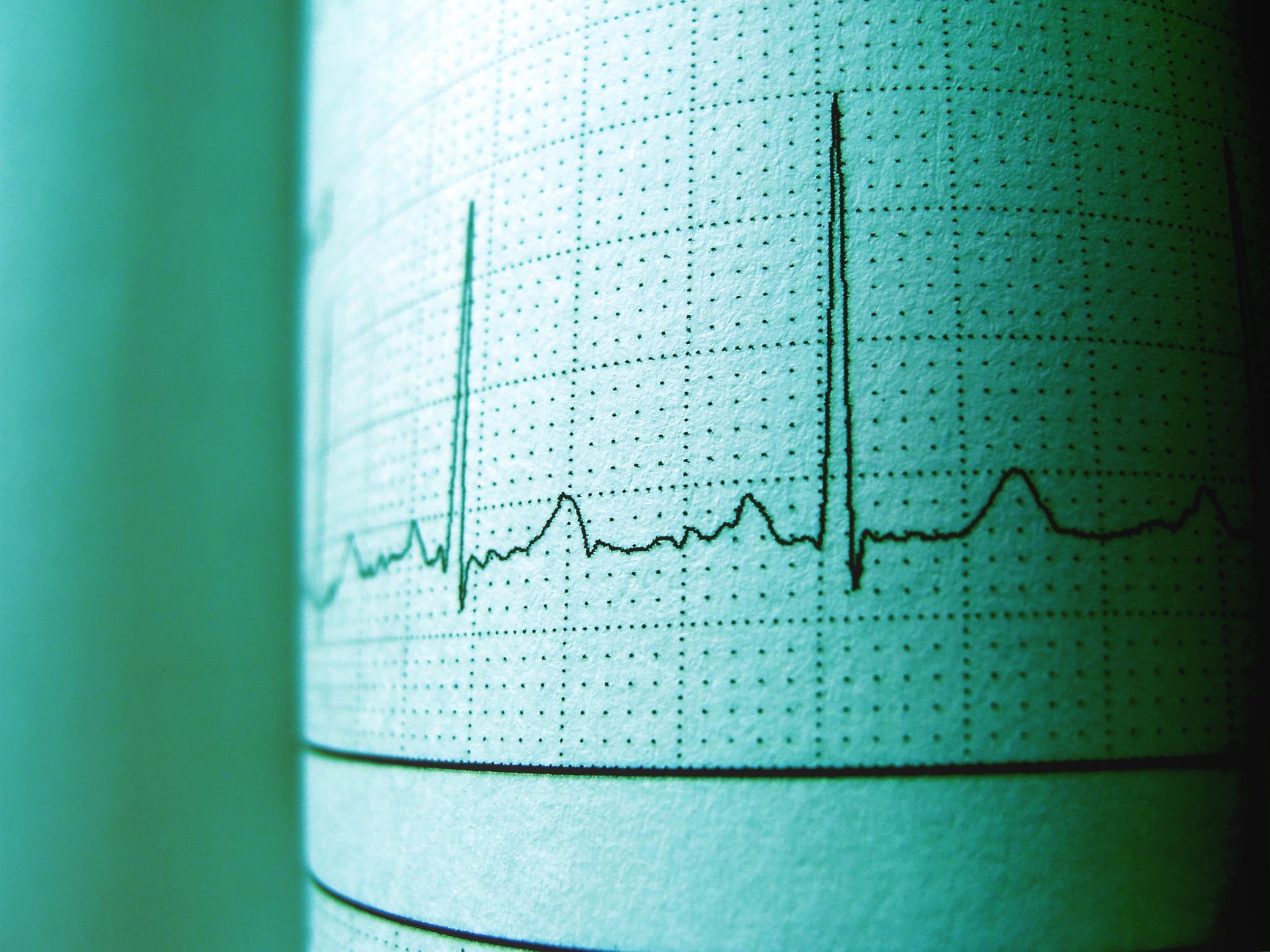
Resting Heart Rate as a Window Into Cardiovascular Adaptation
Your resting heart rate tells a clearer story about cardiovascular fitness than almost any other single metric. Normative data shows that average resting heart rate for men ages 18-19 is 65.5 bpm, while men ages 80-89 average 57.8 bpm. This counterintuitive data reveals an important truth: resting heart rate tends to decrease with age for both men and women, suggesting that many older adults maintain better cardiovascular fitness than younger, sedentary people. When you add consistent functional fitness training, you often see your resting heart rate drop by 5-10 beats per minute within weeks—a sign that your heart is becoming more efficient at delivering oxygen at rest. The limitation worth understanding is that resting heart rate alone doesn’t paint the complete picture.
Two people with identical resting heart rates might have vastly different functional fitness levels. Stress, caffeine, sleep quality, and even hydration status can elevate your resting heart rate on any given morning. A single elevated reading means nothing; the trend over weeks matters. Additionally, some athletes with naturally lower resting rates aren’t necessarily fitter—genetics play a role. The warning here is simple: use resting heart rate as one data point in a larger conversation with your training, not as a standalone metric of fitness.
Functional Fitness Training and Cardiovascular Adaptation
When you perform functional fitness movements consistently, your cardiovascular system undergoes measurable adaptation. A 2025 randomized controlled trial published in scientific literature found that 6-week functional training programs show significant improvements in physical function, cardiorespiratory fitness, and quality of life in older women. These weren’t just modest gains—participants experienced meaningful increases in how far and fast they could move, as well as how their hearts responded to effort. The functional nature of the movements—things like sit-to-stand exercises, walking, and resistance training that mimics real-world activities—appears to trigger more complete cardiovascular adaptation than isolated strength work. The mechanism at work is your aerobic system’s ability to improve.
Functional fitness creates demand on your cardiovascular system across multiple planes of motion and at varying intensities. Your heart adapts by becoming more efficient at extracting oxygen from blood, your capillary networks expand to deliver more oxygen to muscles, and your mitochondrial density increases. This process happens reliably over weeks and months of consistent training. However, there’s an important limitation: the window for adaptation is probably smaller than you think. Most cardiovascular adaptations plateau after 8-12 weeks of consistent stimulus, which is why periodizing your training—changing intensity, volume, or movement patterns—becomes necessary to continue improving.

Using Heart Rate Zones to Guide Your Functional Training
Practical heart rate monitoring transforms functional fitness from guesswork into measurable, repeatable progress. The first step is establishing your maximum heart rate—the traditional formula (220 minus your age) is a useful starting point, though field tests like the 3-minute step test or a maximal effort run can be more accurate. Once you know your maximum, calculate your zones. A 40-year-old runner would estimate max heart rate at 180 bpm, making Zone 2 roughly 108-126 bpm and Zone 4 roughly 144-162 bpm. In practice, this means structuring your week with intentional variety.
Monday might feature a Zone 2 functional session focusing on movement quality—think farmer carries, Bulgarian split squats, and controlled step-ups at a conversational pace. Wednesday could include a Zone 3 session mixing functional movements with slightly elevated intensity. Friday might feature short Zone 4 efforts embedded in a functional circuit. This approach outperforms the common mistake of doing everything at medium intensity (which trains nothing particularly well) and reduces the injury risk that comes from constant hard efforts. The tradeoff is that Zone 2 training often feels “too easy,” leading many runners to abandon it—yet it’s precisely this zone where the majority of aerobic gains happen without accumulating fatigue.
Common Mistakes in Heart Rate-Based Functional Training
The first mistake is training too hard too often. Most runners spend far too much time in Zone 3 and Zone 4, believing that harder work always yields better results. Over time, this leads to accumulated fatigue, elevated resting heart rate, and plateaued fitness. Your heart rate—particularly if it’s elevated while resting—is signaling that your nervous system is stressed. A warning sign appears when your resting heart rate climbs 5-10 beats above your normal baseline; this often indicates overtraining or accumulating life stress and means you should dial back intensity for a few days.
The second mistake is ignoring individual variation in heart rate response. Two runners of identical age and fitness level might have different maximum heart rates because of genetic factors, medications, or heat acclimatization. If your calculated zones feel wildly off—perhaps Zone 2 feels impossibly hard or zone 4 feels too easy—trust your perception and recalibrate. The third mistake is checking your heart rate only during exercise and ignoring recovery data. How quickly your heart rate drops after effort matters as much as what it hits during effort. A slow heart rate recovery (taking more than a minute to drop 20+ beats after stopping exercise) can indicate overtraining or cardiovascular issues worth discussing with a doctor.

Technology and Wearables in Monitoring Functional Fitness
Wearable heart rate monitors have become the standard tool for tracking functional fitness training, and their accuracy matters. Modern wearables achieve accuracy as low as 3% error rate in measuring heart rate during exercise, meaning a reading of 150 bpm might actually be anywhere from 145-155 bpm. For most practical purposes, this level of accuracy is sufficient. The wearable technology market itself has exploded—valued at $80 billion in 2024 and projected to reach $188.67 billion in 2026—indicating that millions of runners and fitness enthusiasts now have real-time heart rate feedback.
The limitation is that not all wearables are equally accurate during functional fitness. Wrist-based monitors sometimes struggle during compound movements with arm motion, while chest straps remain the gold standard. Additionally, you’re trading simplicity for data; some athletes become overly reliant on numbers and lose the ability to understand their body’s signals through sensation alone. The practical approach combines technology with intuition—use wearables to learn the relationship between your perceived effort and actual heart rate, then gradually build the ability to train by feel.
The Future of Heart Rate Monitoring and Functional Training
The convergence of functional fitness programming and advanced heart rate monitoring is reshaping how training is prescribed. Real-time biofeedback through wearables allows coaches to adjust intensity on the fly, ensuring athletes stay in target zones rather than drifting off course. As artificial intelligence improves, wearables are beginning to predict recovery status, injury risk, and optimal training intensity based on heart rate variability and resting heart rate trends. For runners incorporating functional fitness, this means increasingly personalized guidance on when to push and when to pull back.
The broader insight is that cardiovascular health is no longer an abstract concept but a measurable, actionable target. Individuals with low cardiorespiratory fitness have annual health care costs 2-3x higher and are 2-3 times more likely to die prematurely than fitter counterparts. Conversely, higher cardiorespiratory fitness significantly reduces 15-year risk of developing multiple chronic diseases including diabetes, hypertension, and heart disease. This means your functional fitness training, monitored through heart rate zones, isn’t just about running faster or lifting heavier—it’s about building resilience that pays dividends across your entire life.
Conclusion
Functional fitness and heart rate monitoring form a powerful partnership for building sustainable cardiovascular health. By understanding your heart rate zones, respecting your resting heart rate as a stress indicator, and using modern wearable technology to guide training intensity, you can optimize every workout for maximum adaptation without falling into the overtraining trap. The data is clear: consistent training in the right zones—particularly Zone 2 endurance work—builds cardiovascular efficiency, reduces disease risk, and keeps you running strong for decades.
Your next step is to establish your baseline. Track your resting heart rate for a week, calculate your heart rate zones based on a conservative maximum heart rate estimate, and structure your training with intention. Include mostly Zone 2 work, add regular Zone 3 and Zone 4 sessions with purpose, and never ignore the signal your resting heart rate sends when it climbs. Your heart will adapt faster than you expect, and the combination of functional movements with heart rate awareness will transform not just your running, but your long-term health.