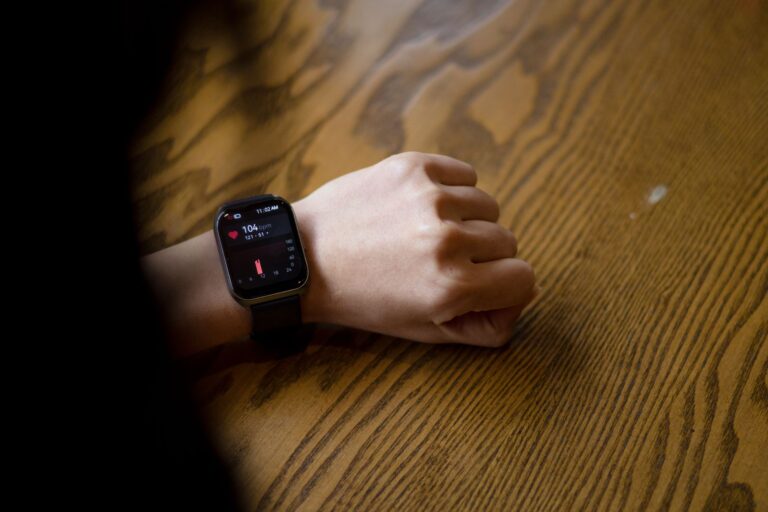
The future of wearable cardio technology lies in continuous, non-invasive monitoring that moves beyond simple heart rate tracking to provide deep insights into cardiovascular performance, recovery, and individual disease risk. Within the next five to ten years, wearables will likely measure not just beats per minute but also arterial stiffness, blood oxygen saturation at the cellular level, and even early signs of atrial fibrillation—all without requiring chest straps or trips to a cardiologist’s office. For runners, this means devices like the Apple Watch Series 9 with its ECG capability or Garmin’s advanced training metrics will evolve into personal cardiovascular monitoring systems that rival clinical-grade equipment in accuracy and reliability.
Today’s wearables already capture heart rate variability, blood oxygen, and workout intensity zones with surprising precision. But the next generation will integrate multiple biosensors, AI-driven pattern recognition, and cloud analysis to identify subtle changes in cardiovascular health that you might never notice on your own. A runner might receive an alert not because their resting heart rate spiked, but because the pattern of their daily variability suggests overtraining or an impending illness—information that could prevent injury or burnout months before it becomes obvious. The challenge ahead is not technological but practical: ensuring these devices are accurate enough to matter, affordable enough to adopt widely, and transparent enough that you understand what the data actually means rather than being overwhelmed by noise.
Table of Contents
- HOW WILL WEARABLE CARDIO SENSORS BECOME MORE ACCURATE IN THE COMING YEARS?
- THE CHALLENGE OF CONTINUOUS BLOOD OXYGEN AND ARTERIAL HEALTH MONITORING
- HOW WEARABLE CARDIO DATA WILL INFORM PERSONALIZED TRAINING ADAPTATION
- COMPARING WEARABLE CARDIO DATA TO CLINICAL-GRADE MEASUREMENTS
- THE BATTERY AND PRIVACY PARADOX IN CONTINUOUS CARDIO MONITORING
- SMART TEXTILES AND WEARABLE PATCHES: ALTERNATIVE FUTURES FOR CARDIO MONITORING
- THE CONVERGENCE OF WEARABLES, TELEMEDICINE, AND PREVENTIVE CARDIOLOGY
- Conclusion
- Frequently Asked Questions
HOW WILL WEARABLE CARDIO SENSORS BECOME MORE ACCURATE IN THE COMING YEARS?
Current wearables rely primarily on photoplethysmography—basically, LEDs that shine through your skin and measure blood flow. This approach works reasonably well during steady-state exercise, but struggles during high-intensity running when motion artifacts and sweat introduce noise. Future devices will layer in multiple sensor types: electrical impedance, optical sensors at different wavelengths, and even radar-based contactless monitoring, all processed by machine learning models trained on thousands of hours of clinical data. Fitbit and Garmin already use multiple sensors in tandem; the next step is making these measurements so robust that they rival chest straps and medical monitors. The real test is comparison against gold-standard clinical equipment.
A study comparing smartwatch ecg readings to hospital-grade 12-lead ECGs found that most consumer devices miss subtle arrhythmias that might matter for endurance athletes. However, newer models are closing this gap. The Apple Watch has received FDA clearance for atrial fibrillation detection, and continuous improvement in sensor fusion means that within three to five years, wearables may detect arrhythmias with 95% sensitivity—good enough for runners to act on results rather than dismiss them as false alarms. One limitation to keep in mind: increased accuracy doesn’t always mean increased utility. A runner with a detected arrhythmia still needs a cardiologist to interpret it, and some conditions flagged by future wearables may never cause symptoms or problems. The device might be technically accurate but clinically useless without proper medical context.

THE CHALLENGE OF CONTINUOUS BLOOD OXYGEN AND ARTERIAL HEALTH MONITORING
Beyond heart rhythm, the future of wearable cardio technology hinges on measuring the health of blood vessels themselves—specifically, arterial stiffness and plaque buildup, which are early warning signs of cardiovascular disease. Current wearables measure pulse wave velocity, but the measurement often varies based on arm position, hydration, and other confounders. Next-generation devices may use multiplex optical sensors or even ultrasound to image your arteries directly through the skin, providing a non-invasive, at-home alternative to expensive ultrasound scans. Blood oxygen saturation is already available on many smartwatches, but the accuracy varies widely depending on skin tone, tattoos, and sensor placement.
Research has shown that pulse oximetry readings on dark skin can be systematically biased, sometimes missing oxygen desaturation that clinical monitors would catch. As wearable manufacturers design sensors specifically to account for these differences, we’ll see more reliable SpO2 readings for all users. However, the warning here is that wearable SpO2 is still primarily useful for detecting large drops during sleep or illness—it’s not sensitive enough to guide everyday training decisions for most runners. The future may bring breakthrough sensors like optical coherence tomography (OCT) integrated into a wristband, which could image arterial walls and plaque non-invasively. But this technology is still years away from consumer devices, and the power consumption and cost remain major barriers.
HOW WEARABLE CARDIO DATA WILL INFORM PERSONALIZED TRAINING ADAPTATION
Today’s advanced running watches use heart rate variability and training load to suggest when to push hard and when to recover. Garmin’s Training Status, for example, uses resting heart rate, VO2 max estimates, and recent workout history to categorize your state as “unproductive,” “productive,” or “overreaching.” In the future, these systems will incorporate real-time data on arterial compliance, blood viscosity, and cardiac output to make much sharper recommendations. If your device detects that your arterial stiffness increased overnight, it might automatically dial back the intensity suggestions for the day, even if your resting heart rate looks normal. A practical example: imagine running a marathon training cycle where your wearable detects a subtle decline in blood oxygen recovery between hard efforts. This might indicate overtraining before your subjective symptoms catch up.
The device could alert you to reduce mileage by 10-15% for one week, potentially preventing a respiratory illness or cardiac stress that derails your entire season. This kind of personalized, data-driven adjustment is within reach in the next five years as machine learning models improve. One major limitation is individual variability in what “normal” cardio adaptation looks like. A runner’s arterial stiffness might naturally fluctuate with diet, hormones, and hydration. Without sophisticated baseline modeling and proper statistical controls, a wearable might over-interpret noise as a meaningful change, leading to unnecessary warnings and “alert fatigue” that causes runners to ignore important signals.

COMPARING WEARABLE CARDIO DATA TO CLINICAL-GRADE MEASUREMENTS
For runners serious about understanding their cardiovascular limits, the comparison between wearables and clinical testing remains stark. An exercise stress test in a lab provides direct measurement of VO2 max, lactate threshold, and cardiac function under precise conditions. A wearable estimate might be off by 5-15%, depending on your fitness level and the watch’s algorithm. Going forward, wearables may capture enough continuous data to estimate VO2 max with clinical accuracy—by tracking your heart rate response across thousands of runs, the device learns your unique physiology and refines its prediction.
Garmin’s VO2 max estimate, for instance, has been validated against lab tests in several studies and typically falls within ±3-5 mL/kg/min for trained athletes. But that accuracy depends on the device having months of data and you being in a relatively steady training state. If you jump into a hard training block, the watch’s estimate lags behind your actual fitness because it’s extrapolating from older data. The trade-off for runners is deciding whether to pay for annual lab testing ($200-500 per test) for precise data, or trust your wearable’s continuous approximation and invest that money elsewhere. For most runners, the wearable will be sufficient; for those targeting specific performance goals or managing health concerns, periodic lab testing remains the safer choice.
THE BATTERY AND PRIVACY PARADOX IN CONTINUOUS CARDIO MONITORING
One of the biggest barriers to future wearable cardio technology is the battery problem. Continuous ECG monitoring, optical sensors, and wireless data transmission drain batteries quickly. The Apple Watch lasts roughly 18 hours with regular use; if you enable continuous cardiac monitoring and oxygen tracking, it drops to 12-14 hours. True all-day, always-on cardio monitoring would require either breakthrough battery technology or acceptance of daily charging—which many runners find burdensome. Privacy is the second major issue.
Detailed cardiovascular data—your heart rate patterns, arrhythmias, stress levels—is sensitive health information. Future wearables will collect this data constantly and send it to cloud servers for analysis. This creates a privacy and security risk if companies or hackers access the data. While encryption and privacy regulations like HIPAA (in the US) or GDPR (in Europe) provide some protection, the risk is real. A runner diagnosed with a cardiac condition through their wearable data might face insurance discrimination if that information becomes known, a scenario that isn’t theoretical but has happened in other health contexts. The warning to keep in mind: before adopting a wearable with advanced cardio monitoring, read the privacy policy carefully and understand exactly where your data goes, who accesses it, and how long it’s stored.

SMART TEXTILES AND WEARABLE PATCHES: ALTERNATIVE FUTURES FOR CARDIO MONITORING
Beyond wristbands, wearable cardio technology is expanding into smart fabrics and adhesive patches. Companies like Epicore Biosystems and MIT researchers are developing thin, flexible patches that stick to your skin and monitor ECG, respiration, and temperature for days without removal. For runners, this could mean a single patch worn under your shirt during training that provides continuous, unobtrusive monitoring without the need to charge a watch daily. A specific example: the MC10 BioIntelliSense patch, designed for clinical use, can monitor cardiac signals continuously for up to two weeks.
As this technology matures and costs drop, a runner might apply a patch before a long race or hard training block to capture detailed heart rate and electrical activity data without distraction. The data could be analyzed post-hoc to understand how your heart responded to the effort and whether any arrhythmias occurred—information valuable for coaching adjustments. The limitation is durability and practicality. Current patches are fragile, expensive ($200-500 per patch in clinical settings), and require careful skin preparation. Mass production will need to reduce cost and improve robustness, both likely within the next five to ten years.
THE CONVERGENCE OF WEARABLES, TELEMEDICINE, AND PREVENTIVE CARDIOLOGY
The real future of wearable cardio technology isn’t just better sensors—it’s integration with healthcare systems. Imagine a runner whose wearable detects an irregular heart rhythm and automatically alerts their cardiologist through a secure app. The doctor reviews the captured ECG data, schedules a telehealth visit within hours, and prescribes treatment if needed, all without the runner leaving their house. This convergence of wearables, AI analysis, and telemedicine is already beginning with companies like AliveCor and Apple partnering with healthcare providers.
For runners and the broader population, this shift could democratize early detection of cardiovascular disease. Many serious conditions—atrial fibrillation, structural heart disease, ischemia—show few symptoms until they cause a crisis. Continuous wearable monitoring combined with AI-driven risk assessment and accessible telemedicine could identify and treat millions of people years before a heart attack or stroke occurs. This is the future that technology companies, researchers, and health systems are actively building.
Conclusion
The future of wearable cardio technology is neither sci-fi nor distant—it’s arriving now in incremental improvements to devices most runners already own. Over the next five to ten years, expect your smartwatch or fitness tracker to evolve into a genuine personal cardiovascular monitoring system that detects arrhythmias, estimates arterial health, and guides training with precision that rivals clinical testing. The sensors will become more accurate, the battery life will improve, and the integration with your healthcare provider will deepen.
However, this future comes with legitimate caveats: data privacy requires vigilance, device accuracy will still fall short of clinical-grade equipment for some measurements, and the volume of health data generated might overwhelm as often as it informs. The smartest approach for runners is to adopt wearable cardio monitoring as a tool for awareness and trend-spotting, but not as a replacement for periodic clinical evaluation if you have health concerns. Stay skeptical of alerts that seem implausible, maintain context about your own symptoms and how you feel, and remember that a number on a screen is only useful if you know how to act on it.
Frequently Asked Questions
How accurate are smartwatch heart rate readings compared to chest straps?
During steady-state running, modern smartwatches achieve 85-95% accuracy compared to chest straps. During high-intensity intervals and sprints, accuracy drops to 70-85% due to motion and sweat artifacts. For training zones and intensity guidance, the error is usually small enough to be useful. For precise lactate threshold work, a chest strap remains more reliable.
Can wearables detect serious heart conditions early enough to prevent a heart attack?
Wearables can detect some conditions like atrial fibrillation weeks or months before symptoms appear, which is genuinely valuable. However, they cannot reliably detect coronary artery disease (the main cause of heart attacks) until an event is imminent. They’re best viewed as one layer of a larger health picture, not as complete prevention.
Should I get a wearable with ECG capability?
If you’re over 40, have a family history of heart disease, or train extensively, an ECG-capable device is worth the extra cost—typically $100-200 more than a basic fitness watch. If you’re young and asymptomatic, the additional data provides less actionable value, though the peace of mind and trend data might still justify the expense.
Do wearables work accurately for all skin tones?
Historically, no. Optical sensors have performed worse on darker skin tones due to how melanin interacts with light. Newer devices with multiple wavelength sensors and algorithmic adjustments are closing this gap, but testing before purchase is still recommended if you have darker skin.
Will my wearable cardio data be sold to insurance companies or employers?
Not under current US law, which generally protects health data under HIPAA (if the device company is a covered entity) or state privacy laws. However, privacy policies vary widely by company, and regulations are evolving. Read your device’s privacy policy carefully and disable cloud syncing if you’re uncomfortable with data storage.
How soon until wearables can measure blood pressure as accurately as a cuff?
Pulse wave analysis and related techniques are getting close, with several prototypes now achieving clinical-grade accuracy. We’ll likely see mainstream adoption in smartwatches within 3-5 years, assuming regulatory approval and cost reduction come through.