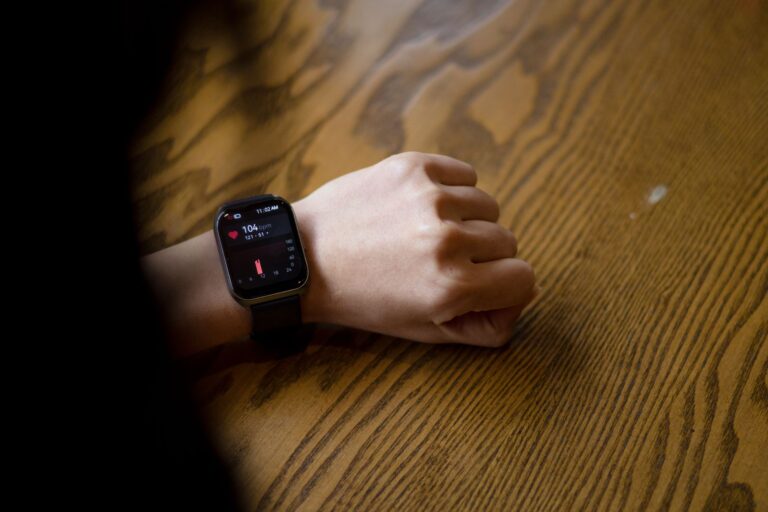
Fitbit’s latest cardio features represent a significant shift in how the company approaches fitness tracking, moving beyond simple step counts to sophisticated metrics like VO2 Max measurement, weekly Cardio Load targets, and AI-powered coaching. These new features, which rolled out in 2026 with the launch of the Fitbit Air and expanded Public Preview access, let you understand your cardiovascular fitness level with the same precision that elite athletes use to train. Instead of chasing daily cardio goals that may not fit your schedule, Fitbit now offers personalized weekly targets that give you flexibility—if you’re sick or traveling on Monday, you can catch up on your cardio load later in the week without falling behind.
The centerpiece of these updates is VO2 Max tracking, which measures how efficiently your body uses oxygen during exercise. For runners, this metric is crucial because it correlates directly with aerobic capacity and endurance performance. Fitbit’s integration of this feature into the Public Preview app, available in the Fitness tab as a Key metric, brings lab-grade cardio assessment to your wrist. Coupled with AI-powered Google Health Coach using Gemini, the system now interprets your data and offers personalized recommendations to boost your cardio fitness over time.
Table of Contents
- What Is VO2 Max and Why Does It Matter for Runners?
- Weekly Cardio Load vs. Daily Cardio Goals—A Smarter Approach
- AI-Powered Coaching with Google Health Coach and Gemini
- Heart Rate Monitoring and Atrial Fibrillation Detection
- Fitbit Air—The New Hardware Platform
- Pricing, Premium Access, and Global Rollout
- Future Outlook and Integration with Google Ecosystem
- Conclusion
What Is VO2 Max and Why Does It Matter for Runners?
VO2 Max, officially called Cardio Fitness Score on Fitbit, quantifies how many milliliters of oxygen your body can use per kilogram of body weight per minute during maximum exercise. For runners, this number is the gold standard for measuring aerobic endurance. A higher VO2 Max typically correlates with faster 5K times, better marathon performance, and improved cardiovascular health. Fitbit’s new measurement arrives in the Public Preview app and provides continuous tracking, so you can watch your fitness improve month to month. What makes Fitbit’s approach unique is that it requires no special equipment—just your wrist and your regular runs.
The feature rolled out to 37 countries including the US, most of Europe, parts of Asia, and Mexico, reflecting Fitbit’s expansion of this capability. For context, professional distance runners often have VO2 Max scores in the 60s or 70s, recreational runners typically fall in the 40–50 range, and untrained adults average 25–35. Fitbit’s algorithm calculates your score based on heart rate response, age, gender, and activity data. However, there’s a limitation: Fitbit’s estimate is less precise than a laboratory VO2 Max test (which involves running on a treadmill while breathing into equipment). The wearable version gives you a solid approximation for tracking trends rather than exact scientific measurement.

Weekly Cardio Load vs. Daily Cardio Goals—A Smarter Approach
Traditional daily cardio goals force a rigid structure: hit 30 minutes of cardio every single day or fall behind. Fitbit’s new Weekly Cardio Load system abandons this one-size-fits-all approach, instead setting a target you complete over seven days. This flexibility is especially valuable for runners juggling variable schedules, weather, or injury recovery. If you log 60 minutes of running on Tuesday but need to rest Wednesday and Thursday, you can make up the remaining load on Friday or Saturday without penalty.
It mirrors how elite runners actually train—with built-in recovery days and flexible weekly volume. The downside is that for highly disciplined athletes, the weekly target might feel less motivating than daily streaks. Some runners thrive on checking off a goal every single day; Fitbit’s model requires more self-monitoring over the week. Additionally, the system doesn’t differentiate between easy runs and hard efforts—60 minutes of steady jogging counts the same as 60 minutes of tempo work. The integration with Google Health app’s weekly leaderboard, which lets you compare Cardio Load and steps with friends, adds a social element but may also create pressure if you fall behind mid-week.
AI-Powered Coaching with Google Health Coach and Gemini
Fitbit’s new AI assistant, powered by Google’s Gemini, doesn’t just collect cardio data—it interprets it and offers personalized guidance. The Google Health Coach helps you understand what your VO2 Max score means, tracks your improvement trajectory, and suggests workouts tailored to boost your cardio fitness. For example, if the coach detects that your VO2 Max has plateaued for three weeks, it might recommend adding a weekly tempo run or increasing long-run distance. This personalization is light-years ahead of generic “you need more cardio” alerts.
The AI component also pairs with Fitbit’s new Readiness Score, which measures daily recovery. Available on Fitbit Air and new devices, the Readiness Score uses resting heart rate, HRV (heart rate variability), and sleep data to tell you whether you’re ready for a hard workout or need an easy day. A runner coming off a 20-mile long run might see a low Readiness Score the next day, signaling recovery priority. However, this feature is part of Google Health Premium—a $10/month or $100/year subscription—so it’s not free like basic Fitbit tracking. For budget-conscious users, the core VO2 Max and Cardio Load features are available without premium, but the AI coaching requires the paid tier.

Heart Rate Monitoring and Atrial Fibrillation Detection
Beyond VO2 Max, Fitbit’s enhanced heart rate monitoring now includes Heart Rate Variability (HRV) tracking and Atrial Fibrillation (A-Fib) detection with irregular heart rhythm notifications. HRV measures the variation in time between heartbeats, which correlates with stress levels and recovery status—higher HRV generally signals better nervous system recovery. For runners, this metric helps explain why you might feel sluggish even after adequate sleep; high stress or illness can suppress HRV before symptoms fully appear. Fitbit’s A-Fib detection uses the device’s optical heart rate sensor to identify irregular rhythms and alerts you via the app, flagging potential cardiac issues for medical evaluation. The tradeoff here is accuracy.
Fitbit’s A-Fib detection is a screening tool, not a diagnostic device. It can alert you to investigate, but a confirmed diagnosis requires an ECG or Holter monitor from a doctor. Some runners, especially those with premature heart beats (very common in endurance athletes), might receive false alerts or false negatives. The feature is valuable as an early warning system but should never replace professional medical assessment. HRV tracking is more reliable and useful for runners building training awareness, though external factors like caffeine, poor sleep, and illness can skew the readings day-to-day.
Fitbit Air—The New Hardware Platform
In May 2026, Fitbit launched the Fitbit Air at $99.99 for the standard model and $129.99 for special editions, becoming Google’s answer to WHOOP and other premium fitness trackers. The Air is a screen-less device focusing entirely on heart rate, activity, and sleep—no distractions. It offers seven days of battery life per charge, with a five-minute fast-charge option providing a full day of use. Every Fitbit Air purchase includes a three-month Google Health Premium trial, giving you immediate access to VO2 Max insights, AI coaching, and Readiness Score analysis. The limitation is the lack of a screen.
If you’re accustomed to checking your watch for time or quick stats, the screen-less design requires you to pull out your phone to see any data. For runners, this means no on-wrist pace feedback during runs, no live metric glancing mid-workout, and no offline access to your data. The battery advantage (seven days vs. one to three days for most smartwatches) is offset by the dependency on your phone app for all interaction. The Fitbit Air targets minimalist athletes who want pure data collection without a smartwatch experience.
Pricing, Premium Access, and Global Rollout
The cardio features rollout reflects Fitbit’s phased global strategy. VO2 Max reached 37 countries by early 2026, including Austria, Belgium, Brazil, Czech Republic, Denmark, Estonia, Finland, France, Germany, Hungary, India, Indonesia, Ireland, Italy, Japan, Latvia, Lithuania, Malaysia, Mexico, Netherlands, Norway, Poland, Portugal, Romania, Slovakia, Slovenia, South Korea, Spain, Sweden, Switzerland, and Taiwan. In countries where the feature has launched, it’s available immediately in the Public Preview app. Basic features like Cardio Load and step leaderboards are free, but access to Google Health Coach, Readiness Score, and advanced cardio analytics requires Google Health Premium at $10/month or $100/year.
For runners outside these 37 countries, the rollout may take time. Fitbit typically tests features in developed markets first, then expands based on data and demand. If you purchase a Fitbit Air, the included three-month trial lets you evaluate whether Premium justifies the $10/month cost for your training. Many runners find the free tier sufficient for basic progress tracking, while serious athletes pursuing performance gains often justify the subscription.
Future Outlook and Integration with Google Ecosystem
Fitbit’s shift toward AI-powered coaching and comprehensive cardio tracking signals Google’s broader vision for health. The Gemini-powered coaching layer hints at future AI features—perhaps automated workout planning, injury risk prediction, or nutrition recommendations based on your cardio workload. The integration into Google Health (Google’s centralized health app) rather than siloed Fitbit app suggests this ecosystem will eventually connect with other Google services, possibly including Maps-based running routes, Google Fit activity data, and YouTube fitness coaching.
For runners, the roadmap appears to focus on personalization and predictive health. As Fitbit collects more heart rate, activity, and sleep data across millions of users, its algorithms will improve at forecasting overtraining risk, optimal training loads, and individual response to different workout types. The next logical step might be AI-generated training plans that adapt weekly based on your Readiness Score and VO2 Max trends.
Conclusion
Fitbit’s new cardio features—VO2 Max, Weekly Cardio Load, AI coaching, and enhanced heart rate monitoring—represent a fundamental shift from passive activity tracking to active training intelligence. For runners, VO2 Max provides a science-backed metric for measuring aerobic fitness, while Weekly Cardio Load offers flexibility that aligns with real training variability. The Fitbit Air hardware and Google Health Premium subscription create a cohesive ecosystem, though at a higher price point than basic trackers.
To get started, check if VO2 Max has launched in your country (it’s available in 37 as of early 2026) and access the Public Preview app to see your Cardio Fitness Score. If you’re considering the Fitbit Air, the three-month premium trial lets you test whether AI coaching and Readiness Score align with your training goals before committing to the yearly subscription. For serious runners, this combination provides data clarity and guidance that rivals much more expensive sports watches.