
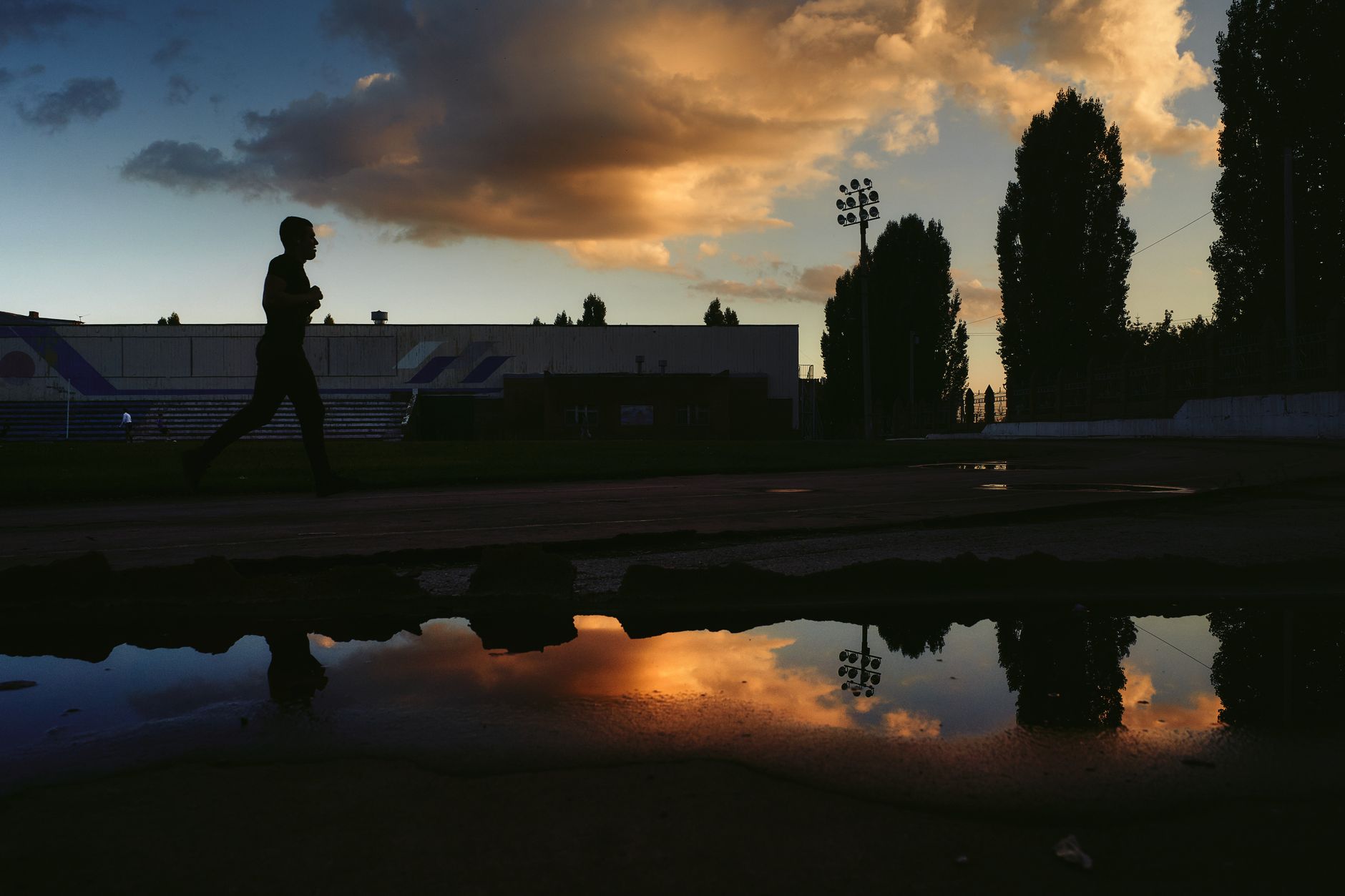
The visibility features that matter most for running reflective gear are retroreflective bands on moving joints, a fluorescent base layer, and self-powered flashing lights. Retroreflective means the material sends headlight beams back toward the driver.
Night running carries added risk for training in darkness. The Federal Highway Administration reports the nighttime roadway fatality rate is three times the daytime rate, with about 76% of pedestrian fatalities at night, as summarized in the Minnesota LTAP visibility summary. That makes joint motion, bright daytime color, and active light all worth checking before a run.
Medical information disclaimer: This article is for general educational purposes only and does not provide medical advice, diagnosis, or treatment. Always consult a physician or other qualified health professional about symptoms, medications, tests, or treatment decisions.
Table of Contents
- Why a vest alone falls short
- Where should reflectivity go?
- How do daytime and nighttime materials differ?
- How do you build 360-degree coverage?
Why a vest alone falls short
A nighttime driver-response experiment found maximal response distances for a full biological-motion configuration. Ankle and wrist markers alone still gave surprisingly long distances in that condition. A retroreflective vest alone performed no better than no markers, according to the PubMed abstract by Balk and colleagues in the nighttime pedestrian detection experiment.
NHTSA finds pedestrians wearing good retroreflective materials that outline body shape and moving extremities can be detected much farther. Wrist and ankle highlights plus active flashing lights helped most under low-beams. Normal clothing gave far shorter detection, according to NHTSA pedestrian safety guidance.
Where should reflectivity go?
Place retroreflective material on major moving joints. Ankles, knees, waist, wrists, elbows, and shoulders matter most. The Work Zone Safety Information Clearinghouse reports this layout creates a recognizable human-motion signal for drivers.
Motion is the key to that signal. Wrist-plus-ankle markers did not beat torso markers when the pedestrian stood still. The Journal of Vision study from 2009 shows biomotion gains depend on movement.
How do daytime and nighttime materials differ?
Fluorescent yellow, red, and orange improve daytime detection. They absorb UV light and re-emit visible light. At night, lamps, flashing lights, and red or yellow retroreflective materials increase detection.
Fluorescent alone provides no self-glow in darkness. The Cochrane systematic review on retro-reflective clothing makes that day-night split clear. Choose a bright fluorescent base for day and add retroreflective trim plus lights for night.
How do you build 360-degree coverage?
Work standards point to the same mix. ANSI/ISEA 107 requires both fluorescent background material and retroreflective trim placed for 360-degree visibility. The USDA Forest Service summary lists about 775 square inches fluorescent plus 201 square inches retroreflective for Class 2.
European standard EN ISO 20471 similarly tiers minimum areas and torso-encircling placement. Build a running kit from those three parts: Retroreflectors need an external headlight to return light. Check bands and batteries before you leave.
- fluorescent base layer for daytime color
- retroreflective bands on ankles, knees, waist, wrists, elbows, and shoulders
- flashing or steady self-powered light front and back