
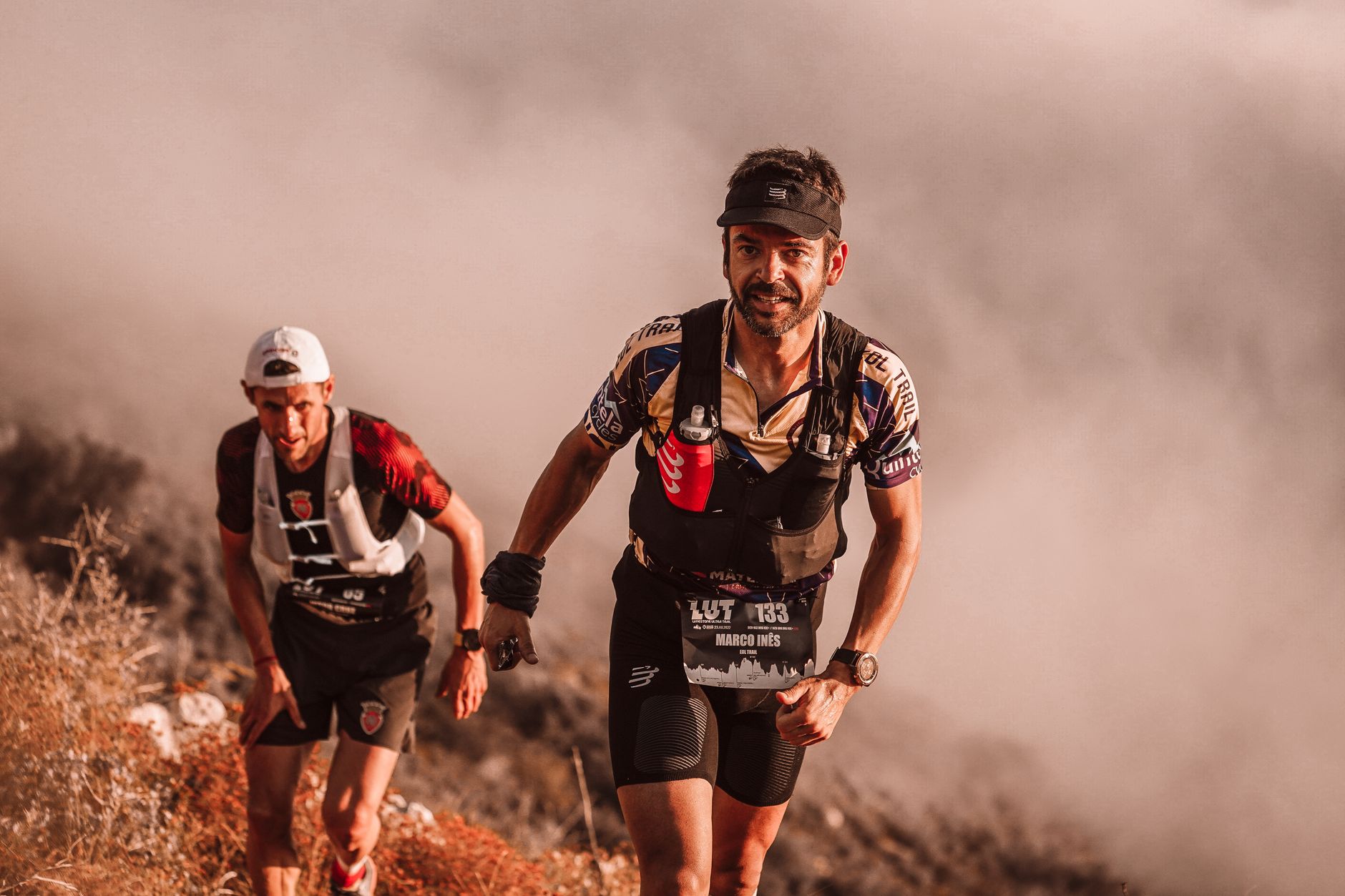
Running at altitude requires slower pace, gradual acclimation, and extra hydration. Thin air lowers oxygen delivery, so sea-level pace feels harder until the body adjusts.
Acclimation means the body's adjustment to lower oxygen over hours, days, and weeks. Maximal oxygen uptake, called VO2max, measures aerobic capacity for running. Pace, sleep altitude, and fluids are the three levers runners can control.
Medical information disclaimer: This article is for general educational purposes only and does not provide medical advice, diagnosis, or treatment. Always consult a physician or other qualified health professional about symptoms, medications, tests, or treatment decisions.
Table of Contents
- Why pace drops immediately
- What changes in the body
- How should you set sleep altitude
- How should you handle fluids
- Why do standard pace adjustments miss
Why pace drops immediately
At 3,050 m, runners had 16.5% lower maximal oxygen uptake than at sea level. Arterial oxygen saturation also fell during maximal exercise, directly cutting aerobic capacity, according to a JAMA study in the 1987 JAMA altitude study.
Elite middle-distance runners at 2,100 m ran 5.8% slower in threshold sessions than at sea level. VO2max sessions were 3.6% slower with higher perceived effort, researchers reported in the International Journal of Sports Physiology and Performance.
What changes in the body
Within hours to days, breathing rate and heart rate rise at altitude. Plasma volume falls about 11-25%, which concentrates hemoglobin in less fluid. Clinician reporting and U.S.
Army field guidance describe this early fluid shift. Kidney erythropoietin, a hormone signal for red blood cell production, rises within hours. New cells take 4-5 days to appear, with full adjustment continuing for weeks.
How should you set sleep altitude
Sleep altitude drives acclimation for runners visiting mountains. Avoid sleeping at 2,750 m after a one-day ascent from low altitude, CDC guidance advises in the CDC Yellow Book high-altitude guidance.
Build extra nights into trips that climb fast or sleep high. A rushed ascent leaves less time for breathing, heart rate, and fluid shifts to settle.
- Above 3,000 m, raise sleeping altitude no more than 500 m per night.
- Add one extra night for each 1,000 m gained.
How should you handle fluids
Fluid losses at altitude can reach 2-4 liters per day. About 2 liters is insensible loss from faster breathing, dry air and sweat, plus increased urine output.
Needs therefore exceed sea level, according to the National Academies. A 2024 mountaineer nutrition review in Frontiers in Sports and Active Living concludes hydration needs are higher than at sea level, detailed in the Frontiers mountaineer nutrition review. It recommends tracking urine, body mass and thirst rather than a fixed intake, because cold, exertion and limited water access impair drinking.
Why do standard pace adjustments miss
Responses vary widely between runners. Athletes with exercise-induced arterial hypoxemia lost 4.2% of VO2max at only 1,000 m. Others lost nothing, researchers reported in the British Journal of Sports Medicine.
Run by effort and heart rate, not sea-level pace, on arrival. Allow roughly 12-16 days for submaximal endurance to recover. Replace water plus sodium during and after runs, U.S. Army training notes and athletic-trainer guidance advise.