
Yes, you can start running with obesity, but the smartest first step is usually not running at all—it is walking with purpose, building a base, and then layering in short running intervals as your joints, heart, and confidence adapt. The body of someone carrying significant excess weight is fully capable of becoming a runner, but the path runs through a gradual progression rather than lacing up and attempting a continuous mile on day one. Starting with a walk-run method, paying attention to footwear and surface, and protecting the knees and feet from early overload is what separates a sustainable habit from a six-week injury cycle. Consider a real pattern seen in beginner programs: a 285-pound man who tried to run two miles straight in week one quit within a month with shin splints and heel pain.
A second person at a similar weight started with 30-minute walks, added 30-second jogging bursts after three weeks, and was running a continuous mile by month three—still heavy, but now genuinely a runner. The difference was not willpower or genetics. It was load management. Excess body weight multiplies the force traveling through your ankles, knees, and hips with every stride, so the people who succeed are the ones who respect that math early. This guide walks through how to begin safely, what gear and surfaces actually matter, how to structure your first weeks, and the specific problems—joint pain, chafing, breathlessness—that tend to derail heavier beginners, along with how to handle each one.
Table of Contents
- Can You Safely Start Running When You Are Obese?
- How the Walk-Run Method Builds Your Running Base
- What Shoes and Surfaces Matter Most for Heavier Runners
- How to Structure Your First Weeks of Running
- What Problems Should Heavier Beginners Expect and Manage?
- Does Running Help With Weight Loss When You Are Obese?
- When Will Running Start to Feel Easier?
- Frequently Asked Questions
Can You Safely Start Running When You Are Obese?
For most people, yes—but “safely” depends on your current health status, not just your weight. The single most useful action before you begin is a conversation with a doctor, especially if you have high blood pressure, diabetes, joint problems, or are over 40 and have been sedentary. Running raises heart rate and blood pressure acutely, and a basic checkup rules out the small number of cardiac and metabolic issues that genuinely warrant caution. The vast majority of heavier beginners get cleared to start; the checkup simply removes the guesswork. The mechanical reality is worth understanding plainly. Each running stride sends a ground reaction force of roughly 2.5 to 3 times your body weight through your lower body.
For a 250-pound runner, that can mean 600 to 750 pounds of force per step, and a runner takes well over 1,000 steps per mile. Walking, by comparison, generates forces closer to 1.2 times body weight. That gap is exactly why the walk-run method exists: it lets you accumulate the cardiovascular benefit of elevated effort while capping the repetitive impact your tissues are not yet conditioned to absorb. This does not mean running is dangerous for heavy people—it means the dose has to match your current capacity. A useful comparison is strength training: nobody walks into a gym and deadlifts 300 pounds on the first day, yet plenty of people effectively ask their joints to do the equivalent by running continuously before building tolerance. Treat impact load like any other training variable that gets increased gradually.
How the Walk-Run Method Builds Your Running Base
The walk-run method, popularized by coach Jeff Galloway, alternates short jogging intervals with walking recovery, and it is the single most reliable on-ramp for heavier beginners. A typical starting structure is 30 seconds of easy jogging followed by 90 seconds to two minutes of walking, repeated for 20 to 30 minutes. Over several weeks you extend the jog intervals and shrink the walk breaks. This protects your joints, keeps your heart rate in a sustainable zone, and—critically—gives you frequent small wins instead of one demoralizing struggle. The warning here is about ego and pace. The most common mistake is running the jogging intervals too fast. Your jog should be barely faster than your walk—slow enough that you could speak a full sentence.
Heavier beginners often sprint their intervals because 30 seconds feels short, then conclude they “can’t run” when they are gasping. The problem is not your lungs or your weight; it is pace. If you cannot hold a conversation, you are running too hard, and you are also generating more impact force than necessary. The honest limitation of the walk-run method is that it is slow by design, and progress is not linear. Some weeks you will feel like you are barely advancing, and a poor night’s sleep or a heavy meal can make an interval that felt easy last week feel brutal today. People chasing fast transformation often abandon the method right before it starts compounding. The runners who benefit most are the ones who accept that staying at the same interval length for an extra week is a valid, even wise, choice rather than a failure.
What Shoes and Surfaces Matter Most for Heavier Runners
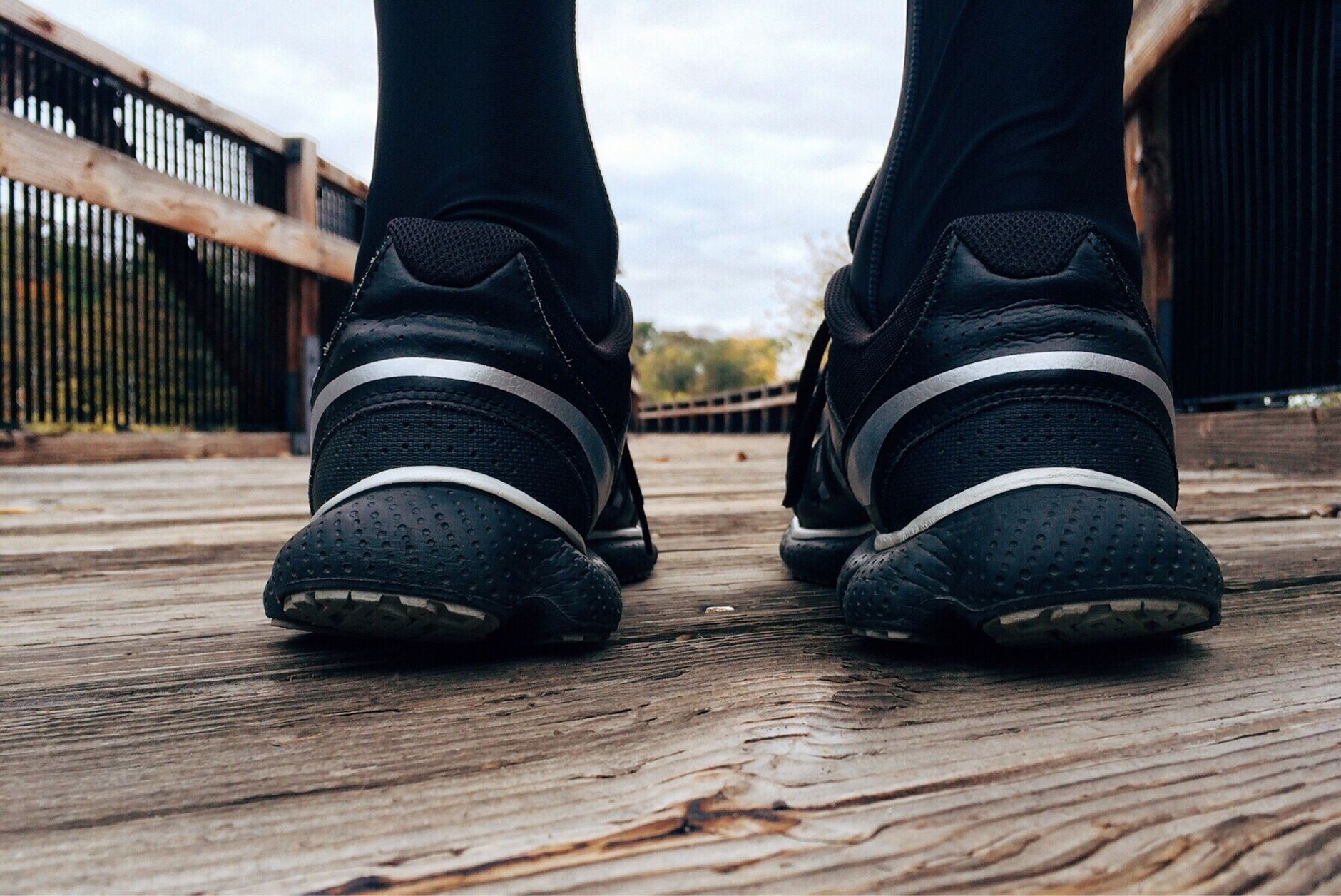
Footwear is not a place to economize when you are heavy. The repeated high-impact forces mean your shoes are doing real work to attenuate shock, and a worn-out or poorly-fitted pair is a direct line to plantar fasciitis and joint pain. Go to a specialty running store, get your gait assessed, and prioritize a shoe with substantial, well-cushioned midsole foam. Maximalist cushioned models—brands like Hoka built their reputation on thick midsoles—are frequently a good match for heavier runners precisely because there is more material between your foot and the ground. Surface choice is the underrated companion to footwear. Concrete sidewalks are the hardest common running surface and the least forgiving on joints; asphalt roads are noticeably softer; and packed dirt trails, grass, or a rubberized track are softer still.
A specific example: a heavier beginner who shifts their walk-run sessions from a concrete sidewalk to a local high school’s rubberized track often finds that lingering knee soreness eases within a week or two, with no change to the program itself. The treadmill is another joint-friendly option, with the added benefit of a cushioned deck and controllable pace. The tradeoff to weigh is convenience versus impact. The sidewalk outside your door is always available, while the soft track may be a drive away. The practical compromise most people land on is using the most forgiving surface they can reach without adding so much friction that they skip the workout—a softer surface you actually use beats an ideal surface you avoid. Plan on replacing running shoes every 300 to 500 miles, and lean toward the lower end of that range if you are carrying significant weight, since the cushioning compresses faster under heavier loads.
How to Structure Your First Weeks of Running
A workable first month looks like this: three sessions per week with at least one rest day between each, starting with brisk 20- to 30-minute walks for the first week or two to build a base. Once walking feels comfortable, introduce short jog intervals using the walk-run structure, and increase total time or jog duration by no more than about 10 percent per week. That 10 percent guideline is the most widely cited rule for avoiding overuse injury, and it matters more, not less, when extra weight amplifies every stride. The frequency question involves a real tradeoff. Running more often accelerates cardiovascular and habit gains, but recovery is where heavier beginners are most vulnerable—muscles adapt faster than tendons, ligaments, and bone.
Three runs a week with rest days lets connective tissue catch up, whereas jumping to five or six days early is a common path to tendon irritation. Compared to a younger, lighter runner who might tolerate back-to-back days, a heavier beginner generally gets better long-term results from fewer sessions with fuller recovery, even though it feels slower. Cross-training fills the gap productively. On non-running days, swimming, cycling, or an elliptical builds aerobic fitness with a fraction of the joint impact, which means you can train your heart and lungs more often than your joints could handle from running alone. Strength work—particularly for the hips, glutes, and calves—directly improves running durability by helping those muscles absorb force that would otherwise hammer your knees. A beginner who adds two short strength sessions a week typically tolerates the running progression noticeably better than one who only runs.
What Problems Should Heavier Beginners Expect and Manage?
Three issues derail heavier beginners most often: joint pain, chafing, and breathlessness. Knee, shin, and foot pain usually signal that load outpaced adaptation—too much, too soon, or too hard. The fix is rarely to quit; it is to scale back to the last comfortable level, add rest, check your shoes, and rebuild more slowly. The important warning is to distinguish ordinary muscle soreness, which is dull and fades within a day or two, from sharp, localized, or worsening joint pain, which is a signal to stop and reassess rather than push through. Pushing through sharp pain is how a minor irritation becomes a months-long injury. Chafing is the problem nobody warns beginners about, and it is significantly more common at higher body weights where skin surfaces rub—inner thighs, underarms, and along the bra line or waistband.
Untreated, it can produce raw, burning skin that makes you dread the next run. The solution is straightforward: anti-chafing balm (products like Body Glide), moisture-wicking fitted clothing rather than cotton, and well-fitted compression shorts to prevent thigh rub. A single bad chafing episode has ended more beginner running attempts than most people realize, which is why addressing it preemptively matters. Breathlessness is real but often misread. Feeling winded early is usually a sign of pace and conditioning, not a verdict on your ability—and it improves quickly because cardiovascular fitness adapts faster than your joints do. The limitation to keep in mind is that aerobic gains can outrun structural readiness: within a few weeks your lungs may feel ready to run far more than your tendons and joints can safely handle. This mismatch is precisely the trap that leads people to increase mileage too fast, so let your joints, not your breath, set the ceiling on how quickly you progress.
Does Running Help With Weight Loss When You Are Obese?
Running burns meaningful calories—roughly 100 or more per mile, and somewhat higher at heavier body weights because moving more mass costs more energy—but the common disappointment is expecting the scale to drop fast. Weight loss is driven primarily by an overall calorie deficit, and it is entirely possible to out-eat a running habit, especially since exercise can increase appetite. Running is a powerful tool for cardiovascular health, mood, and maintaining loss, but pairing it with attention to nutrition is what actually moves the number.
A realistic example: a beginner running three walk-run sessions a week might burn 800 to 1,200 calories total across the week, the equivalent of roughly a third of a pound of fat. That is genuine and adds up over months, but someone expecting five pounds a week from running alone is likely to feel like a failure and quit. Framing running as the engine of long-term health—with diet as the primary lever for weight—keeps expectations honest and the habit intact.
When Will Running Start to Feel Easier?
Most consistent beginners notice a real shift somewhere between weeks four and eight: jog intervals that felt punishing become manageable, breathing settles, and recovery between sessions gets quicker. This is the cardiovascular system adapting—your heart becomes more efficient and your body gets better at delivering oxygen—and it typically arrives before major changes show up on the scale, which is why tracking workout progress beats tracking only weight.
A concrete marker many heavier beginners hit: the first continuous mile without walking, often somewhere around the two-to-three-month mark when the program is followed patiently. One runner starting at 270 pounds logged their first nonstop mile in week ten, then their first nonstop 5K about four months after that, while still well above what charts would call a “normal” running weight. The body adapts on its own timeline, and weight and running ability are not the same thing—plenty of heavy people run, and run regularly, long before the weight comes off.
Frequently Asked Questions
Is it bad for my knees to run if I’m obese?
Running raises joint load, but gradual progression, cushioned shoes, softer surfaces, and the walk-run method keep impact manageable. Sharp or worsening joint pain is a signal to scale back; ordinary soreness that fades in a day is normal.
How much should I weigh before I start running?
There is no required weight to begin. Many people start running well above “normal” charts using walk-run intervals. A doctor’s checkup matters more than a number on the scale, especially with existing health conditions.
How often should a heavier beginner run per week?
Three sessions with rest days between them is a reliable starting point. It lets tendons, ligaments, and bone—which adapt slower than muscles—recover, lowering injury risk compared with running most days.
What is the best running surface when you’re heavy?
Softer surfaces like rubberized tracks, packed dirt, grass, or a treadmill deck are gentler on joints than concrete. Asphalt is a middle ground. Use the most forgiving surface you can realistically reach.
How do I stop my thighs from chafing while running?
Use anti-chafing balm, wear fitted moisture-wicking clothing instead of cotton, and try compression shorts to prevent skin-on-skin rub. Addressing it before it happens prevents painful, run-ending raw skin.
3 thoughts on “How to Start Running with Obesity”
Comments are closed.