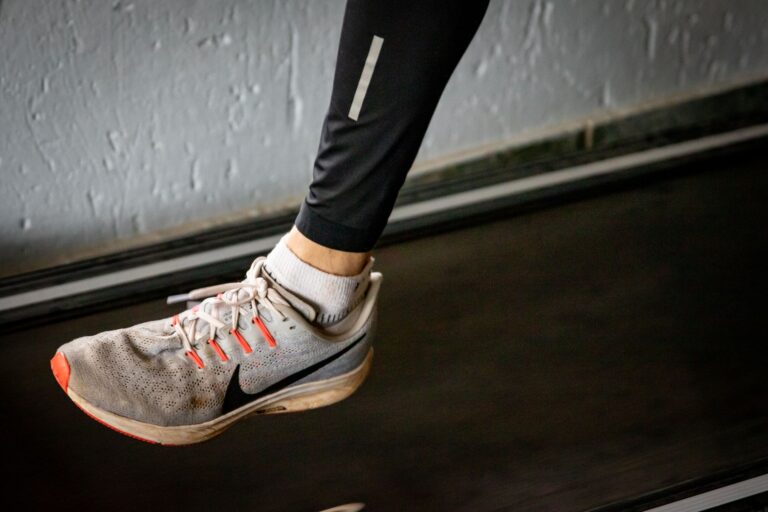
Building symmetrical form means training your body to move with balanced strength and flexibility across both sides, which is the most direct way to prevent the injuries that derail most runners. When your left leg is significantly stronger or more mobile than your right—a condition nearly universal among runners—you’re creating a biomechanical liability. That imbalance forces compensatory movements: your hips drop on the weak side, your knee caves inward, your ankle inverts slightly with each stride. Over thousands of repetitions, these micro-deviations accumulate into knee pain, IT band syndrome, or ankle sprains.
A runner who spent three months addressing a 15-degree hip strength gap, documented through single-leg glute bridge tests, went from hobbling through 3-mile runs to comfortably logging 20-mile weeks without pain. The core principle is simple: asymmetry doesn’t just limit performance—it’s a prediction of injury. Your body will always take the path of least resistance, and if that path is tilted, your joints absorb force they weren’t designed to handle. Correcting symmetry isn’t about looking pretty or achieving perfect balance, which is impossible anyway. It’s about narrowing the gap enough that your running mechanics normalize, your joints stay stacked, and the repetitive stress distributes evenly across the structures meant to handle it.
Table of Contents
- Why Does Running Create Asymmetry in the First Place?
- The Real Cost of Ignoring Asymmetry: Injury Escalation and Adaptation Pain
- Assessment First: How to Identify Your Specific Asymmetries
- The Correction Protocol: Targeted Strength Work Over General Conditioning
- Hip Mobility as the Missing Piece: Why Strength Alone Isn’t Enough
- Return to Running: Pacing the Reintegration of Speed and Distance
- Building Symmetry as a Permanent Practice, Not a Temporary Fix
- Conclusion
Why Does Running Create Asymmetry in the First Place?
Your dominant side is naturally stronger from decades of favoring it in daily life. You kick a ball with your right leg, you push off stairs with your left leg, you carry bags on one shoulder. By the time you start running, you’ve already built a 10-to-20 percent strength differential between sides. Running doesn’t create this gap—it amplifies it. Each stride is a mini-plyometric test; the weaker side gets worked harder trying to match the dominant side’s power output, yet it falls further behind because it’s starting from a disadvantage. A runner who logs 30 miles per week might take 180,000 strides that month, and 90,000 of those strides are absorbed by a leg that’s biomechanically compromised.
Over six months, that compounds into a liability. Previous injuries also lock in asymmetry. Twist an ankle and your body immediately protects it by splinting that leg with tension in the calf and hip, even after swelling goes down. That protective tension can persist for years if you don’t actively address it. The result is a runner who returns to training with an old ankle injury that now manifests as a weak glute on the injured side, creating a new injury pattern in the knee. The asymmetry isn’t purely muscular—it’s neurological, postural, and structural all at once.
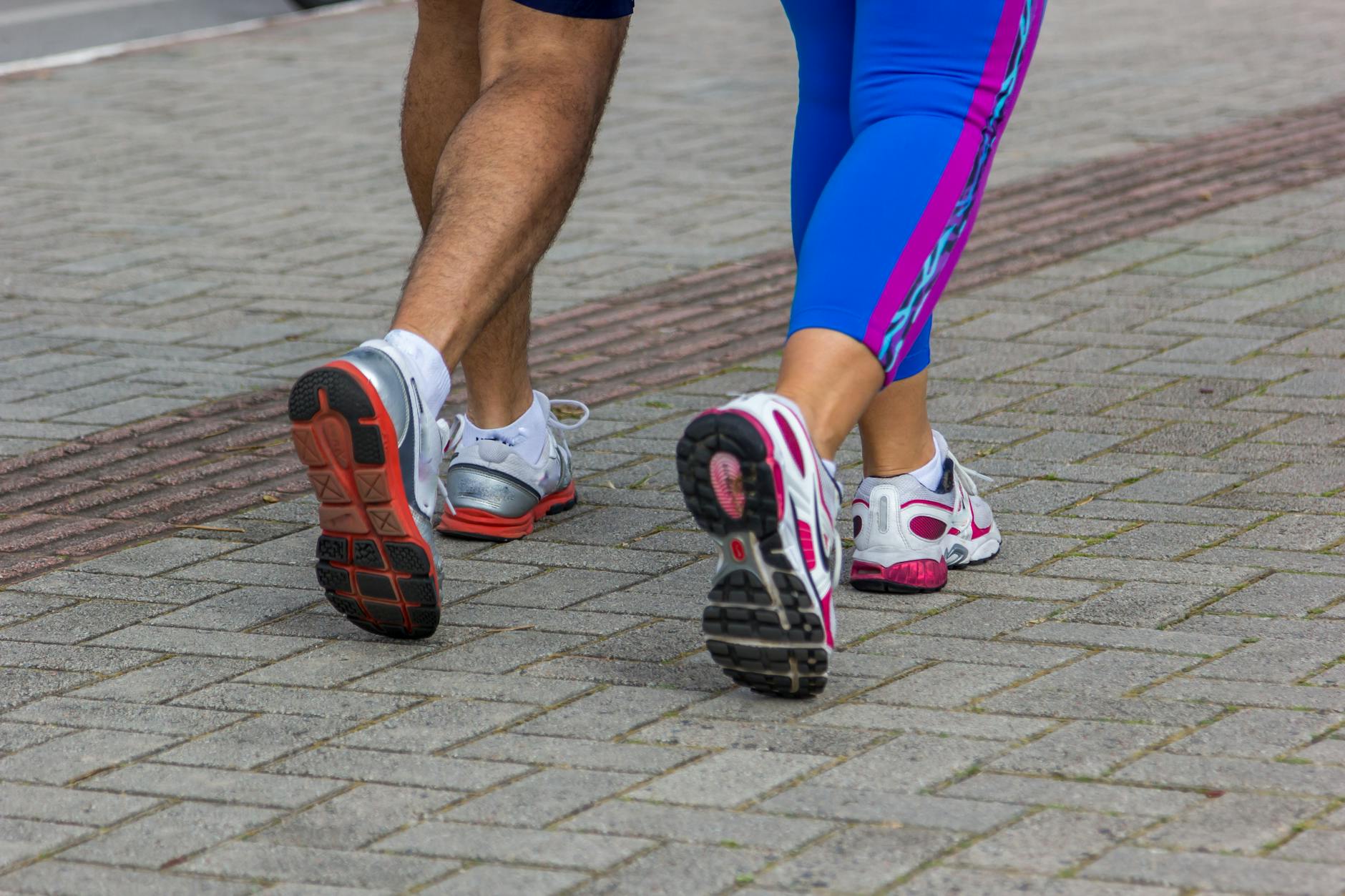
The Real Cost of Ignoring Asymmetry: Injury Escalation and Adaptation Pain
Ignoring asymmetry doesn’t mean you‘ll get injured immediately—it means you’ll get injured when you try to push beyond a certain threshold. A runner with a 20-degree hip strength gap might feel fine at 15 miles per week, but add speed work or increase mileage, and the weak side suddenly can’t maintain control. That’s when the compensation patterns become aggressive enough to cause pain. The limitation here is crucial: you can run forever at a level your asymmetry tolerates. The moment you want to progress, your body says no. The escalation is predictable.
Knee pain appears first because the knee is downstream of the hip; if your hip is weak, your knee collapses inward and feels the brunt. Ignore that signal and continue the same training, and pain spreads to the IT band, then the ankle, then the opposite knee catches some overload pain. Now you’re trying to run on two problem legs instead of one. The window for correcting a single asymmetry is when pain is mild and localized; at that point, 4-6 weeks of focused work can fix it. Wait until pain is severe and multiple sites hurt, and you’re looking at 3-4 months of rehab and a much slower return to any meaningful mileage. Most runners wait too long because the early signals are easy to dismiss as normal running soreness.
Assessment First: How to Identify Your Specific Asymmetries
You can’t fix what you don’t measure. Start with a single-leg glute bridge: lie on your back, bend one knee and drive through that heel to lift your hips, keeping the other leg extended. Do 15 on each side and count how many you can do with strict form (hips level, no arching the low back). If one side tops out at 12 and the other hits 15, that’s a real difference. For runners, this test matters because the glute is the primary hip stabilizer, and weakness there directly translates to a dropped hip on that side during running. Next, test hip internal rotation: sit on the ground with one knee bent at 90 degrees in front of you, and gently press that knee toward the opposite side.
Measure the angle from your shin to your body’s midline. Most runners have at least 10-15 degrees less internal rotation on one side, often the side with the weak glute. This restriction doesn’t cause injury on its own, but combined with a weak glute, it’s a problem. A runner with weak left glute and limited left hip internal rotation will externally rotate their knee as compensation to get the rotation their hip can’t provide—which is exactly how internal knee pain starts. Do a thorough assessment before you begin correcting. Document your numbers so you can actually measure progress instead of guessing.
The Correction Protocol: Targeted Strength Work Over General Conditioning
The standard fix is to overload the weak side. If your right glute is 15 percent weaker than your left, your right side needs more stimulus, more volume, or more challenging variations than your left. This is where most runners go wrong—they do balanced workouts on both sides, which preserves the asymmetry instead of fixing it. Your weak side needs more reps, more sets, or harder variations for a 4-to-6 week block. A practical example: single-leg Romanian deadlifts (RDLs) are phenomenal for fixing asymmetric glute weakness. Do them on both sides, but do 12 reps on the strong side and 15 reps on the weak side.
Or add a pause, or add weight. The weak side gets more stimulus, which is the only way to close the gap. Unilateral work (one side at a time) is essential because barbell squats and bilateral movements let the strong side dominate, and the weak side just coasts. After 4-6 weeks of emphasizing the weak side, retest. You should see the gap narrow to within 5 percent, at which point you can move to balanced work to maintain the gains. The tradeoff is that imbalanced training feels psychologically weird—your brain wants both sides to get the same work—but it’s necessary. Stay imbalanced on purpose for a short window to fix a real imbalance.
Hip Mobility as the Missing Piece: Why Strength Alone Isn’t Enough
Every runner who tries to correct asymmetry via strength work alone eventually hits a ceiling. The weak side stays weak because the tissue is tight, and tight muscles can’t produce force effectively. You can’t build a strong glute in someone whose hip is locked in external rotation; the geometry is wrong, and the muscle can’t access its full range. This is the limitation that derails most DIY correction efforts. Runners add glute exercises, see some progress, then plateau after three weeks because they haven’t addressed mobility. The fix requires both.
After your glute bridge test, if you notice the weak side sits in external rotation even when relaxed (your toes point outward), that’s a mobility problem. Add 2-3 minutes of 90/90 hip stretch on that side (sit with one hip bent to 90 degrees in front and the other to 90 degrees behind, fold forward gently). Do pigeon pose, do cossack squats, do internal rotation work in a quadruped position. Spend two weeks on mobility before you start loading the weak side with heavy single-leg RDLs. The combination—mobility plus load—is what actually closes asymmetry gaps. Strength without mobility is trying to build a stronger prison; mobility without strength still leaves you weak. Do both.

Return to Running: Pacing the Reintegration of Speed and Distance
Once you’ve corrected your asymmetry—your glute strength is now equal, your hip mobility has opened up—you can’t suddenly go back to your old training. The asymmetry developed over months or years, and your running patterns are deeply grooved. Your nervous system will immediately try to fall back into the old compensation pattern if you jump into speed work or mileage. Instead, spend one week running only easy miles, paying attention to your form. A runner who fixed a left-side hip weakness should mentally cue “lift my left hip” every few hundred meters during this week. This conscious reactivation teaches your nervous system the new pattern.
In week two, add one easy session of eight to ten 100-meter pickups at a comfortably fast pace, but controlled—not all-out. In week three, add a second session. By week four, you can resume something approaching normal training. This four-week progression sounds slow, and it is, but it’s the only way to ensure the weak side stays strong and the compensation patterns don’t creep back. A runner who spent six weeks correcting asymmetry then jumped back to speed work and high mileage within a week often re-injures themselves, because their central nervous system never learned the new pattern. Patience in the return phase pays enormous dividends.
Building Symmetry as a Permanent Practice, Not a Temporary Fix
The runners who never get injured again aren’t the ones who fixed asymmetry once and forgot about it—they’re the ones who built it into their weekly routine forever. This means a maintenance block: one session per week of unilateral lower-body work, alternating between hips, knees, and ankles depending on what you notice. In the off-season when mileage is low, bump it up to two sessions. If you ever start to feel an old imbalance creeping back, you have the tools to catch it and address it in two weeks instead of waiting until it becomes an injury.
The forward-looking insight is that as you age as a runner, asymmetry tends to creep back in due to daily life stress, sitting at desks, and accumulated wear. The runners running strongly in their 40s and 50s aren’t blessed with good genetics—they’re the ones who’ve built unilateral training into their routine as a non-negotiable part of staying healthy. Symmetry isn’t something you achieve once. It’s a standard you maintain, and the maintenance cost is remarkably low compared to the rehabilitation cost of an injury.
Conclusion
Building symmetrical form is the foundation of sustainable running. It starts with identifying where your asymmetries live, continues with targeted work on the weak side, and persists as a permanent part of your training philosophy. Most runners can close meaningful asymmetry gaps in 4-6 weeks if they’re intentional about it—which means the decision to do this work pays back almost immediately in the form of pain-free running and the ability to increase mileage without triggering new injuries. The next step is straightforward: test yourself this week.
Do single-leg glute bridges, check your hip internal rotation, and notice if one side feels weaker or tighter. If you find a gap of 10 percent or more, spend four weeks addressing it with the protocol outlined above. Track your numbers. You’ll be surprised how quickly a meaningful asymmetry closes when you stop treating your body as a bilateral machine and start training like the human organism you actually are—which is naturally asymmetrical and requires intelligent correction.