Machine learning is reshaping cardio training by enabling personalized, adaptive workouts that respond to your body in real time. Rather than following a static training plan, runners and endurance athletes now have access to systems that continuously learn from your heart rate, breathing patterns, and performance data to adjust intensity, rest periods, and long-term progression automatically. The technology has moved beyond the research lab into consumer fitness apps, smartwatches, and connected gym equipment that millions of people use daily.
This shift is driven by hard market reality: the global smart fitness market is projected to reach $42.15 billion in 2026, growing at a 25.9% annual rate. The AI personal trainer market specifically is valued at $16.9 billion in 2025 and is expected to reach $65.7 billion by 2033. The evidence is clear that runners want systems that learn and adapt—68% of fitness app users now prefer platforms that adjust to their performance patterns. What was once the domain of elite athletes with personal coaches is becoming accessible to anyone with a smartphone or smartwatch.
Table of Contents
- How Machine Learning is Personalizing Cardio Workouts
- The Sensor Technology Behind the Numbers
- Smart Equipment That Adapts in Real Time
- Clinical Validation and Real-World Evidence
- The Challenges and Limitations Nobody Talks About
- How Trainers Are Adopting Machine Learning Today
- What’s Actually Coming Next in Cardio Training
- Conclusion
How Machine Learning is Personalizing Cardio Workouts
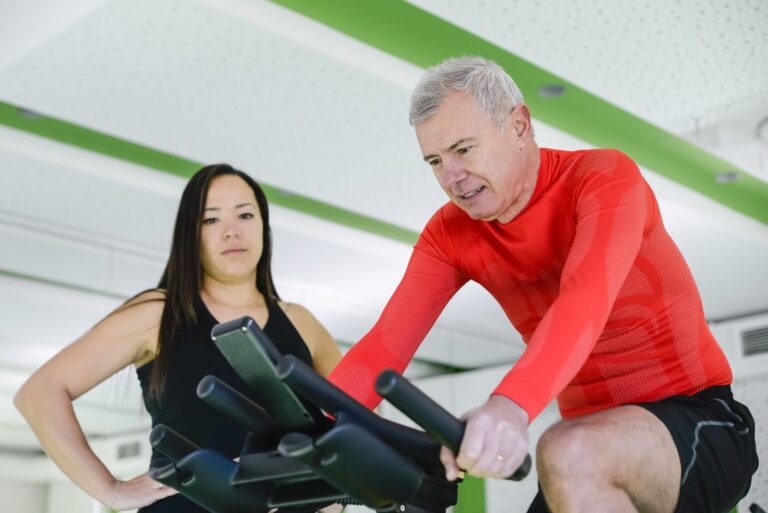
The core innovation is relatively straightforward: machine learning models take in continuous data from wearable sensors and adjust your training in response. Instead of running the same pace every Tuesday, your system learns your cardiovascular capacity, recovery speed, and response to different intensities. The HARISON smart exercise bikes offer a concrete example—they connect via Bluetooth to an app that provides virtual coach-led adaptive workouts where the bike’s resistance automatically adjusts based on your heart rate in real time. If your heart rate drops below your target zone, resistance increases; if you spike too high, it backs off. What makes this possible is the combination of multiple machine learning techniques working together.
Researchers use LSTM networks, Physics-Informed Neural Networks (PINNs), and 1D convolutional neural networks to predict and understand heart rate changes from wearable sensor data. These aren’t black-box predictions—Apple researchers specifically developed methodology that blends physiological models of how the heart actually works with machine learning, creating models that stay consistent with human physiology rather than learning patterns that wouldn’t make sense in real bodies. This personalization addresses a real limitation of traditional training plans: they assume all athletes respond the same way to the same stimulus. In reality, your genetics, current fitness level, sleep quality, stress, and dozens of other factors affect how your body responds to a given workout. Machine learning captures that individual variation. A 2025 survey found that 64% of personal trainers already use AI regularly and find it helpful, with particular value in programming and monitoring.
The Sensor Technology Behind the Numbers
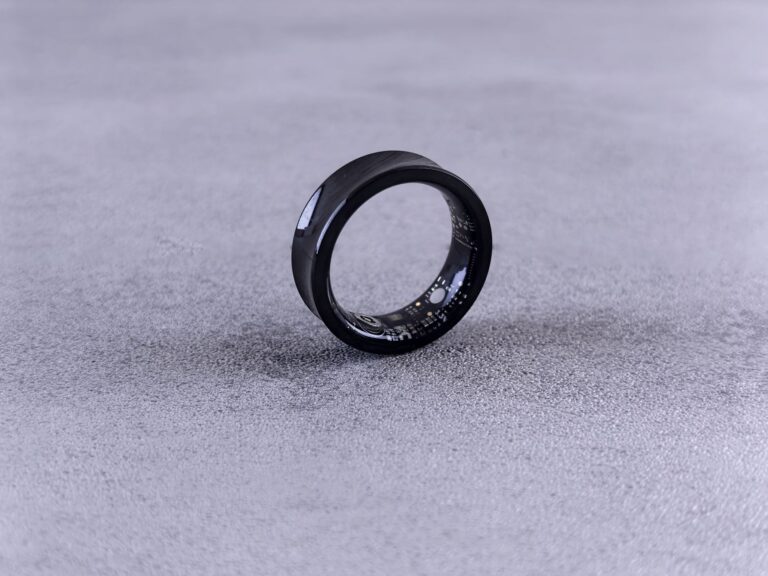
The accuracy of machine learning models for cardio training depends entirely on the quality of data coming in. Modern smartwatches have moved far beyond simple step counting. Current devices like the Apple Watch Series 8 and 9, Samsung Galaxy Watch 5 and 6, Fitbit Sense, and Garmin Vivosmart incorporate multiple sensor modalities that capture heart rate via photoplethysmography, ECG data, heart rate variability, blood pressure, and oxygen saturation. Each sensor stream provides different information about your cardiovascular state. The challenge is that wearable sensors produce noisy data. Your smartwatch can’t see inside your arteries or measure blood flow directly—it infers these from optical sensors and electrical signals measured through your wrist or arm.
Researchers have developed hybrid approaches to improve accuracy. Singular Spectrum Analysis (SSA) combined with machine learning techniques leverages auxiliary physiological inputs like breathing rate and RR intervals (the time between heartbeats) to filter out noise and produce more reliable predictions. The practical consequence is that modern training systems are substantially more accurate than they were five years ago, but they still have error margins that matter, especially at high intensity where small mistakes can lead to overtraining. One important limitation: these models are typically trained on data from healthy, younger populations during controlled exercise. Their performance on older athletes, people with cardiovascular conditions, or during unusual activities (like running in extreme heat or at altitude) is less well documented. If you’re using wearable-based training load recommendations and you’re outside the “normal” population, the guidance may need adjustment based on how you actually feel.
Smart Equipment That Adapts in Real Time
Beyond wearables, machine learning is being embedded into cardio equipment itself. The Merach immersive fitness racing game transforms treadmill running into competitive challenges where you run against virtual opponents on a screen. The system processes your pace, stride, and output to create a dynamic racing experience—it’s not just showing you a video; the AI is adjusting difficulty and pacing based on how you’re actually performing. This adds a layer of engagement that traditional treadmill running lacks, which matters because adherence is one of the biggest limitations of any training system. HARISON’s connected exercise bikes represent another approach: they integrate real-time sensor feedback with cloud-based machine learning. The bikes measure cadence, resistance, power output, and heart rate simultaneously.
Over time, the algorithm learns your typical response patterns and can predict when you need recovery days or when you’re ready for harder work. The app provides coaching cues that adapt as your fitness improves—the workouts get harder, but not at a pace that causes injury or burnout. Individual and home users now represent the largest segment of this market, driven by demand for convenient, on-demand training. The limitation here is obvious: a machine learning system in your living room can’t provide the real-time correction that a coach can. If your form is breaking down, the app won’t know. If you’re compensating for an injury, the model won’t see it. The technology works best when combined with traditional coaching or at minimum, video form checks.

Clinical Validation and Real-World Evidence
The scientific evidence for machine learning in cardio medicine has accelerated dramatically. A major 2026 study published by the American College of Cardiology examined 81,703 patients who received transcatheter left atrial appendage occlusion procedures using an XGBoost machine learning model to predict adverse outcomes. The machine learning model outperformed traditional clinical scoring methods at identifying which patients were at highest risk for complications. This matters because it shows the technology works on real clinical populations, not just healthy athletes. Ongoing clinical trials are now developing machine learning-based intelligent systems for exercise prescription specifically in cardio-oncology preventive care, with studies running through December 2026.
These trials are addressing a real clinical gap: cancer survivors need specialized exercise guidance to rebuild cardiovascular fitness after treatment, but personalized prescriptions are expensive and rare. Machine learning offers a way to scale that personalization. Research teams are also demonstrating that cardiovascular fitness can be reliably predicted by wearable technologies during ordinary daily activities—not just during structured exercise. Machine learning models applied to wearable fitness tracker data show potential for early identification of hospitalizations and cardiovascular disease development. The implication is that continuous monitoring might eventually catch problems before symptoms appear. However, this research is still developing; we don’t yet have evidence that earlier detection from wearables actually improves outcomes compared to traditional screening methods.
The Challenges and Limitations Nobody Talks About
Despite the promise, machine learning models for cardio training face real constraints. First, most models are trained on limited populations. Studies examining heart rate prediction from wearable sensors typically use cohorts of younger, healthier volunteers—often university students or recreational runners. How well these models work for older runners, athletes with cardiovascular conditions, or people on medications that affect heart rate is genuinely unclear. The research literature doesn’t have good data yet. Second, there’s a fundamental accuracy-complexity tradeoff. Simple linear models are interpretable—you understand why they made a recommendation—but less accurate. Complex deep learning models are more accurate but become black boxes.
If a training app recommends a hard workout and you get injured, you want to understand why the system made that call. Explainable AI frameworks are being developed for cardiovascular risk prediction, but they’re not yet standard in consumer fitness apps. You’re often trusting a recommendation from a model you can’t inspect. Third, the business model of most AI fitness apps creates a misalignment. The app makes money by keeping you engaged—showing you progress, gamifying workouts, getting you to upgrade to premium features. The model is optimized for engagement, not necessarily for your long-term health or injury prevention. A coach is paid to make you better; an app is paid to keep you subscribed. That’s a subtle but important difference in incentives.
How Trainers Are Adopting Machine Learning Today
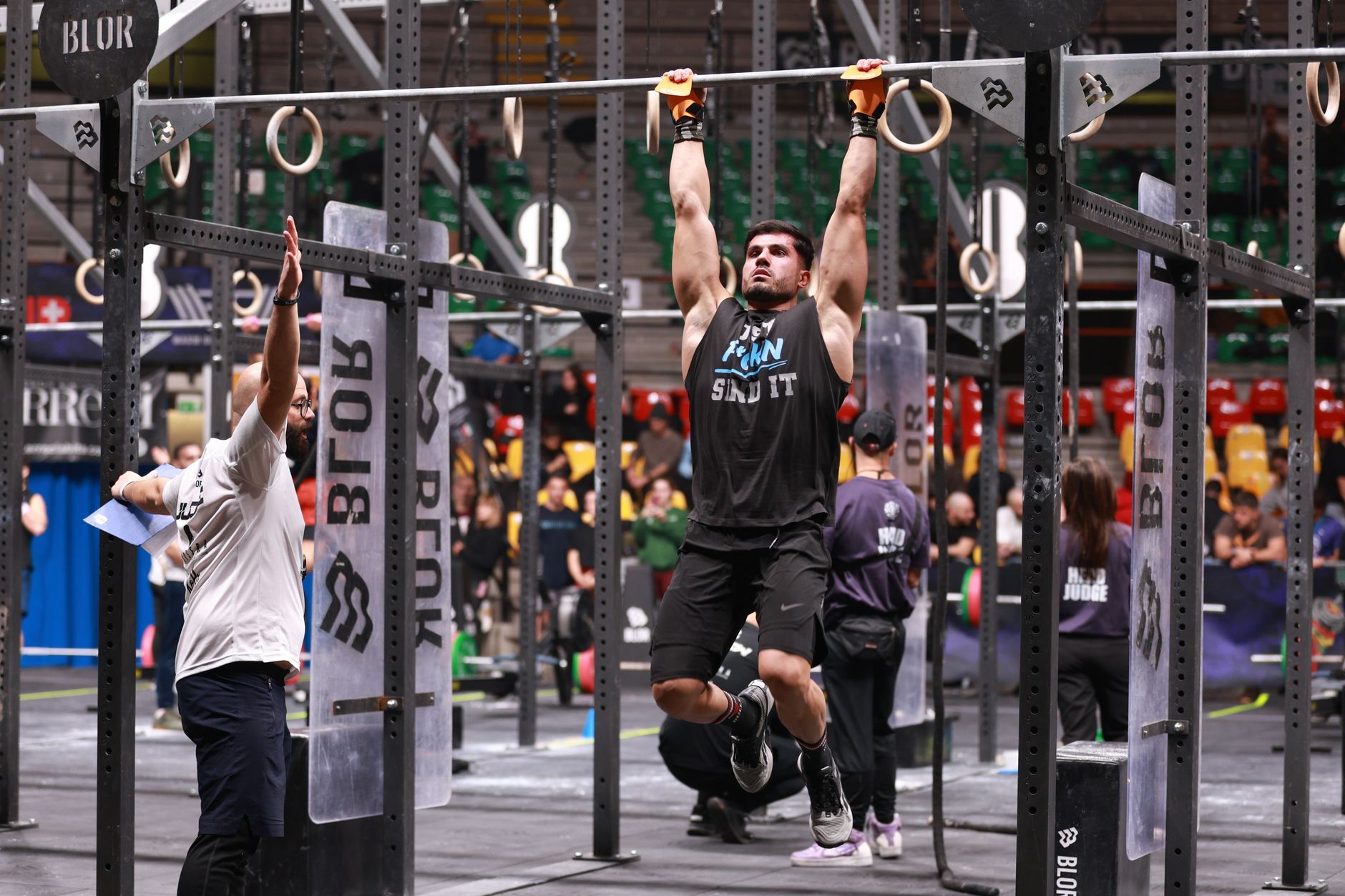
The adoption curve among professional trainers has accelerated. The 64% of personal trainers who now use AI regularly are using it primarily for administrative tasks, programming assistance, and nutrition planning—not yet for real-time coaching replacement. This makes sense: the technology is mature enough to help a coach work faster, but not yet autonomous enough to replace the relationship and real-time feedback a good coach provides.
For individual runners, the adoption pathway is typically: start with a fitness tracking app, progress to a smartwatch with training recommendations, then possibly invest in connected equipment if you’re serious about optimization. Each step adds a layer of personalization but also requires more data sharing and technical involvement. The tradeoff is clear: more data and machine learning insight versus more privacy concerns and time spent managing the technology.
What’s Actually Coming Next in Cardio Training
The research pipeline suggests three major advances over the next few years. First, multimodal biomarker analysis with machine learning is moving toward early detection of cardiovascular disease risk—combining structured health data with wearable sensor data to identify risk before clinical symptoms appear. This could fundamentally shift how preventive cardiology works. Second, explainable machine learning frameworks are becoming more sophisticated.
Rather than accepting black-box recommendations, you’ll increasingly be able to understand exactly why a system is recommending a particular training load or recovery day. This makes integration with traditional coaching more practical. Third, the convergence of real-time wearable feedback with competitive gaming elements (like the Merach treadmill racing system) is creating a new category of training that’s simultaneously more engaging and more physiologically individualized. The next generation of cardio training won’t feel like “following a training plan”—it will feel like playing a game that happens to be perfectly calibrated to your fitness level.
Conclusion
Machine learning is fundamentally changing cardio training from a one-size-fits-all model to personalized adaptation. The global smart fitness market has moved from niche to mainstream, with the AI personal trainer market alone projected to reach $65.7 billion by 2033. The technology is real, the market is large, and adoption continues to accelerate across equipment, apps, and professional coaching.
The practical question for runners isn’t whether to engage with this technology—it’s how much to rely on algorithmic recommendations versus traditional intuition and coaching. The best outcomes will likely come from treating machine learning as a tool that complements good coaching and self-awareness, not as a replacement for either. Start with a tracking app, pay attention to what patterns it identifies, and consider it as one input into your training decisions rather than the only voice in your head during a run.