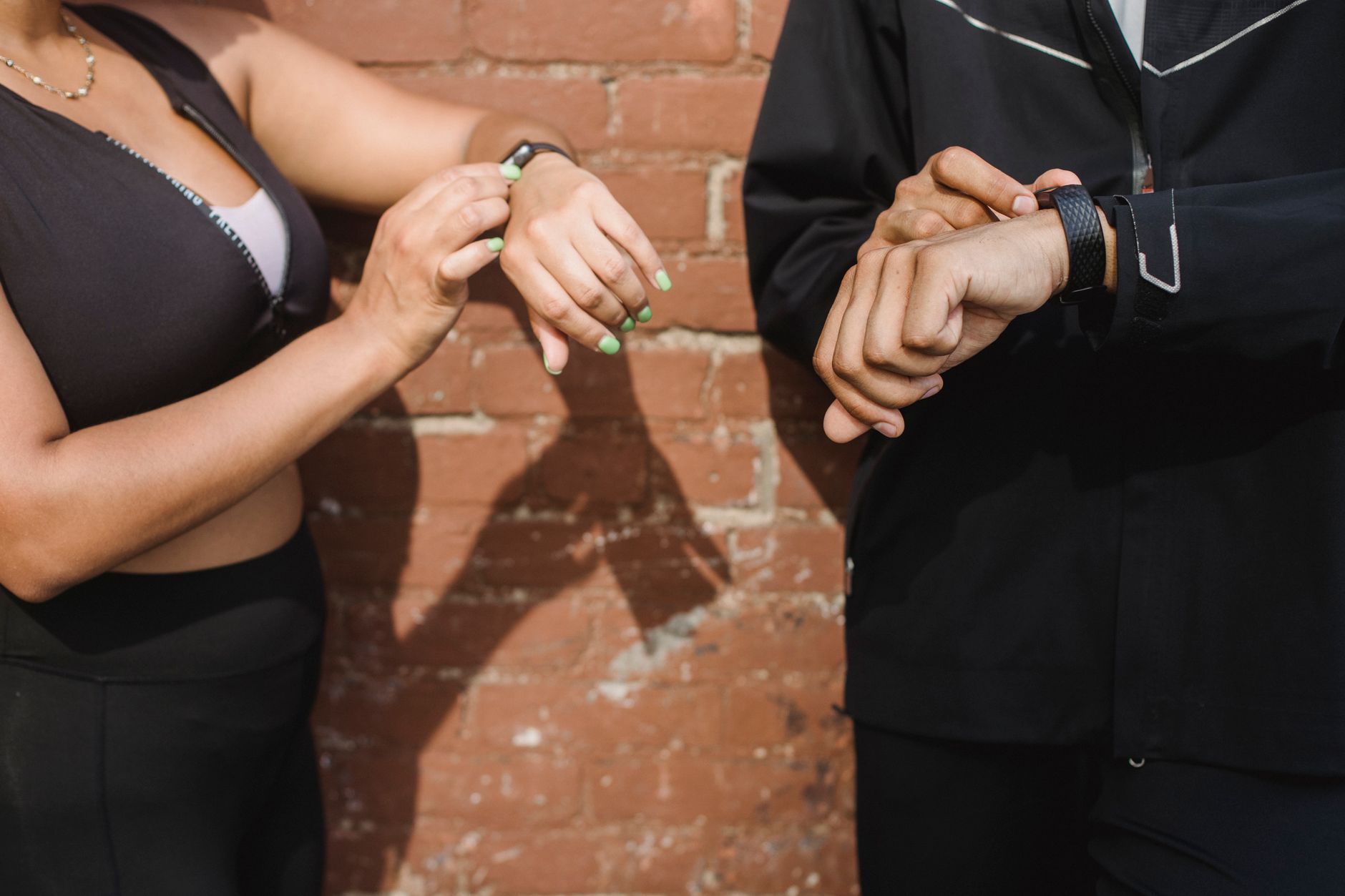
For runners, Garmin, Oura, Whoop and Apple Watch detect sleep correctly about 86 to 89 percent of the time but struggle to measure wake and sleep stages. That makes them useful for tracking sleep duration trends, not nightly deep sleep or REM minutes. Sleep trackers here means wrist watches and rings that estimate sleep from movement and heart signals. Polysomnography means the lab test that records brain, eye and muscle activity plus heart rhythm, and it is the gold standard these devices are judged against.
Medical information disclaimer: This article is for general educational purposes only and does not provide medical advice, diagnosis, or treatment. Always consult a physician or other qualified health professional about symptoms, medications, tests, or treatment decisions.
Table of Contents
- How well do they spot sleep?
- Can runners trust sleep stages?
- How do Apple and Garmin estimate sleep?
- What should runners watch instead?
How well do they spot sleep?
All four brands are strong at finding sleep and weak at finding wake. A lab study of healthy adults wearing every device found two-state sleep/wake agreement of 88 percent for Apple Watch, 89 percent for Garmin, 89 percent for Oura and 86 percent for Whoop, according to the lab comparison in MDPI Sensors. That pattern held in a second lab test. An independent Antwerp sleep-lab test of 62 adults found sensitivity above 90 percent for sleep but specificity of only 29.4 percent for Garmin Vivosmart 4 to 52.2 percent for Apple Watch Series 8, according to the Antwerp results in SLEEP Advances.
In plain terms, the devices rarely miss sleep but often score quiet wake as sleep. Agreement scores reflected the same gap. Kappa was 0.53 for Apple, 0.37 for Whoop and 0.21 for Garmin in that test. Runners who lie still after a late session should expect extra sleep credit.
Can runners trust sleep stages?
Stage tracking is less reliable than sleep duration. Whoop showed 89 percent agreement for sleep versus wake but only 64 percent for four-stage wake, light, slow-wave and REM classification, with 95 percent sensitivity for sleep and 51 percent specificity for wake. Oura Ring Gen 3 reached 91.7 to 91.8 percent sleep-detection accuracy across 421,000 epochs in 96 people, with 75.5 percent for light sleep to 90.6 percent for REM.
It showed no significant difference from polysomnography for total sleep time and wake after onset. The practical limit is systematic bias. Wearables overestimate total sleep time, underestimate wake and often misclassify wake, REM and deep as light sleep. A single night of stage minutes is not reliable for training decisions.
How do Apple and Garmin estimate sleep?
Apple says watchOS 9 estimates REM, core and deep sleep from the accelerometer plus heart-rate sensor. It uses machine-learning models trained and validated against polysomnography in a large diverse sample. Garmin says its watches score sleep from 0 to 100 through Firstbeat Analytics.
Inputs include heart rate, heart-rate variability, respiration derived from heartbeat, wrist movement and time of day, plus sleep history and stress, according to the Garmin explanation of sleep tracking. Both approaches infer sleep from body signals rather than measuring brain waves. Movement plus heart rhythm can separate sleep from wake reasonably well. They cannot separate light, deep and REM with lab precision.
What should runners watch instead?
Resting heart rate and overnight heart-rate variability hold up better than staging. Whoop reports under 20-minute bias for sleep duration and 0.7 beats-per-minute bias for heart rate versus gold standards.
Use multi-night trends in sleep duration, resting pulse and heart-rate variability to judge recovery. A three-to-seven-night average smooths one bad night, travel, alcohol and hard training. Runners can act on simple rules:.
- keep wake time steady, even after rest days
- compare this week to last week, not last night to tonight
- flag illness or overload when resting pulse rises and variability falls for several nights
- treat a low deep-sleep number alone as noise unless duration and morning fatigue also drop