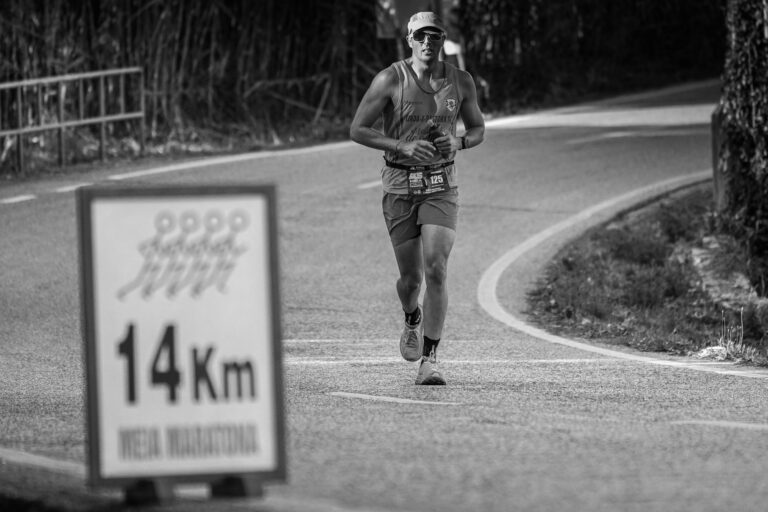
Poor posture while running won’t fix itself by changing your shoes or following generic training plans. You need specific modifications to your running form, stride mechanics, and training focus that directly address postural weaknesses. These modifications include strengthening your posterior chain, adjusting your lean, shortening your stride, and building stability through targeted exercises—changes that typically show measurable improvement within 4 to 6 weeks of consistent practice. Running with poor posture accelerates injury because your body compensates with muscles that aren’t designed for endurance work. A runner with forward head posture puts extra load on the cervical spine and upper traps; one who collapses at the hips shifts force onto the IT band and knees.
A runner named Marcus came to physical therapy complaining of chronic knee pain. Video analysis showed he was running with a rounded upper back and anterior pelvic tilt—his knees caved inward on every stride. Once he spent three weeks correcting his posture cues and adding single-leg balance work, his pain dropped from 6 out of 10 to a 2. The modifications that work are simple to describe but require deliberate practice. You won’t fix posture by “thinking about it” during an easy run; you need structured drills, form checkpoints, and progressive strength work built into your training week.
Table of Contents
- What Posture Breakdowns Look Like While Running
- Strengthening the Posterior Chain Without Adding Training Volume
- Cadence and Stride Length Adjustments for Posture
- Core Stability Exercises That Actually Translate to Running
- Common Breakdowns During Runs and How to Catch Them
- Gait Retraining Timelines and Realistic Expectations
- Integrating Posture Work Into Your Race Season
- Frequently Asked Questions
What Posture Breakdowns Look Like While Running
Most runners develop one of three postural problems: forward lean (upper body too far ahead of the hips), collapsed hips (one hip dipping lower than the other), or rounded shoulders with forward head position. These patterns emerge because running is a repetitive, fatiguing activity—as your stabilizer muscles tire, your body defaults to whatever posture requires the least muscular effort, not the most efficient one. Forward lean is particularly common in newer runners trying to go fast. The runner angles their entire body forward from the ankles instead of maintaining a vertical torso and letting gravity do the work. This shifts impact load onto the lower back and puts constant tension on the posterior chain.
A runner doing this correctly should feel like they’re falling forward gently and their feet are catching them; instead, they feel like they’re pushing their body forward at an angle. Collapsed hips—where one side drops lower than the other on each stride—indicates weak glute medius on the stance leg. This asymmetry forces the foot and knee to compensate, usually causing knee pain or IT band irritation. Rounded shoulders reduce running efficiency because your chest stays closed and your arms don’t swing as powerfully. Testing your own posture is straightforward: video yourself running from the side and from behind, ideally at a speed you actually race at. Many runners discover they run differently when they know they’re being filmed, so watch for what your form does naturally after the first 30 seconds.
Strengthening the Posterior Chain Without Adding Training Volume
The posterior chain—your glutes, hamstrings, and lower back—is the structural foundation for upright running posture. Most runners underdevelop this area because they prioritize aerobic work and neglect strength. If your posterior chain is weak, no amount of form cuing will fix your posture; you’ll default back to poor patterns as soon as you’re tired. The most effective posterior chain exercises for postural runners are single-leg deadlifts, hip thrusts, and Nordic curls. Single-leg deadlifts teach your hip stabilizers to support your body weight on one leg—exactly what running demands—while Nordic curls build eccentric hamstring strength that protects your knees on downhill sections. You don’t need heavy weights.
Two sets of 8 to 12 reps per leg, done twice a week, creates noticeable improvement in posture control within three weeks. A limitation here: if you rush the volume or add strength work on top of your current running plan without reducing your easy run volume, you’ll overtrain. Your aerobic base running should go down by 15 to 20 percent on the weeks you’re introducing serious strength work. Hip thrusts are particularly valuable because they directly strengthen the hip extensors that hold your hips forward during running. Many runners avoid this exercise because it feels awkward, but video analysis of their running form before and after hip thrusts shows consistent improvements in pelvic alignment. The exercise works best when you focus on squeezing your glute at the top of each rep rather than simply moving weight.
Cadence and Stride Length Adjustments for Posture
One of the quickest ways to improve posture is to increase your cadence—the number of steps you take per minute. Runners with poor posture often take 160 steps per minute or fewer, which means each stride is longer and requires more hip extension to reach that far forward. Longer strides make forward lean inevitable because your body compensates to reach the ground. Increasing to 170 to 180 steps per minute forces you to take smaller, quicker steps, which naturally reduces the reach and makes upright posture easier to maintain. Cadence work is especially valuable in early-season training when you’re building your aerobic base. Add 10-minute cadence intervals at your target cadence to one easy run per week, and test whether the shorter stride feels less jarring on your knees and lower back.
Many runners who switch to a higher cadence report that chronic pain spots quiet down, not because cadence is a magic fix, but because higher cadence prevents the compensatory movement patterns that created pain in the first place. A warning: increasing cadence too aggressively—jumping 20 steps per minute in one week—increases injury risk because your calves and shins work harder. Increase by 5 to 10 steps per minute every two weeks. The tradeoff is that higher cadence requires more aerobic effort at the same pace. When you first switch to 180 steps per minute, your heart rate will be 5 to 10 beats higher than it was at 170 steps per minute, even at identical speed. This settles down after a few weeks as your neuromuscular system adapts.
Core Stability Exercises That Actually Translate to Running
A strong core matters less for posture than a strong posterior chain, but it’s the stabilizer that prevents your spine from rotating excessively and your ribcage from flaring. Dead bugs, bird dogs, and suitcase carries are the three highest-yield core exercises for runners with postural issues because they teach your deep abdominal muscles to stabilize under load while your limbs move independently—the exact demand of running. Dead bugs are the least intimidating: lie on your back, extend your right arm overhead and your left leg straight, then return to center and repeat on the other side. Do three sets of 20 total reps, moving slowly and focusing on keeping your lower back pressed into the floor the entire time. If your lower back arches, you’ve gone too far.
Bird dogs are the running-specific version: from a hand-and-knee position, extend your right arm and left leg simultaneously while keeping your hips level. Again, three sets of 10 to 12 reps per side, twice a week. Suitcase carries—walking while holding a dumbbell at your side—build lateral stability and teach your core to resist rotation, which is exactly what your obliques do when you run. These three exercises take 10 minutes total and should be done on the same days you do posterior chain work. They’re low-fatigue additions to your training and don’t require recovery the way intense running sessions do.
Common Breakdowns During Runs and How to Catch Them
Even runners who understand posture corrections often fail during the run itself because fatigue overrides intention. Your body will collapse back into poor posture—usually somewhere between minute 20 and 30, when your stabilizer muscles start to fatigue. The most common breakdown is a forward head position that develops gradually: your head drifts forward, your shoulders round, and suddenly you’re hunched. This single shift changes how your entire body stacks on top of your feet. A practical cue that helps: every 2 miles, do a 30-second form reset. Slow to a jog, take five deep breaths, and deliberately pull your shoulders back and down, lengthen your neck, and engage your core.
This isn’t about holding that form for your entire run—it’s about resetting your proprioceptive feedback so your body has a reference point for upright posture. Many runners find that just one reset per run keeps them honest for the rest of the session. A warning: if you’re trying to reset your form while running at race pace, you’ll lose rhythm and efficiency. Resets work best during easy runs or base-building phases when speed isn’t the priority. Another breakdown happens at the hips: as your gluteus medius fatigues, your hip drops on the swing leg and your stance leg knee caves inward. Video analysis is the only reliable way to detect this because it feels normal once it starts. This is why running-specific assessments with video feedback are invaluable—you can’t feel what you’re doing after 40 minutes of running.
Gait Retraining Timelines and Realistic Expectations
Changing your running form is a multi-week project, not a one-session fix. Research on gait retraining shows that runners need 4 to 8 weeks of consistent practice—at least three focused sessions per week—before postural changes feel automatic. During weeks 1 and 2, the changes feel awkward and require conscious effort. During weeks 3 and 4, you’ll alternate between feeling the new pattern and reverting to the old one. By week 6, the new pattern should feel more natural than the old one, though it still requires attention during fatigued runs.
The timeline accelerates if you combine video feedback with in-person coaching or physical therapy. A single session with a running coach who watches your video and gives you three specific cues is worth weeks of self-guided practice because you eliminate trial-and-error. An example: a runner named Sarah had forward shoulder collapse during her runs. Her coach identified that her arm swing was too wide—her arms were crossing her midline, which externally rotated her shoulders forward. By narrowing her arm swing to 45 degrees, her shoulder position improved immediately, and the postural change held throughout her run.
Integrating Posture Work Into Your Race Season
If you’re already in a race-focused training block, adding three new strength exercises and relearning your running form is disruptive. The strategic approach is to address posture during your base-building phase (8 to 12 weeks before your goal race) when volume is high but intensity is low. Your easy runs are the perfect laboratory for form work because you have time and breath to focus on mechanics.
Once you’re in the intensity phase—speed work, tempo runs, and race-pace sessions—maintain your strength routine but reduce the amount of deliberate posture cueing. Your body should have internalized the pattern by this point. If posture breaks down during speed work, that’s a sign your strength base isn’t solid enough; dial back the intensity and spend another two weeks in base phase. A runner training for a marathon in the fall should begin posture corrections in June—that’s 16 weeks out, which gives you a full base phase to rewire your movement patterns before the intensity ramps up.
Frequently Asked Questions
How do I know if my posture is actually poor while running?
Video yourself running from the side and from behind at your normal training pace. Look for forward lean (upper body ahead of hips), forward head position, collapsed hips (one side lower), or rounded shoulders. Compare your form at minute 5 with your form at minute 30—the comparison usually reveals where fatigue breaks your posture.
Can I improve posture just by thinking about it while I run?
Briefly, yes. You can maintain better posture for a few minutes with conscious effort, but fatigue overrides intention within 10 to 20 minutes. Lasting change requires strength work and cadence adjustments that make good posture the default, not the exception.
How long does it actually take to see results from posture corrections?
Minor improvements appear within two weeks (less joint pain, easier breathing). Significant changes in running form require 4 to 8 weeks of consistent strength work and form practice. Most runners see the biggest changes in injury rates and long-run comfort after 8 to 12 weeks.
Should I see a physical therapist or running coach for posture work?
If you have current pain, physical therapy is worth the investment because a therapist can rule out structural issues and prescribe targeted exercises. If you’re pain-free but want to optimize form, a running coach with video analysis skills is sufficient and usually less expensive.
What happens if I ignore poor posture and just keep running?
You’ll likely develop pain somewhere in your lower body—knees, hips, lower back, or IT band—within 3 to 6 months. Poor posture accelerates impact loads on joints that aren’t equipped to handle that stress. Once pain develops, recovery typically requires 4 to 8 weeks of reduced running, so addressing posture preventively is cheaper than physical therapy.
Can high-mileage runners fix their posture, or is it too late?
Posture corrections work at any mileage level, but high-mileage runners need to add strength work carefully to avoid overtraining. Reduce your easy run volume by 15 to 20 percent on the weeks you introduce serious strength training, then gradually rebuild volume once your body adapts.