Manual treadmills without a motor require you to power the belt entirely through your own effort—your legs push the deck backward, which moves the belt forward, keeping you in place while you run. Unlike motorized treadmills that set a fixed pace and pull the belt beneath your feet, manual treadmills respond only to your push, meaning the belt stops the moment you slow down or ease up. For runners like ultramarathoner Scott Jurek, who used manual treadmills during winter training, this type of treadmill demands more effort per mile because you’re fighting friction and inertia continuously, but it also provides a unique training stimulus that many athletes find valuable.
Manual treadmills sit on a spectrum between outdoor running and motorized machines. They typically feature a curved, inclined running surface with rollers at each end, minimal electronics, and resistance that varies based on your weight and running speed. Unlike outdoor running, which offers impact variability and natural terrain changes, or motorized treadmills, which isolate lower-body effort, manual treadmills create a hybrid experience—they require active propulsion from your legs while providing a controlled environment. Because there’s no motor, these machines are often more affordable and require no electricity, making them popular in home gyms where budget or space is limited.
Table of Contents
- How Do Manual Treadmills Work Without a Motor?
- The Physical and Biomechanical Demands
- Real-World Training Applications and Examples
- Manual vs. Motorized Treadmills—What Matters for Your Training
- Common Challenges and Injury Risks
- Training Techniques and Protocols
- The Evolution and Future of Manual Treadmills
- Conclusion
How Do Manual Treadmills Work Without a Motor?
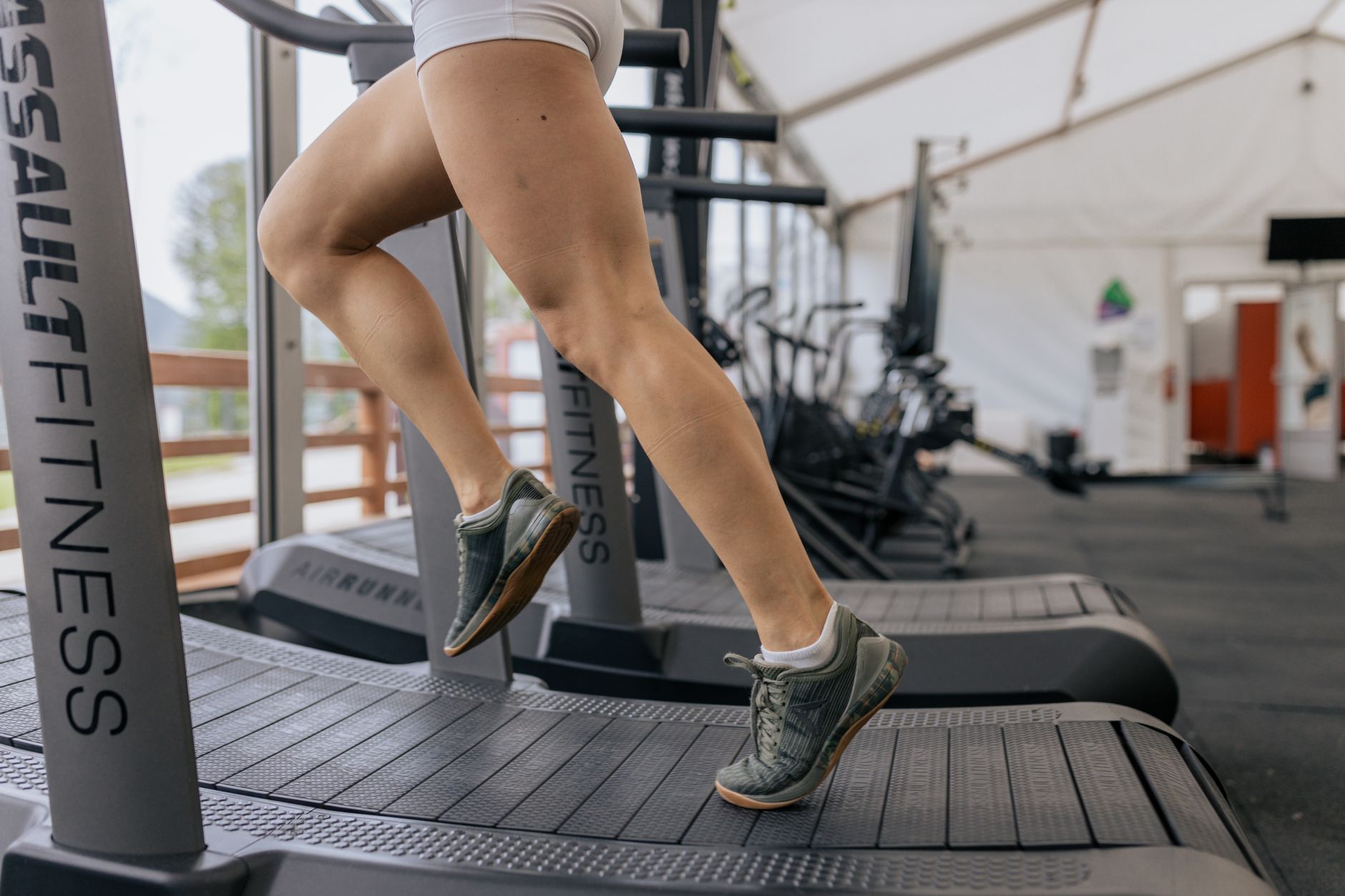
A manual treadmill’s belt is powered entirely by your running motion. When you step forward onto the belt, your leg push the deck backward, which transfers energy to rollers at the front and rear of the machine. Those rollers are connected to the belt, so as the deck moves backward relative to the frame, the belt moves forward under your feet. This is fundamentally different from a motorized treadmill, where an electric motor drives the belt and you simply run on top of it. On a manual treadmill, if you stop pushing—by slowing down, stopping, or stepping off—the belt instantly stops moving because there’s no motor maintaining momentum.
The design of a manual treadmill’s running surface is critical. Most quality manual treadmills feature a slightly curved or inclined belt, typically set at a 10- to 15-degree angle. This incline helps reduce the effort required to keep the belt moving and makes the running motion feel more natural. Some runners compare the biomechanics to running uphill on flat ground—your body position shifts forward slightly, and your hamstrings and glutes engage more than on a flat motorized treadmill. The resistance you experience depends on the friction between the belt and rollers, the incline angle, your body weight, and your running speed. Heavier runners or those running at higher cadences will experience more resistance.
The Physical and Biomechanical Demands
running on a manual treadmill is significantly more physically demanding than running on a motorized machine set at zero incline. Research has shown that runners expend 5 to 10 percent more energy on a manual treadmill compared to a motorized one at the same perceived effort level, because they’re actively propelling the belt rather than being carried along by a motor. This higher metabolic cost can be an advantage for building strength and work capacity, but it’s also a warning: if you’re accustomed to motorized treadmill training, switching to a manual treadmill without gradual adaptation can lead to overuse injuries, particularly in the hamstrings, glutes, and Achilles tendon. The biomechanical pattern on a manual treadmill tends to emphasize the posterior chain—your hamstrings, glutes, and lower back work harder to propel your body forward.
Some runners experience soreness in these muscles when they first transition to manual treadmill running, even if they’re well-trained road runners. The incline built into most manual treadmills also affects your running form. Your body leans forward more than it would on a flat surface, and your stride length may shorten. For runners focused on developing posterior chain strength or improving power output for sprinting or hill running, this can be a genuine advantage. However, if you’re training for a flat marathon on a flat road, too much manual treadmill work could skew your adaptation toward a forward-leaning posture that doesn’t match your racing biomechanics.
Real-World Training Applications and Examples
Manual treadmills have carved out a specific niche in training programs for athletes who want to build strength while maintaining aerobic fitness. Obstacle course racers—athletes competing in events like Spartan Race or Tough Mudder—sometimes use manual treadmills for winter training because the higher physical demands and posterior chain emphasis translate well to the power-based demands of those events. A runner training for an OCR might spend 20 to 30 minutes twice a week on a manual treadmill at a moderate effort level, building leg strength and work capacity in a controlled environment before moving that fitness to outdoor or track work. Manual treadmills are also used in some rehabilitation settings for athletes returning from certain types of injuries.
Because you have complete control over pace and intensity—you can instantly reduce effort—they allow for more nuanced training zones than motorized treadmills. A runner recovering from a calf strain, for example, might start with very slow, easy running on a manual treadmill, knowing they can back off instantly if pain increases. CrossFit facilities and gyms focused on metabolic conditioning have embraced manual treadmills for high-intensity interval training, where athletes perform all-out sprints for 20 to 40 seconds followed by recovery periods. The resistance and effort requirement make these sprints genuine work rather than the “running in place” feel some athletes report on motorized machines.

Manual vs. Motorized Treadmills—What Matters for Your Training
The choice between a manual and motorized treadmill depends on your training goals, budget, and available space. Motorized treadmills offer precise pace control, which is essential if you’re training for a specific race goal where you need to hit exact mile splits during a tempo run or threshold workout. A marathoner training at a 7:15-mile-per-minute pace needs the consistency of a motorized treadmill to ensure that training stimulus is repeatable. Manual treadmills, by contrast, require constant proprioceptive feedback and adjustment from the runner—your pace fluctuates slightly as your effort changes, which means it’s difficult to maintain a perfectly consistent speed for longer intervals.
Manual treadmills excel at building leg strength and work capacity, while motorized machines are better for specificity and pace-based training. If your gym has both, an ideal approach for many runners is using motorized treadmills for longer aerobic runs and race-pace workouts, and manual treadmills for strength-focused sessions, hill sprints, or short intervals where variability in pace doesn’t matter. Manual treadmills also offer a significant practical advantage: no electricity required, no monthly maintenance bills, and they typically cost 30 to 50 percent less than motorized machines. For someone building a home gym on a limited budget, a quality manual treadmill can deliver training value that punches above its price point.
Common Challenges and Injury Risks
The primary limitation of manual treadmills is the steep learning curve and high injury risk if you progress too quickly. Runners transitioning from primarily outdoor running or motorized treadmill training often overestimate their tolerance for manual treadmill work because it feels deceptively manageable at low intensities. The mistake is ramping up duration or intensity too fast—this is a warning sign to watch. A common pattern is a runner starting with 15 minutes at what feels like an easy effort, then pushing to 20 or 25 minutes in the next session because it didn’t feel that hard. This can lead to acute hamstring or Achilles tendon injuries within one or two weeks. The safe approach is to start with just 5 to 10 minutes at low intensity, then increase duration by no more than 10 to 15 percent per week.
Pacing consistency is another limitation that catches many runners off guard. On a motorized treadmill, you set the pace and the machine maintains it. On a manual treadmill, your pace drifts constantly—it slows when you’re fatiguing, accelerates when you push harder. For runners accustomed to seeing a steady speed readout on their watch, this variability can feel frustrating or confusing. Some runners respond by trying to maintain an exact pace by constantly adjusting their effort, which actually increases fatigue and defeats the purpose of doing an easy aerobic run. The solution is to focus on effort level or heart rate rather than speed, which is a healthier approach for many training sessions anyway.

Training Techniques and Protocols
Effective manual treadmill training requires specific strategies that differ from motorized treadmill work. Hill sprint intervals are a natural fit—short bursts of hard running lasting 30 to 60 seconds, with full recovery between efforts. The variable resistance of the manual treadmill makes these efforts genuinely difficult, building both aerobic power and leg strength simultaneously. A typical session might be 5 to 10 repetitions of 45-second hard efforts with 90 seconds of easy recovery, taking 30 to 40 minutes total. This type of work translates directly to outdoor running, where you encounter actual hills.
Another effective protocol is steady-state tempo running at a moderate intensity, held for 15 to 25 minutes once or twice per week. Because effort matters more than exact pace on a manual treadmill, you can focus on maintaining a sustainable hard effort—one where you’re breathing hard but can still speak in short sentences. This builds your lactate threshold and work capacity. The posterior chain engagement makes these sessions particularly effective for developing leg strength, which many distance runners lack. Unlike long, slow distance running on a motorized treadmill, which can feel passive, tempo work on a manual treadmill demands active engagement throughout.
The Evolution and Future of Manual Treadmills
Manual treadmills have experienced a resurgence in recent years, particularly among functional fitness communities and strength-focused runners. Technology has improved the designs—better bearings, smoother belt materials, more durable frames—making them more reliable and enjoyable to use than earlier models. However, motorized treadmills continue to dominate mainstream fitness because they offer ease of use and precision that most casual exercisers prefer.
The future likely involves a continued coexistence where serious athletes and strength-focused runners use manual treadmills as a specialized tool alongside motorized machines for different purposes. Some forward-looking fitness programs now combine manual and motorized treadmills strategically—using motorized machines for aerobic base-building and race-pace work, and manual treadmills for strength development and power training. This approach maximizes the benefits of each tool while minimizing their drawbacks. As more runners recognize that pure volume isn’t the only driver of performance, and that strength and power matter significantly for injury prevention and race results, manual treadmills may attract an even broader audience beyond CrossFit and OCR communities.
Conclusion
Manual treadmills without a motor are genuinely useful training tools, not novelties or inferior alternatives to motorized machines. They demand more physical effort, engage your posterior chain more intensely, and require no electricity or extensive maintenance. They’re also significantly cheaper, making them accessible for home gym builders on a budget. However, they come with real constraints: they’re unsuitable for precise pace-based training, they carry a higher injury risk if you progress too quickly, and they require more active engagement and proprioceptive awareness from the runner.
The smart approach is to view manual treadmills as a specialized tool in your training arsenal, not a replacement for motorized machines. If you’re interested in building leg strength, want to train in a more metabolically demanding way, or are simply looking for a durable, low-cost treadmill option, they deserve serious consideration. Start conservatively with short durations at easy intensity, progress gradually, and focus on effort and power output rather than hitting specific pace targets. Done right, a manual treadmill can be a valuable part of a comprehensive training program.