
The best treatment for overtraining syndrome is relative rest combined with a gradual return to low-intensity activity—not complete cessation of exercise. When a runner notices persistent fatigue, declining performance, elevated resting heart rate, and mood disturbances despite adequate sleep, they’re likely experiencing overtraining syndrome (OTS), a condition that requires strategic recovery rather than panic. The treatment timeline varies from 1-4 weeks for mild cases to 4-12 weeks for severe overtraining, depending on the athlete’s sport, training history, and how long they’ve been pushing beyond their body’s adaptation capacity.
Consider the case of a competitive 10K runner who increased mileage too quickly, cut sleep short due to work stress, and ignored early warning signs of fatigue. After three weeks of feeling persistently exhausted and running slower than usual, proper treatment involves stopping intense training immediately, but replacing it with 5-10 minutes daily of easy cross-training like walking or swimming. This approach prevents complete deconditioning while allowing the nervous and endocrine systems to recover—something complete bed rest doesn’t accomplish as effectively. The joint consensus statement from the European College of Sport Science and American College of Sports Medicine confirms that evidence-based treatment centers on relative rest rather than absolute inactivity, making recovery both faster and psychologically more manageable for athletes than traditional complete training cessation.
Table of Contents
- How Long Does Overtraining Recovery Actually Take?
- Graduated Return to Training During Recovery
- What Kind of Cross-Training Works Best?
- When Sleep Medication Becomes Part of Treatment
- Acupuncture and Dry Needling for Neuroendocrine Recovery
- Nutrition and Recovery—A Often-Overlooked Element
- Preventing the Next Cycle—Periodization and Training Structure
- Conclusion
How Long Does Overtraining Recovery Actually Take?
Recovery duration depends heavily on the severity of overtraining syndrome and how long an athlete has been depleted. For Stage 1 OTS—the mild form caught early with training adjustments and proper sleep—recovery typically occurs within 1-4 weeks. However, severe overtraining syndrome, where athletes have been pushing hard for months without adequate recovery, may require 4-12 weeks of modified training before returning to previous performance levels. This distinction matters because many runners make the mistake of assuming all overtraining requires the same recovery period, then become frustrated when they’re not back to normal within two weeks.
The key factor determining recovery length is how long the athlete trained through warning signs before addressing the problem. A runner who reduces mileage by 30% and improves sleep patterns within one week of noticing symptoms will recover far faster than one who ignores fatigue for two months before seeking help. Individual factors like age, overall fitness, nutrition quality, and stress levels also influence recovery speed. A well-nourished 25-year-old with minimal life stress might recover in half the time of a 45-year-old dealing with work deadlines and sleep deprivation.

Graduated Return to Training During Recovery
Rather than jumping back into normal training once you feel better, a properly guided return uses a graduated approach that starts with 5-10 minutes daily of low-intensity activity and builds slowly to approximately one hour over several weeks. This prevents re-triggering overtraining syndrome and allows the body’s neuroendocrine system to fully reset. The temptation to resume normal training too quickly is the primary reason some athletes experience relapse and require additional recovery weeks. During the graduated return phase, intensity matters far more than duration.
A runner should maintain a conversational pace—slow enough to hold a full sentence without breathing hard—throughout this recovery period. Many athletes make the mistake of assuming “easy running” means running easy during recovery weeks but then pushing harder than before once they return to structured training. This creates a cycle where they overshoot again within 2-3 weeks. Instead, the entire training plan should be restructured with periodization, meaning planned cycles of harder and easier training that prevent the accumulation of excessive fatigue. The European College of Sport Science emphasizes that periodized training programs are the most effective approach to preventing future overtraining episodes.
What Kind of Cross-Training Works Best?
Low-intensity cross-training during recovery—activities like easy cycling, swimming, walking, or elliptical work for 5-10 minutes daily—maintains aerobic fitness and cardiovascular base without the impact stress and central nervous system demand of running. The specificity of cross-training matters less than keeping the intensity low; the goal is maintaining general fitness while allowing running-specific muscles and neuromuscular patterns to rest. An athlete in overtraining recovery who swims or bikes hard is still overtraining, just in a different sport.
Consider a marathoner recovering from overtraining who was averaging 45 miles per week. Rather than dropping to zero miles and sitting on the couch, they might swim 10 minutes three times weekly and walk 20 minutes on other days, providing gentle stimulus without the wear-and-tear of running. This approach, confirmed by Cleveland Clinic and Hoag Orthopedic Institute research, prevents the complete deconditioning that happens with total rest while also maintaining psychological wellbeing—many runners struggle mentally with complete training cessation. The limitation is that this graduated cross-training approach requires patience and discipline; it’s psychologically harder to maintain consistency with easy cross-training for 6-8 weeks than to either push hard or do nothing, yet it produces better long-term outcomes.
When Sleep Medication Becomes Part of Treatment
If an athlete experiencing overtraining syndrome also has significant sleep disturbances—trouble falling asleep despite fatigue, frequent nighttime awakenings, or non-restorative sleep—medications like Trazodone or Amitriptyline may help reset sleep patterns during recovery. These are not performance-enhancing drugs but rather targeted interventions for a specific symptom that impedes recovery. Sleep is where the body’s parasympathetic nervous system restores hormonal balance and cellular repair, so treating sleep problems directly accelerates overall recovery. The tradeoff with sleep medication is that it addresses a symptom rather than the root cause of sleep disruption; the underlying overtraining must still be treated with training modification and stress reduction.
Some athletes respond to sleep medication within 1-2 weeks and can discontinue once training load and sleep hygiene improve, while others require several weeks of consistent use. The medication provides a window during early recovery when the athlete’s nervous system is too activated to sleep naturally. Without treating the training stimulus that disrupted sleep in the first place, medication alone won’t create lasting improvement. Any consideration of sleep medication should involve a sports medicine physician or primary care doctor, not self-treatment, since individual factors affect whether these medications are appropriate.
Acupuncture and Dry Needling for Neuroendocrine Recovery
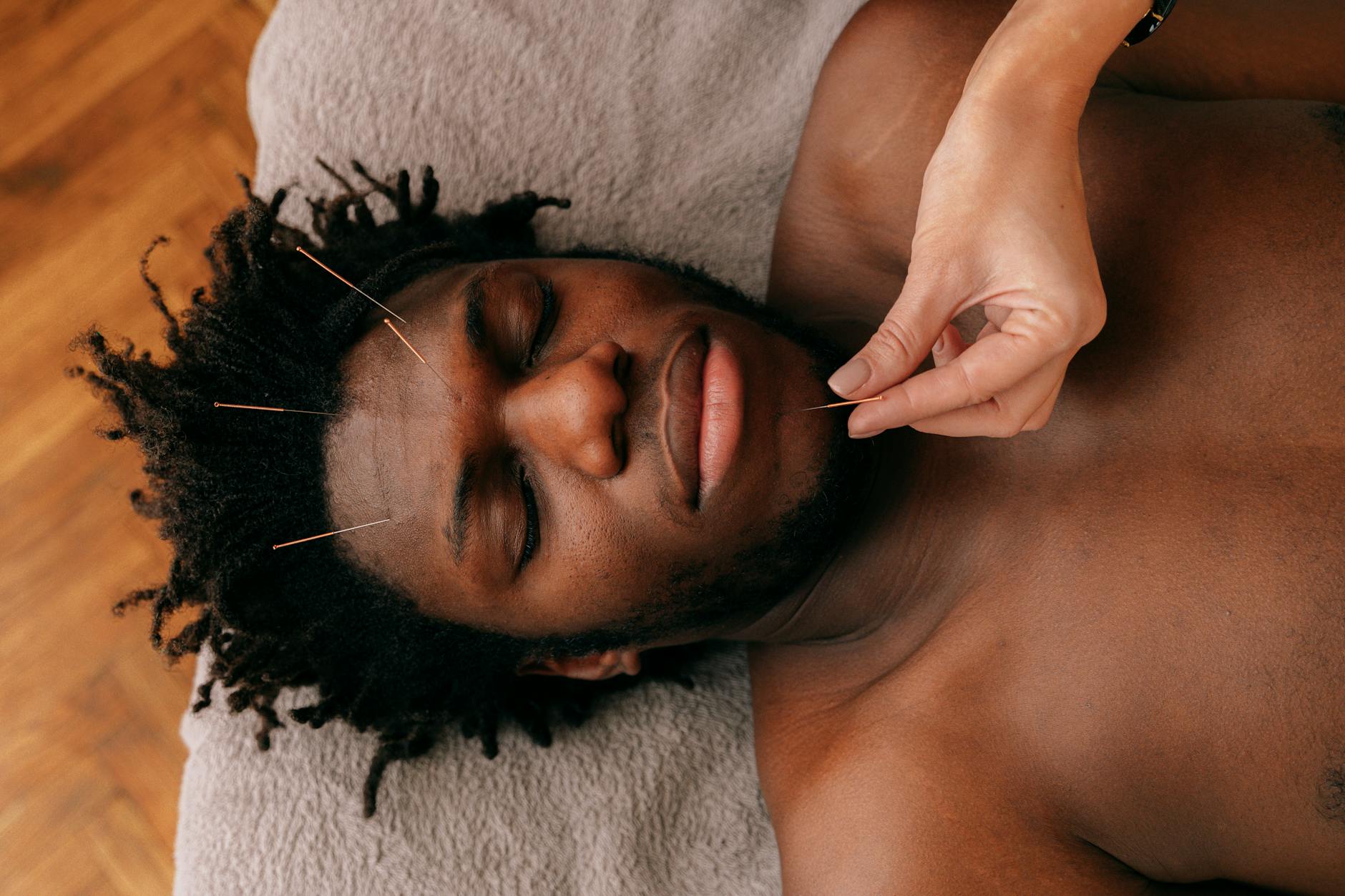
Weekly acupuncture or dry needling treatments are reported as effective complementary interventions for musculoskeletal tension and neuroendocrine system recovery during overtraining treatment. These therapies address the physical manifestations of overtraining—trigger points, muscle tension, and autonomic nervous system dysregulation—while supporting the body’s shift from sympathetic (fight-or-flight) to parasympathetic (rest-and-digest) dominance. Some athletes report improved sleep quality and faster fatigue resolution when weekly treatments are combined with training modification.
A limitation of acupuncture and dry needling in overtraining recovery is that research supporting their effectiveness is limited and these interventions work best as additions to, not replacements for, core treatment elements like training reduction and sleep improvement. An athlete who continues high-volume training and gets weekly acupuncture won’t recover meaningfully. Additionally, cost and availability restrict access for many runners; acupuncture treatments aren’t typically covered by insurance and can range from $75-200 per session. These therapies seem most beneficial for athletes whose overtraining is accompanied by significant musculoskeletal pain or tension, rather than as a standalone treatment approach.
Nutrition and Recovery—A Often-Overlooked Element
Nutrition plays a substantial role in overtraining recovery that’s frequently overlooked in favor of focusing solely on training reduction. Athletes recovering from overtraining often have depleted micronutrient levels, inadequate protein intake to support tissue repair, and insufficient carbohydrate consumption to restore depleted glycogen stores.
Ensuring adequate calories, high-quality protein (1.2-1.6 grams per kilogram of body weight), and consistent carbohydrate intake helps the body recover from the metabolic stress of overtraining. A practical example: a 70-kilogram runner eating only 1,800 calories daily while training 30-40 miles weekly created a massive energy deficit that contributed to overtraining. During recovery, increasing to 2,100-2,300 calories, prioritizing protein and whole-food carbohydrates, and ensuring micronutrient adequacy (iron, magnesium, zinc, B vitamins) significantly accelerated recovery compared to an athlete who made similar training changes but continued undereating.
Preventing the Next Cycle—Periodization and Training Structure
The most valuable insight from overtraining recovery is that prevention through properly periodized training is far superior to treating overtraining after it develops. Periodization involves intentionally cycling through phases of varying intensity and volume—harder blocks followed by easier recovery blocks—rather than maintaining high intensity year-round.
Most runners who experience overtraining once have trained with insufficient recovery or unplanned intensity distribution, which is entirely preventable with structured planning. Looking forward, the research and clinical emphasis on overtraining treatment is shifting increasingly toward prevention through better monitoring tools—wearable devices tracking heart rate variability, sleep quality, and training load—and toward athlete education about the signs of overtraining before they reach severe stages. A runner who recognizes persistent fatigue and declining pace after 6-8 weeks of heavy training and proactively backs off for 2-3 weeks prevents months of forced recovery later.
Conclusion
The best treatment for overtraining combines relative rest—not complete cessation—with a gradual return to activity over 1-12 weeks depending on severity, supported by sleep optimization, proper nutrition, and sometimes targeted interventions like acupuncture or sleep medication. The evidence from sports medicine experts including the European College of Sport Science and American College of Sports Medicine clearly shows that combined training modification, recovered sleep patterns, and low-intensity cross-training produce better outcomes than traditional complete rest while also maintaining psychological wellbeing.
More importantly, understanding overtraining treatment teaches runners the value of preventing it through periodized training, adequate recovery, and attention to warning signs before they become severe. The runner who experiences overtraining syndrome recovers completely; the runner who never develops it doesn’t lose any training time at all. Focus your long-term approach on training structure, adequate sleep, nutrition, and recognizing early fatigue signals—these prevent overtraining far better than even excellent treatment after the fact.


