
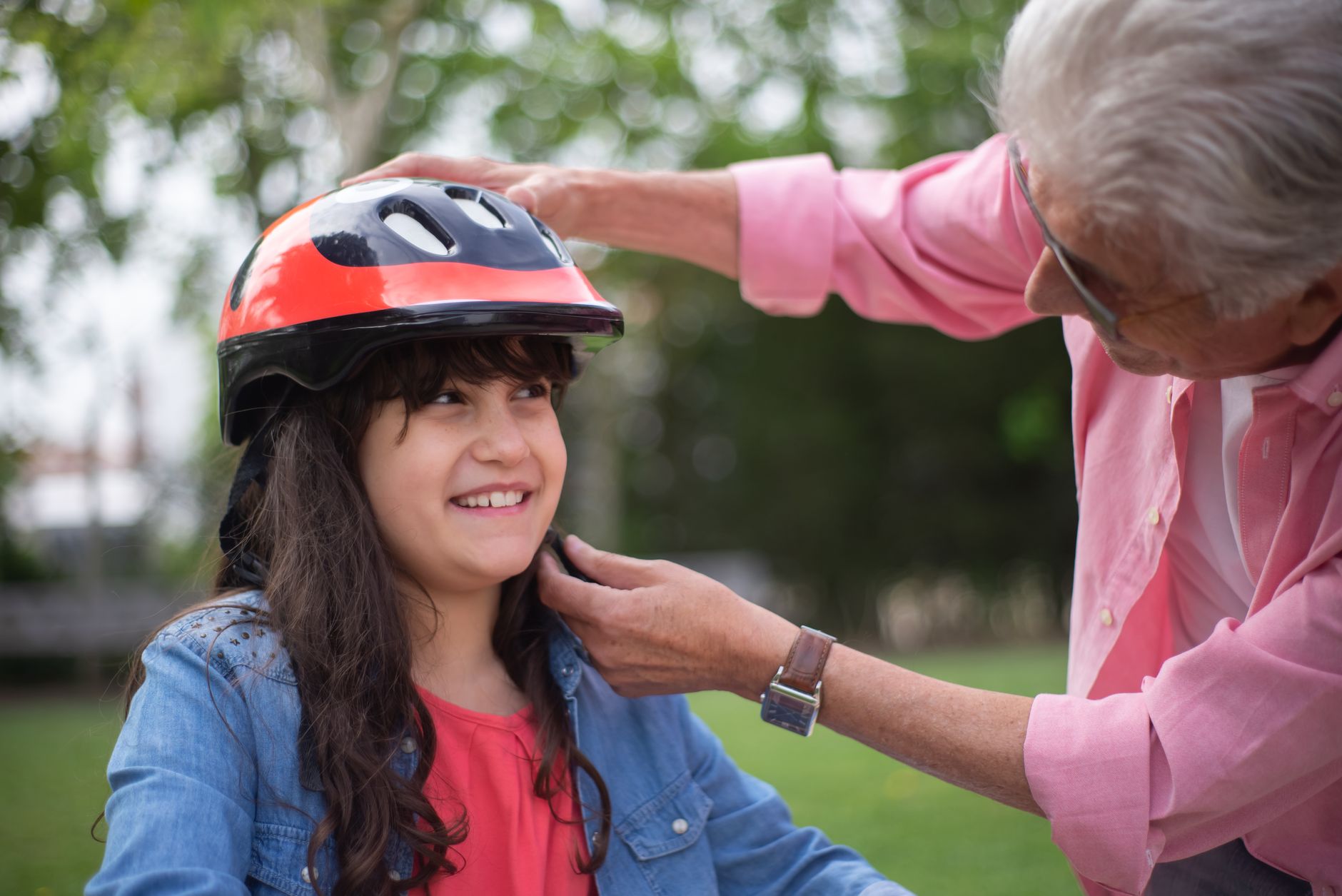
Playing with grandchildren is one of the most effective ways to maintain cardiovascular fitness while creating meaningful memories. The physical demands of active play—whether chasing, lifting, bending, or sustained movement—provide genuine aerobic benefits that rival structured exercise, while engaging different muscle groups than running alone. A grandparent who regularly plays tag, builds with blocks on the floor, or helps a grandchild learn to ride a bike can accumulate 30-45 minutes of moderate-intensity activity without the mental resistance that sometimes accompanies deliberate workouts.
The cardiovascular payoff is substantial. A 65-year-old grandmother who spends two hours on a Saturday afternoon playing catch, swinging a grandchild, and moving around a playground can burn 300-400 calories while maintaining joint flexibility and balance—qualities that prevent falls and support long-term running performance. Unlike a stationary bike, playing with grandchildren demands functional movement: you’re reacting, adjusting, and engaging your core constantly.
Table of Contents
- How Does Active Grandparent Play Compare to Traditional Exercise?
- Physical Demands and Energy Expenditure of Grandparent Play
- The Cardiovascular and Mental Health Benefits
- Building a Sustainable Routine of Active Grandparent Engagement
- Injury Prevention and Age-Related Considerations
- Activities That Maximize Cardiovascular Benefit
- Sustaining Active Grandparenting as You Age
- Conclusion
- Frequently Asked Questions
How Does Active Grandparent Play Compare to Traditional Exercise?
Playing with grandchildren demands different energy systems than running does. While running builds sustained aerobic capacity through steady-state effort, active grandparenting involves interval-style exertion: bursts of sprinting while chasing, sustained effort while pushing a child on swings, and recovery moments during transitions. This naturally mimics high-intensity interval training without requiring a formal program or gym membership. A grandparent who runs marathons might find their interval tolerance decreases if they stop including varied-pace movement—but regular active grandparenting naturally reintroduces those intensity shifts.
The functional advantage is real. Playing with grandchildren exercises stabilizer muscles that pure running doesn’t emphasize: lateral movements when bending to pick up toys, rotational core work when swinging a child, and balance adjustments when walking on uneven ground. These adaptations strengthen ligaments and connective tissue in ways that pure forward locomotion cannot. However, there’s a limitation: active grandparenting rarely provides the sustained 50+ minute aerobic stimulus that a distance runner needs to build serious cardiovascular base. It’s a supplement, not a replacement, for runners who have specific endurance goals.
Physical Demands and Energy Expenditure of Grandparent Play
The intensity varies dramatically depending on the type of play. Chasing games and tag consistently elevate heart rate to 60-75% of maximum, a moderate-intensity zone where many people can sustain conversation but feel genuinely active. Lifting a young grandchild repeatedly (toddlers average 25-35 pounds) engages the leg muscles and posterior chain similarly to squats or deadlifts, with the added benefit of irregular load distribution that forces core stabilization. Over an hour, the cumulative energy expenditure can reach 250-350 calories depending on the grandchild’s age and the type of play—roughly equivalent to a 5-mile run at a moderate pace for a 160-pound adult.
A significant limitation is sustainability. Playing intensely with active grandchildren can lead to overuse injuries in grandparents who are not regularly conditioned for that style of movement. A grandparent who is primarily a runner might develop knee pain from the lateral movements required in games, or shoulder strain from repetitive lifting. The intermittent, high-acceleration nature of grandchild play can be deceptive: it feels less taxing than running because of the frequent rest periods, but the impact and directional forces can accumulate injury risk quickly if you’re not prepared. Warming up and incorporating mobility work becomes especially important.
The Cardiovascular and Mental Health Benefits
Playing with grandchildren produces measurable cardiovascular improvements. Studies on active grandparenting show that regular engagement (3-4 times per week, 60+ minutes) correlates with improved resting heart rate, better blood pressure control, and increased HDL cholesterol. The psychological benefit compounds the physical one: interaction with grandchildren releases oxytocin and reduces cortisol, creating a stress-buffering effect that a solo run alone cannot replicate. A grandmother who runs regularly but plays with grandchildren only occasionally misses a crucial element of cardiovascular health. The relationship dynamic amplifies adherence.
Unlike a running routine, which can feel obligatory or monotonous, playing with grandchildren contains intrinsic motivation. You’re not doing it for fitness points; you’re doing it for connection. This behavioral advantage means grandparents tend to sustain active play longer than they might sustain an equivalent structured exercise session. For instance, a grandparent might run for 30 minutes because that’s their scheduled workout, but happily play actively for 90 minutes with a grandchild without watching the clock. Over a year, this consistency difference produces substantial cumulative benefits.

Building a Sustainable Routine of Active Grandparent Engagement
Starting gradually is essential. A grandparent who hasn’t done dynamic movement in months cannot safely shift into extended chasing games without preparation. Begin with 20-30 minute sessions focused on lower-impact play: building with blocks (which involves frequent bending and standing), playing catch, or helping with age-appropriate obstacle courses. Gradually increase to 45-60 minute sessions over 4-6 weeks as your conditioning improves.
The comparison to training for a race is apt: you wouldn’t run a 10-mile training run without building a base, and you shouldn’t sprint with grandchildren for hours without building movement tolerance first. Mixing play types preserves joint health. Alternating between chasing games one session, water play or swimming the next, and movement-based games like tag or follow-the-leader on the third session distributes impact and prevents overuse patterns. A grandparent who only plays tag with multiple grandchildren in succession risks repetitive strain; the same grandparent who spaces sessions across different days and varies movement types can sustain active grandparenting for decades. Planning sessions—scheduling specific times and activities—increases follow-through and allows you to prioritize recovery when needed.
Injury Prevention and Age-Related Considerations
The most common injury patterns in active grandparents involve the knees, lower back, and shoulders. The knees suffer under the repetitive lateral movements and quick directional changes that games like tag demand, especially if your running routine has built dominance in forward-and-back movement. The lower back strains under the bending and lifting required to play on the ground or to pick up grandchildren repeatedly. The shoulders tighten and develop pain from throwing, lifting, or swinging a child overhead.
A warning: ignoring early pain signals in these areas leads to chronic problems that restrict both grandparenting and running. Preventive mobility work is non-negotiable. Five minutes of dynamic stretching before play (leg swings, arm circles, hip openers, torso twists) and five minutes of static stretching after significantly reduce injury risk. Strengthening exercises targeting the glutes, core, and hip stabilizers—planks, clamshells, single-leg deadlifts—address the stability demands that active play creates. Grandparents who already run have a leg up if their running routine includes strength work; those who run but skip strength training often discover through active grandparenting that they have stability gaps that show up immediately under the demands of dynamic play.

Activities That Maximize Cardiovascular Benefit
Games that involve running or sustained movement produce the greatest cardiovascular stimulus. Tag, relay races, playing catch across a field, dancing together, and simple chase games around the house or yard keep heart rate elevated consistently. These activities are also scalable: you can adjust intensity by changing the distance, speed, or duration based on the grandchild’s age and your current fitness level. A grandparent playing tag with a 4-year-old for 20 minutes experiences a different but legitimate cardiovascular challenge than one playing tag with a 10-year-old for 45 minutes.
Water-based play provides low-impact cardiovascular engagement. Swimming, pool games, and water sports distribute impact across the body rather than loading the joints vertically. For a grandparent managing arthritis or prior injury, water play offers maintained cardiovascular stimulus without the joint stress of ground-based games. The trade-off is that water play generally produces lower absolute intensity (unless you’re seriously swimming laps), so it works best as part of a rotation with higher-intensity play rather than as the only source of active grandparent engagement.
Sustaining Active Grandparenting as You Age
The long-term payoff of regular active grandparenting extends beyond the years when grandchildren are young. Grandparents who maintain functional fitness and movement variety through engaged play sustain better mobility, balance, and bone density in later decades. The activity builds resilience—the ability to respond to unexpected physical demands without injury.
This resilience applies directly to running: a grandparent who has spent years maintaining movement quality through dynamic play with grandchildren typically maintains better form and injury resistance in running as they age. Looking forward, the research on active aging increasingly recognizes varied functional movement as more protective than single-modality exercise. A lifetime runner who also maintained regular active grandparenting shows better long-term outcomes for mobility, fall prevention, and independence than a runner who focused exclusively on steady-state exercise. The implication is clear: if you have grandchildren, regular active engagement is not a distraction from your running practice—it’s a complementary practice that strengthens your overall health trajectory.
Conclusion
Playing with grandchildren is a genuine form of cardiovascular and functional fitness that complements a running routine effectively. The activity provides interval-style exertion, engages stabilizer muscles that running alone doesn’t emphasize, and offers the psychological benefits of meaningful connection—creating an adherence advantage that structured exercise often lacks. When approached systematically with attention to warm-up, recovery, and injury prevention, active grandparenting becomes a sustainable source of fitness that spans decades.
Start with 20-30 minute sessions of varied play and gradually increase duration and intensity as your conditioning allows. Mix play types to prevent overuse injuries, incorporate preventive mobility work, and respect pain signals that indicate you need to modify or reduce intensity. Treated as a serious component of your training plan rather than a casual add-on, playing with grandchildren will strengthen both your cardiovascular fitness and the relationships that make life worth running for.
Frequently Asked Questions
How often should I play actively with grandchildren to get cardiovascular benefit?
Three to four sessions per week of 45-60 minutes produces measurable cardiovascular improvement. Shorter sessions (20-30 minutes) still count but require more frequency or higher intensity to achieve equivalent stimulus.
Can active grandparent play replace my running routine?
No. While it provides genuine cardiovascular benefits, it typically doesn’t sustain the duration or sustained intensity needed for endurance fitness. Use it as a complement to running, not a replacement.
What warm-up should I do before playing with grandchildren?
Five minutes of dynamic movement—leg swings, arm circles, torso twists, hip circles—prepares your muscles and joints. Include a brief progression toward the intensity you’ll use during play.
How do I know if I’m pushing too hard with my grandchildren?
You should be able to speak in short sentences during play (moderate intensity). If you cannot speak at all or feel sharp pain (not just general exertion), you’re overdoing it. Recovery should take minutes, not hours.
What types of play provide the most cardiovascular benefit?
Running-based games (tag, chase), sustained movement (dancing, swimming), and games requiring rapid directional changes produce the highest heart rate elevation. Sedentary play like board games offers no cardiovascular benefit.
How can I prevent injuries while playing actively with grandchildren?
Include a warm-up before and static stretching after. Do strength work targeting glutes, core, and hip stabilizers 2-3 times weekly. Vary play types to avoid overuse patterns, and don’t ignore early pain signals.


