
The fitness technology you need to improve your running isn’t something you’ll need to wait for—it’s available right now. In 2026, wearable devices, AI-powered coaching systems, and smart home equipment have moved from futuristic concepts into practical tools you can use during your next workout. If you’ve been holding out for “future” fitness technology, the good news is that future has already arrived, and it’s more accessible and practical than you might expect. What makes today’s fitness technology genuinely useful is that it goes far beyond counting steps. A modern smartwatch or fitness ring tracks your heart rate variability, blood pressure, blood glucose levels, and skin temperature—data that actually means something for your training and recovery.
These aren’t gimmicks added to justify a premium price. They’re measurements that can help you understand why certain workouts leave you feeling drained or energized, and whether you’re pushing hard enough or not hard enough. Consider a runner wearing a current-generation fitness tracker during a hard interval session. That device doesn’t just log your heart rate; it measures heart rate variability to assess recovery status, tracks blood oxygen during the effort, and logs sleep quality from the night before. After the workout, it suggests whether you should run again tomorrow or take an easy day based on your physiological readiness. That’s not speculation—that’s data-driven coaching that was essentially impossible five years ago.
Table of Contents
- Wearable Technology as Your Personal Health Monitor
- AI Trainers Built Into Your Equipment
- Immersive Fitness Through VR and Augmented Reality
- Nutrition Analysis and Recovery Tracking Through AI
- The Reality Check—Cost, Privacy, and Data Reliability
- Longevity and Exoskeleton Technology for Runners
- The Practical Path Forward for Today’s Runners
- Conclusion
- Frequently Asked Questions
Wearable Technology as Your Personal Health Monitor
Wearables have been ranked the top fitness industry trend for 2026 by the American College of Sports Medicine, and for good reason. The barrier between “nice to have” and “actually useful” has finally been crossed. The devices themselves haven’t changed dramatically in appearance, but what they measure and how they interpret that data has evolved significantly. Modern wearables track metrics that matter to runners specifically. heart rate variability—the variation in time between heartbeats—gives you insight into how well your nervous system is recovering.
Sleep tracking has moved beyond simple sleep duration to measure sleep stages and consistency, which directly impacts running performance. Blood pressure, blood glucose, and skin temperature readings provide a more complete picture of your physical state than traditional workout metrics. The practical difference shows up in training decisions. A runner relying only on pace and heart rate might push hard during a workout even though their HRV indicates they’re not recovered. A wearable device that flags low recovery will suggest an easier effort, which prevents overtraining and injury. This isn’t a small optimization; it’s the difference between sustainable training and the burnout that derails most runners.

AI Trainers Built Into Your Equipment
If you’ve been to a modern gym recently, you might have noticed equipment that seems almost conversational. Brands like Tonal, OxeFit, and DKN have integrated AI personal trainers directly into their machines. These systems adjust resistance in real time based on your performance, not based on a preset program. If you slow down or lose form, the resistance automatically decreases. If you’re moving smoothly and powerfully, it increases the challenge. For runners who cross-train, this represents a genuine advantage. The AI doesn’t just follow a preset workout; it responds to how you’re moving right now.
This is different from a traditional strength machine where you follow a fixed pattern. The equipment is essentially coaching you through each rep, watching your speed and form and adapting instantly. The limitation here is access and cost. This technology is primarily available at equipped gyms or as expensive home installations, and it requires subscription services for the personalization and coaching features. A basic treadmill or rowing machine costs far less, but it won’t adjust resistance based on your real-time performance. If you have access to AI-equipped equipment through a gym, it’s worth using regularly. If you don’t, a regular smart treadmill with built-in workouts still offers significant value compared to traditional equipment.
Immersive Fitness Through VR and Augmented Reality
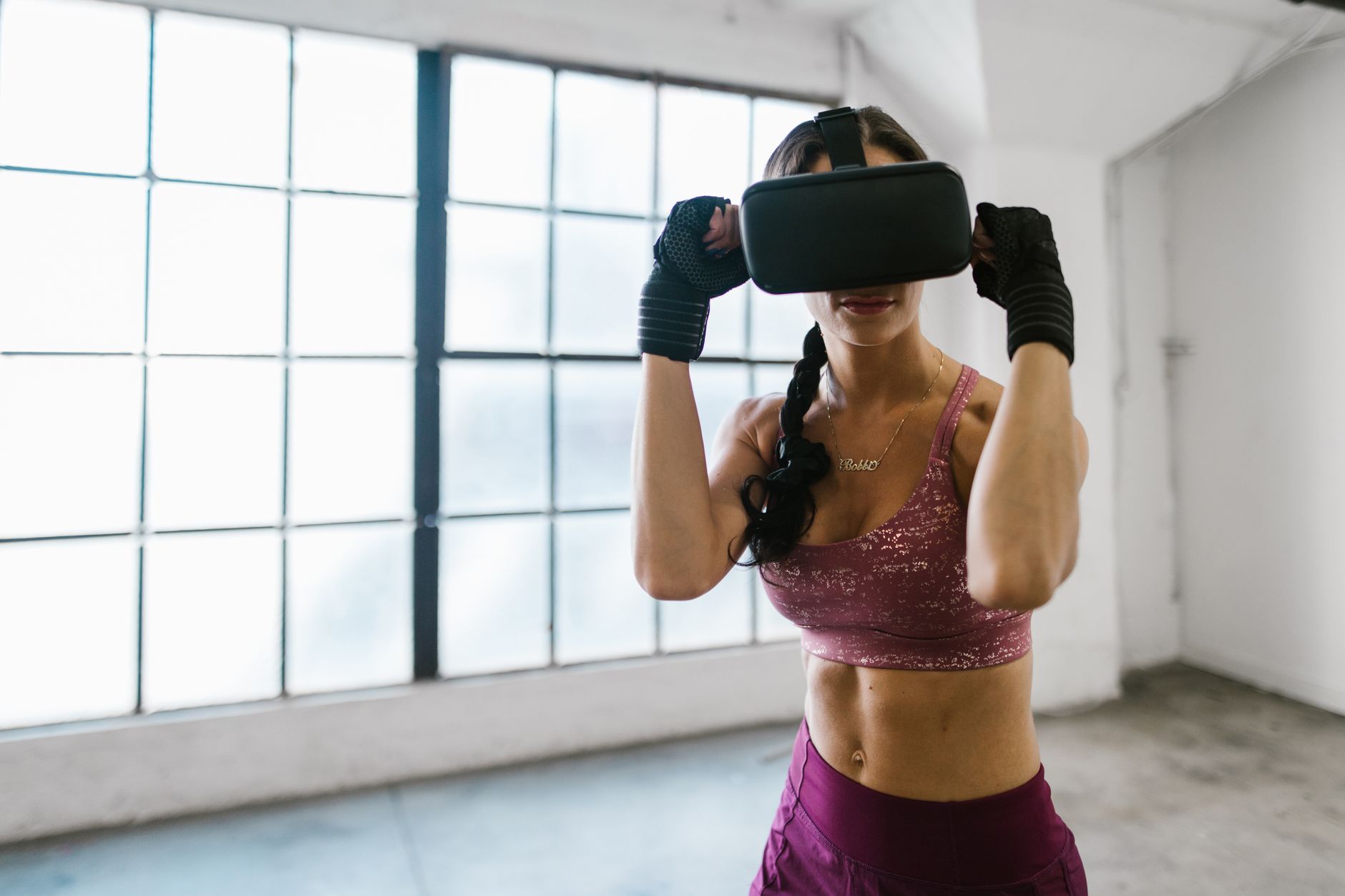
Virtual reality fitness has evolved beyond the gimmick phase. VR applications now transform workouts into fully rendered virtual environments where you can bike through mountain ranges, run through fantasy landscapes, or compete against other people in real-time multiplayer sessions. The immersion creates a psychological effect: workouts feel shorter and harder efforts feel more manageable because your brain is engaged in the environment rather than focused on the discomfort. Augmented reality coaching adds another layer, projecting real-time cues directly into your field of vision during outdoor runs.
AR glasses or smartphone-based systems can display your pace, cadence, heart rate, and coaching cues without requiring you to glance down at a watch. Some systems provide form coaching during runs, using smartphone cameras to analyze your stride and provide feedback about posture or landing patterns. For runners, VR is most practical during treadmill workouts or indoor cross-training, where environmental immersion has the most impact. Outdoor AR coaching works but requires compatible devices and still depends on smartphone processing power, which creates battery drain issues on longer runs. The technology is here and functional, but it works best for specific training scenarios rather than as an all-purpose solution.

Nutrition Analysis and Recovery Tracking Through AI
Smartphone-based nutrition analysis has become genuinely useful. Apps that use your phone’s camera can now scan meals and automatically log macro and micronutrient data without manual entry. You point your camera at your plate, and the app identifies the food, estimates portion size, and logs the nutritional content. This removes a major friction point in nutrition tracking—you don’t have to search databases and manually enter portion sizes for every meal. Combined with wearable tracking, you can start connecting your nutrition to your actual recovery and performance. Low blood glucose readings before workouts, combined with your nutrition logs, show you what eating patterns optimize your performance.
You can see directly how different meals affect your next day’s recovery metrics. This is genuinely personalized nutrition data, not generic guidelines. The practical benefit depends on how consistently you use it. Scanning every meal creates habits, but it requires discipline. The apps are accurate for most common foods but struggle with mixed dishes, restaurant meals, and portions. For runners optimizing training, tracking meals on important training days and recovery days gives you useful data without requiring obsessive logging.
The Reality Check—Cost, Privacy, and Data Reliability
Before you invest heavily in fitness technology, understand the limitations. Wearable measurements aren’t as accurate as clinical equipment. Heart rate variability readings, blood pressure estimates, and blood glucose approximations are useful for trends and relative comparisons, but they’re not replacements for medical monitoring if you have health conditions. A fitness tracker might notice your blood pressure is elevated during workouts, but it shouldn’t replace an actual blood pressure monitor if you’re managing hypertension. Privacy is a real concern with connected devices. Fitness data—including your location history, heart rate patterns, sleep data, and personal health information—gets stored on company servers.
Understand what data is collected, how it’s used, and whether it’s shared with advertisers or other companies. The convenience of automatic tracking comes with the tradeoff of sharing increasingly detailed personal health information. Cost accumulates fast. A quality smartwatch ($300-500), a subscription service ($10-20 monthly), gym membership with equipped facilities ($50-150 monthly), and supplemental apps all add up. The technology is worth it if you’ll actually use it to make training decisions, but it’s wasted money if it just sits in your closet as an expensive tracker. Start with one tool you’ll genuinely use rather than trying to adopt everything at once.
Longevity and Exoskeleton Technology for Runners
Newer technologies are beginning to filter into consumer availability. The NuraLogix Longevity Mirror uses AI and transdermal optical imaging to analyze facial blood-flow patterns and calculate a longevity index score based on physiological age and cardiovascular health risk. This isn’t a gimmick—it’s measuring real physiological markers from a simple mirror interaction.
While it’s not yet mainstream, it represents the direction fitness technology is heading: more comprehensive health assessment without more invasive testing. The Dephy Sidekick Exoskeleton—a wearable shin and ankle system—reduces physical effort and discomfort during movement. For runners managing minor injuries or seeking faster recovery between hard training sessions, exoskeleton technology could provide relief. These are still expensive and primarily available through specialized facilities, but they’re entering the conversation about tools that could help runners train through discomfort or recover from minor issues.
The Practical Path Forward for Today’s Runners
The gap between futuristic fitness technology and what’s actually available today has closed significantly. You don’t need to wait for something new; you can build a functional system right now. The key is choosing tools that match how you actually train and what metrics matter for your goals. A runner focused on easy run consistency benefits most from straightforward activity tracking and basic heart rate data. A runner managing training load needs HRV and recovery metrics.
A cross-trainer benefits from AI-equipped strength devices. Fitness technology works best as part of a larger training system, not as a replacement for the fundamentals. No device will make you a better runner if you’re not running consistently, if you’re not sleeping enough, or if your training lacks structure. What good technology does is provide feedback that helps you make better decisions within a training program you’re already committed to. Start with one tool that answers a specific question about your training, then add others if they solve real problems.
Conclusion
The future of fitness technology isn’t somewhere ahead of you—it’s available right now through wearables, smart equipment, and connected apps. The challenge isn’t finding advanced technology; it’s cutting through the noise to identify tools that will actually improve your training. Wearables rank as the top fitness industry trend in 2026 precisely because they’ve moved beyond novelty into genuinely useful health monitoring. Start by identifying one specific question about your training that technology could help answer.
Whether that’s recovery readiness, cross-training performance, or nutrition optimization, there’s a tool available today that can provide that data. Begin with one tool you’ll use consistently, understand what it actually measures and how reliable that measurement is, and build from there. The future of fitness was supposed to be about more technology, more data, and more complexity. Instead, it’s become about better tools that help you make simpler, smarter training decisions.
Frequently Asked Questions
Are fitness wearables accurate enough to trust for training decisions?
Wearables are accurate for tracking trends and relative comparisons but aren’t as precise as clinical equipment. Heart rate variability, blood pressure, and blood glucose readings give useful guidance for training patterns without replacing medical monitoring.
Do I need to be at an expensive gym to access AI-powered fitness equipment?
Many modern gyms now have AI-equipped machines available as part of standard membership. You don’t need an exclusive facility, though costs vary by location. Home equipment options exist but require larger upfront investment.
Is VR fitness actually better than regular treadmill running?
VR provides psychological benefit through immersion and can make harder efforts feel more manageable, but the physical training stimulus is similar. It’s best used for specific purposes like building treadmill tolerance or making cross-training more engaging.
How much does building a complete fitness technology setup cost?
A basic system starts at $300-500 for a quality smartwatch plus monthly subscription fees ($10-20). Adding gym access, apps, and equipment increases costs significantly. Start with one tool rather than trying to adopt everything at once.
Will fitness technology replace a good training plan?
Technology provides data and feedback, not training structure. A well-designed training plan remains fundamental. Technology works best to optimize decisions within a program you’re already committed to.
Can I use fitness technology if I have health conditions?
Wearable health readings are useful for trend tracking but shouldn’t replace clinical monitoring. Consult your healthcare provider about using fitness technology alongside medical care for specific conditions.


