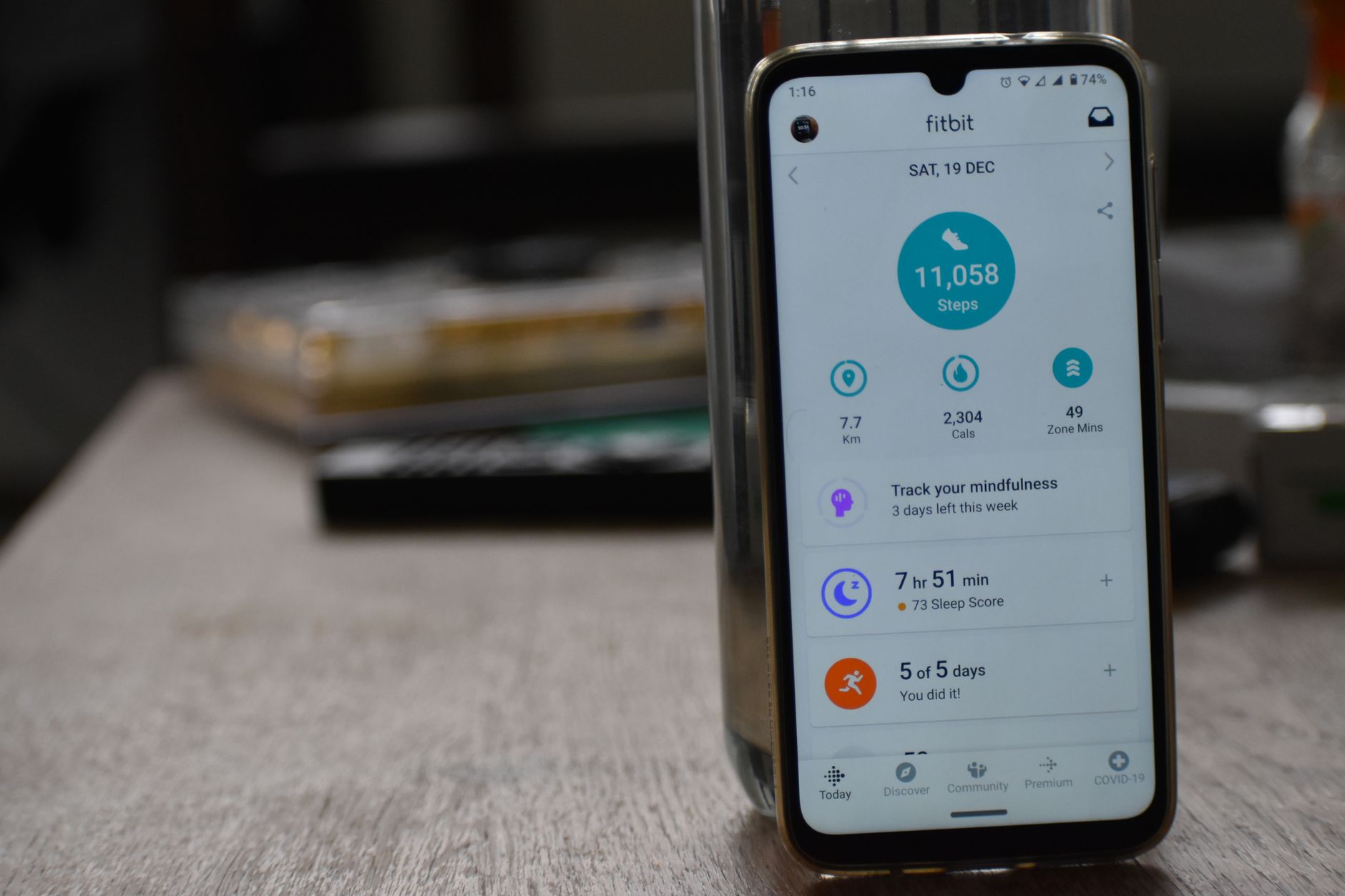
Active Zone Minutes are Fitbit’s metric for tracking the intensity and quality of your cardiorespiratory activity, rather than simply counting steps or time spent exercising. When you move in higher heart rate zones, your Fitbit device awards you Active Zone Minutes—and how many you earn depends on how hard you’re working. The system recognizes three intensity levels: Fat Burn (earning 1 Active Zone Minute per minute), Cardio (earning 2 per minute), and Peak (also earning 2 per minute). If you go for a 30-minute run at moderate intensity, you might earn 45 or 60 Active Zone Minutes depending on how hard you push, rather than earning a flat 30 that a simple time-based tracker would give you. The concept is rooted in the American Heart Association’s exercise recommendations: 150 minutes of moderate-intensity aerobic activity per week, or 75 minutes of vigorous activity, or a combination of both.
Fitbit’s Active Zone Minutes align directly with those guidelines. This means you’re not just logging exercise—you’re tracking whether the exercise you’re doing meets recognized health standards for cardiovascular fitness. Your goal on Fitbit is typically set at 150 Active Zone Minutes per week, which breaks down to roughly 22 minutes per day. That daily number isn’t a hard requirement, but it gives you a daily target to work toward. Some days you might accumulate your weekly minutes quickly with intense workouts; other days a gentler pace means those minutes take longer to rack up.
Table of Contents
- HOW FITBIT CALCULATES YOUR ACTIVE ZONE MINUTES
- UNDERSTANDING THE HEART RATE ZONES AND THEIR INTENSITY LEVELS
- TRACKING YOUR PROGRESS TOWARD THE 150-MINUTE WEEKLY TARGET
- PRACTICAL STRATEGIES FOR REACHING YOUR WEEKLY GOAL
- COMMON ISSUES AND ACCURACY CONCERNS WITH ZONE MINUTE TRACKING
- SWIMMING AND ACTIVITIES THAT DON’T TRACK HEART RATE
- ACTIVE ZONE MINUTES AND YOUR BROADER FITNESS JOURNEY
- Conclusion
HOW FITBIT CALCULATES YOUR ACTIVE ZONE MINUTES
Fitbit uses your heart rate to determine which intensity zone you’re working in at any given moment. The system relies on the Karvonen calculation to establish your personal heart rate zones. First, your maximum heart rate is estimated as 220 minus your age. From there, Fitbit calculates your zones as percentages of your heart rate reserve—the difference between your maximum heart rate and your resting heart rate. This personalized approach is more accurate than generic zone calculators because it accounts for your individual resting heart rate, which varies based on fitness level and age. The three active zones are straightforward in their point values. Fat Burn (50-69% of maximum heart rate) represents moderate effort—the pace where you can still hold a conversation but feel like you’re working.
This zone awards 1 Active Zone Minute per minute of activity. Cardio (70-84% of maximum heart rate) is where serious cardiovascular work happens; you’re breathing hard and can only speak in short phrases. Peak (above 85% of maximum heart rate) is maximum effort, the all-out sprint where you can barely speak. Both Cardio and Peak zones award 2 Active Zone Minutes per minute, making vigorous exercise much more efficient at hitting your weekly target. The immediate benefit is that this system rewards intensity over time. A leisurely walk that keeps your heart rate below 50% of maximum won’t earn any Active Zone Minutes, even if you’re outside for an hour. But a 20-minute brisk run that pushes you into the Cardio zone might earn 40 Active Zone Minutes toward your 150-minute weekly goal.
UNDERSTANDING THE HEART RATE ZONES AND THEIR INTENSITY LEVELS
Each intensity zone represents a different type of physiological stress on your body and serves a different training purpose. The Fat Burn zone (50-69% max heart rate) is where many people start if they’re new to fitness or returning after time off. The aerobic base you build here supports all other training. This zone burns fat for fuel but doesn’t stress your cardiovascular system enough to trigger significant fitness adaptations—it’s the zone for recovery runs, steady-state walks, or easy cycling. The Cardio zone (70-84% max heart rate) is where the real fitness improvements happen. This is where your body adapts to harder work, your mitochondria become more efficient at using oxygen, and your cardiovascular system strengthens. Most of your running pace if you’re a recreational runner falls here.
A 5K race pace or a tempo run will push you into this zone. The Peak zone (above 85% max heart rate) is reserved for all-out efforts—sprinting, high-intensity interval training, or the final kick in a race. Most people shouldn’t spend much time here outside of dedicated intense workouts, and chronic overtraining in this zone can lead to burnout or injury. One important limitation is that Fitbit uses wrist-based optical heart rate monitoring, which can sometimes register incorrectly during certain activities or for certain body types. If you have a tattoo under your Fitbit, the sensor might struggle. Cold water or poor blood flow can also affect accuracy. This means the zones Fitbit assigns you are approximations, not clinical measurements. For most recreational athletes this is fine, but if you’re doing serious training where heart rate precision matters, a chest strap monitor is more reliable.
TRACKING YOUR PROGRESS TOWARD THE 150-MINUTE WEEKLY TARGET
Your weekly Active Zone Minutes goal is designed to align with public health recommendations, so hitting 150 per week puts you in the category of people meeting cardiovascular fitness guidelines. The 22-minute daily average is just a helpful way to think about it—you could hit 150 by doing three intense 50-minute workouts and resting the other four days, or by doing 22 minutes every day. Fitbit shows you your progress both as a daily tally and as a rolling weekly total, so you can see exactly where you stand at any point. Most running apps and Fitbit itself will display your Active Zone Minutes prominently in your activity feed and dashboard. You’ll see notifications when you reach daily or weekly milestones. For someone training for a half-marathon or 10K, Active Zone Minutes become a useful second metric alongside pace and distance.
You might run a long, slow 10-miler and earn only 20-30 Active Zone Minutes because your pace keeps you in the Fat Burn zone. The same person running a fast 3 miles might earn 30 Active Zone Minutes in half the time, simply because the intensity was higher. One thing to watch is chasing Active Zone Minutes at the expense of balanced training. New runners sometimes try to turn every run into a speed workout to rack up points faster. This actually increases injury risk and leads to burnout. A proper training plan includes easy runs (Fat Burn zone), moderate runs (Cardio zone), and occasional fast efforts (Peak zone). All three are necessary for long-term fitness and performance.
PRACTICAL STRATEGIES FOR REACHING YOUR WEEKLY GOAL
If you’re consistently falling short of 150 Active Zone Minutes per week, the most straightforward fix is adding one or two sessions of moderate intensity or higher. An easy 30-minute run at a conversational pace might earn only 15-20 Active Zone Minutes, but a 30-minute tempo run could earn 40 or 50. You don’t need to add hours of training—you need to add intensity to some of your existing sessions or add at least one harder workout per week. For people with limited training time, high-intensity interval training (HIIT) is very efficient at generating Active Zone Minutes. A 20-minute session of alternating hard efforts and recovery could earn 30-40 Active Zone Minutes because you’re spending a significant chunk of that time in the Cardio or Peak zone.
Compare that to a steady 30-minute easy jog that might earn only 20-25 minutes, and you see why intensity matters for time-constrained athletes. The tradeoff is recovery and durability. Doing all your workouts at high intensity is sustainable for only short periods. Most runners need 80% of their mileage or time at easy intensity to support the harder sessions that generate more Active Zone Minutes. Chasing the 150-minute target exclusively through hard workouts leads to overtraining, injury, and eventually falling short because you’re sidelined. A balanced approach—mostly easy running with one or two higher-intensity sessions per week—hits the target while keeping you healthy.
COMMON ISSUES AND ACCURACY CONCERNS WITH ZONE MINUTE TRACKING
One frequent issue is that Fitbit sometimes misclassifies the zone you’re in, usually placing you in a lower zone than you’re actually working in. This can happen if your wrist-based heart rate sensor isn’t reading cleanly, if you’re wearing the device loosely, or if you’re doing an activity where arm movement affects the optical sensor. Your 8-minute-per-mile run might be showing in Fat Burn when it should be in Cardio. This usually becomes obvious over time—if you consistently earn fewer Active Zone Minutes than you expect from your pace and effort level, your sensor or device fit might be the culprit. Another limitation is that some activities earn Active Zone Minutes but don’t fit neatly into the heart rate zones. Swimming is a notable exception: Fitbit devices don’t reliably track heart rate in water because the optical sensor needs good contact with skin.
However, Fitbit still awards 1 Active Zone Minute per minute of logged swimming activity. This is a reasonable compromise, but it means a swimming workout earns points at a lower rate than equivalent-effort swimming in the Cardio zone would earn if the heart rate were readable. If you have an older Fitbit device or one with a weak sensor, you might want to manually confirm your zone calculations. Knowing that you reached 160 beats per minute during a run and understanding that this is 85% of your max heart rate puts you in the Peak zone can be useful validation. Apps like Strava can help with this cross-check, though they rely on their own heart rate algorithms. Don’t become obsessed with hitting exactly 150 minutes—the number is guidance, not gospel. The real point is consistent aerobic training at intensities that improve your fitness.

SWIMMING AND ACTIVITIES THAT DON’T TRACK HEART RATE
Swimming is the most common activity where heart rate monitoring fails but Active Zone Minutes still apply. Fitbit doesn’t disable zone tracking for swimming—it simply awards you a flat 1 Active Zone Minute per minute logged. This is less generous than earned-rate tracking in higher zones, but it acknowledges that swimming is legitimate cardiovascular exercise. A 45-minute swim earns 45 Active Zone Minutes, which counts toward your 150-minute weekly goal.
Some other water-based activities fall into this category too: kayaking, paddleboarding, or diving. Any activity where the Fitbit can’t get a reliable heart rate reading will either earn no Active Zone Minutes or earn a conservative rate. The lesson here is that Fitbit’s system is designed for land-based aerobic exercise, primarily running, cycling, and gym workouts. If you do a lot of swimming or water sports, your actual fitness might be higher than your Active Zone Minutes reflect, and you shouldn’t let a lower minute count discourage you.
ACTIVE ZONE MINUTES AND YOUR BROADER FITNESS JOURNEY
Active Zone Minutes are most useful as one data point among many. They complement pace, distance, total calories burned, and how you feel during and after workouts. Someone hitting 150 Active Zone Minutes per week is meeting cardiovascular fitness guidelines, but that alone doesn’t guarantee aerobic capacity, speed, or endurance. A runner doing easy 5-mile jogs every day for 150 minutes per week hits the target but might not have the leg strength or speed of someone doing varied workouts—easy days, tempo runs, and intervals.
As wearable technology evolves, Fitbit’s zone minute system continues to get refined. More accurate heart rate sensors, better algorithms, and integration with other fitness data (like VO2 max estimates) give you a fuller picture of your fitness level. For now, Active Zone Minutes remain a practical standard for assessing whether you’re doing enough aerobic work to meet health guidelines. Use them as a guide, but don’t let them override common sense about balanced training, proper recovery, and listening to your body.
Conclusion
Fitbit Active Zone Minutes quantify the intensity of your exercise by tracking your heart rate and assigning point values based on effort level. Working in the Fat Burn zone (50-69% max heart rate) earns 1 point per minute; Cardio (70-84%) and Peak (above 85%) each earn 2 points per minute. Your 150-minute weekly target aligns with American Heart Association cardiovascular guidelines and works out to roughly 22 minutes per day, though the distribution is flexible based on your training schedule.
To make the most of this metric, focus on including some higher-intensity work in your training week—whether that’s tempo runs, intervals, or steady Cardio-zone effort. Monitor your progress on your Fitbit dashboard, but remember that the number is a guide, not a mandate. Your real goal is sustainable, balanced training that improves your fitness without leading to injury or burnout. Active Zone Minutes are a useful tool for staying accountable to cardiovascular fitness recommendations, but they work best as part of a complete training approach that also considers easy runs, recovery, and individual performance goals.