
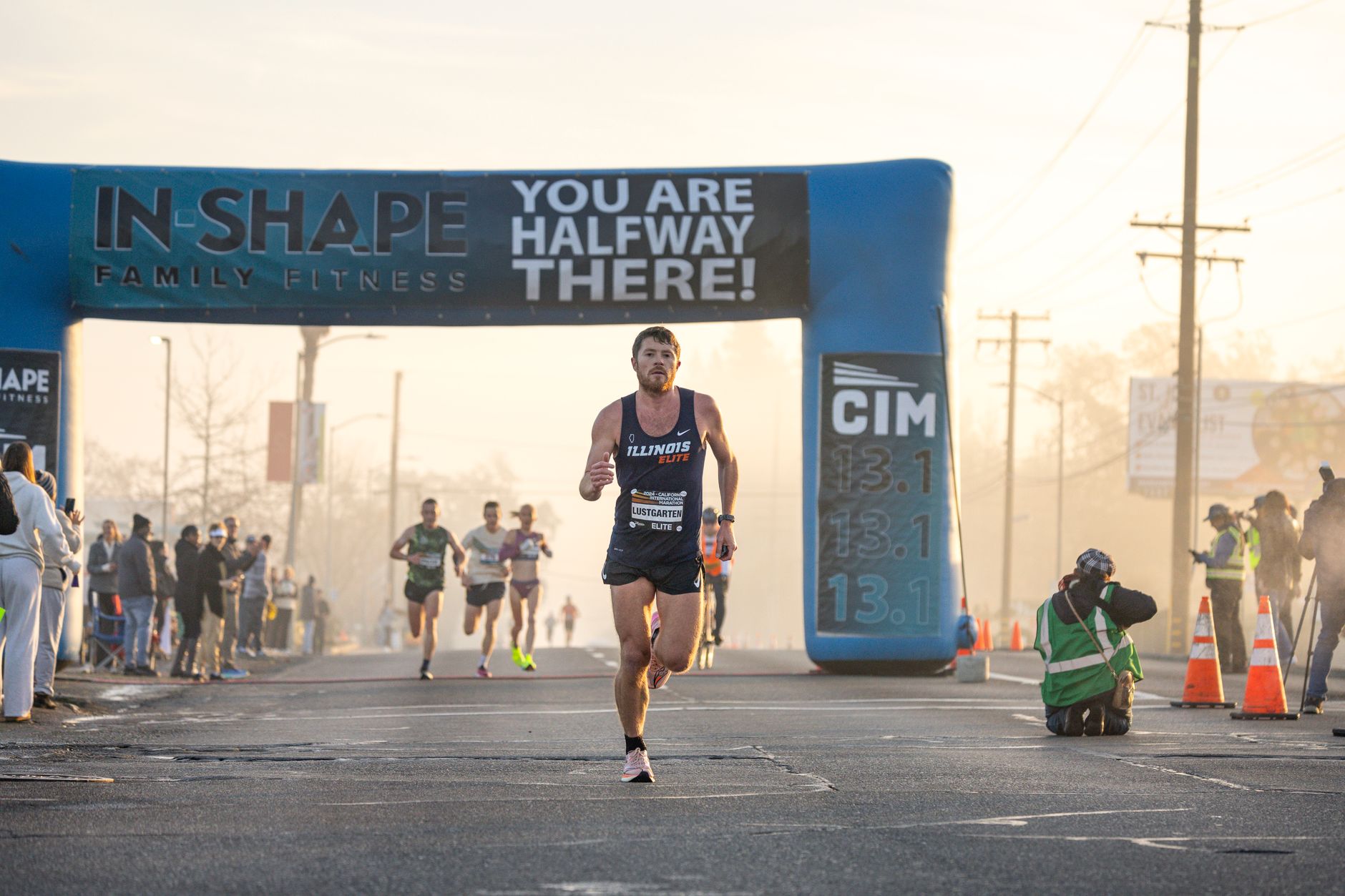
A strong half-marathon workout has three parts: warm-up, main session, and recovery. A half marathon is a 13.1-mile race, so each part supports endurance and leg speed.
Warm-up raises heart rate and blood flow. The main session builds threshold fitness. Recovery restores fuel, fluids, and muscle.
Medical information disclaimer: This article is for general educational purposes only and does not provide medical advice, diagnosis, or treatment. Always consult a physician or other qualified health professional about symptoms, medications, tests, or treatment decisions.
Table of Contents
- How Should You Warm Up?
- What Does a Balanced Training Week Include?
- How Do Tempo Runs Fit 13.1 Miles?
- What Speeds Recovery After Long Runs?
How Should You Warm Up?
Start with 5-10 minutes of light aerobic jogging. Add controlled dynamic moves like leg swings, high knees, and lunges. WVU Campus Recreation, citing Hospital for Special Surgery, advises this sequence to raise heart rate and blood flow in its warm-up and cool-down guidance.
Save static holds for after the run. Cool down with 5 minutes of easy walking or jogging. Finish with gentle stretches for the major muscles. A simple order looks like this:.
- 5-10 minutes light jogging
- leg swings, high knees, lunges
- main run session
- 5 minutes easy walking or jogging, then gentle major-muscle stretches
What Does a Balanced Training Week Include?
A half-marathon week typically mixes one interval session, one tempo run, and one easy long run. The City of Jackson 2-Week Half Marathon Training Plan uses 4x800m at 5K pace, 20 minutes at half-marathon pace, and 7 miles at conversational pace in its 2-week half-marathon training plan. Intervals develop sharp leg turnover. Tempo work holds strong effort with control.
The easy long run builds aerobic time on feet. Keep the easy run truly conversational. You should be able to speak in full sentences. Stop or adjust if pain, dizziness, or chest symptoms appear.
How Do Tempo Runs Fit 13.1 Miles?
Tempo work builds lactate-threshold fitness for the 13.1-mile distance. Lactate threshold means the fastest steady effort you can sustain before fatigue rises quickly. Training4Endurance explains this benefit and shows how tempo fits long runs in its tempo-intervals guide. You can insert tempo segments into a longer run.
One option is 30 minutes easy plus 10-minute tempo repeats. Another is a progressive final 3 miles from marathon pace down to 10-mile pace. Use the long-run setting to practice steady pacing. Start controlled, then finish strong. Avoid sprinting the early miles.
What Speeds Recovery After Long Runs?
Replenish carbohydrate stores soon after long runs or races. Mayo Clinic sports dietitians emphasize carb refueling in the post-exercise recovery window, plus protein and fluids, in its feeding recovery for endurance athletes. During exercise, drink to thirst with plain water and sports beverage as needed. Mayo Clinic dietitian Katherine Zeratsky notes daily baseline intake is an everyday habit, not only race-day drinking.
Keep sipping after training until urine is pale yellow and thirst settles. Sleep 7-9 hours nightly because muscles repair and regenerate during rest. The Medical University of South Carolina reports Stanford basketball players slept up to 10 hours and ran faster sprints, while short sleep harms performance. Hard-training runners may need more rest, so fix sleep before adding mileage.