
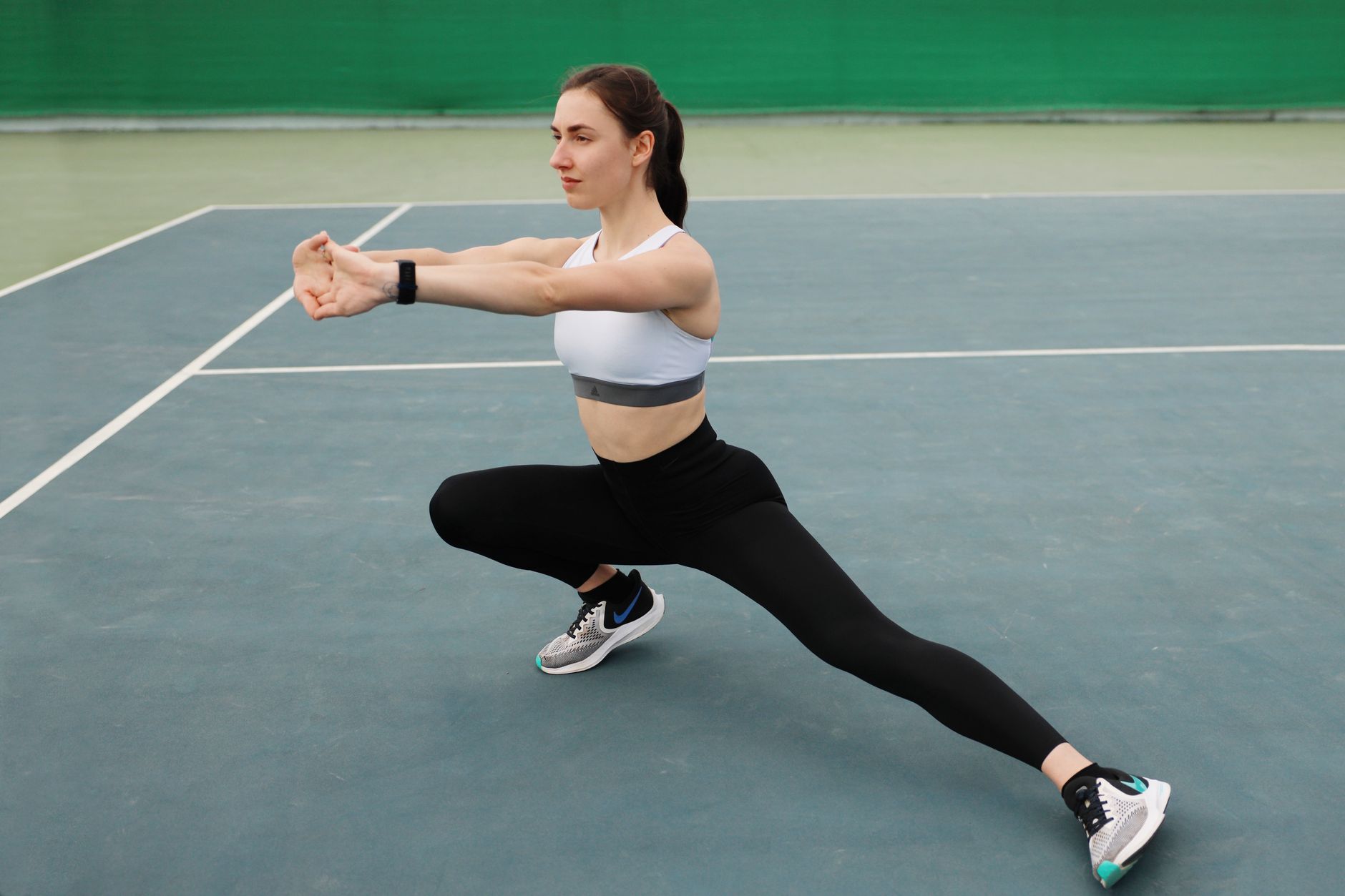
A runner workout built around static stretching should use dynamic moves before the run and static holds after. Static stretching is a still hold that lengthens a muscle without bouncing, so it fits recovery better than warm-up. Runners should do 5-10 minutes of dynamic moves before workouts and save static stretches for after. Hospital for Special Surgery guidance describes that split in the Peloton summary of the guidance.
Medical information disclaimer: This article is for general educational purposes only and does not provide medical advice, diagnosis, or treatment. Always consult a physician or other qualified health professional about symptoms, medications, tests, or treatment decisions.
Table of Contents
- Why skip static stretches before running?
- What should the warm-up do instead?
- Where does static stretching belong?
- Can stretching prevent running injuries?
Why skip static stretches before running?
Trained runners became about 5% less economical and covered 3% less distance when static stretching came first. The Florida State University result is detailed in the Breaking Muscle summary of the study.
Pre-event static stretching can also reduce force, power, strength-endurance, reaction time and sprint speed. National Strength and Conditioning Association research links it to about 3% slower 40-meter sprint times in collegiate track athletes. For runners, that means slower starts and costlier early miles.
What should the warm-up do instead?
Use the warm-up to raise temperature and neuromuscular control. West Virginia University Campus Recreation, citing Hospital for Special Surgery, recommends moving from general moves to running-specific work.
Keep it short and continuous, then start the run. A simple sequence uses the running-specific moves below.
- leg swings
- walking lunges
- high-knee marching
- skipping
- bounding
Where does static stretching belong?
After the run, target worked muscles such as hamstrings, quads and calves. Hold each stretch without bouncing for 15-60 seconds, as described in the Canadian Running Magazine stretching guide.
American College of Sports Medicine resources describe the standard dose as a slow hold to mild discomfort for 15-30 seconds per stretch. Hospital for Special Surgery guidance adds one longer flexibility session per week for maintenance, or three to five sessions per week to gain range.
Can stretching prevent running injuries?
In 2,729 runners running at least 10 miles per week, pre-run static stretching of quads, hamstrings and calves neither prevented nor caused injury. The randomized trial result is summarized in the ScienceDaily report on the trial.
Top risks were prior or chronic injury, higher BMI and switching routines. A 2004 CDC meta-analysis found static stretching had no effect on injury rates, as discussed by Outside. Keep warm-ups dynamic and move static work to recovery.