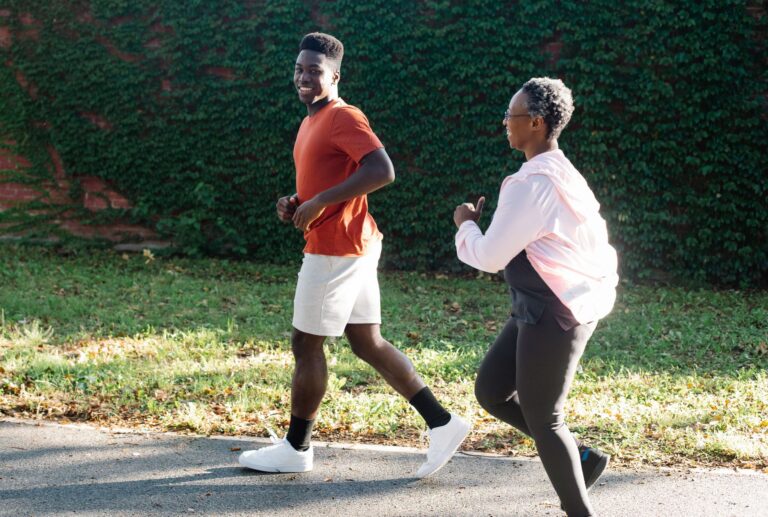
Yes, you can become fitter every year after 50—but it works differently than it did in your younger years. The human body remains remarkably adaptable throughout life, and research consistently shows that older adults who train consistently can improve cardiovascular fitness, build muscle, increase endurance, and enhance overall athletic performance well into their 60s, 70s, and beyond. A 55-year-old runner who trained casually in their 40s can absolutely run faster times, build more muscle, or extend their weekly mileage in the following years. The key difference isn’t whether progress is possible; it’s that progress requires smarter training, better recovery, and realistic expectations about the timeline and trajectory.
The challenge after 50 is that progress happens more gradually, and the margin for error shrinks. Where a 30-year-old might recover from a poorly planned training week in days, you might need extra time. Your hormonal environment shifts, muscle protein synthesis slows slightly, and connective tissues don’t bounce back quite as quickly. But these aren’t barriers—they’re conditions that simply require you to be more intentional about how you train.
Table of Contents
- Does Fitness Improvement Slow Down After 50?
- The Science of Training Adaptations in Older Adults
- Real-World Examples of Fitness Progress After 50
- Building Your Training Plan for Continued Progress
- Common Mistakes That Limit Fitness Gains After 50
- Recovery and Adaptation: The Hidden Factor
- Long-Term Sustainability and Setting Realistic Goals
- Conclusion
Does Fitness Improvement Slow Down After 50?
The honest answer is yes, improvement typically does slow compared to younger adults—but slower doesn’t mean negligible. Peak athletic performance for most people occurs in the 25–35 age range, and after 50, you can expect fitness gains to progress at perhaps 50–70% of the rate you saw at 25. If a well-trained 25-year-old might gain 3–5% in aerobic capacity over a training block, a 55-year-old might gain 1.5–3% with identical programming. This is largely due to age-related declines in maximum heart rate, hormonal changes (especially in testosterone and growth hormone), and decreased muscle protein synthesis. The comparison matters here: you’re not competing against your younger self’s pace of progress, you’re competing against age-related decline.
Humans naturally lose about 3–8% of muscle mass per decade after 30, and cardiovascular function declines at roughly 10% per decade without training. By showing up consistently and training intelligently, you’re fighting that decline head-on and still moving forward. A runner who maintained their baseline fitness through their 40s but never pushed it would likely see noticeable improvement when they increase training intensity at 50 or 55. The limitation to understand: once you’ve trained hard for several consecutive years, progress becomes more incremental. If you’re already a well-trained 52-year-old with years of consistent running behind you, your potential for dramatic improvement is smaller than someone returning to running at 50 after a decade off. But even then, you can still improve race times, build endurance, and increase your training capacity.

The Science of Training Adaptations in Older Adults
Your body doesn’t lose its ability to adapt to training stress after 50—it just adapts somewhat differently and sometimes requires a slightly longer stimulus. Muscle fibers remain trainable, cardiovascular systems respond to aerobic work, and neuromuscular coordination improves with practice. The physiological mechanisms are the same: training creates damage or demand, your body repairs and adapts to handle that stress better next time, and you’re stronger or faster as a result. One key difference is that muscle protein synthesis (the process that builds new muscle tissue) becomes less efficient as you age. Younger athletes can synthesize new muscle tissue quickly after training; older adults get results too, but it often takes a slightly longer recovery window and higher training stimulus.
This means a 55-year-old might need 48–72 hours of proper recovery after a hard session to fully adapt, whereas a 25-year-old might need 36–48 hours. The adaptation still happens—you’re just working on a longer timeline. A critical warning: attempting to train like you did at 30 while in your 50s is one of the fastest paths to injury. Tendinitis, stress fractures, and chronic joint irritation become more common when older athletes suddenly escalate volume or intensity too quickly. Your joints, connective tissues, and bones need more time to adapt to new stresses. The solution isn’t to avoid hard training; it’s to increase training stress gradually (about 10% per week for running volume, for example) and build in adequate recovery.
Real-World Examples of Fitness Progress After 50
Consider a 52-year-old runner who completed a marathon in 4:15 at age 50. With focused training over the next three years—adding speed work one day per week, increasing long run distance carefully, and improving their strength training routine—they run a 3:58 marathon at 55. That’s significant progress: 17 minutes faster. It required patience and consistency, but it’s absolutely achievable because the runner wasn’t trying to shave 30 minutes off; they were looking for incremental improvements across multiple fitness factors. Another realistic example: a 54-year-old who spent their 40s doing mainly slow jogging decides to add structured tempo runs and hill repeats.
Their aerobic capacity, measured by VO2 max, increases by about 8% over a year of consistent training—a substantial gain. They notice they feel less winded on stairs, can sustain a faster pace for longer, and have more energy in daily life. Compare this to someone the same age who maintained a consistent casual running routine for 20 years without pushing intensity; that person would show minimal year-to-year improvement because they’ve already adapted to their training stimulus. The comparison illustrates the central principle: fitness gains after 50 depend largely on training stress and consistency, just like at any age. The difference is the timeline is slightly longer and the payoff per unit of effort might be smaller, but the mechanics are identical.

Building Your Training Plan for Continued Progress
If you want to improve fitness every year after 50, your training plan needs to include several non-negotiable elements: a hard effort once per week (like tempo runs, intervals, or hill repeats), gradual increases in volume over time, consistent strength training twice per week, and adequate recovery. Many athletes over 50 make the mistake of running easy all the time; while easy runs are important for building aerobic base, they don’t create the training stimulus needed for year-to-year improvement. Strength training becomes more critical after 50 than it was at 30. Running alone doesn’t maintain muscle mass as you age; you need dedicated resistance work targeting legs, core, and upper body. This has a dual benefit: it directly improves running performance (stronger muscles translate to better power and efficiency) and it mitigates age-related muscle loss, which would otherwise undermine your fitness.
A runner who adds two 30-minute strength sessions per week often sees improved running economy (how efficiently they run) within months. The tradeoff after 50 is between training volume and recovery quality. A 28-year-old runner might thrive on 60 miles per week with aggressive intensity; a 55-year-old often gets better results from 40–50 miles per week with the same or greater intensity, because the additional volume creates injury risk without proportional benefit. Your time is better spent on structured hard efforts and proper recovery than on extra miles. This requires discipline—it feels counterintuitive to do less while trying to improve more—but it’s how consistent progress happens after 50.
Common Mistakes That Limit Fitness Gains After 50
The most common mistake is ramping up training volume or intensity too quickly. Enthusiasm is great, but increasing your weekly running mileage by more than 10% per week significantly raises your injury risk, and injuries erase fitness progress faster than almost anything else. A runner who goes from 25 miles per week to 35 miles per week over two weeks might feel strong for a few weeks, then develop shin splints or a stress fracture that sidelines them for two months. That same runner, increasing gradually by 2–3 miles per week, reaches 35 miles without injury and continues improving. Inadequate strength training is another frequent limitation. Many runners over 50 focus almost entirely on running volume and ignore the gym. They then wonder why their knees hurt or why they’re not improving as fast as they expected.
Weak glutes, hip muscles, and core muscles create compensation patterns that limit performance and increase injury risk. By contrast, runners who dedicate even 60 minutes per week to targeted strength work often notice improvement in their running times within weeks, even without changing their running workouts. A final warning: ignoring recovery and sleep is particularly limiting after 50. At younger ages, you might get away with only six hours of sleep per night; after 50, most athletes need seven to nine hours for full recovery and adaptation. If you’re training hard but sleeping poorly, your body doesn’t have the time and hormonal environment it needs to build fitness. Cortisol (your stress hormone) stays elevated, and muscle protein synthesis is reduced. Consistent sleep is as important to your training plan as the workouts themselves.

Recovery and Adaptation: The Hidden Factor
Recovery isn’t just rest days; it’s everything that happens between hard training sessions. After 50, your body becomes more sensitive to training stress, which means recovery strategies matter more. This includes nutrition (especially protein intake around your training), hydration, mobility work, sleep, and psychological stress management. An athlete who trains hard but lives under chronic stress or skips meals won’t improve as fast as someone with identical training but better recovery habits.
A specific example: a 58-year-old competitive runner changed nothing about their workouts but shifted their dinner from early evening to immediately after training and added protein with every meal. Within three weeks, they felt noticeably more recovered after hard sessions, and within two months, their training times improved across the board. The training stimulus was identical; the adaptation improved because the recovery window was optimized. This is the kind of marginal gain that compounds year after year after 50.
Long-Term Sustainability and Setting Realistic Goals
The question of whether you can improve every single year after 50 ultimately comes down to how you define improvement and what timeline you’re working with. If you expect 10% gains every year, you’ll be disappointed. But if you measure improvement in realistic increments—maybe 2–5% annually in key performance metrics, or maintaining fitness while age-matched peers decline significantly—then continuous progress is not only possible but normal with consistent training.
Long-term sustainability requires viewing your fitness as a multi-decade project, not an annual sprint. Runners in their 60s, 70s, and beyond who have improved consistently since their 50s typically do so because they’ve adopted training and lifestyle habits they can maintain for the rest of their life. They’re not chasing personal records every year; they’re chasing consistency, enjoyment, and the maintenance of strong fitness relative to their age. That mindset shift—from “How fast can I be?” to “How fit can I stay?”—is often what makes continued improvement possible.
Conclusion
Yes, you can become fitter every year after 50, but it requires acknowledging that the pathway is different from your younger years. Progress happens more gradually, recovery matters more, and your training needs to be more thoughtfully structured. The good news is that your body is still remarkably adaptable; training creates real improvements in aerobic capacity, muscle strength, and athletic performance at any age. Runners and athletes who improve consistently in their 50s, 60s, and beyond typically share a few traits: they train with intention rather than accident, they include both hard efforts and adequate recovery, they prioritize strength training alongside their primary sport, and they set realistic, age-appropriate goals.
Start by establishing a consistent, balanced training plan that includes structured hard efforts, gradual volume progression, strength work, and proper recovery. If you’ve been training casually, even small increases in training intensity and consistency will produce noticeable improvements. If you’re already well-trained, expect progress to come more slowly, but it will still come. The key is showing up consistently, training smart rather than just hard, and giving your body the recovery it needs to adapt. Fitness isn’t something you lose after 50—it’s something you have to earn more intentionally, but it’s absolutely worth the effort.