
Rowing machines are one of the most effective tools for accumulating intensity minutes because they engage your entire body while maintaining a consistent, elevated heart rate. Whether you’re tracking Apple Watch intensity minutes or simply aiming for cardiovascular conditioning, rowing delivers the sustained aerobic effort needed to register measurable intensity. A 20-minute session on a rowing machine at moderate-to-vigorous pace can easily generate 15-20 intensity minutes depending on your fitness level, pace, and the resistance you’re using.
The reason rowing works so well for intensity accumulation is biomechanical. Unlike running, which concentrates effort in your legs, rowing distributes the workload across your legs, core, back, and arms. This distributed effort allows you to sustain higher heart rates longer without the localized fatigue that can force you to slow down. You’re also sitting, which eliminates impact stress on your joints while still demanding significant cardiovascular output—a combination that makes rowing accessible for people who have running injuries or simply prefer low-impact training.
Table of Contents
- How Rowing Machine Intensity Compares to Other Cardio Methods
- Understanding Stroke Rate and Resistance Trade-offs
- Tracking Intensity: What Actually Counts
- Building a Rowing Routine for Consistent Intensity Minutes
- Common Injuries and How to Avoid Them
- Ergometer Technology and Monitoring Progress
- Rowing as Long-Term Aerobic Training
- Conclusion
- Frequently Asked Questions
How Rowing Machine Intensity Compares to Other Cardio Methods
Rowing generally produces intensity minutes at a similar rate to running, but the experience feels different. A runner at a steady 6 mph pace might accumulate intensity minutes depending on their aerobic threshold, but they’re relying primarily on leg power and impact. A rower at a moderate-to-brisk pace (around 1:50 to 2:00 per 500 meters) can hit the same heart rate zones while recruiting far more total muscle mass. This means you can achieve equivalent or superior cardiovascular stimulus without the repetitive impact on your knees and hips.
Where rowing differs from cycling is in the ease of adjusting intensity. On a stationary bike, you can coast; on a rower, you cannot. Every stroke requires effort. This forced engagement makes it easier to stay in the intensity zone without accidentally dropping into moderate or light effort. For people training for endurance sports, this consistency is valuable—you get a purer intensity signal without the drift that sometimes happens on other machines.
Understanding Stroke Rate and Resistance Trade-offs
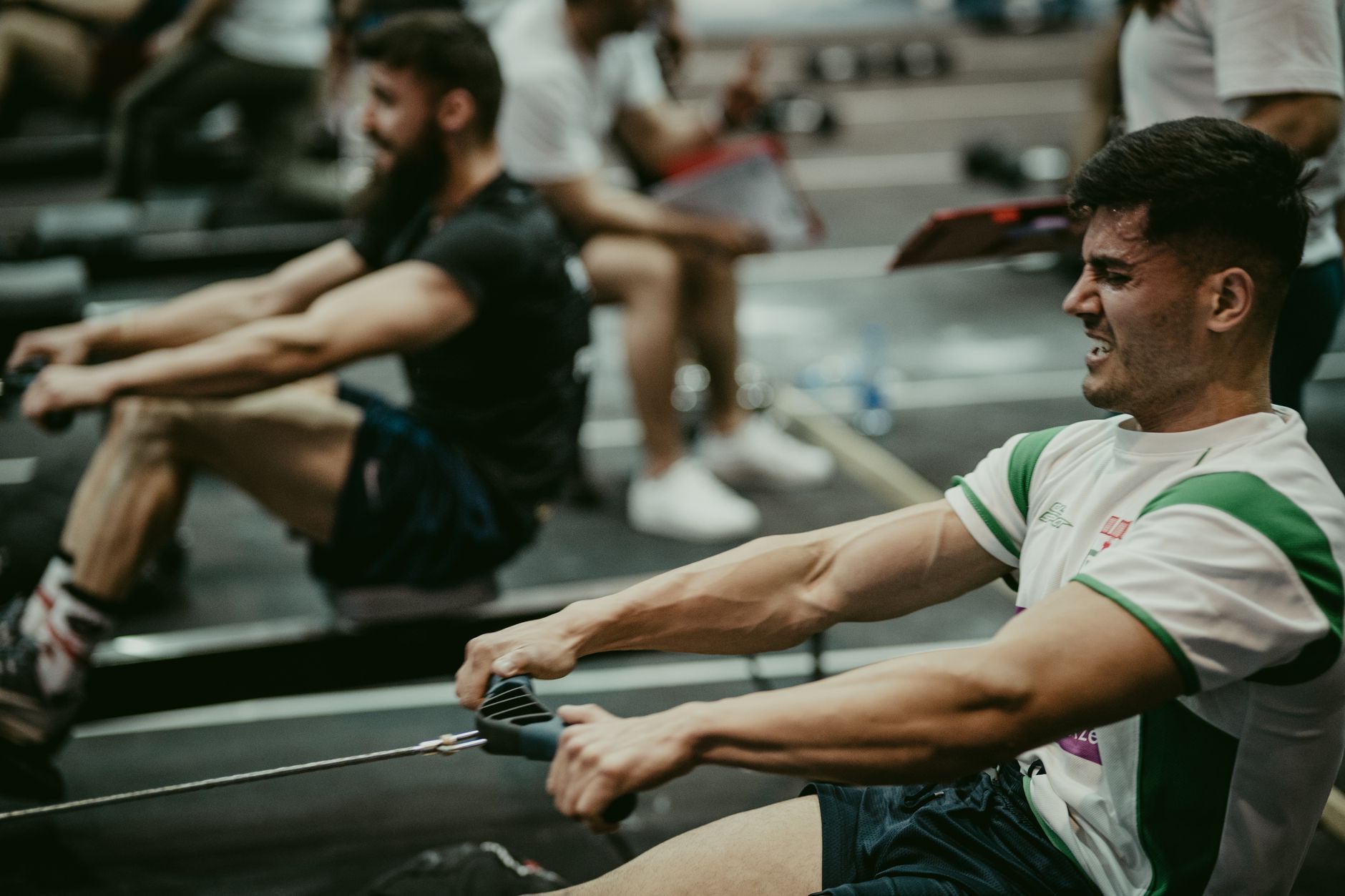
The two controls on a rowing machine are stroke rate (strokes per minute) and damper setting (resistance). Many beginners assume that higher damper settings automatically mean more intensity, but that’s not quite right. A low damper setting with a high stroke rate can demand more power and generate higher heart rates than a high damper setting with a slow, heavy stroke. Finding your optimal combination requires experimentation.
One critical limitation to understand: rowing technique degrades quickly when you’re fatigued or pushing too hard. Bad form—typically rounding your back, leading with your arms, or catching too early—not only reduces power output but increases injury risk. This is where rowing differs from running; you can maintain sloppy running form for a long time without hurting yourself, but poor rowing form is a direct path to back or shoulder strain. If you’re new to rowing, expect a learning curve of several sessions before you can maintain solid technique for a full 20-minute session, even at moderate intensity.
Tracking Intensity: What Actually Counts
Most fitness trackers register intensity based on heart rate zones. For Apple Watch users, intensity minutes accumulate when your heart rate reaches at least 50 percent of your cardiorespiratory fitness reserve—roughly equivalent to brisk walking or higher. On a rowing machine, this typically translates to a pace around 2:30 per 500 meters or faster, though individual thresholds vary based on fitness level and max heart rate. A sedentary person might hit intensity minutes at 1:50 per 500m, while a trained rower might need a much harder pace to register the same zone.
The challenge with rowing and trackers is that heart rate lags behind effort. When you start rowing, your heart rate takes 30 seconds to a minute to climb. This means if you do short intervals—say, 2 minutes hard, 1 minute easy—you might not register as much intensity time as the clock suggests. For maximum efficiency accumulating intensity minutes on a rower, steady-state efforts of at least 10-15 minutes work better than highly fragmented intervals.

Building a Rowing Routine for Consistent Intensity Minutes
A practical approach is to row 3-4 times per week, mixing steady-state sessions with varied-pace workouts. A baseline session might be 20-30 minutes at a conversational but controlled effort—something like a 2:10 to 2:20 pace per 500 meters. This should generate most or all of those minutes as intensity depending on your aerobic fitness. For variation, you can do tempo work: 5-minute warm-up, then 3-4 blocks of 5 minutes at a harder pace with 2 minutes easy between blocks, finishing with a 5-minute cool-down.
The tradeoff with rowing versus running for intensity training is that rowing requires equipment and access to a machine. You can’t just walk out your door and row. This makes it less convenient for spontaneous training or travel, but it also means that when you do sit down, you’re in a controlled environment where variables like temperature and surface are constant. For people building structured training plans, this consistency is an advantage.
Common Injuries and How to Avoid Them
The most frequent rowing injury is lower back strain, usually caused by one of two mistakes: either pulling with your back instead of your legs (missing the sequence of leg drive, then hinge, then arm pull), or maintaining a rounded spine throughout the stroke. The second most common issue is shoulder impingement from poor catch mechanics or excessive overreaching at the finish. Both are preventable with attention to technique and progressive volume increase. A critical warning: if you experience sharp back pain while rowing, stop immediately.
Mild muscle soreness is normal when you’re new to the sport, but sharp pain is a signal that something is wrong—either your form has broken down or you’re doing too much too soon. Many rowers make the mistake of trying to build intensity minutes quickly by doing hard sessions back-to-back without adequate recovery. Your muscles might tolerate this, but your connective tissue adapts more slowly. Adding one steady session per week rather than jumping from zero to four sessions is the safer approach.
Ergometer Technology and Monitoring Progress
Modern rowing machines (called ergometers when they’re serious equipment) come with performance monitors that display calories, split time per 500 meters, and power output in watts. These metrics are useful for tracking consistency and effort. If your split time is rising session-to-session at the same effort level, that’s a sign of fatigue or illness and a cue to pull back.
If it’s dropping while your heart rate stays the same, you’re getting more efficient, which is genuine progress. One specific example: suppose you’ve been rowing 25 minutes at 2:15 per 500 meters once a week, and after four weeks, you’re doing the same 25 minutes at 2:05 per 500 meters with the same perceived effort and similar heart rate. That’s a real improvement in aerobic capacity and power, and those intensity minutes are coming more easily.
Rowing as Long-Term Aerobic Training
Rowing is often overlooked by runners and cyclists, but it’s an underrated tool for building aerobic base and accumulating structured intensity. Unlike running, which has a ceiling for how much volume you can safely do per week, rowing allows for higher volume with lower impact risk.
Some endurance athletes incorporate rowing specifically because it lets them get more aerobic stimulus without compounding the impact load from their primary sport. Looking forward, if you’re serious about optimizing aerobic fitness and intensity minutes, rowing belongs in a diverse training mix alongside running, cycling, or other cardio. The specific advantage is that it’s genuinely difficult to do poorly—as long as you’re on the machine, you’re working—and the full-body engagement means fewer sessions are needed to achieve systemic cardiovascular adaptation.
Conclusion
Rowing machines are a straightforward way to accumulate intensity minutes because they demand consistent effort, engage your entire body, and allow you to stay in the aerobic zone longer than many people expect. A 20-30 minute session at a controlled but challenging pace will generate substantial intensity minutes, and the low-impact nature means you can do this frequently without joint wear.
Start with technique-focused sessions at moderate intensity, build volume gradually over 4-6 weeks, and monitor your split times and perceived effort to ensure you’re progressing without overloading. If you’re serious about aerobic fitness, rowing is worth the barrier to entry—access to a machine and a learning curve—because the returns on consistency are substantial.
Frequently Asked Questions
How many intensity minutes does 30 minutes of rowing generate?
It depends on your aerobic threshold and pace, but most people accumulating 20-25 of the 30 minutes as intensity when maintaining a steady, challenging effort. A pace of 2:00-2:15 per 500 meters typically puts most people in the intensity zone.
Is rowing better than running for building intensity minutes?
They’re different. Rowing allows more total volume with lower impact, while running is more convenient and sport-specific for runners. Neither is objectively better; it depends on your goals and injury history.
How often should I row to see aerobic improvement?
2-3 times per week is a solid baseline. One steady-state session and one varied-intensity session per week is sufficient for most people building aerobic capacity.
Can I row if I have a bad back?
Yes, but only with proper technique and gradual progression. Poor rowing form is a direct cause of back strain, so prioritize technique over intensity when starting. If you have a pre-existing back condition, consult a coach or physical therapist first.
What’s the difference between damper setting and resistance on a rowing machine?
Damper setting (usually 1-10) controls the air/magnetic resistance experienced. Higher settings don’t necessarily mean harder work—they change the feel of the stroke. A high damper with low stroke rate can feel heavy but demand less power; a low damper with high rate demands more power. Experiment to find what suits your fitness level.
Should I row every day?
Not as your primary session. One rowing session per day, 3-5 times per week, is a sensible volume for building fitness. More frequent rowing risks overuse injuries, especially if your technique isn’t yet solid.


