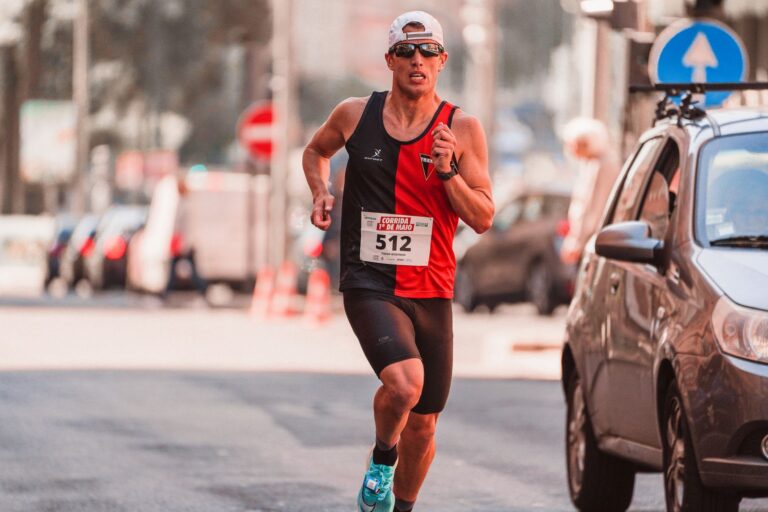
Soft flasks that fit vest pockets are compact water bottles designed to slip into the small cargo or mesh pockets found on running vests and hydration harnesses. These flasks typically measure 4-6 inches tall and hold 300-500ml of fluid, making them slim enough to tuck into dedicated pocket slots without bouncing or creating bulk. Rather than relying on bulky hand bottles or large backpack reservoirs, runners wearing hydration vests can now carry their own personal water supply directly in the vest itself—a practical solution for long-distance training and racing where frequent aid station access isn’t guaranteed.
The appeal lies in convenience and security. A soft flask seated in a vest pocket stays in place during high-intensity efforts and never threatens to slip from your grip mid-run. You control your hydration schedule without waiting for volunteers at aid stations, which matters when running in remote areas, during early-morning workouts, or on courses where water stops are sparse. Runners training for ultramarathons, trail races, or long road marathons have embraced these flasks because they eliminate the distraction of managing a handheld bottle.
Table of Contents
- What Size and Shape Soft Flasks Actually Fit in Running Vest Pockets?
- Material Durability and the Trade-Off Between Flexibility and Leak Prevention
- Hydration Strategy During Long Runs with Limited Pocket Real Estate
- Choosing Between Soft Flasks and Other Hydration Systems
- Leaks, Cleaning, and Maintenance Problems
- Insulation and Temperature Control
- The Future of Vest-Integrated Hydration
- Conclusion
- Frequently Asked Questions
What Size and Shape Soft Flasks Actually Fit in Running Vest Pockets?
Most modern running vests are engineered with specific pocket dimensions. The standard vest pocket measures approximately 4.5 to 5.5 inches tall and 2 to 3 inches wide, designed to accommodate flasks in the 300-500ml range. A 400ml soft flask from brands like Ultimate Direction, Salomon, or Decathlon will slide into these pockets with minimal fuss, while larger 750ml or 1-liter flasks often require the larger external pockets or won’t fit securely at all. The shape matters as much as volume—narrow, columnar flasks nestle into vest pockets far more easily than squat or bulbous designs.
When shopping, the critical specification isn’t just capacity but the flask’s height-to-width ratio. A 500ml flask that measures 6 inches tall but only 2 inches wide will fit where a 500ml flask that’s 5 inches tall but 3 inches wide may not. Many runners discover this the hard way, purchasing a flask only to find it either pokes awkwardly out of the vest pocket or forces them to overstuff the pocket, creating an uncomfortable pressure point against their ribs. It’s worth measuring your vest pockets before buying.
Material Durability and the Trade-Off Between Flexibility and Leak Prevention
Soft flasks are made from flexible plastic or silicone, which is both their strength and their limitation. The material compresses as you drink, preventing the annoying bubble of dead air that develops in rigid bottles. However, this same flexibility makes them prone to leaks if the cap isn’t sealed perfectly. A partially closed cap on a soft flask can drip through the entire run, whereas a rigid bottle with a halfway-closed cap might stay mostly dry. This is a genuine hazard if your flask is sitting in a chest pocket against your body or in a vest pocket filled with gels and salt tabs.
The durability question also applies to longevity. Soft flasks develop microscopic creases and stress points in the plastic over time, especially if you fill them to absolute capacity and then squeeze them to drink. After 50-100 running sessions, some flasks begin to leak along the seams or where the cap screws on. This doesn’t mean they’re poor equipment—it’s the expected lifespan of a consumable product. Just as runner’s replace tires after several years of use, soft flasks are typically replaced annually or every two years depending on frequency of use.
Hydration Strategy During Long Runs with Limited Pocket Real Estate
Carrying multiple small flasks in different vest pockets is more practical than carrying one oversized flask, since it distributes weight and doesn’t create a lopsided feel. A runner training for a half-marathon or longer might place one 400ml flask in a front chest pocket and another in a rear cargo pocket, giving them 800ml of fluid without the single-pocket burden. This two-flask approach also allows you to carry different liquids—water in one, sports drink or electrolyte mix in another—so you can alternate and avoid flavor fatigue on very long efforts.
The limitation here is that vest pocket capacity isn’t infinite. If you’re running 20+ miles and want to be self-sufficient between aid stations, even two flasks might only get you 3-4 hours of hydration depending on your sweat rate. This is why many ultrarunners still use larger backpacks for longer efforts or rely on a combination of vest pockets and a handheld bottle when vest pockets are full. It’s a realistic constraint worth understanding before assuming soft flasks alone will solve your hydration needs.

Choosing Between Soft Flasks and Other Hydration Systems
The comparison landscape includes hand-held bottles, hydration backpacks, and race-provided water stations. Hand-held bottles give you immediate access and larger capacity (600-700ml) but introduce fatigue in your arm, hand, and shoulder over a two-hour run, particularly if you switch hands frequently. Hydration backpacks distribute weight across your back and can carry 1.5-2.5 liters, ideal for remote trail routes, but many road runners find the back-mounted weight feels cumbersome and warm. Soft flasks in vest pockets split the difference: they’re lighter than backpacks, don’t tire your arms, and feel less conspicuous than a traditional hydration pack.
The trade-off you make is capacity. A vest with four pockets might hold 1.2-1.6 liters if you load every pocket with a 400ml flask, but this assumes your vest is designed for that purpose and you can tolerate the weight distributed across your chest and torso. For a 10K or half-marathon where you’ll hit aid stations regularly, soft flasks feel like overkill. For a trail marathon, 50K, or an early-morning 15-miler where aid stations are far apart, soft flasks become essential.
Leaks, Cleaning, and Maintenance Problems
One of the most common complaints about soft flasks is the hassle of thorough cleaning. After carrying sports drink or electrolyte mix for several hours, the dried residue inside the flask can become sticky and hard to remove, particularly in the cap threads and the thin valve opening. Letting a soft flask sit uncleaned for even a day can develop a sour smell or mold growth. This isn’t a problem specific to soft flasks—any bottle has this issue—but the flexible material and small internal valve of a soft flask make it slightly harder to clean than a wide-mouth rigid bottle. Running a thin brush through the bottle helps, and soaking the cap separately in hot water with a tiny bit of baking soda works, but it’s a recurring chore that some runners find frustrating.
The cap itself is another weak point. Many soft flask caps are proprietary plastic pieces designed to be lightweight and compact, but they’re not as robust as a threaded lid on a rigid bottle. If you drop a capped soft flask onto concrete or repeatedly cram it into a tight vest pocket, the cap can crack or the seal can fail. Replacement caps are available but often cost $8-15, which adds up if you lose or damage them regularly. This is a limitation worth acknowledging if you’re rough on gear or training in environments where losing a cap is likely.

Insulation and Temperature Control
Soft flasks offer virtually no insulation, so water will warm to ambient temperature quickly during a warm-weather run. If you fill a soft flask with cold water before a summer run, you’ll have room-temperature water within 30-45 minutes depending on air temperature. This isn’t inherently bad—many runners prefer room-temperature fluids during exercise—but if your strategy involves cooling down with a cold drink during the run, a soft flask won’t deliver that benefit. Some runners have experimented with wrapping soft flasks in thin reflective sleeves or moisture-wicking fabrics, which adds minimal weight and can slow warming slightly, but these are workarounds rather than genuine solutions.
Cold-weather running raises the opposite problem. If you’re running in 30-degree weather and your soft flask is filled with room-temperature water, the flask itself won’t freeze, but the fluid inside can freeze or become slush depending on how long you’re out. This is rarely an issue for runs under two hours, but on longer winter ultramarathon attempts where you’re out for 6+ hours, it’s something to plan around. Some runners use electrolyte mixes with lower freezing points or keep flasks tucked inside insulated vests close to body heat.
The Future of Vest-Integrated Hydration
As running vests evolve, manufacturers are designing pockets specifically optimized for soft flasks, with drainage holes to prevent sweat pooling and internal sleeves to stabilize the flask and prevent rattling. This trend toward integrated pocket design suggests that soft flasks in vests will remain standard equipment for distance runners.
Newer materials like thermoplastic elastomers may offer better durability and leak resistance than current plastics, potentially addressing some of the maintenance and longevity concerns that plague current-generation flasks. The combination of soft flasks with smart hydration practices—meaning you calculate your fluid needs beforehand, mark your consumption schedule, and plan your refill points—represents the mature approach to self-sufficient hydration. Rather than treating soft flasks as a one-size-fits-all solution, experienced distance runners treat them as one tool in a larger hydration toolkit, deployed strategically based on course terrain, weather, and personal sweat rate.
Conclusion
Soft flasks that fit vest pockets are practical hydration tools for runners unwilling to depend entirely on aid stations or accept the fatigue of carrying a handheld bottle. They work best for distances between 12 and 25 miles, in conditions where aid stations are sparse, and for runners who value security and consistent access to their own fluid. The 300-500ml flasks designed for standard vest pockets are reliable, lightweight, and purpose-built for the task.
Before investing, measure your vest pockets, verify flask dimensions, and understand the maintenance requirements. Accept that soft flasks have real limitations in capacity, temperature control, and long-term durability. If you address these trade-offs realistically—carrying backup flasks for ultra-distance efforts, replacing flasks every 1-2 years, and cleaning them immediately after use—soft flasks become a straightforward part of your running toolkit rather than a source of frustration.
Frequently Asked Questions
What’s the difference between a soft flask and a water bladder in a hydration pack?
A soft flask is a standalone container you carry in a vest pocket, while a water bladder is a large reservoir (typically 1.5-2.5 liters) inside a backpack connected to a drinking tube. Soft flasks give you flexibility to carry different liquids or amounts in different pockets, while a bladder in a pack is simpler to manage but locks you into that hydration choice.
Will a 500ml flask fit in any running vest pocket?
Not necessarily. Vest pocket dimensions vary by manufacturer and model. A 500ml flask in one vest might fit snugly in a front pocket but be too thick for a side pocket on another vest. Always measure your specific vest pockets or check the manufacturer’s specifications before purchasing.
How do I prevent a soft flask from leaking while it’s in my vest pocket?
Seal the cap tightly before placing the flask in your pocket. Check the seal by gently squeezing the flask; if liquid comes out around the cap, it isn’t sealed properly. Some runners add a piece of electrical tape around the cap threads as backup on long runs, though this is usually unnecessary if the cap is installed correctly.
Can I use the same soft flask for different drinks like water and sports drink?
Yes, but rinse thoroughly between uses to avoid flavor carryover and residue buildup. If you alternate regularly, consider dedicating one flask to water and another to sports drinks to minimize cleaning hassles.
How long do soft flasks typically last?
Most soft flasks last 1-2 years of regular training use (50+ runs annually) before developing cracks, leaks, or material degradation. The lifespan depends on how aggressively you use them, whether you clean them immediately, and storage conditions.
Is a soft flask better than a hand-held bottle for marathon training?
Depends on your preference and logistics. Soft flasks in a vest distribute weight evenly and free your arms, while hand-held bottles are simpler and give you more capacity in less weight. For training runs, try both and see which feels better; many marathoners use soft flasks during solo long runs but switch to hand-helds or race-provided aid during actual races.