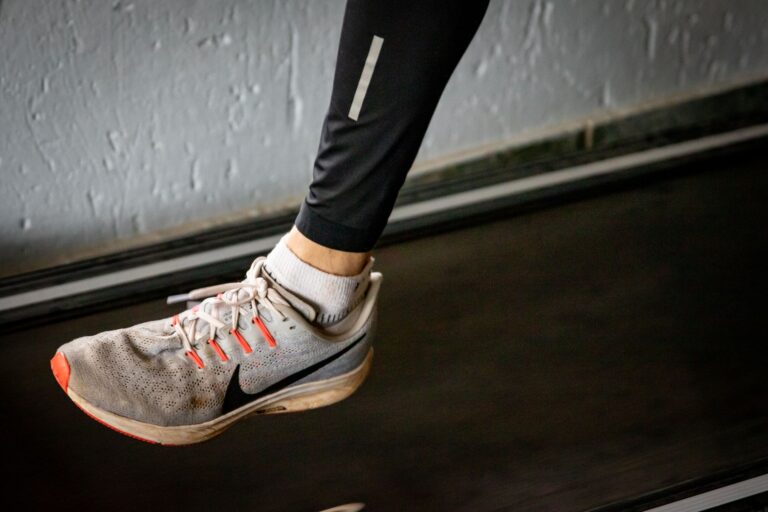
People with flat feet can definitely run successfully, but they need to prioritize arch support and gradual conditioning to prevent common injuries like plantar fasciitis and shin splints. The main adjustment is choosing shoes with firm midsole support and learning to strengthen the muscles and connective tissues that would normally be supported by a natural arch. A runner with flat feet who wears minimalist shoes without proper support often develops pain in the plantar fascia or develops overpronation (excessive inward rolling), which cascades into knee and hip problems.
The good news is that flat feet don’t inherently make you a slower or worse runner. Many successful distance runners have flatter arches than average. What matters is working with your body’s structure rather than against it. This means investing in proper footwear, adding targeted strength work to your routine, and being strategic about how you build your weekly mileage.
Table of Contents
- What Kind of Shoes Do Runners with Flat Feet Need?
- Why Gradual Mileage Building is Non-Negotiable
- Strength and Flexibility Work That Actually Matters
- When to Consider Custom Orthotics
- Watch for Achilles Tendon and Knee Issues
- Cross-Training as a Core Part of Your Program
- Gait Analysis and Form Awareness
- Frequently Asked Questions
What Kind of Shoes Do Runners with Flat Feet Need?
Flat-footed runners need stability shoes or motion-control shoes, not neutral or cushioning-focused models designed for high arches. Look for shoes that have a firm medial post or guide rail system that prevents excessive pronation. Brands like ASICS Gel-Kayano, Brooks Adrenaline GTS, and New Balance 860 are built specifically for this, with reinforced support along the inner arch. The cushioning level matters less than the structural support—you can find both plush and firm options that will work.
Don’t assume that running in regular athletic shoes is fine just because they’re expensive or popular. A runner wearing standard neutral running shoes with flat feet will typically overpronate, putting extra stress on the medial knee and plantar fascia. Getting a gait analysis at a specialty running store takes about 20 minutes and costs nothing; they’ll watch you run on a treadmill and recommend shoes based on what they observe. This is different from orthotics, which are custom insoles that add additional arch support beyond what the shoe provides.
Why Gradual Mileage Building is Non-Negotiable
With flat feet, the connective tissues and muscles supporting your arch are working harder than they would in someone with a high arch. This means your body needs more time to adapt to the stress of running. If you jump into a higher weekly mileage too quickly, plantar fasciitis often shows up within two to three weeks as pain near your heel or along the bottom of your foot.
A conservative approach is to increase weekly mileage by no more than 10 percent per week, though many coaches suggest 5 percent increases for flat-footed runners. The risk of ignoring this is real: plantar fasciitis can become a chronic issue that takes months to resolve. Once inflamed, the plantar fascia doesn’t heal quickly because it’s under constant stress every time you walk or run. Some runners have reported plantar fasciitis lingering for six months or longer if they tried to push through the pain instead of backing off mileage and addressing the root cause.
Strength and Flexibility Work That Actually Matters
Running with flat feet requires ongoing strengthening of the intrinsic foot muscles—the small muscles that run along the bottom and sides of your foot. Simple exercises like short-foot holds (where you shorten the arch by drawing your toes toward your heel without curling them), towel scrunches, and calf raises build the structures that support your arch. Adding 10 minutes of these exercises two to three times per week makes a measurable difference in stability and reduces arch strain during runs.
Calf tightness is another common culprit for flat-footed runners, because tight calves force more work onto the plantar fascia. A flat-footed runner with tight calves is working against both issues simultaneously. Dedicating time to calf stretches, foam rolling, or even a lacrosse ball massage on the sole of your foot addresses the tightness that pulls on your arch from above.
When to Consider Custom Orthotics
Off-the-shelf insoles in stability shoes help many flat-footed runners, but custom orthotics prescribed by a podiatrist are worth considering if you’re dealing with persistent pain. Custom orthotics are molded to your specific foot structure and gait pattern, providing targeted support where you actually need it rather than generic arch support. They typically cost between $300 and $800, while over-the-counter insoles run $40 to $150.
The tradeoff is that custom orthotics take time to break in—you can’t just stick them in your shoes and run a long run the next day. Most podiatrists recommend a gradual introduction over two to three weeks, wearing them for shorter periods before putting them into your running shoes. Some runners find that once their feet have adapted and their strength improves, they can transition back to just wearing stability shoes without the orthotics.
Watch for Achilles Tendon and Knee Issues
Flat feet change the mechanics of your entire leg, which means injuries don’t always show up in your arch. Achilles tendinopathy is common in flat-footed runners because of increased tension along the back of the leg, and knee pain is frequent because overpronation torques the knee inward during stance.
If you notice pain on the outside of your knee or a sharp pain at the back of your heel, these are red flags that your arch support or running form needs adjustment. One important limitation: if you develop pain that persists beyond a few days or worsens with each run, continuing to run through it often makes it worse. Many runners assume that “pushing through” minor aches is normal, but with flat feet, early intervention is much more effective than waiting months before getting help.
Cross-Training as a Core Part of Your Program
Incorporating swimming, cycling, or elliptical work once or twice per week gives your feet and arches recovery time while maintaining aerobic fitness. This is especially valuable for flat-footed runners because it reduces the cumulative impact load on the plantar fascia while still building endurance. A runner training for a half-marathon might run three times per week and add one swim session and one cycling session, reducing the total running stress by about 40 percent while keeping the same overall aerobic stimulus.
Gait Analysis and Form Awareness
Overpronation often accelerates arch stress, so understanding your gait helps you correct inefficiencies. Some runners with flat feet can improve their mechanics by focusing on landing closer to midfoot rather than heel-striking, which is usually a result of overstriding.
Shorter, quicker strides at the same pace reduce the braking force that exacerbates pronation. If you’re currently running at a 170 steps-per-minute cadence (relatively slow), increasing to 180 or 190 steps per minute while shortening your stride length often improves mechanics without changing your speed.
- —
Frequently Asked Questions
Can I run in minimal shoes if I have flat feet?
Most podiatrists recommend against minimal shoes for flat-footed runners because they lack the arch support needed to prevent overuse injuries. Transitioning to minimalism would require months of gradual adaptation and is usually worth attempting only after you’ve developed significant foot and calf strength.
How do I know if my shoes are worn out?
Check the midsole for compression in the arch area and look at the heel wear pattern. If the midsole feels mushy or the heel shows obvious compression, the shoe has probably lost its support. Most running shoes last 300 to 500 miles before the midsole breaks down.
Should I avoid running on concrete?
Concrete is harder than asphalt and transmits more impact up your legs, so it increases stress on flat feet. If you have a choice, running on asphalt or softer trails reduces plantar fascia strain, though any surface works if your shoes and strength are adequate.
Can orthotics fix flat feet permanently?
Orthotics manage the symptoms and improve mechanics, but they don’t change your foot structure. You’ll likely need them whenever you run, similar to how someone with astigmatism continues wearing glasses.
Is it normal to have heel pain when I start running?
Some discomfort during the first few weeks as your feet adapt is normal, but sharp pain or pain that worsens over consecutive runs is a warning sign. Plantar fasciitis usually starts as mild heel pain and gets worse if you ignore it.
What’s the difference between stability and motion-control shoes?
Motion-control shoes are more rigid and correct more severe overpronation, while stability shoes offer support with slightly more flexibility. Motion-control is typically recommended for severe flat feet, while stability shoes work for mild to moderate flatness. —