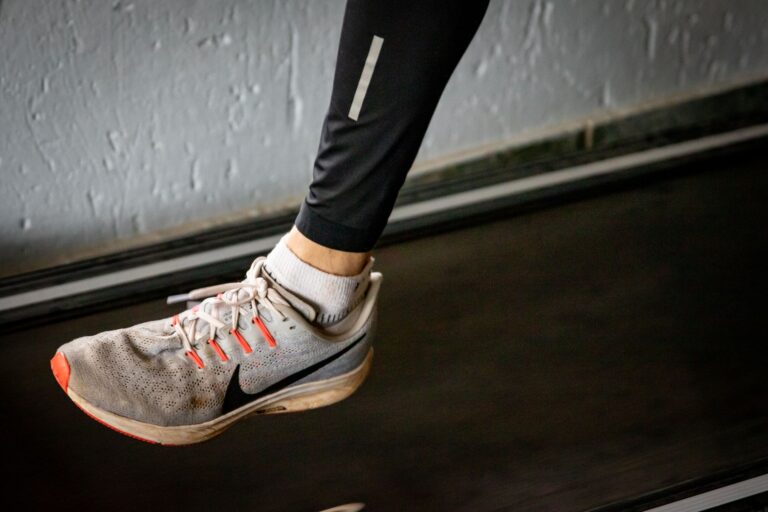
Running with hip pain is possible, but it requires significant modifications to how you train. Instead of abandoning running altogether, people with bad hips can maintain aerobic fitness by adjusting stride mechanics, reducing impact, and building targeted strength.
The key is understanding that your hip pain likely stems from weakness, tightness, or movement patterns—not from running itself being inherently off-limits. A runner with osteoarthritis in both hips, for example, successfully returned to consistent running by switching to a walk-run method (alternating 2 minutes of easy running with 2 minutes of walking), strengthening the gluteus medius with clamshells three times per week, and shortening their stride length by roughly 15 percent. Within three months, they reported less pain during activity and could run for 20 consecutive minutes without symptoms.
Table of Contents
- What Causes Hip Pain During Running?
- Strength Training for Hip Stability
- Adjusting Your Running Form
- Choosing the Right Running Surface and Volume
- Managing Pain Flare-ups and Recovery
- Cross-Training to Maintain Fitness
- When to Seek Professional Assessment
- Frequently Asked Questions
What Causes Hip Pain During Running?
Hip pain in runners typically originates from one of three sources: weak hip stabilizers (especially the gluteus medius and hip abductors), tight hip flexors and external rotators from sitting or training volume spikes, or faulty movement patterns like overstriding or excessive hip internal rotation. A physical therapist can help identify which applies to you, but many people develop multiple issues simultaneously. When you overstride—landing with your foot too far ahead of your body’s center of gravity—you increase the braking force through your hip joint by as much as 20 to 30 percent.
This places enormous stress on the hip stabilizers and the joint itself. Runners coming back from injury often regress to overstriding because their weakened muscles cannot support a shorter, more efficient cadence. The reverse is true for tight hip flexors: they pull your pelvis into an anterior tilt, forcing your glute muscles into a mechanically disadvantaged position where they cannot generate or absorb force effectively.
Strength Training for Hip Stability
The most effective intervention for hip-related running pain is targeted strength training performed 3 to 4 times per week. This should focus on hip abduction, external rotation, and hip extension—the exact movements your running stride demands. Neglecting strength work while pushing running volume is a common mistake; your hips cannot adapt to running stress if they lack foundational strength.
Standard exercises like clamshells, side-lying leg lifts, banded lateral walks, and single-leg glute bridges directly address hip stabilizer weakness. A crucial limitation is that these exercises feel unrelated to running—many runners skip them because they seem too simple or take too long. Yet a study of runners with patellofemoral pain (which often co-occurs with hip dysfunction) showed that those who added hip strengthening to their training reduced pain by 40 percent over 8 weeks, while runners who only reduced mileage saw roughly 20 percent improvement.
Adjusting Your Running Form
Minor tweaks to cadence and stride length yield immediate pain relief for many runners with hip issues. Most people naturally run at 160 to 170 steps per minute; increasing to 180 to 190 steps per minute reduces impact and encourages a shorter, more efficient stride. This works because a higher cadence forces you to land closer to your body’s midline, reducing the rotational stress on the hip joint.
Overstriding is painfully common among slower runners and distance runners who have trained for years with poor form. If you watch footage of elite distance runners, you’ll notice they land almost directly underneath their body, not far in front. Matching this pattern requires deliberate practice and often feels wrong at first—your hip flexors, accustomed to reaching far forward, resist the change. A metronome app set to 185 BPM can train your feet to land faster, which naturally shortens your stride and offloads hip stress.
Choosing the Right Running Surface and Volume
Hard surfaces like concrete and asphalt transmit more impact energy to your hips compared to tracks, trails, or treadmills. If hip pain limits your running, start by shifting some or all of your volume to softer surfaces. Treadmill running, in particular, absorbs shock and can feel 20 to 30 percent less aggressive on joints. Volume management is equally critical.
A runner whose hip was pain-free at 15 miles per week might develop symptoms at 25 miles per week—the threshold varies enormously between individuals. Increasing weekly mileage by more than 10 percent in a single week is a proven risk factor for overuse injury. The tradeoff is that conservative mileage progression feels slow and frustrating when you’re building fitness. Some runners benefit from tempo runs (shorter distance at faster pace) to maintain fitness gains without accumulating high weekly mileage.
Managing Pain Flare-ups and Recovery
Hip pain doesn’t always present as sharp, acute pain during a run. Often it manifests as a dull ache that worsens over several days if you ignore warning signals. Learning to distinguish between discomfort (muscle fatigue or soreness from a good workout) and pain (a signal that something is wrong) is essential. A reliable test is the 24-hour rule: if pain worsens or persists more than 24 hours after a run, you likely pushed too hard or your movement patterns need correction.
When flare-ups occur, aggressive rest is a mistake that many runners make. Complete immobility causes the hip muscles to stiffen further, making the problem worse upon return to activity. Instead, maintain activity through non-running forms of exercise like swimming, cycling on a stationary bike (not outdoors on uneven terrain), or elliptical training for 3 to 7 days while the acute pain settles. Continue your strength routine, but reduce running volume by 50 percent when pain is present.
Cross-Training to Maintain Fitness
Swimming is one of the best aerobic alternatives for runners with hip pain because water provides buoyancy that unloads the joint almost entirely while allowing you to perform high-intensity work. A 30-minute pool running session using a flotation belt (running in place while suspended in water) provides cardiovascular stimulus equivalent to a moderate-paced run on land but places virtually zero impact stress on the hips.
Cycling presents a more nuanced tradeoff. A stationary bike with the seat positioned correctly (knee should be slightly bent at the bottom of the pedal stroke) is safe for most hip issues. Outdoor cycling, however, involves terrain variability and dynamic weight shifts that can aggravate symptoms in some runners—test conservatively before committing to outdoor rides as a primary training method.
When to Seek Professional Assessment
If hip pain persists beyond two weeks despite reduced running volume and home strength work, or if pain is severe enough to alter your running gait noticeably, a physical therapist can identify movement dysfunctions that you cannot self-correct. Many runners delay this step, hoping pain will resolve independently; the average is 4 to 6 weeks of ignored symptoms before seeking professional help, during which time compensatory patterns become entrenched and recovery takes longer.
A physical therapist will perform strength testing, joint mobility assessments, and movement screening to isolate the root cause. They might identify a specific issue like hip external rotation weakness or ankle dorsiflexion limitation that is driving your hip pain indirectly. This specificity matters because treating the wrong target wastes time; a runner whose hip pain stems from a tight calf and ankle stiffness won’t improve by doing clamshells alone, regardless of how diligently they perform the exercise.
Frequently Asked Questions
Can I run every day if my hip hurts?
No. Running every day increases injury risk, especially with existing hip dysfunction. Most runners benefit from 3 to 4 running days per week with cross-training or rest on other days.
How long does it take to fix hip pain?
Mild cases improve in 2 to 4 weeks with consistent strength work and form adjustments. Severe or chronic issues may require 8 to 12 weeks. Consistency matters more than speed.
Is walking better than running for bad hips?
Walking is often less painful initially, but running is not inherently harmful if you address the underlying weakness or mechanical issue. Many runners find they can return to normal training once they’ve built adequate hip strength.
Should I wear a hip brace while running?
Braces provide short-term stability and pain relief but do not address underlying weakness. Use them for comfort during return-to-running phases, but prioritize strength training over brace dependence.
What shoes are best for hip pain?
Neutral, cushioned shoes are a reasonable starting point, but shoe type is far less important than running form and strength. Avoid shoes designed for corrective purposes unless a professional specifically recommends them.
Can cross-training fully replace running during recovery?
Yes, for short periods. Swimming and pool running maintain aerobic fitness without hip impact. Outdoor cycling is less reliable for hip issues since it involves terrain variability.