Yes, you can meaningfully improve your foot strike without ever thinking about where your feet land. The secret lies in training the physical systems that naturally position your body correctly when running, so proper foot strike emerges as a consequence of better overall movement rather than conscious effort. Many runners try to fix their foot strike through direct cues—”land on your midfoot,” “strike under your hips”—but these mental instructions often create tension and artificial movement patterns.
Instead, developing supple legs with bent knees and relaxed ankles, strengthening your core, building hip and glute capacity, and practicing high-cadence drills trains your neuromuscular system to land correctly without requiring you to think about it. This approach works because foot strike is primarily determined by your body’s position in space and how your muscles are organized to receive impact. When your hips are strong, your core is engaged, and your legs can flex naturally through landing, your body positions itself for a midfoot strike automatically. You’re not trying to force a foot landing pattern; you’re building the physical foundation that makes that pattern inevitable.
Table of Contents
- Why Indirect Training Works Better Than Conscious Foot-Strike Cues
- Building Supple Legs—The Foundation for Natural Midfoot Landing
- Core and Upper Body Alignment—Keeping Your Spine Over Your Hips
- Hip and Glute Development—The Often-Overlooked Critical Link
- Forward Lean Technique and Movement Skill—Advanced Positioning Strategies
- High-Cadence Training for Natural Foot-Strike Improvement
- Integration—How Everything Works Together
- Conclusion
Why Indirect Training Works Better Than Conscious Foot-Strike Cues
Trying to consciously change foot strike through direct cues often backfires because runners tend to stiffen their legs and tense their ankles in an attempt to control landing. This increased rigidity actually makes heel striking worse, creating a vicious cycle where the solution becomes the problem. The indirect approach sidesteps this trap by focusing on qualities—strength, flexibility, coordination—that improve foot strike as a byproduct rather than the main target. Your nervous system is constantly evaluating impact forces and adjusting muscle timing based on feedback from your muscles, tendons, and joints.
When you develop the physical capacity to land softly and absorb force efficiently, your body learns to land in ways that minimize jarring sensations. A supple leg with flexible ankles and bent knees absorbs impact more effectively when you land forward on your foot rather than on your heel, so your neuromuscular system naturally gravitates toward midfoot landing because it feels better and requires less effort to control. This principle applies across all movement. Consider how experienced cyclists don’t consciously think about weight distribution on the pedal; their developed leg strength and neuromuscular efficiency handle it automatically. Runners who’ve built the right physical foundation experience something similar with foot strike.
Building Supple Legs—The Foundation for Natural Midfoot Landing
A supple leg landing is the single most important factor in improving foot strike without conscious changes. This means developing the ability to land with your knees bent and your ankles relaxed rather than rigid. When your knees are flexed at landing, your body naturally positions your foot under your hips rather than reaching it out in front of you, which is the hallmark of heel striking. The challenge is that many runners have developed stiff ankles through years of running with shoes that restrict natural ankle motion or through insufficient ankle and calf conditioning.
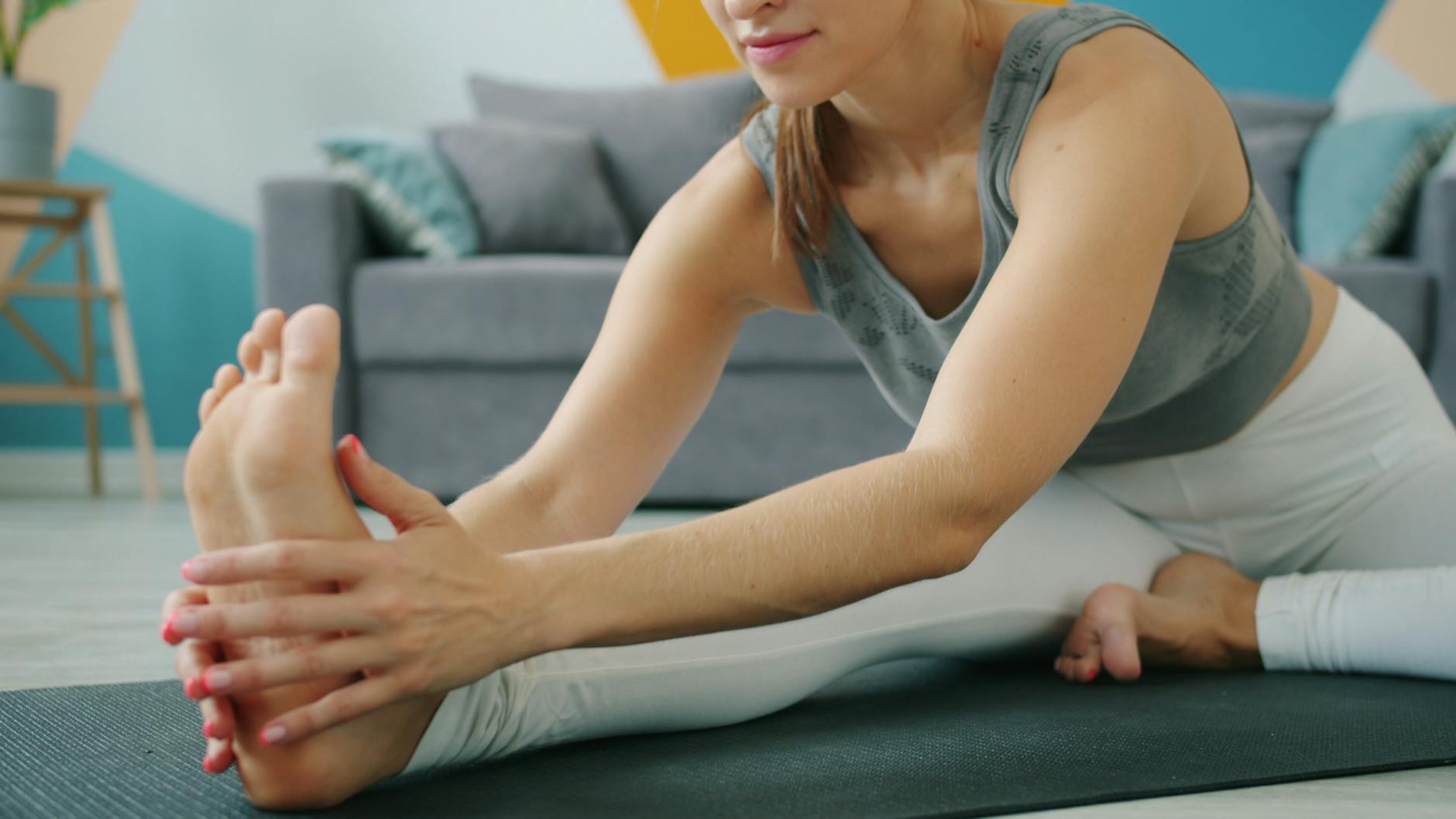
A rigid ankle forces your leg to stay relatively straight at landing, which shifts your foot strike forward (toward the heel) because there’s less flexibility in the foot and lower leg to position you correctly. Developing ankle flexibility through targeted drills—calf raises, ankle rotations, walking backward—takes just a few minutes weekly but produces noticeable changes in how your foot naturally lands. One limitation of the supple-leg approach is that it takes time to develop. Ankles and calves that have been tight for years don’t suddenly become flexible after two weeks of stretching. Expect four to eight weeks of consistent work before you notice substantial changes in your landing mechanics, and be patient with any temporary increases in calf soreness as the tissues adapt.
Core and Upper Body Alignment—Keeping Your Spine Over Your Hips
Your upper body position has an underestimated influence on foot strike. When your core is weak, your torso tends to lean forward from the waist rather than maintaining alignment over your hips. This forward lean forces your body to reach your leg out in front to catch yourself, which naturally produces a heel strike. A strong core allows you to maintain a slight forward lean from your ankles while keeping your spine aligned, which positions your landing footstrike naturally under your center of gravity. Strengthening your core doesn’t require elaborate routines.
Planks, dead bugs, bird dogs, and single-leg hops performed twice weekly for 10-15 minutes create a stable foundation for running. The benefit extends beyond foot strike: runners with strong cores experience fewer hip and lower back injuries because impact forces are managed more efficiently through your entire body rather than concentrated in your knees and ankles. Upper body strength also plays a role. Many runners ignore their back and shoulder strength, but a weak posterior chain encourages a collapsed posture where your shoulders round forward, which again forces your body to reach forward with your leg to compensate. Incorporating pull-ups, rows, or band work into your training creates the postural foundation for good running alignment—and better foot strike as a result.
Hip and Glute Development—The Often-Overlooked Critical Link
The strength and function of your hips and glutes may be the most underestimated factor in natural foot strike improvement. Your femur (thigh bone) needs to stay centered in the hip socket to produce correct running mechanics, and this is primarily a function of hip stability and glute strength. When your glutes are weak or inactive, your femur tends to adduct and internally rotate in the hip socket, which changes the angle of your entire leg and shifts your foot strike forward. Hip and glute training involves targeted exercises like clamshells, side-lying leg lifts, lateral band walks, step-ups on stairs, and single-leg work.
Runners often neglect these exercises because they feel disconnected from running itself, but they’re perhaps more important than any foot-strike-specific drill. A runner with strong, centered hips and active glutes will naturally land with their foot under their body because that’s the biomechanically efficient position when their hip socket is correctly organized. One practical consideration: glute strength takes consistent training to develop and can feel awkward when you’re first activating these muscles. Many runners discover they can’t feel their glutes firing during certain exercises—this is called “glute amnesia” and is more common than you’d expect. Stick with the training for two to three weeks before expecting noticeable improvements in how your glutes engage during running.
Forward Lean Technique and Movement Skill—Advanced Positioning Strategies
A subtle forward lean from your ankles (not from your waist) naturally shifts your landing point backward, promoting better foot positioning without conscious effort. This differs from the common mistake of leaning forward from the waist, which compresses your torso and actually encourages reaching your leg out in front. The correct forward lean comes from your ankles pushing against the ground while keeping your body stacked: it’s a lean angle of about 5-10 degrees rather than a dramatic forward pitch. The challenge with forward lean is that it requires proprioceptive awareness—you need to feel the difference between leaning from your ankles versus your waist. This is where movement skill development becomes important.
Movement skill means using environmental feedback to continuously optimize your mechanics without conscious thought. As you run downhill, on uneven trails, or on different surfaces, your nervous system receives constant information about where your feet are landing and how forces are being absorbed. Runners who’ve developed good movement skill learn from this feedback and naturally adjust their landing to match the terrain and running conditions. Developing movement skill requires practicing running in varied conditions rather than always on the same flat road. Trail running, hill running, and tempo work on different surfaces all challenge your neuromuscular system to adapt and improve foot strike naturally. One warning: don’t introduce too much terrain variation too quickly, as this can increase injury risk if your body isn’t accustomed to the demands.
High-Cadence Training for Natural Foot-Strike Improvement
High-cadence training—short, fast-paced running intervals performed twice weekly—reinforces quick turnover and naturally improves foot strike. The most accessible form is 30-second fast-feet runs where you increase your cadence to around 180-200 steps per minute for brief intervals. When you run faster, it’s mechanically impossible to heel strike because your foot doesn’t have time to reach forward; your feet naturally land underneath your body. These fast-feet sessions provide two benefits: they train your neuromuscular system to organize itself correctly at higher cadences, and they create a template your body can reference at easier paces.
After regular fast-feet training, many runners find that their comfortable running cadence increases slightly and their foot strike naturally improves even when running easy. Perform these for 30 seconds at a time, with complete recovery between efforts, for a total of 4-6 repetitions once or twice weekly. Hill sprints serve a similar purpose. The challenge of running uphill naturally encourages quick turnover and higher knee drive, both of which promote better foot positioning. An added benefit is that hill running builds strength and power in your legs and glutes simultaneously, addressing the physical foundation component alongside cadence improvements.
Integration—How Everything Works Together
The building blocks for improving foot strike without conscious changes aren’t isolated techniques; they’re interconnected components of a single system. Supple legs matter more when you have the hip strength to keep your femur centered. Core strength matters more when your ankles are flexible enough to receive impact with bent knees.
High-cadence training is most effective when you’ve built the physical foundation to support it. Effective training weaves these elements together rather than treating them separately. A typical weekly approach might include two days of strength work (focusing on core, hips, and glutes), one or two days of high-cadence training (fast-feet runs or hill work), regular mobility work for ankles and calves, and steady-state running on varied terrain to develop movement skill. Over 8-12 weeks, runners who follow this integrated approach consistently report improved foot strike, reduced leg pain, and feeling more efficient—all without ever consciously thinking about where their feet land.
Conclusion
Training your foot strike without conscious changes requires patience and consistency across multiple physical domains, but it’s far more effective and durable than trying to force better landing patterns through mental cues. By developing supple legs, strengthening your core and upper body, building hip and glute capacity, and practicing high-cadence drills, you create the physical foundation that makes good foot strike inevitable.
Your body naturally gravitates toward efficient landing patterns when it has the strength, flexibility, and movement skill to do so. Start with whichever building block feels most relevant to your current training—if your ankles are tight, prioritize mobility work; if you know your glutes are weak, focus on activation and strength. The improvements build on each other, and within a few months of consistent, intelligent training, you’ll notice your foot strike has changed not because you thought about it, but because your body is now organized to land correctly.