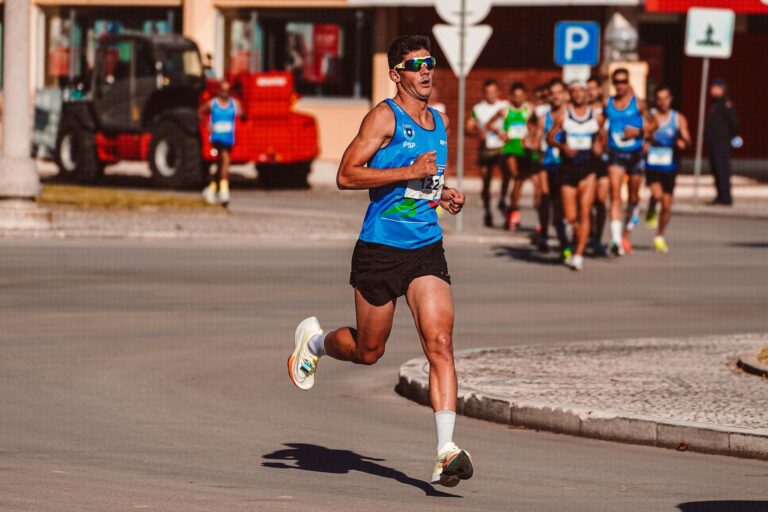
Physical capacity matters more than chronological age because your body’s ability to run, recover, and handle stress depends far more on what you’ve trained it to do than on how many years you’ve lived. A 60-year-old runner with decades of consistent training can often outperform a sedentary 35-year-old by nearly every measurable fitness metric—VO2 max, anaerobic threshold, muscle strength, and bone density. The difference isn’t biology punishing the younger person or age blessing the older one. It’s that the 60-year-old built and maintained physical capacity through years of deliberate work, while the 35-year-old hasn’t.
What this means is simple but consequential: you don’t have a fixed deadline to start running fast or running long. Age is one variable in your fitness equation, but it’s far from the most important one. Genetics, training history, consistency, sleep, nutrition, and current fitness level all exert stronger influences on your running performance than your birth year. The runner who trains smart and stays injury-free at 50 will run better than the runner who trained carelessly at 25 and spent the last decade on the couch.
Table of Contents
- How Does Physical Conditioning Actually Overcome the Age Factor?
- Capacity Declines With Inactivity, Not With Birthdays
- Muscle Strength and Bone Density: The Foundation Under Aerobic Fitness
- How to Build Capacity Now—The Practical Reality
- The Recovery Reality and the Injury Risk That Matters More Than Age
- Fast Twitch Muscle and Speed Training
- What This Means for Running Culture and Future Performance
- Conclusion
- Frequently Asked Questions
How Does Physical Conditioning Actually Overcome the Age Factor?
Physical capacity is built through repeated stress and adaptation. When you run, your body responds by strengthening muscle fibers, improving mitochondrial function, increasing capillary density, and training your cardiovascular system to work more efficiently. These adaptations happen regardless of age, though they may come slightly slower in older runners. A 55-year-old who takes up running for the first time and trains consistently for three years can achieve cardiovascular fitness levels that rival someone half their age who jogs casually once a week.
The key mechanism is aerobic adaptation. Your VO2 max—the maximum amount of oxygen your body can utilize per minute—can improve by 15 to 25 percent in sedentary people who begin consistent aerobic training, regardless of age. Studies of master athletes show that runners who maintain consistent training loads into their 60s and 70s preserve VO2 max levels that would seem impossible for untrained people of any age. A 70-year-old with decades of running experience can have a VO2 max of 45 ml/kg/min or higher, while a sedentary 25-year-old might measure in the low 30s. The difference isn’t age—it’s training.
Capacity Declines With Inactivity, Not With Birthdays
Here’s where age becomes deceptive. Physical capacity declines at a rate of roughly 3 to 8 percent per decade in sedentary adults, accelerating after age 65. But this decline belongs to inactivity, not to age itself. Runners who maintain consistent training lose only 5 to 10 percent of their peak capacity per decade, while athletes who take extended breaks can lose capacity much faster—sometimes 5 percent per month of inactivity. The limitation here matters: while older runners can maintain capacity better than sedentary peers, they do typically decline faster than younger runners if both stop training.
A 40-year-old who runs regularly can return to fitness within weeks of restarting after a month off. A 65-year-old may need twice as long to recapture lost capacity. But the 65-year-old who never stopped training will still beat the 40-year-old who did. Age is permissive, not determining. The runner who treats age as an excuse to reduce training will decline. The runner who adjusts training smartly rather than backing off entirely will sustain capacity for decades.
Muscle Strength and Bone Density: The Foundation Under Aerobic Fitness
Aerobic capacity is only half the story. Muscle strength and bone density also matter more than age, and both respond strongly to specific training. Running maintains bone density better than many sports because it loads the skeleton, but runners who add strength training—especially lower body and core work—maintain muscle mass and bone density far more effectively than age alone would suggest. Consider two women at 58: one has run consistently for 20 years and includes two strength sessions per week; the other has been sedentary.
The runner will likely have bone density comparable to a woman 10 or 15 years younger, while her leg muscles will be denser and stronger than many untrained women in their 30s. Sarcopenia, the age-related loss of muscle mass, is largely preventable through strength training. The sedentary woman loses roughly 3 to 5 percent of muscle mass per decade after 30, but the runner who trains strength will lose almost none. This isn’t because she’s younger. It’s because she’s using her muscles.

How to Build Capacity Now—The Practical Reality
If you’re starting a running program in your 40s, 50s, or 60s, your initial gains in fitness will likely be rapid and dramatic. The first year of consistent training often yields 20 to 30 percent improvements in fitness metrics, regardless of age. Your body is responding to novel stress, and that response is powerful. But the path to building capacity changes slightly with age: recovery becomes more important, progression must be more gradual, and consistency matters more than intensity. Younger runners often get away with haphazard training—putting in hard effort sporadically while neglecting sleep and nutrition—and still improve.
Older runners cannot. The tradeoff is that older runners who train intelligently with proper recovery will build capacity more reliably than younger runners who train carelessly. A 50-year-old who runs four days per week with adequate sleep, strength training, and progressive effort will gain fitness faster than a 28-year-old who runs five days per week while exhausted and malnourished. Age makes the cost of poor recovery higher, but it doesn’t block improvement. It just demands respect.
The Recovery Reality and the Injury Risk That Matters More Than Age
As you age, recovery takes longer—not because your body is broken, but because the physiological windows are slightly larger. An 30-year-old might recover fully from a hard workout in 24 to 36 hours, while a 60-year-old might need 36 to 48 hours. But this is manageable. The bigger challenge is that older runners tend to accumulate previous injuries, and those old injuries become irritable with increased training load more readily than they do in younger athletes. The warning here is crucial: injury risk rises not from age itself but from ignoring the longer recovery window while trying to maintain a young runner’s training frequency.
A 55-year-old who runs six days per week on little recovery might struggle with chronic issues, while a 55-year-old who runs four or five days per week with structured recovery will stay healthy. The age-related vulnerability isn’t to new injuries so much as to reactivating old ones. If you respect recovery, you can train hard. If you ignore it, age will punish you—but so would a 25-year-old training the same way. Age amplifies the consequence, not the risk.

Fast Twitch Muscle and Speed Training
Age does have one genuine impact: fast twitch muscle fibers decline faster than slow twitch fibers in sedentary people, and this affects speed more than it affects endurance. This is why master runners tend toward longer distances—marathon and ultramarathon performances hold up better with age than 5K and 10K performances. But this too is manageable through specific training.
Runners who include sprint work, hill repeats, and tempo running maintain fast twitch function far better than runners who do only easy running. A 60-year-old who has done speed work throughout her running life will run considerably faster 5Ks than a 60-year-old who has trained only for marathons. The capacity to do speed training doesn’t disappear with age; it requires more careful recovery and more respect for durability, but the work still generates results.
What This Means for Running Culture and Future Performance
The shift away from age-based performance expectations represents a significant reframing of what’s possible in running. Races increasingly report older age groups finishing with impressive times, not because older people are suddenly younger, but because the subset of older people who stay trained have always been capable of this. The difference is that more people are running into older age now, and they’re training differently—with better information, better coaching, and better understanding of what’s needed.
Looking forward, as running becomes a lifelong activity rather than something people do until they’re tired, we’ll see more evidence that physical capacity, not age, is the limiting factor. The runner who starts at 35 and stays consistent can be running 5Ks at 70. The runner who runs hard for 10 years and then stops will decline, regardless of age. The variable that matters is what you do with your body, not what year you were born.
Conclusion
Physical capacity matters more than age because age is just a number, while fitness is a reflection of training, recovery, and consistency. A well-trained 60-year-old will out-run a sedentary 25-year-old, and the competitive masters running scene proves this principle every weekend. You don’t have to accept decline as inevitable, and you don’t need to wait for your 20s to build a running life that lasts decades.
The practical takeaway is straightforward: start running if you haven’t, stay consistent if you have, build strength work into your routine, respect recovery, and ignore the calendar. Your capacity to run fast, run far, and run strong depends on what you’ve trained your body to do, not on how many years you’ve been alive. Age sets some boundaries around how quickly you recover and how often you can train hard, but within those boundaries, the improvements are real, sustainable, and profound.
Frequently Asked Questions
Can I build serious running capacity if I’m starting at 50?
Yes. Starting at 50 and training consistently for three years will likely give you a fitness level better than most people in their 30s. The first year often brings the biggest improvements—15 to 30 percent gains in aerobic fitness—because your body responds powerfully to the new stimulus.
How much does age actually slow recovery compared to being younger?
A 60-year-old might need 36 to 48 hours to recover from a hard workout, while a 30-year-old might need 24 to 36 hours. The difference is real but manageable—it mainly means running fewer hard workouts per week, not that recovery is impossible.
If I ran in my 20s and 30s but took 15 years off, can I come back?
Yes, but the return will be different. You’ll likely regain fitness faster than a sedentary person starting fresh, but you won’t immediately return to your old levels. Expect 6 to 12 months of consistent training to recapture substantial fitness. Your previous training history helps, but you’re rebuilding from your current capacity, not your past one.
Why do older runners tend to run slower 5Ks compared to marathons?
Fast twitch muscle declines more with age and sedentary behavior than slow twitch muscle. But this isn’t inevitable—runners who do regular speed work, hill repeats, and tempo training maintain sprint capacity much better. Age isn’t the limitation; training specificity is.
What’s the most important factor for staying fit as I age—genetics, training, or something else?
Training beats genetics. A trained 60-year-old with average genetics will outperform a genetically gifted 60-year-old who never trained. Consistency matters more than talent, and current training matters more than age.