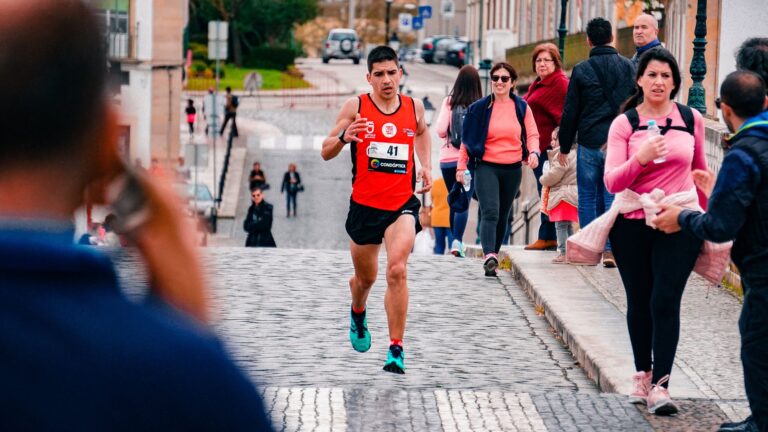
Distance runners excel because their bodies are built—or trained—to run on slow twitch muscle fibers, which can sustain contractions for hours without exhausting. Unlike fast twitch fibers that fire up for explosive power and fatigue quickly, slow twitch fibers rely on aerobic metabolism to generate sustained energy. This fundamental difference in muscle composition and function is why an elite marathon runner can maintain a 6-minute-mile pace for two hours while a sprinter would collapse within minutes at that speed.
Consider the difference between a world-class marathoner like Eliud Kipchoge, whose legs are composed of an estimated 80 percent slow twitch fibers, and a 400-meter runner whose muscle profile is reversed—Kipchoge’s physiology is the reason he can run 26.2 miles faster than most people can run a single mile. The relationship between slow twitch fibers and distance running success is not just about raw muscle type; it’s about efficiency, oxygen utilization, and the body’s ability to resist fatigue. Slow twitch fibers have more mitochondria—the cellular power plants—and better blood supply, making them incredibly efficient at converting stored fuel into usable energy over extended periods. This metabolic advantage is what separates distance runners from other athletes, and it’s why coaches and runners spend years developing these fibers through specific training methods.
Table of Contents
- What Makes Slow Twitch Fibers the Engine of Endurance Running?
- How Slow Twitch Fibers Resist Fatigue During Long-Distance Running
- The Relationship Between Fiber Type and Running Genetics
- Building and Maintaining Slow Twitch Fiber Capacity Through Training
- Common Pitfalls in Training Slow Twitch Fibers for Distance Running
- How Slow Twitch Fiber Composition Affects Pacing Strategy in Races
- The Future of Understanding Fiber Type in Distance Running Training
- Conclusion
- Frequently Asked Questions
What Makes Slow Twitch Fibers the Engine of Endurance Running?
Slow twitch muscle fibers, also called Type I fibers, are characterized by low contraction speed but exceptional endurance capacity. They contain more mitochondria than fast twitch fibers, along with higher concentrations of oxidative enzymes and myoglobin, a protein that stores oxygen within the muscle cell. This combination means slow twitch fibers can extract and use oxygen from the blood more efficiently than fast twitch fibers, allowing them to sustain activity for extended periods without relying on anaerobic (oxygen-free) metabolism, which produces lactate buildup and fatigue. When you run a 10-kilometer race at a steady pace, you’re predominantly using slow twitch fibers because the intensity is sustainable and aerobic.
The structural differences between fiber types directly influence their performance characteristics. Slow twitch fibers are smaller in diameter than fast twitch fibers, but they’re denser in capillary networks—the tiny blood vessels that deliver oxygen and nutrients. This difference explains why a distance runner’s leg muscles appear leaner compared to a sprinter’s more visibly bulky legs; the slow twitch-dominant runner has more small fibers serving by a rich network of blood vessels, while the sprinter has fewer but larger fast twitch fibers. A practical comparison: imagine a city with many small, efficient buses traveling frequent routes (slow twitch) versus a city with fewer but larger buses that make quick trips (fast twitch). The small-bus city can move more people over time because it’s optimized for continuous service.

How Slow Twitch Fibers Resist Fatigue During Long-Distance Running
The fatigue-resistant nature of slow twitch fibers comes from their reliance on aerobic metabolism. When muscles burn carbohydrates and fat in the presence of oxygen, they produce steady energy without excessive lactate accumulation. Lactate itself isn’t “bad,” but excessive lactate—combined with hydrogen ion buildup—creates an acidic environment in muscle tissue that contributes to the burning sensation and performance decline runners feel during intense efforts. Because slow twitch fibers maintain aerobic conditions at sustainable paces, they avoid this accumulation and allow runners to continue for hours. However, this fatigue resistance has a significant limitation: it comes at the cost of contractile speed and power.
A slow twitch fiber cannot generate the quick, forceful contractions needed for sprinting, which is why distance runners struggle in speed work unless they specifically train their fast twitch fibers. The glycogen-sparing efficiency of slow twitch fibers is another critical advantage for distance running. These fibers preferentially oxidize fat as fuel during lower-intensity efforts, which preserves glycogen (stored carbohydrate) for later stages of a race when intensity increases or as fuel when carbohydrate availability becomes critical. A runner competing in a marathon who has trained adequately to maximize slow twitch fiber efficiency can rely on fat metabolism for the first two hours, saving their glycogen for the final miles. A warning for runners: if you neglect slow twitch fiber development and attempt a distance event with primarily fast twitch muscle composition, you’ll deplete glycogen rapidly and hit the wall earlier than someone with slow twitch dominance. This is one reason why ultra-distance runners prioritize long, slow runs—these sessions specifically recruit and strengthen slow twitch fibers.
The Relationship Between Fiber Type and Running Genetics
While training can modestly increase slow twitch fiber recruitment and enhance their oxidative capacity, your baseline fiber type composition is largely genetically determined. Muscle biopsy studies consistently show that elite distance runners inherit a naturally high percentage of slow twitch fibers, often 70-80 percent or higher. This genetic advantage doesn’t guarantee running success—training, mental toughness, and race strategy matter enormously—but it does create a physiological foundation that makes distance running easier. A runner born with a 55 percent slow twitch composition will need more specific training to achieve the same endurance capacity as someone with a 75 percent baseline, and they may never reach the same peak performance.
The genetic component of fiber type explains why some athletes find distance running feels natural while others find it feels like swimming upstream. When Kenya and Ethiopia dominate long-distance running internationally, part of the explanation is population-level genetics that favor endurance fiber composition. This doesn’t mean runners without genetic endurance advantage can’t succeed—training can improve slow twitch fiber oxidative capacity by 15-25 percent and increase their recruitment efficiency—but it does mean that someone with an average or fast twitch-dominant composition will need to be more intentional about their training approach. An example: two runners training identically for a marathon, one with 75 percent slow twitch fibers and one with 55 percent, may show a performance difference of 10-15 minutes even if both are equally motivated and have equivalent VO2 max values.

Building and Maintaining Slow Twitch Fiber Capacity Through Training
The primary method for enhancing slow twitch fiber performance is long, steady-state running at aerobic pace—typically 60-75 percent of maximum heart rate or the pace at which you could hold a conversation. These runs recruit slow twitch fibers, stimulate mitochondrial growth within those fibers, and improve the capillary density around them. A 10-mile run at easy pace does more to develop slow twitch fiber endurance than a 3-mile run at race pace, even though the faster run might feel more challenging. The key distinction is duration and aerobic sustainability: slow twitch fibers respond to time under tension at aerobic intensity, not to intensity itself.
Tempo running and lactate threshold work serve a different purpose in slow twitch development—they train the slow twitch fibers to operate at higher intensities and improve their ability to remove lactate and hydrogen ions from the muscle. A runner who trains exclusively at very easy paces will develop slow twitch fiber endurance but may be ill-prepared for race-pace running, where they’ll rely on slower, more easily fatigued fast twitch fibers. The tradeoff is that high-intensity training, while necessary for racing speed, recruits more fast twitch fibers and provides less stimulus for slow twitch oxidative capacity. Elite distance runners balance this by doing 70-80 percent of their mileage at easy pace (slow twitch focus) and 20-30 percent at threshold, interval, and race-pace work (recruiting all fiber types while building speed).
Common Pitfalls in Training Slow Twitch Fibers for Distance Running
One frequent mistake amateur distance runners make is running too hard too often, which shifts training stimulus away from slow twitch fiber development toward fast twitch recruitment. When every run feels moderately hard rather than clearly easy or clearly hard, you’re in what coaches call the “junk mileage” zone—not slow enough to properly develop slow twitch aerobic capacity, not fast enough to build speed or lactate threshold. The warning here is that this approach feels productive in the moment (your watch shows heart rate up and pace reasonable) but wastes training time that could build actual fitness. A runner doing five runs per week at moderate pace develops less endurance fitness than someone doing four easy runs plus one fast run, even though both are covering similar weekly distances.
Another limitation in relying solely on genetics and slow twitch composition is that without proper training, these fibers remain undertapped. A genetically gifted distance runner with 80 percent slow twitch fibers who trains sporadically will lose fitness rapidly and won’t achieve peak aerobic capacity. Conversely, a runner with 55 percent slow twitch fibers who trains consistently and intelligently can develop slow twitch metabolic capacity significantly beyond what genetics alone would suggest. This underscores a critical point: genetics determine the ceiling of potential, but training determines whether you approach that ceiling. A warning for competitive runners: ignoring periodization and training variation can lead to overuse injuries that damage the very slow twitch fibers you’re building, setting back progress by weeks or months.

How Slow Twitch Fiber Composition Affects Pacing Strategy in Races
Understanding your likely slow twitch fiber composition can inform your racing strategy. If you know you have a naturally high slow twitch percentage, you can confidently pace longer distances conservatively and plan to run a stronger second half when others fade—your fibers are designed to sustain and improve. If you suspect your fiber composition skews more toward fast twitch, a more aggressive early race strategy might suit you better, building a cushion before the final miles become harder.
For example, a runner with predominantly slow twitch fibers in a marathon might run the first half at a steady 8:00 per mile and the second half at 7:45, knowing that aerobic capacity and efficiency will improve as the race progresses. A runner with fewer slow twitch fibers might need to run 7:45 early and accept a 8:15 late pace. Pacing also interacts with fueling strategy—a slow twitch-dominant runner can sustain aerobic fat metabolism longer and might perform well with minimal carbohydrate intake, while a runner with less slow twitch capacity who pushes faster paces earlier will depend more heavily on carbohydrate availability and needs a higher fueling plan.
The Future of Understanding Fiber Type in Distance Running Training
Advances in non-invasive testing, including muscle ultrasound and advanced blood biomarkers, are gradually making fiber type assessment more accessible to recreational runners without requiring muscle biopsy. As training tools improve, coaches will likely have better data to prescribe fiber-type-specific training—longer slow runs for slow twitch development, specific threshold work to improve slow twitch oxidative capacity, and targeted sprint work to prevent slow twitch-dominant athletes from losing fast twitch capacity.
The future of distance running training may be more individualized based on actual fiber composition rather than one-size-fits-all training plans. What’s already clear is that the next generation of distance runners will likely benefit from earlier identification of their muscle composition and more targeted training from younger ages. Countries with sophisticated talent identification programs—including those in East Africa—may gain competitive advantages by identifying runners with high slow twitch composition early and specializing them in distance events, rather than expecting all runners to succeed across multiple distances.
Conclusion
Slow twitch muscle fibers are the fundamental physiological advantage that separates distance runners from other athletes. Their capacity to sustain aerobic metabolism over hours, combined with fatigue resistance and metabolic efficiency, makes them the true engine of endurance performance. While genetics establish the baseline fiber composition, deliberate training through long, steady runs and aerobic work can significantly enhance slow twitch fiber capacity, allowing even runners without a genetic endurance advantage to become competitive distance runners.
If you’re committed to distance running, the takeaway is straightforward: build your training around developing slow twitch fibers through consistent aerobic work, structure your volume so that the majority of your mileage is at easy pace, and be patient with the process. Distance running success isn’t about pushing hard every session—it’s about systematically strengthening the muscle fibers that were designed for sustained effort. Focus on time at aerobic intensity, trust that your slow twitch fibers will adapt, and let your genetics set the ceiling while your training determines how close you get to it.
Frequently Asked Questions
Can you convert fast twitch fibers to slow twitch fibers through training?
No, you cannot change the fundamental type of a fiber. However, training can increase the oxidative capacity of fast twitch fibers, making them behave more like slow twitch fibers in certain conditions. You can also improve recruitment efficiency, training your body to rely more on slow twitch fibers during distance running.
What percentage of slow twitch fibers do you need to be a successful distance runner?
Elite distance runners typically have 70-80 percent slow twitch composition, but recreational distance runners can be successful with much less. Even with 50-55 percent slow twitch fibers, consistent training can develop sufficient aerobic capacity for marathon completion and competitive performance at the age-group level.
How long does it take to build slow twitch fiber capacity?
Aerobic adaptations in slow twitch fibers typically appear within 3-4 weeks of consistent training, with significant improvements visible after 8-12 weeks. Mitochondrial density increases and capillary networks expand over months and years of sustained aerobic training.
Should slow twitch-dominant runners avoid speed work?
No. While slow twitch-dominant runners should emphasize aerobic work, they still need speed work to maintain fast twitch recruitment and develop race-pace speed. Typically 20-30 percent of weekly mileage should include faster-paced running and interval work.
Can you determine your fiber type without a muscle biopsy?
While muscle biopsy is the gold standard, you can estimate your fiber type composition based on your natural performance patterns—if you naturally excel at distances and struggle with speed, you likely have high slow twitch composition. Genetic testing is becoming available but is not yet widely used in running.
Do slow twitch fibers use different fuel than fast twitch fibers?
Yes. Slow twitch fibers preferentially oxidize fat at lower intensities, while fast twitch fibers rely more heavily on carbohydrate (glycogen). This is why slow twitch-dominant runners can sustain long efforts on fat metabolism, while everyone relies more on glycogen as intensity increases.