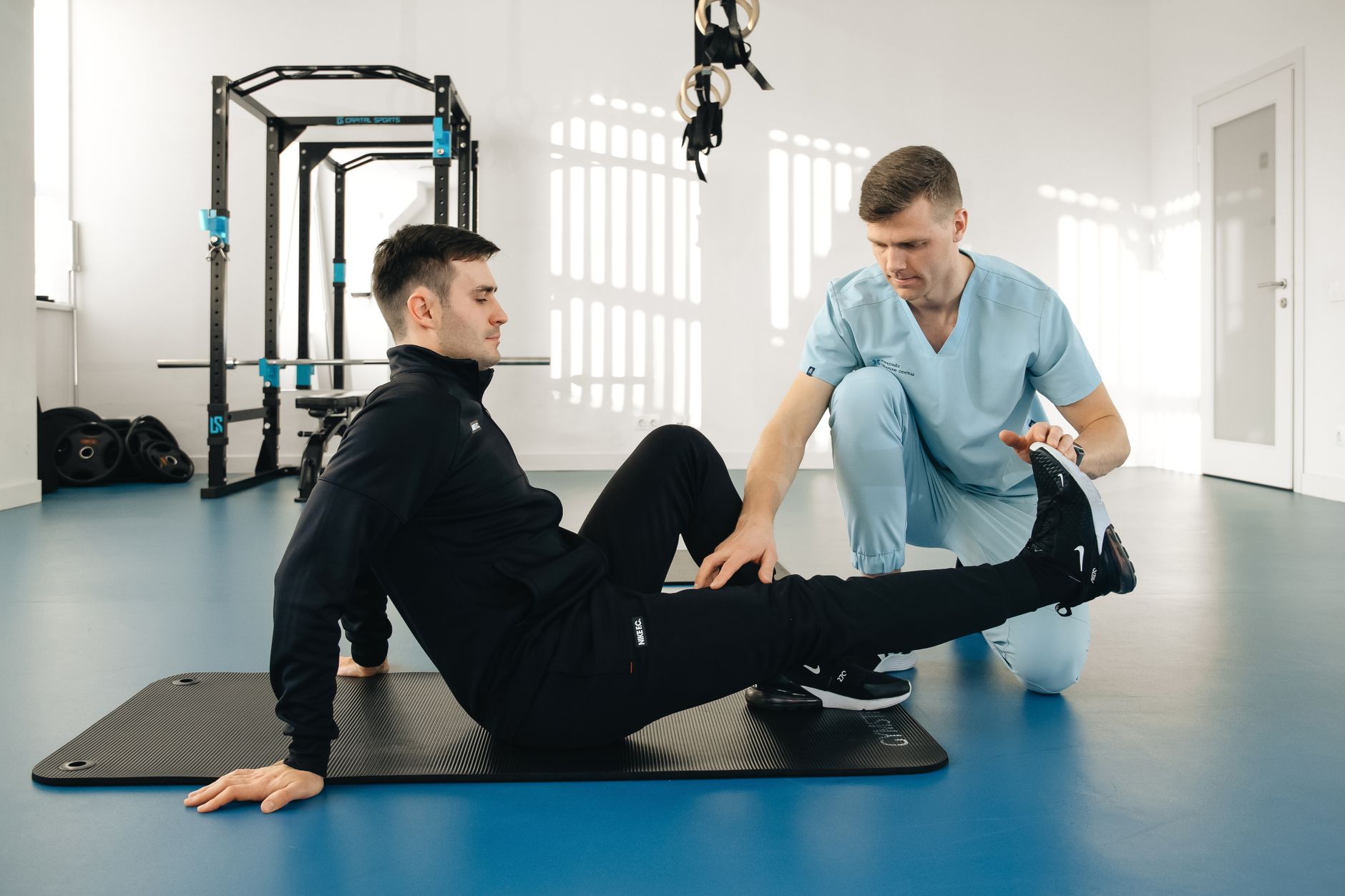
Runners best avoid hamstring injuries with dynamic warm-ups plus eccentric strengthening, especially the Nordic hamstring exercise. Static stretching before a run alone does not lower injury risk.
Hamstrings are the three muscles down the back of the thigh that drive push-off and slow the lower leg while sprinting. Eccentric means the muscle produces force while lengthening, as in the slow lowering phase of a Nordic. Protection comes from warming those muscles for action and strengthening them over weeks.
Medical information disclaimer: This article is for general educational purposes only and does not provide medical advice, diagnosis, or treatment. Always consult a physician or other qualified health professional about symptoms, medications, tests, or treatment decisions.
Table of Contents
- What makes the Nordic curl so protective?
- Why do runners need both Nordics and sprint exposure?
- What belongs in a pre-run warm-up?
- When should runners use static stretches?
What makes the Nordic curl so protective?
The Nordic hamstring exercise is a kneeling lowering move. Your ankles stay anchored while you resist gravity as your torso tips forward, then you catch yourself with your hands. That long, controlled lengthening trains the hamstring to handle high braking forces. According to the British Journal of Sports Medicine meta-analysis, programs including the Nordic cut hamstring injuries by about half across 8,459 athletes in 15 studies the 2019 injury-prevention meta-analysis. University of Queensland, UniSQ, and Stanford researchers link that benefit to changed mechanics in the biceps femoris long head, the hamstring head most often torn in sprinting.
Stronger eccentric capacity helps that muscle survive late swing phase. Start with a short range and a partner holding your ankles. Keep hips straight, ribs down, and hands ready to catch you. Stop the set when you can no longer lower slowly. Add range only as control improves.
Why do runners need both Nordics and sprint exposure?
Sprinting and Nordic curls stress the hamstring in different ways, so one does not replace the other. Nordics build eccentric strength in a controlled kneeling position. Sprinting loads the muscle at high speed and long length during the running stride. Stanford Human Performance Alliance researchers report that the two tasks load the hamstring differently, so runners likely need both sprint exposure and Nordics the Stanford comparison of sprinting and Nordics.
Use gradual strides and short fast efforts to introduce speed. Keep most running easy while sprint distance rises slowly. Trunk and pelvic control also matter for repeat injury. According to Hospital for Special Surgery guidance, prevention centers on dynamic warm-ups plus strengthening, especially eccentric hamstring work and trunk control the HSS hamstring-injury guide. Pair Nordics with simple core and glute work such as planks, bridges, and single-leg balance.
What belongs in a pre-run warm-up?
A good pre-run routine uses slow, controlled motion to raise blood flow, core temperature, and range of motion. That sequence helps the glutes, hamstrings, and quads activate before harder running. Begin with easy walking or jogging, then move through larger leg motions.
Use moves that take joints through running shapes: Keep the effort relaxed and rhythmic rather than bouncy or forced. Five to ten minutes is enough for most easy runs. Extend the routine before intervals, hills, or races.
- front-to-back leg swings for hip mobility
- walking knee hugs to mobilize hamstrings and glutes
- walking lunges for hips, quads, and glutes
- high knees, butt kicks, and short strides to finish
When should runners use static stretches?
Save long static hamstring holds for after running. Pre-exercise static stretching alone does not lower injury risk. According to American Family Physician, a Cochrane pool of six trials with 5,130 people found no clear reduction the 2016 review of stretching for injury prevention. That limit matters because many runners still stretch cold hamstrings and expect protection.
A dynamic warm-up prepares tissue for speed better than a held toe touch. Static work cannot replace eccentric strength or graded sprint exposure. After a run, hold each hamstring gently without pain. Breathe normally and stop if you feel a sharp pull. Treat new or returning hamstring pain as a reason to reduce speed work and seek care.