
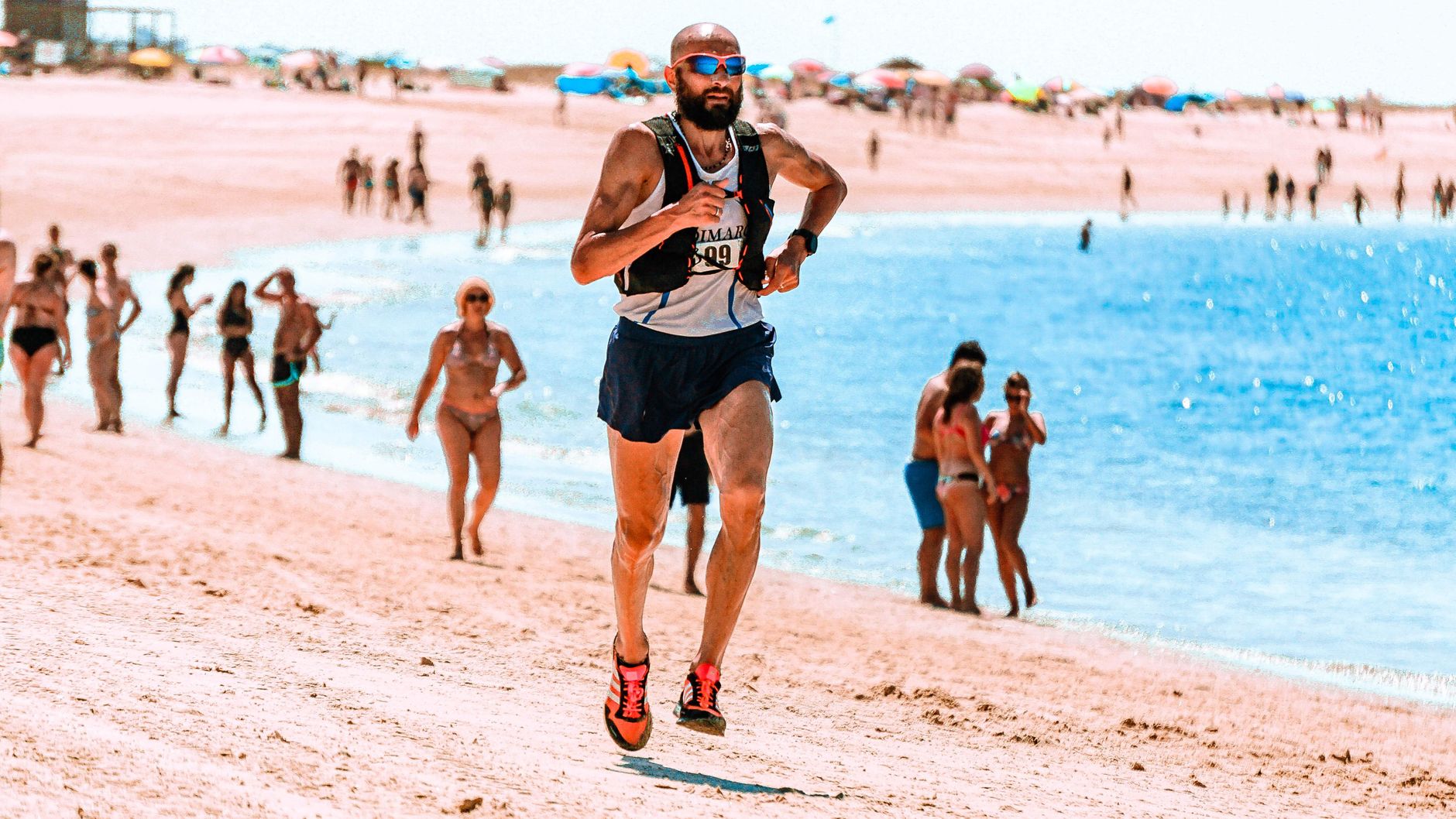
Vegan running for beginners means building running fitness while eating only plant foods, with no meat, dairy or eggs. A safe progression plan combines three walk-run days per week with rest days and small weekly increases plus planned protein, B12, iron and fluids. A walk-run start lets bones and soft tissue adapt. A planned vegan menu prevents the low energy and nutrient gaps seen in unplanned vegan runners.
Medical information disclaimer: This article is for general educational purposes only and does not provide medical advice, diagnosis, or treatment. Always consult a physician or other qualified health professional about symptoms, medications, tests, or treatment decisions.
Table of Contents
- How do you start the first weeks?
- How quickly should you build distance?
- How much protein do you need?
- How do you cover B12 and iron?
- What about fluids and safety checks?
How do you start the first weeks?
NHS guidance describes a 9-week walk-run plan with 3 runs per week and rest days between sessions. Week one starts with a 5-minute brisk walk, then alternating 60 seconds of running and 90 seconds of walking.
The NHS via Warwickshire outlines this start in the Couch to 5K guide. Use the walk breaks as planned and take full rest days between runs.
How quickly should you build distance?
UCLA sports medicine advises new runners to increase weekly distance by no more than about 10%. That limit gives bones and soft tissue time to adapt. UCLA notes this steady buildup lowers risk of shin splints, stress fractures, muscle pulls and runner's knee in the slow steady routine report.
Treat the 10% rule and Couch to 5K as conservative guides, not guarantees. Keep easy pace conversational. Repeat a week if fatigued rather than forcing progress.
How much protein do you need?
Vegan runners need enough total energy first, then enough protein. For athletes, the Journal review sets 1.4–2.0 grams per kilogram daily.
The Journal of the International Society of Sports Nutrition review advises aiming toward the higher end when energy intake is adequate. The Journal of the International Society of Sports Nutrition review links the higher target to lower digestibility of plant protein in athlete guidance. Spread protein across meals and match intake to training load.
How do you cover B12 and iron?
NIH and the Academy of Nutrition and Dietetics state vegans have no reliable natural plant source of vitamin B12. They advise regular B12-fortified foods such as nutritional yeast or soy milk, or a B12 supplement, to prevent deficiency in the B12 fact sheet. Running Writings analysis reports plant non-heme iron is absorbed at only about 3–8% versus 8–16% or more for heme iron.
Pairing beans, lentils or fortified cereals with vitamin C foods can raise absorption several-fold. NURMI and Journal of Exercise and Nutrition research finds a well-planned vegan diet including supplements can meet runners' B12, vitamin D and iron needs. Unplanned vegan recreational runners show lower energy, protein and key micronutrient intakes in studies.
What about fluids and safety checks?
American College of Sports Medicine advises runners to start exercise well-hydrated. They should drink during activity to avoid losing more than about 2% of body weight. Afterward, rehydrate with about 1.25–1.5 liters of fluid per kilogram lost.
Weigh before and after long runs to guide replacement. Beginner guidance treats these plans as conservative guides, not guarantees. Get iron and B12 blood work before self-dosing high iron.
- Repeat a week if fatigued and keep easy pace conversational
- Get iron and B12 blood work before self-dosing high iron
- Track fluids to stay within 2% loss and replace 1.25–1.5 L per kg lost