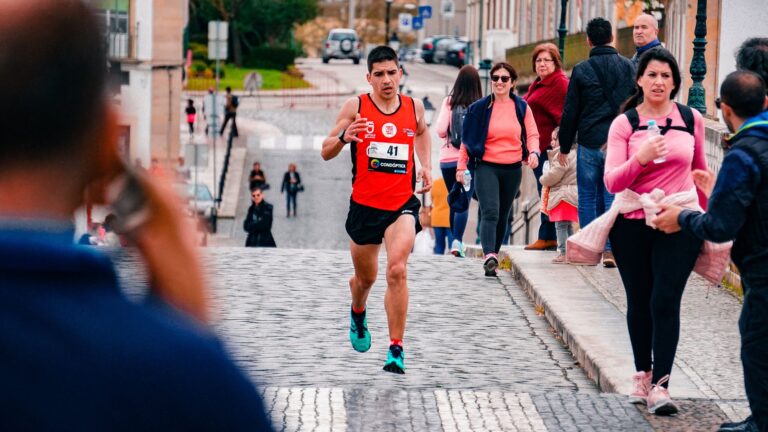
Ultramarathon racing at age 50 represents a significant achievement in endurance sports, and capturing a third career victory while setting a course record demonstrates exceptional fitness and tactical execution. This accomplishment challenges the common assumption that athletic performance peaks in the early thirties, showing instead that properly trained runners can achieve their fastest times and most consistent results well into their fifth decade.
The runner’s third victory signals not a lucky one-off performance but a pattern of sustainable high-level competition across multiple seasons and course variations. Setting a course record at 50 requires not just raw speed but intimate knowledge of the terrain, accumulated race experience, and a training program specifically adapted to the aging body’s recovery needs. This combination of elements—prior victories establishing a baseline, the maturity to execute a paced strategy, and the physical resilience to maintain effort over 50 miles—converges rarely enough that each instance warrants examination.
Table of Contents
- What Does a Third Ultramarathon Victory at 50 Really Mean?
- Course Records at the Ultramarathon Distance—Rarity and Demand
- Training for Sustained Ultramarathon Performance in Your Fifties
- Recovery and the Physical Toll of Ultramarathon Racing at Fifty
- Common Injuries and How They Derail Ultramarathon Ambitions
- Age 50 and the Ultramarathon Competitiveness Landscape
- The Rarity of Multiple Ultramarathon Victories and What It Signals
What Does a Third Ultramarathon Victory at 50 Really Mean?
Winning any single ultramarathon demands discipline across four to six months of training, proper fueling strategy, and mental fortitude during the inevitable low points of a 50-mile effort. Achieving this once is a notable accomplishment; doing it three times suggests the runner has solved several problems that defeat most competitors. The difference between a one-time ultramarathon finisher and a three-time winner often lies in pacing consistency, injury prevention, and the psychological ability to repeat hard efforts. Age 50 sits at a transition point in athletic careers.
Some runners find their thirties and early forties too consumed by work and family obligations to train seriously; by 50, time constraints may ease. Others have simply accumulated enough years of running to have developed the aerobic base, movement efficiency, and self-awareness that younger runners often lack. A three-time victor at this age has likely trained through multiple injury cycles, learned what fueling strategies work for their gut, and identified which courses suit their strengths. The repeated nature of this achievement—a third victory, not a second or first—indicates something often overlooked: consistency beats talent in ultramarathon racing. The runner has demonstrated the ability to peak multiple times, suggesting their training approach is sustainable and their body’s adaptation capacity remains intact despite the accumulated mileage of years.
Course Records at the Ultramarathon Distance—Rarity and Demand
A course record at 50 miles is substantially harder to achieve than winning the race itself. Winning requires only beating the other competitors present that day, who might be off-form, undertrained, or dealing with unexpected conditions. A course record requires crushing the accumulated efforts of potentially years or decades of previous runners over the same terrain. It demands ideal weather, perfect pacing, competitive fitness, and thorough route knowledge converging simultaneously. Setting a course record while notching a third career victory compounds the difficulty.
The runner is not simply executing a personal-best effort; they are also managing the tactical demands of racing against competitors, navigating an unsupported or partially supported 50-mile course, and maintaining focus through the mental and physical deterioration that occurs in the latter miles. Many runners who achieve their fastest times do so in small, self-paced events; winning a competitive race while also setting a record requires balancing these competing demands. Weather and course conditions matter enormously here. A 50-mile record set in temperate, dry conditions on a well-marked route with reliable aid stations is legitimately different from one set on a hilly or technical course with weather fluctuations. Understanding the context—how many aid stations existed, what elevation gain the course included, whether the trail was shaded or exposed—is critical to assessing the difficulty. Without those details, the number alone can be misleading.
Training for Sustained Ultramarathon Performance in Your Fifties
Runners targeting ultramarathon victories in their fifties typically spend 16–24 weeks in focused training blocks leading to each race. This is longer than many younger runners’ training cycles, reflecting the extended recovery time required as the body ages. The typical weekly mileage during these phases ranges from 40 to 80 miles, with one or two long runs exceeding 20 miles, depending on the runner’s experience and injury history. A specific example of this type of training: a runner preparing for their third ultramarathon at 50 might spend six weeks building mileage, eight weeks doing tempo runs and hill repeats to build speed at sustained efforts, and then four weeks tapering while maintaining intensity. One long run per month might reach 30–35 miles; the others stay between 18 and 28 miles.
This contrasts with younger runners’ approaches, which often feature higher peak mileage and faster absolute paces, because the aging athlete’s tendons and ligaments recover more slowly from high-intensity work. Cross-training becomes more central in training plans for 50-year-old ultramarathoners than for their younger counterparts. Strength work focused on the posterior chain—glutes, hamstrings, lower back—helps offset the repetitive impact of running. Many successful runners at this age include twice-weekly strength sessions in addition to running. Swimmers and cyclists sometimes supplement running mileage, both to maintain aerobic fitness while reducing impact and to engage different muscle groups.
Recovery and the Physical Toll of Ultramarathon Racing at Fifty
The physical cost of running 50 miles intensifies with age. Recovery from an ultramarathon in someone’s fifties often requires two to three weeks before normal training resumes, compared to one to two weeks for a younger runner. This longer recovery window reflects slower protein synthesis, delayed nervous system recovery, and increased inflammation response to extreme effort. A runner balancing multiple ultramarathon victories needs to space them appropriately—typically six to nine months apart—to allow adequate recovery and training cycles between efforts. The immediate aftermath of a 50-mile race involves predictable suffering: leg soreness peaks around 36–48 hours post-race, appetite suppression often lasts several days, and sleep disturbance is common. Beyond these expected effects, runners in their fifties often report a more profound fatigue—not just muscular but central nervous system fatigue that manifests as concentration difficulty and mood shifts.
This is not a sign of weakness; it reflects the magnitude of the stress imposed on an aging body. Some runners schedule post-ultramarathon recovery weeks as deliberately low-mileage, low-stress periods to allow deeper physiological adaptation. Nutrition becomes more important for recovery at this age. Runners who achieve multiple victories often work with sports nutritionists to ensure adequate protein intake (1.6–2.0 grams per kilogram of body weight daily during training blocks), proper carbohydrate timing around workouts, and sufficient micronutrient intake. Iron status, bone health, and hormonal balance—all factors that can decline with age—require monitoring. A runner’s third ultramarathon victory at 50 almost certainly involved addressing these nutritional factors deliberately, not leaving them to chance.
Common Injuries and How They Derail Ultramarathon Ambitions
Injury represents the most common barrier to repeated ultramarathon success at any age, but particularly at 50. Tendinitis in the knees, Achilles tendon, or plantar fascia affects a large percentage of ultramarathoners and is slower to resolve in older athletes. A runner who achieves three victories has likely navigated multiple injury scares—minor strains, inflamed tendons, or stress reactions—without allowing them to become catastrophic. This requires discipline: knowing when to rest completely rather than run through pain, when to cross-train instead of logging miles, and when to modify training rather than abandon a training cycle. Overtraining syndrome represents another hazard.
Because recovery is slower at 50, the margin between productive training and harmful overtraining narrows. A runner training too aggressively might feel fine initially, then suddenly experience a crash—depressed immune function leading to illness, chronic fatigue, mood disturbance, or injury. Runners who achieve multiple victories typically respect this boundary, pulling back intensity or volume when they notice warning signs like resting heart rate elevation or persistent heaviness in the legs. Stress fractures in the tibia, fibula, or metatarsals are also prevalent among ultramarathoners training on high mileage. These injuries often announce themselves subtly—localized pain that doesn’t improve with rest days and worsens with impact—before becoming severe enough to force time off. A runner compiling a third ultramarathon victory at 50 has likely caught at least one potential stress reaction early and addressed it before it became a full fracture, perhaps through a brief period of pool running or cross-training while reducing impact miles.
Age 50 and the Ultramarathon Competitiveness Landscape
The 50–59 age group has grown substantially in ultramarathon racing over the past 15 years, reflecting both increasing participation in the sport overall and runners discovering ultramarathons later in life. This growth has made age-group competition tighter; a runner winning their age group at a major ultramarathon event today likely has better fitness than the age-group winners of a decade ago. Setting a course record while also winning adds another layer of difficulty, because it requires not just beating stronger age-group competitors but achieving an absolute time that transcends age-relative performance.
The mental demands of ultramarathon racing—enduring physical discomfort, managing self-doubt during the long middle sections, deciding whether to push harder or ease back—do not diminish with age. If anything, runners in their fifties often possess advantages in these areas over younger competitors: accumulated experience managing adversity, clearer understanding of their own capabilities and limits, and reduced tendency to make impulsive pacing decisions. A third victory suggests the runner has developed mental strategies that work reliably, whether that involves self-talk techniques, structured fueling schedules that prevent the blood-sugar crashes that trigger doubt, or pre-planned contingency strategies for handling specific course challenges.
The Rarity of Multiple Ultramarathon Victories and What It Signals
Completing a single ultramarathon is an accomplishment that perhaps one in a few thousand people will achieve in a lifetime. Winning one requires both exceptional fitness and favorable race-day variables. Achieving three wins, particularly at age 50 and while setting a course record, places the runner in an extremely small cohort. This rarity reflects not just the runner’s current fitness but years of sustained commitment: seasons of training, multiple recovery cycles, persistence through setbacks, and the ability to stay healthy enough to race seriously year after year.
The course record component adds texture to this narrative. It indicates the runner has not simply been competitive within their age group but has executed at a level that stands against the full historical record of that course. This could reflect course changes—if the route had been made easier in recent years, older times would fall more readily—but more likely reflects genuine improvement in the runner’s fitness and execution. Whether through better training methodology, improved running economy, or simply the accumulation of experience, the third victory with a course record shows no decline in performance despite the passage of time from victories one and two.