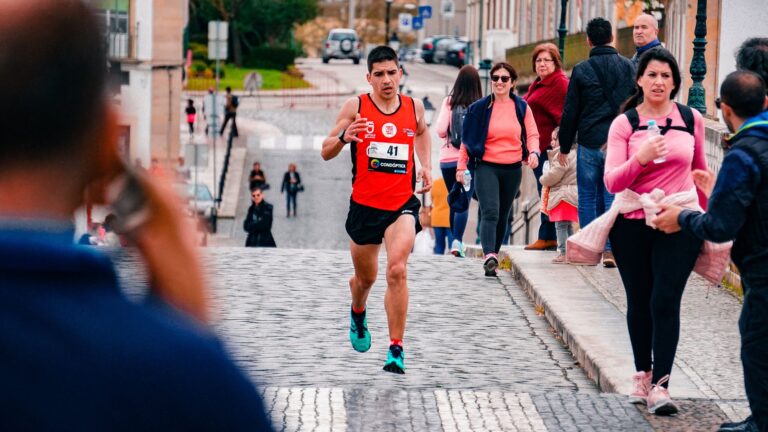
Your maximum heart rate in water is typically 10 to 15 beats per minute lower than it is on land—a physiological reality that many swimmers overlook when training. This difference exists because of your horizontal body position in the water, which changes how your cardiovascular system responds to exercise. If you’re a runner who swims for cross-training, this means your traditional heart rate zones don’t directly translate to the pool.
Understanding how your heart behaves underwater is essential for getting the most out of swim workouts and avoiding the mistake of pushing too hard because your numbers look conservative compared to land-based training. The good news is that heart rate training in water follows the same fundamental principles as any other aerobic exercise—you just need to account for the 10 to 15 BPM drop and adjust your target zones accordingly. Well-trained young swimmers under 19 experience a smaller reduction of just 5 to 7 BPM, showing that fitness and adaptation play a role in this response. Whether you’re training for triathlon, building base aerobic fitness, or simply looking to swim smarter, knowing your correct heart rate zones transforms a workout from guesswork into a structured, measurable program.
Table of Contents
- How Does Your Heart Rate Change When You Swim?
- Calculating Your Maximum Heart Rate and Training Zones for Swimming
- Understanding Swimming Heart Rate Zones and the Conversation Test
- Which Heart Rate Monitor Should You Use for Swimming?
- Common Mistakes When Applying Land Heart Rate Training to Swimming
- Temperature, Immersion, and Heart Rate Response
- Heart Rate Training in Competitive Contexts and Long-Term Fitness
- Conclusion
- Frequently Asked Questions
How Does Your Heart Rate Change When You Swim?
When you enter the water, your body undergoes an immediate shift. The horizontal position reduces the gravitational stress on your cardiovascular system compared to running or cycling upright. This physiological adjustment means your heart doesn’t need to work as hard to pump blood against gravity, which is why that 10 to 15 BPM reduction occurs in most adult swimmers. For recreational swimmers, this drop is consistent and predictable. However, if you’re a younger, highly trained swimmer, your body has adapted so efficiently to horizontal work that the reduction shrinks to just 5 to 7 BPM. This shows that years of swimming condition your cardiovascular system to handle water-based exercise more efficiently than land-based athletes experience initially. The practical implication is straightforward: take your estimated maximum heart rate and subtract 10 to 15 beats before calculating your training zones.
For a 40-year-old runner switching to pool work, your estimated max heart rate on land is 180 BPM (220 minus 40). In water, you’d estimate your max at around 165 to 170 BPM. If you ignore this and train using 180 BPM as your reference, you’ll either work much harder than intended or misinterpret easy pace as harder effort. The result is either excessive fatigue or undertraining and missing the aerobic adaptation you’re seeking. One limitation to this general rule is individual variation. Some swimmers, particularly those with larger lung volumes or exceptional cardiovascular fitness, may see different reductions. The best approach is to test yourself in the pool—swim at race pace and note your actual heart rate, then work backward to calibrate your personal zones rather than relying solely on the population average.
Calculating Your Maximum Heart Rate and Training Zones for Swimming
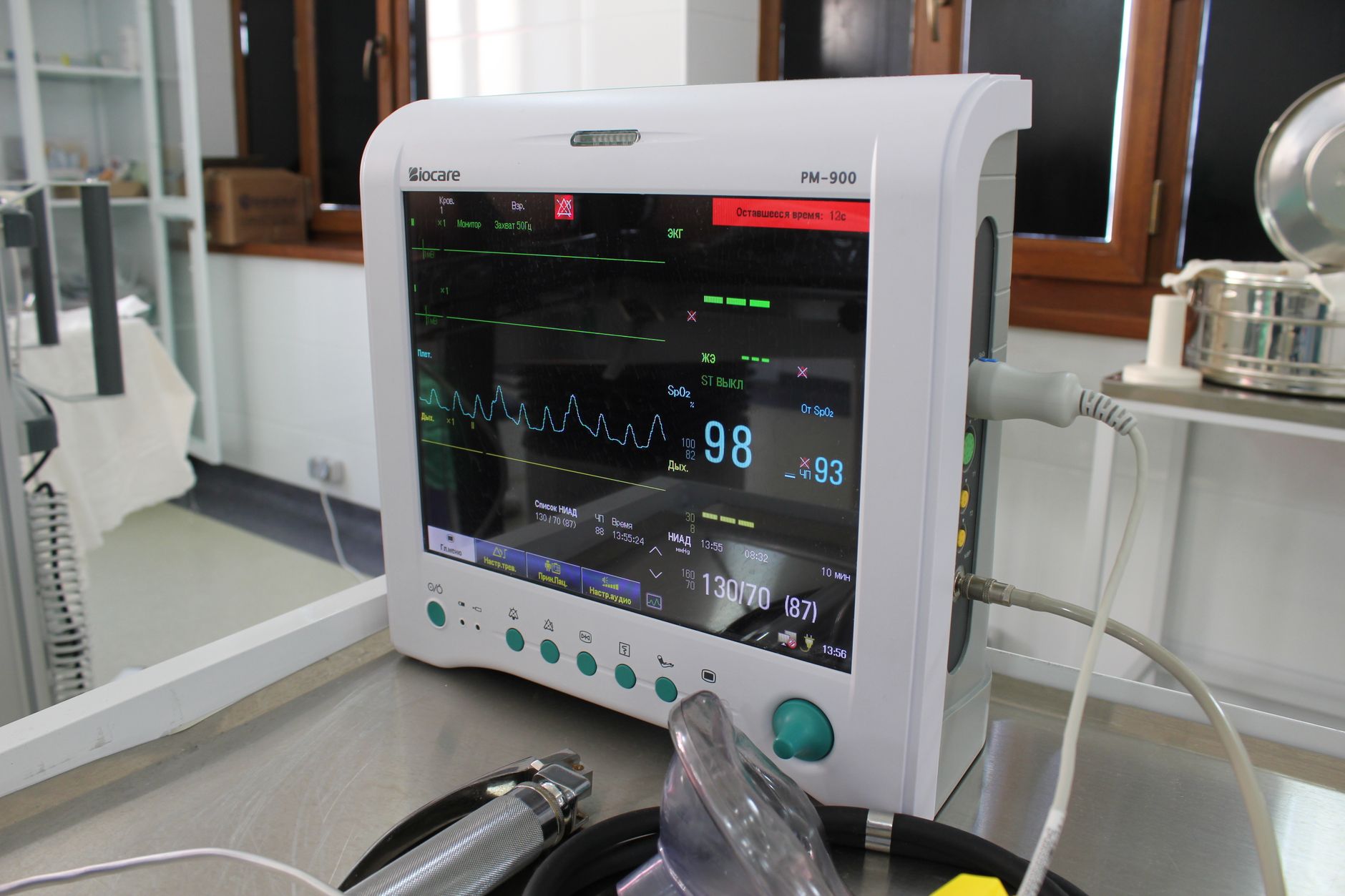
The most basic formula for estimating maximum heart rate on land is simple: 220 minus your age. A 50-year-old would estimate a maximum of 170 BPM on land, then apply the 10 to 15 BPM reduction to get a swimming max of 155 to 160 BPM. This straightforward approach works well as a starting point and requires no special testing. However, it has a major limitation: it doesn’t account for your individual fitness level or resting heart rate. Two 50-year-olds with identical age could have vastly different cardiovascular capabilities, yet the formula treats them identically. This is where the Karvonen Formula becomes valuable. Instead of using just your estimated maximum heart rate, the Karvonen approach factors in your resting heart rate, giving you a personalized calculation that better reflects your individual fitness.
The formula is: (max heart rate minus resting heart rate) multiplied by the intensity percentage, then add resting heart rate back. A well-trained runner with a resting heart rate of 50 BPM will get different training zones than a recreational swimmer with a 70 BPM resting rate, even if both are 50 years old. The Karvonen method accounts for this difference and provides more accurate guidance. For aerobic training—the foundation of endurance fitness—swim in the 60 to 90 percent intensity range based on your calculated maximum. This broad zone encompasses both steady-state work and faster aerobic efforts. The challenge is that without a reliable heart rate monitor, you’re essentially guessing at your actual intensity. Many swimmers rely on perceived exertion or pace, which can be misleading, especially in the pool where water conditions, wall turns, and technique variations all affect speed independently of true effort.
Understanding Swimming Heart Rate Zones and the Conversation Test
Heart rate zones give structure to training, and in swimming, Zone 2—often called conversation pace—represents the aerobic sweet spot for building base fitness. In Zone 2, you should be able to maintain a conversation with a training partner while swimming. You’re working hard enough that you can’t recite poetry, but relaxed enough that short sentences are possible. This zone, approximately 60 to 75 percent of your adjusted maximum heart rate, is where most training volume happens in well-designed swim programs. The beauty of the conversation test is that it requires no equipment. While a heart rate monitor gives you precise numbers, the conversation test gives you a reliable reality check. Many swimmers discover that they’ve been swimming too fast by regularly testing whether they can actually speak.
A triathlete training for an Ironman might spend 80 percent of their pool time in Zone 2, building aerobic capacity without the cardiac strain of higher-intensity work. If they can’t talk during what they believe is Zone 2, they’re training too hard and will accumulate fatigue without the intended adaptation. Zones 3 and 4, representing tempo and threshold work, climb to 75 to 85 percent and 85 to 95 percent of maximum heart rate respectively. These sessions are shorter—typically 20 to 40 minutes of total workout time—and more demanding. Zone 5, sprint work above 95 percent of max, should be brief intervals. A common mistake is spending too much time in Zones 3 and 4, which leads to overtraining without sufficient recovery. The conversation test fails here—you simply can’t maintain it—so monitoring becomes essential.
Which Heart Rate Monitor Should You Use for Swimming?
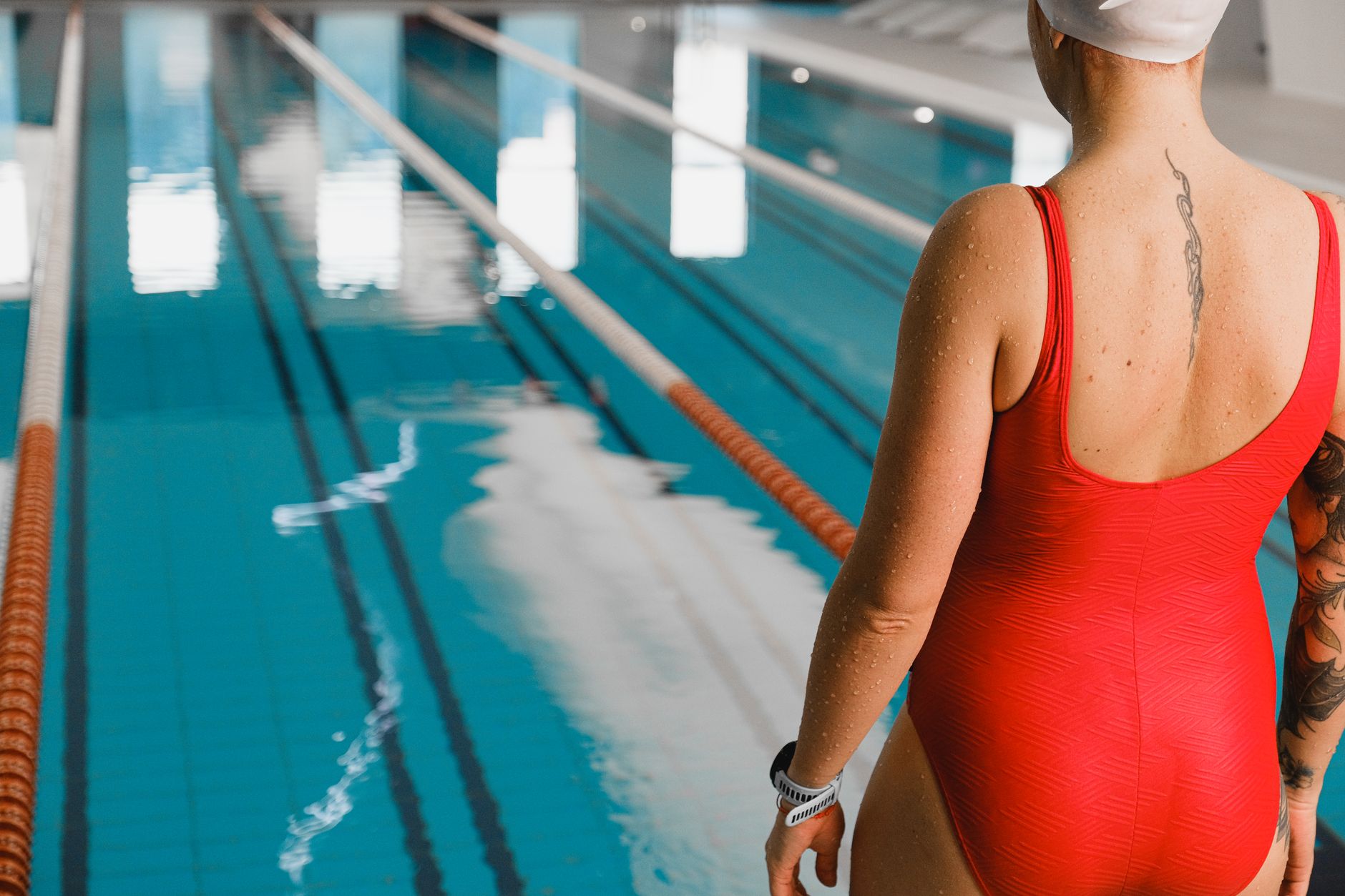
If you’re serious about heart rate training in the pool, a chest-strapped waterproof heart rate monitor is your most reliable option. These devices sit just below your pectoral muscles and use electrical signals to detect heartbeats directly, providing accuracy within 1 to 2 BPM under most conditions. The chest strap stays in place during turns, flip turns, and vigorous freestyle, and waterproof models from reputable brands maintain consistent accuracy even during extended underwater intervals or flip turns. This is the gold standard for swim-specific heart rate training. Wristwatch options have improved significantly and now include several viable alternatives. Garmin swimming watches, Apple Watch Series 2 and newer, Polar OH1 and OH1+ armbands, and Navy Cycling-compatible devices all support underwater heart rate monitoring. The Polar OH1 series, worn on the arm or wrist, uses optical sensing technology to detect heart rate and offers a middle ground between the accuracy of chest straps and the convenience of wrist wear.
However, optical monitors are generally less accurate than chest-strapped devices, particularly during high-intensity work or when you have tattoos or darker skin tone that affects light penetration. An Apple Watch Series 2 can track heart rate in the pool, though many swimmers find it less reliable than a chest strap when water turbulence or extended underwater time occurs. The practical consideration is that more accurate data leads to better training decisions. Underestimating your heart rate during a workout makes you think you’re working easier than you actually are, which can mask overtraining. Overestimating creates the opposite problem—you think you’re at higher intensity than reality and unnecessarily restrict your effort. If you’re investing time in structured heart rate training, spend the extra $50 to $100 on a chest strap. If you’re casually monitoring trends or doing occasional zone checks, any waterproof device works adequately.
Common Mistakes When Applying Land Heart Rate Training to Swimming
The most frequent error is using land-based maximum heart rate without adjustment. A runner might know their max is 190 BPM from road workouts and attempt to apply that directly to pool training. This creates zones that are too high, making easy work feel hard and potentially leading to overtraining. Another common mistake is assuming steady pace equals steady heart rate. In the pool, a slight technique change, water temperature, or fatigue accumulation can cause your heart rate to climb even as pace stays identical. This is why targeting a heart rate range is more reliable than targeting a specific time per 100 meters. Some swimmers new to heart rate training become obsessed with hitting exact numbers, treating a target of 150 BPM as requiring exactly 149 to 151.
In reality, heart rate fluctuates naturally by 3 to 5 BPM throughout a workout based on stroke efficiency, breathing patterns, and momentary effort. If your target zone is 150 to 160 BPM, aim for the middle of that range (155 BPM) and don’t stress about momentary dips to 152 or spikes to 163. Heart rate training is a guide, not a rigid rule. A final warning: don’t use heart rate as your only metric for training readiness. If your resting heart rate is 5 to 10 BPM higher than normal, you may be under-recovered, stressed, or fighting an illness. Proceeding with a planned high-intensity session despite elevated resting rate is a common path to overtraining syndrome. Heart rate data is most useful when combined with perceived exertion, sleep quality, and overall training stress.

Temperature, Immersion, and Heart Rate Response
Cold water immersion triggers an immediate heart rate elevation in many swimmers. When you first enter cool water, your body’s dive reflex can cause a temporary spike in heart rate and blood pressure as your nervous system responds to the thermal shock. This initial response subsides after a few minutes as your body adjusts, but the heart rate elevation can persist throughout a cold-water swim. A swimmer in 65-degree water might see a 5 to 10 BPM higher baseline than in 82-degree water, even at the same intensity.
This means your training zones may shift seasonally if you transition between outdoor and indoor pools. Warm water, by contrast, can depress heart rate slightly as your cardiovascular system works less hard to maintain core temperature. Pool water heated to 88 degrees or higher reduces the total cardiac demand compared to cooler conditions. The practical implication is that your heart rate alone can’t reliably compare workouts across different pool temperatures—a 155 BPM effort in cold water is not the same as 155 BPM in warm water. Using perceived exertion alongside heart rate, or sticking to the same pool when tracking progress, helps you account for these environmental variables.
Heart Rate Training in Competitive Contexts and Long-Term Fitness
For competitive swimmers, heart rate data informs training intensity during base-building phases but becomes less useful during taper. As athletes reduce volume and increase intensity in the final weeks before competition, heart rate zones shift due to improved freshness and reduced fatigue. A workout that produces 160 BPM heart rate early in season might only produce 155 BPM five weeks later at the same pace—a good sign of improved efficiency, not a sign to intensify.
Smart coaches track this trend and adjust zones dynamically rather than treating initial calculations as permanent. Age-group and Masters swimmers often discover that heart rate training extends their competitive years by promoting smarter, more sustainable training. Rather than relying on the pace that younger swimmers naturally hold, heart rate zones ensure that a 65-year-old trains aerobically on easy days just as effectively as a 30-year-old, avoiding the chronic fatigue that comes from swimming too hard on days meant to be recovery. This is the long-term value of heart rate training: it personalizes intensity regardless of age or ability, making swimming safer and more sustainable across decades of training.
Conclusion
Heart rate training transforms swimming from a subjective “get in and swim hard” activity into a structured, measurable system that builds fitness efficiently. The key is remembering that your heart rate in water runs 10 to 15 BPM lower than on land, using either a simple percentage-based formula or the more accurate Karvonen method to calculate personal zones, and investing in a waterproof heart rate monitor—ideally a chest strap—to track actual effort.
Zone 2 work, confirmed by the conversation test, forms the foundation of most training programs and should make up the majority of your pool time. The next step is to test your current fitness by establishing your true maximum heart rate in the pool, then structure your training around personalized zones rather than generic templates. Whether you’re a runner adding cross-training, a triathlete building endurance, or a Masters swimmer seeking to train smarter, heart rate data transforms workouts into predictable progress.
Frequently Asked Questions
Can I use my running maximum heart rate for swimming?
No. Your maximum heart rate is 10 to 15 BPM lower in water than on land due to your horizontal position. Always adjust downward before applying zones to pool training.
Is the 220-minus-age formula accurate?
It’s a useful starting point, but the Karvonen Formula, which factors in your resting heart rate, gives more personalized and accurate results for training zones.
What if I don’t have a heart rate monitor?
The conversation test—you should be able to speak short sentences in Zone 2—is a reliable backup. However, a monitor provides objective data that helps track fitness improvements over time.
Why is my heart rate higher in cold water?
Cold water immersion triggers a temporary increase in baseline heart rate. This means your training zones may shift by 5 to 10 BPM between cold outdoor pools and warm indoor facilities.
Should I train in Zone 2 all the time?
Most well-designed programs use Zone 2 for 70 to 80 percent of volume, with shorter, higher-intensity sessions in Zones 3 and 4 once per week. This balance builds aerobic capacity while managing fatigue.
How accurate are optical heart rate monitors compared to chest straps?
Chest straps are the gold standard, accurate within 1 to 2 BPM. Optical monitors like the Polar OH1 and Apple Watch are reliable for most swimmers but less accurate during high-intensity work compared to chest-strapped devices.