
Water aerobics does count as legitimate cardiovascular training, delivering measurable improvements in heart health, endurance, and calorie burn when performed at appropriate intensity levels. Unlike the perception that water exercise is purely recreational or for recovery, well-designed water aerobics workouts can elevate your heart rate to 50-85% of your maximum, matching the cardiovascular demands of land-based running and cycling. A 155-pound person performing vigorous water aerobics can burn 400-500 calories in 45 minutes, comparable to jogging at a moderate 6 mph pace on pavement.
The key difference is impact. While running generates force through repeated foot strikes on hard ground, water aerobics uses resistance and buoyancy to challenge your cardiovascular system without the joint stress. For runners looking to cross-train during recovery weeks or when managing minor injuries, water aerobics fills a critical training role that many dismiss too quickly. The cardiovascular adaptations—increased stroke volume, improved oxygen utilization, lower resting heart rate—are the same regardless of whether your feet touch ground or water.
Table of Contents
- What Makes Water Aerobics Count as Real Training?
- How to Measure Water Aerobics Intensity and Results
- Water Aerobics for Cross-Training Runners
- Structuring an Effective Water Aerobics Workout
- Common Mistakes That Reduce Water Aerobics Effectiveness
- Temperature Effects on Training Response
- Water Aerobics in a Balanced Training Plan
- Conclusion
- Frequently Asked Questions
What Makes Water Aerobics Count as Real Training?
Water aerobics counts as training when intensity meets specific thresholds. The water’s resistance increases proportionally to movement speed—moving your leg faster through water demands exponentially more effort than moving it slowly. This nonlinear resistance means you can’t coast through water workouts the way some people walk through gym sessions. Research from the Journal of Sports Medicine and Physical Fitness found that water aerobics performed at vigorous intensity produced similar VO2 max improvements as land-based aerobic exercise over 12 weeks. The buoyancy element changes the equation in your favor during recovery.
Water supports 90% of your body weight at chest depth and 50% at waist depth, reducing impact forces by 50-90% compared to running. This isn’t weakness—it’s leverage. A runner with plantar fasciitis who can’t tolerate pavement impact can maintain cardiovascular fitness in water while inflammation subsides. But here’s the limitation: if you perform water aerobics at low intensity with lots of standing and minimal movement intensity, it becomes active recovery, not training. The water environment doesn’t automatically guarantee an effective workout; your effort level does.

How to Measure Water Aerobics Intensity and Results
Measuring water aerobics intensity is trickier than running because traditional metrics like pace and distance don’t apply directly. Your best indicators are heart rate and perceived exertion. Aim to keep your heart rate between 120-160 beats per minute during vigorous water aerobics—this translates to roughly 60-80% of your maximum heart rate depending on age and fitness level. Using a waterproof heart rate monitor gives you real feedback rather than guessing whether you’re working hard enough. Perceived exertion should match a level where you can speak in short sentences but not hold a full conversation.
If you’re chatting freely with the person next to you, you’re too easy. Track your progress by how long you can sustain vigorous effort—if you complete 30 minutes at high intensity without needing rest breaks, you’ve built real aerobic capacity. A limitation many people encounter: water temperature affects effort perception. Cool water makes exercise feel harder even at the same intensity, while warm pools (82-86°F) can make high-intensity work feel easier than it actually is. Don’t let the comfortable temperature fool you into thinking you’re working less hard than you are.
Water Aerobics for Cross-Training Runners
Runners benefit from water aerobics primarily during high-mileage training blocks when accumulated impact stress threatens overuse injury. Substituting one running session per week with a 45-minute water aerobics session maintains cardiovascular fitness while giving musculoskeletal structures recovery time. The non-impact nature means you can train on consecutive days without the cumulative impact that leads to stress fractures or plantar fasciitis.
A practical example: a half-marathon runner typically runs 25-35 miles weekly during peak training. One of those sessions—usually an easy run—can be replaced with 45 minutes of vigorous water aerobics without fitness loss. Studies show runners who incorporate water training alongside running experience fewer training-related injuries while maintaining similar race performance compared to runners who only run. The water provides resistance training for stabilizer muscles that running alone doesn’t adequately challenge, particularly in the hip abductors and core.
Structuring an Effective Water Aerobics Workout
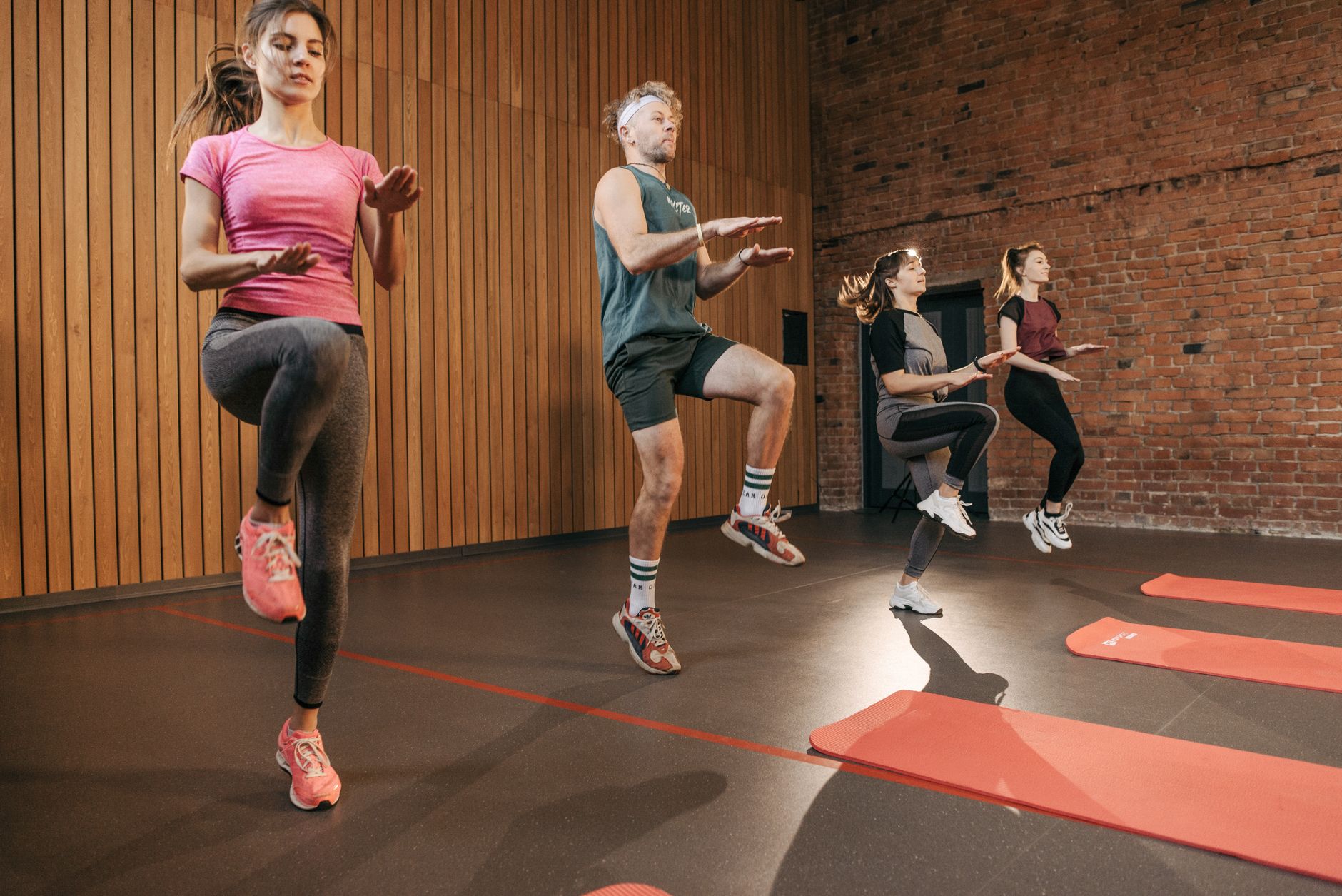
An effective water aerobics session follows the same structure as a running workout: warm-up, building intensity, sustained effort, and cool-down. Begin with 5-10 minutes of easy movement to elevate heart rate and warm muscles—walking across the pool, gentle kicks, arm circles. Move into 2-3 minutes of higher-intensity bursts to prime your cardiovascular system, then settle into your main set. The main set might be 25-30 minutes of sustained vigorous activity: water jogging (simulating running motion), high-knee runs, side-to-side movements, or choreographed combinations that keep you moving constantly.
Many people underestimate water jogging; when done at speed with proper form (driving knees forward and back through full range of motion), it demands serious effort. Finish with 5-10 minutes of cool-down activity at lower intensity and a short static stretch session poolside. A comparison: this structure mirrors a 5-mile tempo run for runners. The warm-up, main set, and cool-down phases serve identical physiological purposes whether you’re on pavement or in water.
Common Mistakes That Reduce Water Aerobics Effectiveness
The biggest mistake is insufficient intensity. Many people enter water aerobics classes designed for general fitness or rehabilitation, then assume all water aerobics is recovery-level exercise. True training-level water aerobics classes exist, but you need to seek them out or structure your own. Moving slowly through water burns calories through low-intensity activity, but doesn’t trigger cardiovascular adaptations needed for fitness improvement. Another critical mistake is inconsistent resistance application.
If you wear flotation devices (kickboards, pull buoys, vests) that reduce the water’s resistance, you also reduce training stimulus. These tools have their place during recovery or form-focused work, but they shouldn’t be your default during main sets. A warning: chlorine exposure during frequent intense water aerobics can cause skin irritation, particularly if pool chlorine levels are poorly maintained. Rinse off immediately after workouts and consider applying protective lotion beforehand if you’re prone to irritation. Some runners also find chlorine irritation in the eyes and throat during vigorous breathing patterns—goggles and rinsing your mouth with water during rest intervals helps.

Temperature Effects on Training Response
Pool temperature significantly impacts how hard you work and how your body adapts. Pools maintained at 78-82°F feel comfortable but may be cool enough that your body’s thermoregulation demands additional metabolic effort, increasing overall training intensity. Warmer pools (84-86°F) are common in therapy or recreational settings and feel pleasant but can lead to overheating during vigorous sustained exercise, potentially forcing you to reduce intensity earlier than intended.
An example: the same 45-minute water aerobics session feels considerably harder in a 79°F pool than in an 84°F pool, independent of effort level. If you’re training for fitness gains, cooler pools offer a slight intensity advantage. If you’re training during injury recovery, warmer pools promote blood flow and muscle relaxation, supporting rehabilitation.
Water Aerobics in a Balanced Training Plan
For runners, water aerobics works best as a supplementary tool rather than a replacement for running. The ideal approach treats water sessions as cross-training that maintains cardiovascular fitness without impact stress. Elite runners rarely build their base aerobic fitness primarily through water work, but they frequently use it for recovery weeks or during injury management.
As remote coaching and training apps become more sophisticated, some platforms now include guided water aerobics sessions designed specifically for runners, programming them strategically within training cycles. Looking forward, wearable technology that accurately captures water aerobics intensity (current devices struggle underwater) will make tracking easier. For now, runners who embrace water aerobics as legitimate training—approaching it with the same intensity and structure they bring to running—see real fitness gains that directly transfer to running performance and injury resilience.
Conclusion
Water aerobics absolutely counts as meaningful training when performed at appropriate intensity levels with consistent effort. The cardiovascular adaptations from vigorous water exercise match those from land-based training, while the impact reduction offers injury prevention benefits that running alone cannot provide. The research is clear: water aerobics at 60-85% of maximum heart rate produces measurable improvements in aerobic capacity, muscular endurance, and calorie burn.
If you’re a runner, stop dismissing water as only for recovery. Strategic water aerobics workouts—vigorous sessions performed at sustained intensity—belong in your training plan alongside running. Start with one 45-minute session weekly during high-mileage weeks or when managing minor injuries, structure it with proper warm-up and intensity building, and track your heart rate to ensure you’re working hard enough. The pool is training, not just relief.
Frequently Asked Questions
How does water aerobics compare to running for cardiovascular fitness?
At equivalent intensity levels (60-80% max heart rate), water aerobics produces similar cardiovascular adaptations as running. The primary difference is impact. Running builds stronger bones and connective tissue through ground reaction forces, while water aerobics maintains cardiovascular fitness without those forces. For fitness purposes, they’re comparable; for building bone density, running has an advantage.
Can water aerobics replace running for training?
Not completely for serious runners. Water aerobics maintains fitness effectively but doesn’t provide the sport-specific adaptations—running economy, leg strength at running angles, mental toughness from pounding—needed for optimal running performance. Use water aerobics as a supplement, not a substitute, when dealing with injury or during recovery weeks.
What’s the minimum intensity level for water aerobics to count as training?
Your heart rate should reach and sustain 120-150 beats per minute for at least 20-30 minutes continuously. If you’re not slightly breathless and can speak full sentences easily, you’re below training intensity. Perceived exertion should feel like “moderate to hard” effort.
How often should runners do water aerobics?
Once weekly during heavy running phases or twice weekly during injury recovery. More frequent water aerobics risks reducing your running stimulus too much. Less frequent water aerobics doesn’t provide enough cross-training benefit. Most runners benefit from one 40-50 minute vigorous session weekly.
Why does pool temperature matter for training?
Cooler pools (78-82°F) require more thermoregulation effort, increasing intensity without extra exercise. Warmer pools (84-86°F) feel more comfortable but can cause overheating during vigorous effort. Choose pool temperature based on your training goal—cooler for conditioning, warmer for recovery-focused sessions.
Are water aerobics classes the same as individual pool training?
No. Classes vary widely from recovery-level activity to high-intensity conditioning depending on the instructor and facility. Many traditional aerobics classes move too slowly to provide training stimulus. If you take classes, seek instructor-led vigorous sessions or program your own high-intensity water workouts alongside recreational classes.


