
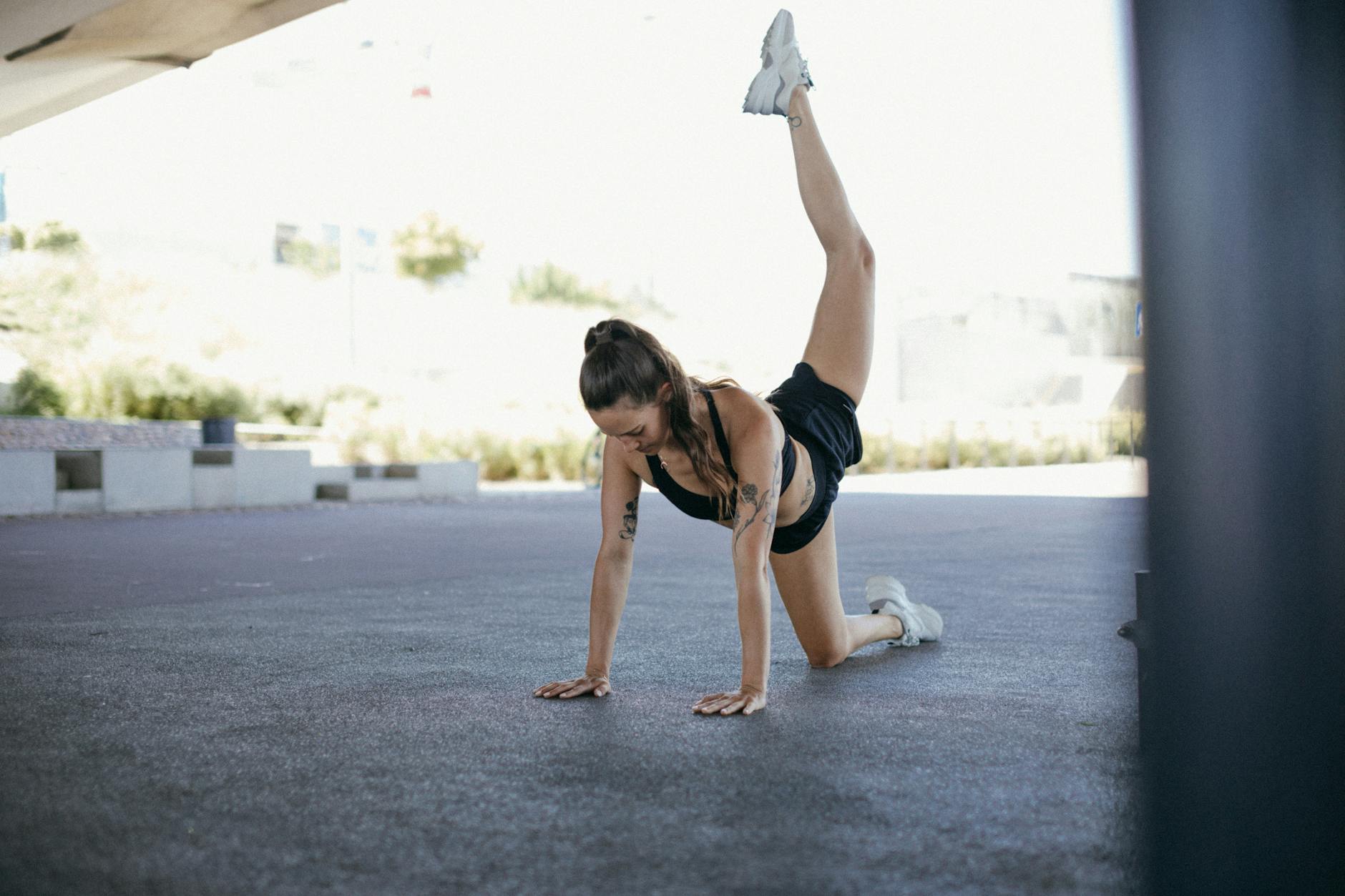
Strong glutes are fundamentally the foundation of efficient running form, yet most runners focus entirely on their legs and shoes while ignoring the muscles that control hip stability and power output. Your glute maximus, medius, and minimus work together to extend your hip, stabilize your pelvis, and propel you forward with each stride—without adequate strength in these muscles, your body compensates by relying on your knees, lower back, and ankle joints to do work they weren’t designed to handle. A runner with weak glutes will typically demonstrate overstriding, increased vertical oscillation, and inward knee collapse, all of which increase injury risk and reduce running economy.
Consider a recreational marathon runner who switches from a flat running posture with weak glutes to a structured glute-strengthening program over eight weeks. Within this timeframe, many runners report a noticeable reduction in knee pain, fewer muscle soreness complaints after long runs, and improved speed at the same effort level. The biomechanical shift is measurable: stronger glutes mean your hips stay level during single-leg stance, your pelvis doesn’t drop on the non-support side, and your stride becomes more symmetrical and controlled.
Table of Contents
- Why Weak Glutes Create Running Problems You’re Blaming on Your Knees
- How Glute Strength Directly Improves Your Running Economy and Speed
- The Connection Between Hip Stability and Stride Consistency
- Practical Glute-Strengthening Exercises That Actually Transfer to Running
- Why Many Runners’ Glute Training Fails to Improve Their Running
- Female Runners and Glute Activation Patterns
- The Future of Running Form Science and Preventive Glute Training
- Conclusion
- Frequently Asked Questions
Why Weak Glutes Create Running Problems You’re Blaming on Your Knees
When your glutes can’t adequately extend your hip and stabilize your pelvis, your running form degrades in ways you might not recognize. Your quadriceps and hip flexors work overtime, creating muscle imbalances that pull your knee inward (a condition called valgus collapse). Your knee then bears excessive stress from lateral and rotational forces that should have been managed by your hips. This compensation pattern is particularly common in female runners, who typically have greater pelvic width and different neuromuscular activation patterns, making glute activation even more critical for injury prevention. The ground reaction force generated with each footstrike must be absorbed and redirected efficiently.
Strong glutes absorb this impact by decelerating your leg before heel strike and accelerating it during push-off. Weak glutes force this burden onto your joints—your ankle supinates excessively, your tibia internally rotates too much, and your knee experiences repetitive stress that accumulates over training cycles. Studies using gait analysis have consistently shown that runners with IT band syndrome, patellofemoral pain, and anterior knee pain demonstrate significantly reduced glute strength compared to uninjured counterparts. The practical consequence: you can buy the most expensive running shoes on the market, but if your glutes aren’t strong enough to control your movement pattern, the shoe’s stability features will be overwhelmed by the dysfunction above them. Many runners discover this when they change shoes three times and still have the same pain.

How Glute Strength Directly Improves Your Running Economy and Speed
running economy—the amount of oxygen and energy required to run at a given pace—improves measurably when glutes contribute appropriately to propulsion. Each time your glute maximus extends your hip, it’s generating force that moves you forward, reducing the work your smaller, less efficient muscles must do. A runner with strong glutes requires less metabolic effort to maintain the same pace compared to a runner relying on quad-dominant propulsion. This isn’t merely a theoretical advantage. In practice, runners who complete a six to twelve-week glute strengthening protocol often report being able to run the same pace with a lower heart rate, or conversely, maintaining their typical heart rate at a faster pace.
This translates directly to improved race times and the ability to sustain higher effort during interval workouts without premature fatigue. The limitation to consider: building meaningful glute strength requires consistent, progressive overload—light glute activation work once per week won’t create the neuromuscular changes needed to shift your running mechanics. You need 2-3 sessions per week, with progressive resistance, for 4-8 weeks before major improvements appear in your running performance. Another important caveat: overzealous glute training without adequate recovery can lead to hip flexor tightness and trigger points in muscles like the piriformis, which will then compress your sciatic nerve. The goal is balanced strength development, not dominant glutes at the expense of hip flexibility and antagonist muscle function.
The Connection Between Hip Stability and Stride Consistency
Hip stability—your pelvis’s ability to remain level and centered during each stance phase—is almost entirely dependent on glute medius and minimus strength. These muscles abduct the hip and prevent Trendelenburg gait, where the pelvis drops on the unsupported side. During running, you spend roughly 40 percent of your gait cycle in single-leg stance, meaning your non-support-side glute medius is working intensely to prevent your hips from collapsing. When these muscles are strong, your stride maintains consistent geometry and power output throughout your run.
When they’re weak, you’ll notice your stride deteriorates around mile eight of a ten-mile run—your hip sags more, your cadence increases slightly as a compensation, and you lose the powerful hip extension that characterizes your initial miles. Video analysis of runners with strong glutes versus weak glutes shows a dramatic difference in hip height consistency across 30 or more consecutive strides. The weak-glute runner displays obvious asymmetry and progressive deterioration; the strong-glute runner maintains remarkable consistency even when fatigued. A practical example: a competitive 5K runner with weak hip stabilizers will often run a strong first 2 miles but fade noticeably in the final mile, even when aerobic fitness would suggest otherwise. Strengthening their glute medius can sometimes improve final-mile performance by 15-30 seconds without any changes to aerobic training, simply because their hips are no longer collapsing and losing mechanical efficiency.

Practical Glute-Strengthening Exercises That Actually Transfer to Running
Single-leg glute bridges and deadlifts are the foundation. A single-leg glute bridge performed with control—where you hold the top position for 1-2 seconds and concentrate on glute contraction—recruits the glute maximus in a way that translates directly to the hip extension phase of running. Progress by adding resistance with dumbbells or by elevating your supporting foot on a low step, increasing the range of motion. Perform 3 sets of 8-12 reps per leg, twice per week, and you’ll feel the difference in your running mechanics within 3-4 weeks. Single-leg deadlifts provide a more complex stimulus that demands hip stability, balance, and explosive power simultaneously.
They mimic running’s single-leg loading pattern more closely than bilateral exercises. Banded lateral walks and clamshells target the hip abductors specifically, addressing glute medius weakness that creates hip drop. The tradeoff with these exercises is the time investment—a thorough glute-focused strength session takes 20-30 minutes, which some runners view as taking away from their running volume. However, 30 minutes of glute work twice per week will generate better running returns than an additional jog of similar duration if your current limiting factor is weak hips. Monster walks (walking forward while maintaining a quarter-squat position with feet shoulder-width apart) and fire hydrants activate the glutes while building hip stability in a functional range. These are lower-intensity exercises ideal for warm-ups or recovery days, but they shouldn’t be your primary strength work if you’re starting from a place of significant glute weakness.
Why Many Runners’ Glute Training Fails to Improve Their Running
The most common mistake is treating glute strengthening as an isolated, disconnected activity rather than integrated training that complements your running workouts. You perform your glute exercises, then run without conscious effort to activate those muscles. Effective glute training requires progressive running-specific activation: tempo runs at slightly slower-than-race pace, hill repeats that demand powerful hip extension, and stride-control drills that train your nervous system to utilize your new strength. Another critical failure point: inadequate progression and load. Bodyweight glute exercises become ineffective after 2-3 weeks once your neuromuscular system adapts. You must consistently add weight, increase repetitions, or reduce rest periods to maintain the stimulus.
A runner who performs the same 10 air squats and 20 donkey kicks every other week will see no improvement beyond initial weeks. Additionally, many runners skip the eccentric (lowering) phase of these exercises, which is where significant muscle breakdown and adaptation occurs. Controlled lowering over 2-3 seconds, combined with explosive concentrics, creates the stimulus needed for strength gains. A warning about injury risk: rushing into heavy single-leg deadlifts or pistol squat progressions without proper preparation can strain the lower back or create knee pain. Start with bodyweight or light resistance, establish perfect form, and progress conservatively. A single hamstring strain from overly ambitious glute training will set your running back far more than consistent, moderate progression.

Female Runners and Glute Activation Patterns
Female runners statistically show lower glute activation during running compared to males, even when glute strength is similar. This relates to anatomical factors like increased Q-angle (the angle formed by the line connecting your hip to your knee and your knee to your ankle), greater pelvic width, and different neuromuscular control patterns.
The consequence is that female runners may need more aggressive and frequent glute activation work throughout the week—not just in dedicated strength sessions but also as part of warm-up routines before every run. Research consistently shows that female runners with IT band syndrome, patellofemoral pain, and plantar fasciitis respond exceptionally well to hip and glute-focused interventions, suggesting that these populations have particular neuromuscular deficits in hip control. Targeted glute activation circuits (monster walks, fire hydrants, lateral band walks) performed for 5-10 minutes before each run, combined with 2x weekly strength work, represents a more effective preventive approach for many female runners than waiting for injury to occur and then reacting.
The Future of Running Form Science and Preventive Glute Training
Wearable technology and real-time gait analysis are increasingly democratizing feedback that was once available only in research labs. Runners can now use motion-capture apps and AI-powered gait analysis to identify hip drop and asymmetry in their running form, providing concrete motivation to address glute weakness. As this technology becomes more accessible and integrated into training apps, we’ll likely see a cultural shift toward preventive glute training earlier in a runner’s development.
The emerging consensus in sports medicine is that glute strength should be considered a foundational requirement for running injury prevention, not an optional enhancement. Elite running programs have built glute-focused work into their periodized training for years; this approach is gradually trickling down to age-group and recreational runners as awareness grows. Within the next 5-10 years, weak glutes will likely be identified and addressed early in a runner’s development, similar to how we now recognize the importance of ankle mobility or core stability.
Conclusion
Strong glutes are truly the hidden key to efficient, injury-resistant running form because they do the job your biomechanics designed them to do: stabilize your pelvis, control hip movement, and generate powerful propulsion. The fact that this remains “hidden” to many runners speaks to how much running culture has focused on shoes, aerobic training, and leg strengthening while neglecting the foundational stability muscles that make everything else possible.
Your next step is straightforward: assess your current glute strength with a single-leg glute bridge or a single-leg deadlift, identify any weakness or asymmetry, and commit to 2-3 sessions per week of progressive glute strengthening for the next 8-12 weeks. The improvements you’ll feel in your running form, injury resilience, and performance will likely surprise you—and reinforce why glute training should be a permanent part of your routine, not a temporary fix.
Frequently Asked Questions
How long does it take to see improvements in running form from glute training?
Most runners report noticeable changes in how their running feels within 3-4 weeks of consistent glute work (2-3x per week), but measurable biomechanical changes on video gait analysis typically require 6-8 weeks of progressive training.
Can weak glutes really cause knee pain?
Weak glutes are a primary contributing factor to knee pain in runners because they fail to control hip and pelvic motion, forcing the knee to absorb forces it wasn’t designed to manage. However, knee pain often has multiple contributors; glute training is usually part of the solution, not the entire solution.
Is it better to do glute work before or after my run?
Glute activation work is most effective before your run as part of a warm-up (5-10 minutes of light activation), while heavier strength work should be on separate days or at least 6+ hours after a hard run to avoid compromising recovery.
What if I’m already injured? Should I do glute training?
In most cases, yes—but with modifications. A physical therapist or sports medicine professional should determine which exercises are safe in your situation. Often, you can perform pain-free glute work even while managing an injury, and this work often accelerates recovery.
How much glute strength is “enough” for injury prevention?
Research suggests that runners should be able to perform a single-leg glute bridge with good form, a single-leg deadlift with moderate weight, and maintain a level pelvis during a single-leg squat. If you struggle with any of these, your glutes need more work.
Do I need a gym membership to train my glutes effectively?
No. Bodyweight exercises (glute bridges, single-leg glute bridges, donkey kicks, fire hydrants) and resistance bands provide sufficient stimulus for several months. A gym allows for faster progression and heavier loading, but dedicated runners have built strong glutes with minimal equipment.