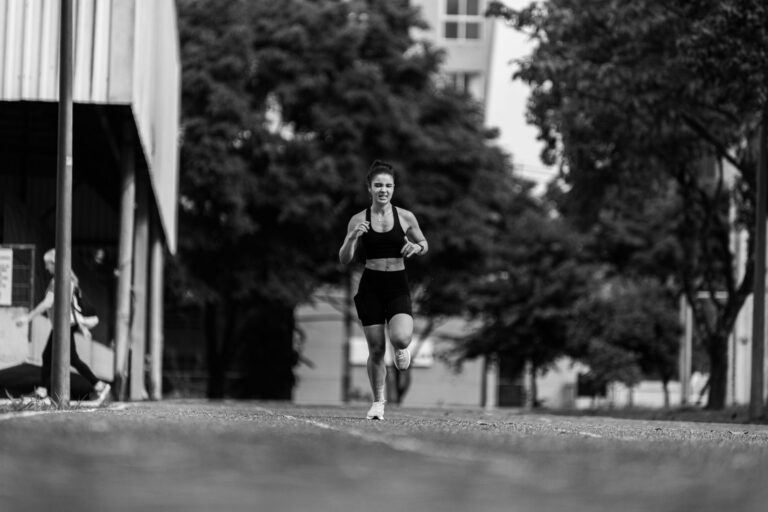
Loud footfalls are a reliable indicator of poor running form. When your feet are slapping the pavement with each stride, you’re likely overstriding—landing with your foot too far ahead of your center of mass—or heel striking with excessive braking forces that your joints weren’t designed to absorb. The sound itself is a warning signal: it reveals inefficiency in your biomechanics and points to injury risk that compounds over thousands of repetitions. A runner pounding out a 5-mile workout with a heavy footfall is imposing unnecessary stress on their knees, ankles, and hips with every single step.
The connection between running quietly and running safely is more than anecdotal. Research consistently shows that runners who consciously adjust their form to reduce noise naturally shift toward more efficient, injury-resistant movement patterns. About 85% of runners naturally use a heel strike, yet when asked to run quietly, roughly three-quarters of them spontaneously shift to a midfoot or forefoot strike. This isn’t coincidence—it’s biomechanics. The body recognizes that quiet running requires different muscle engagement and impact distribution, and that difference is precisely what separates poor form from good form.
Table of Contents
- Why Loud Footfalls Signal Overstriding and Heel Strike Problems
- Impact Forces and the Joint Loading Problem
- Ground Contact Time and Running Economy
- Practical Strategies for Achieving a Quieter, More Efficient Stride
- Common Mistakes When Transitioning to Quieter Running
- The Role of Acoustic Feedback in Injury Prevention
- Long-Term Benefits and the Future of Running Form Optimization
- Conclusion
Why Loud Footfalls Signal Overstriding and Heel Strike Problems
The acoustic signature of your running tells a story about what your body is doing wrong. Loud impacts happen because you’re braking hard against the ground instead of propelling yourself forward. When you heel strike with force, your foot lands far in front of your hips, creating a collision rather than a flowing motion. This braking phase absorbs energy that should be driving you forward, wasting effort and creating shock waves up your kinetic chain. Your shins, knees, and hips all feel the reverberation. Consider the difference in ground contact time: heel strikers average 199 milliseconds of contact with the ground per step, while midfoot and forefoot strikers average 183 milliseconds.
That 16-millisecond difference might sound negligible, but multiply it across a 10-mile run with 15,000 steps, and you’re absorbing significantly more impact over the course of your workout. The longer your foot stays in contact with the ground during a heavy strike, the more time your joints have to decelerate your body weight. Quiet runners spend less time in impact, which means less time fighting gravity and more time flowing forward. Overstriding—the root cause of loud footfalls—creates a biomechanical trap. Your foot lands ahead of your center of mass, which means your leg is already moving backward relative to your body when it touches down. You then have to use extra energy to pull that foot underneath you and push off. This inefficiency doesn’t just affect performance; it increases injury risk substantially, particularly at the knee and shin.

Impact Forces and the Joint Loading Problem
The force your joints absorb during running is directly related to how loud your footfalls are. A 5% increase in cadence—simply taking shorter, quicker steps—can reduce impact forces at the foot, ankle, and knee. But when you extend that cadence increase to 5-10%, the benefit becomes dramatic: runners can reduce joint loading by up to 20% at the knee without burning any additional calories. This finding is significant because it shows that efficiency improvements aren’t metabolically expensive; your body simply moves better when it moves with lighter contact. The limitation here is that increasing cadence too aggressively can create different problems. Some runners who jump from 160 to 190 steps per minute overnight report calf tightness or Achilles tendon irritation.
The fast-twitch muscle fibers in your calves work harder when your cadence increases, and if they’re not gradually conditioned to that demand, they’ll protest. The ideal approach is a gradual increase of 5-10% over several weeks, paired with strength work. Running quietly isn’t about sprinting in place; it’s about finding a sustainable cadence that keeps you in a midfoot strike pattern without creating new problems elsewhere. Joint forces aren’t evenly distributed across all impacts either. When you heel strike with force, the impact is initially concentrated at your heel and ankle before traveling up through your shin and knee. A quieter midfoot strike distributes that force more effectively across the entire kinetic chain, with more support from the arch and calf muscles. Your connective tissues handle distributed load far better than concentrated shock.
Ground Contact Time and Running Economy
The milliseconds you spend in contact with the ground matter for both injury risk and energy efficiency. Quieter runners spend less time per foot strike because they’re not braking or over-decelerating. This shorter ground contact time is a hallmark of economical, efficient running. Think of it like the difference between a gentle tap on a drum versus a heavy strike—the gentle tap creates less vibration and less residual energy loss. Elite distance runners typically have ground contact times around 160-180 milliseconds because their form allows them to maintain forward momentum without wasting energy on impact. The average recreational runner who’s pounding the pavement might be at 200+ milliseconds, which means they’re absorbing more shock and using more effort to maintain their pace.
When you reduce ground contact time through quieter running mechanics, you’re essentially making each step more efficient, which directly translates to easier running at faster paces or the same pace feeling less effortful. The feedback from your own footfalls can serve as a real-time training tool. If your runs are getting progressively louder as fatigue sets in, that’s a sign your form is deteriorating. Your muscles are tiring, your stride is getting longer, and your foot strike is moving backward. This is exactly when injuries happen—when form breaks down in the final miles of a long run. Conversely, if you’re maintaining quiet, controlled footfalls even when tired, it means your form is holding together and your injury risk is lower.

Practical Strategies for Achieving a Quieter, More Efficient Stride
The most straightforward way to run more quietly is to consciously shorten your stride and increase your cadence. Most running watches and apps can display your cadence in real time, making it easy to target a specific step rate. Start by establishing your baseline—many runners naturally fall into 160-170 steps per minute—and then aim for 5% more. If you’re at 165 steps per minute, target 173 for your next few runs. The slight increase will naturally push you toward a midfoot strike because you can’t overstride when you’re stepping more frequently. Another practical approach is to practice “strides”—short 80-100 meter pickups at the end of easy runs where you focus on quiet footfalls and quick cadence. These don’t need to be fast; the goal is form and lightness.
Over time, your neuromuscular system learns the feel of a quieter running pattern, and it becomes more automatic. Some runners also benefit from running drills like high knees or bounding, which reinforce the muscle activation patterns associated with a midfoot strike. The trade-off to understand is that changing your running form takes time and focus. You can’t overhaul your gait overnight without creating muscle soreness or increasing injury risk. Your calves, hip flexors, and glutes will need to adapt to working differently. The window for adaptation is typically 4-6 weeks of consistent practice, though rebuilding decades of heel-striking habits might take longer. During this transition period, it’s wise to reduce your total mileage by 10-20% to prevent overuse injuries while your body adjusts.
Common Mistakes When Transitioning to Quieter Running
One frequent error runners make when trying to quiet their footfalls is attempting to run on their toes. They interpret “quiet running” as “forefoot striking,” and they lurch onto their toes in a way that’s biomechanically awkward and unsustainable. True midfoot striking—where your foot lands under your hip and your entire midfoot contacts the ground simultaneously—is very different from tiptoeing. If you’re running on your toes, you’re creating a different injury risk profile, particularly with calf and Achilles tendon problems. The goal is a light, quick contact with a natural arch landing, not an exaggerated forefoot strike that limits your push-off power.
Another warning: be cautious of the “running gait analysis” industry that claims to identify your “natural” footstrike and suggests that this is immutable. While some biomechanical factors are influenced by anatomy, your footstrike pattern is far more malleable than marketing suggests. The real evidence shows that 85% of runners can and do shift their footstrike pattern when they focus on running quietly. Your footstrike isn’t destiny; it’s a habit that can be retrained. However, this retraining works best with patience and gradual progression rather than abrupt overhaul.

The Role of Acoustic Feedback in Injury Prevention
Running sounds themselves can serve as valuable biofeedback. Research has shown that acoustic analysis of running sounds provides insight into biomechanical patterns associated with injury risk. In other words, your ears are giving you real-time data about your form quality. This is why coaches and experienced runners often emphasize “listening to your feet”—it’s not poetic; it’s practical.
A sudden increase in volume during a run signals that your form is breaking down, usually due to fatigue or improper pacing. A consistent, quiet pattern suggests stable, efficient mechanics. Some runners record themselves running or have someone watch from behind to confirm they’re genuinely quieter, not just perceiving themselves as quieter. Video recordings reveal whether your heel is striking first (and if so, how far ahead of your body), whether your knees are driving up properly, and whether your overall posture supports the quieter, more efficient mechanics you’re building.
Long-Term Benefits and the Future of Running Form Optimization
As you develop the habit of quiet running, the benefits extend far beyond noise reduction. Most runners who successfully make this transition report running feeling easier at the same pace, which opens the door to training adaptations like longer easy runs or additional weekly mileage without increased injury risk. The mechanical efficiency gains compound over months and years, which is why elite runners—who’ve either naturally developed or deliberately cultivated quiet running form—sustain their training loads with fewer injuries than average.
The future of running form training likely involves more accessible real-time feedback tools. Wearable sensors and shoe-based accelerometers are becoming increasingly capable of detecting gait abnormalities and impact forces, potentially alerting runners to form breakdown before injury occurs. The principle remains unchanged: quiet footfalls are the signature of good form, and good form is the foundation of injury-free, efficient running.
Conclusion
Loud footfalls aren’t just an annoyance to your neighbors—they’re a clear signal that your form needs attention. Whether you’re naturally a heavy heel striker or someone whose form deteriorates during fatigue, the solution is the same: shorter strides, quicker cadence, and conscious focus on quiet, controlled contact with the ground. The science is clear that even modest adjustments—a 5% increase in cadence—measurably reduce impact forces and joint loading without metabolic cost. The transition takes consistency and patience, typically 4-6 weeks to establish new patterns, but the payoff is lower injury risk and more efficient running.
Start by establishing your current cadence and gradually increase it by 5%. Pay attention to how your footfalls sound and feel. Practice quiet running during short strides or dedicated form work before integrating it into your longer runs. Your joints will thank you, and the pavement will be a little quieter too.