Strengthening your feet directly improves ground reaction force—the amount of force your body generates when your foot contacts the ground during running. The stronger and more stable your feet are, the more efficiently you can transmit power into the ground and propel yourself forward, which translates to faster running, better endurance, and reduced injury risk. This happens because a weak foot collapses or flexes excessively upon impact, wasting energy and forcing other joints like your ankles, knees, and hips to compensate with extra work they weren’t designed to handle. Most runners overlook foot strength training because the feet seem like they should just work automatically.
But unlike larger muscle groups, the intrinsic muscles of your feet—the small stabilizers inside the foot itself—atrophy quickly without specific attention. A runner who spends three hours a week building leg strength while neglecting the feet is like a musician tuning an expensive guitar but ignoring the strings. The foundation matters. When your feet are strong, your ground reaction force becomes more efficient, your stride stays consistent over longer distances, and you’re far less likely to develop common running injuries like plantar fasciitis, shin splints, or ankle instability.
Table of Contents
- Why Foot Strength Matters for Ground Reaction Force
- The Small Muscles You Can’t See Are Doing the Real Work
- How Foot Strength Translates to Running Efficiency
- Practical Exercises That Actually Strengthen Feet
- Common Mistakes That Prevent Foot Strengthening Progress
- The Role of Footwear in Supporting Ground Reaction
- Measuring Progress and Long-Term Outlook
- Conclusion
Why Foot Strength Matters for Ground Reaction Force
Ground reaction force (GRF) is the force that the ground exerts on your body when your foot strikes it—Newton’s third law in action. The stronger your feet, the better they control and distribute this force across multiple joints and muscles, rather than letting all the impact slam into your knees or hips. Elite runners generate tremendous ground reaction force because they have feet that are strong enough to harness and direct that power efficiently. A study comparing sprinters to casual runners found that the sprinters had significantly more activation in their foot intrinsic muscles, which allowed them to maintain more rigid foot structures during ground contact—this stiffness acts like a spring, storing and releasing energy more effectively.
Weak feet, by contrast, pronate excessively (the foot rolls inward too much) or supinate (rolls outward), which disrupts the smooth transmission of force up the kinetic chain. This forces your calf, shin, knee, and hip muscles to work overtime stabilizing a foot that should be doing some of that work itself. Over time, this imbalance creates pain and injury. Dancers and gymnasts learned this lesson long ago—they spend significant time conditioning their feet because they know that foot weakness limits their power and precision. Runners are only now catching up to this understanding.
The Small Muscles You Can’t See Are Doing the Real Work
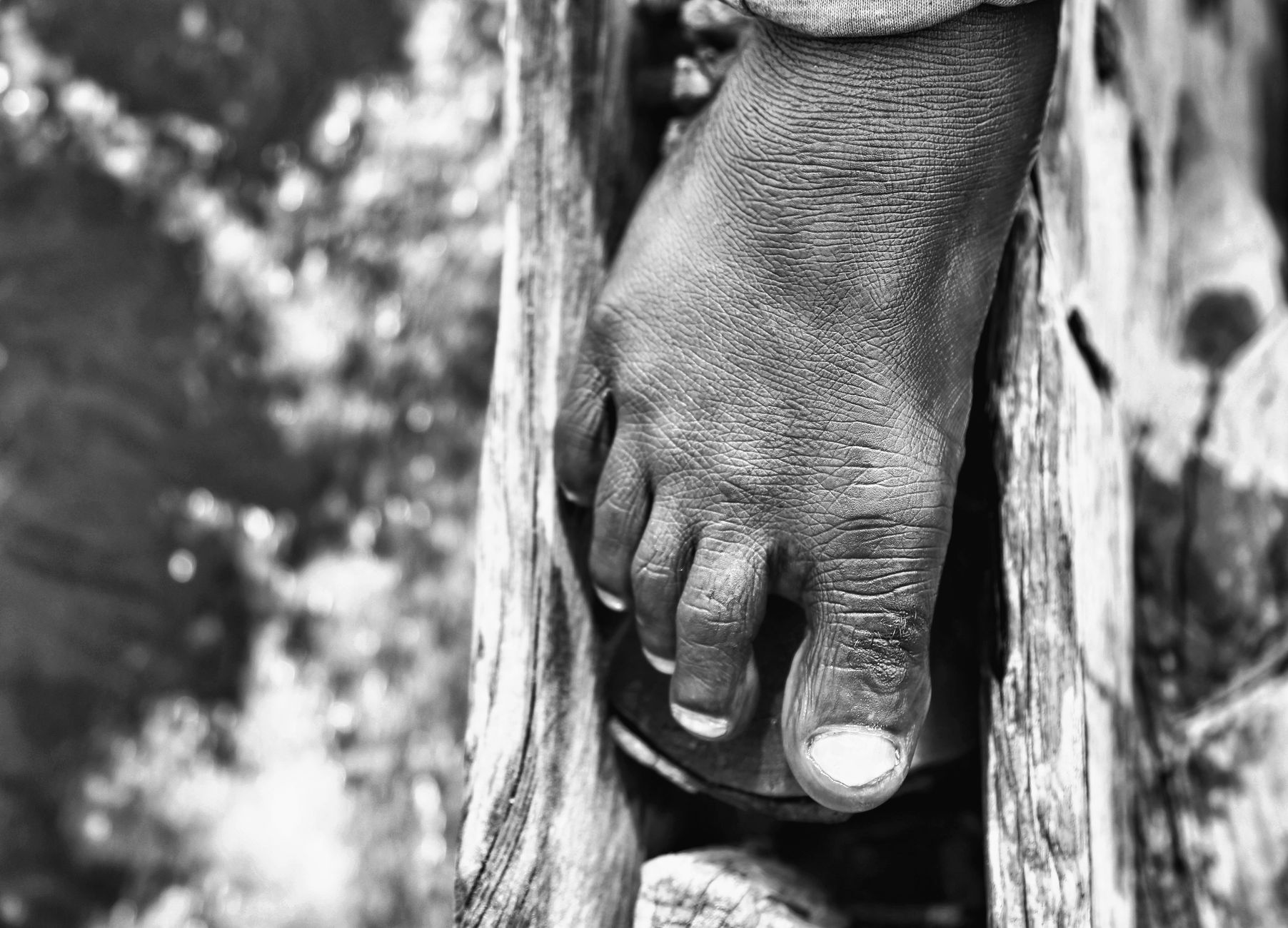
Your foot contains 20 intrinsic muscles—small stabilizers that live inside the foot and control its arch and rigidity. These are separate from the extrinsic muscles in your calf and shin, which you can feel when you flex your foot. The intrinsic muscles are the unsung heroes of ground reaction. When they’re weak, your arch collapses or flattens with each stride, absorbing less shock and reducing your ability to spring back into the next stride. This is why runners with flat feet or fallen arches often feel tired much earlier in a run—their feet aren’t storing and returning energy the way feet with strong arches do.
However, there’s an important caveat: not every runner needs a high arch, and arch strength means different things depending on your individual foot structure. some runners have naturally flexible feet and that’s fine—what matters is control and activation of those intrinsic muscles, not necessarily a visible high arch. The danger comes when muscles are weak and the foot structure is unstable. A fallen arch due to weak muscles is problematic; a naturally lower arch with strong, active muscles can function well. The distinction is subtle but critical. Many runners make the mistake of trying to artificially increase their arch height through orthotics or special inserts when what they actually need is to strengthen the muscles that control the arch.
How Foot Strength Translates to Running Efficiency
When your feet are strong, several things happen simultaneously. First, your ground contact time—how long your foot stays on the ground during each stride—becomes more controlled. A strong foot can create that brief, rigid platform needed for powerful propulsion, while a weak foot lingles on the ground longer as muscles scramble to stabilize. Second, your feet waste less energy on unnecessary pronation or other stabilization movements. This means more of your effort goes into forward motion rather than sideways wobbling.
Third, strong feet allow you to maintain your stride efficiency even when fatigued—a common issue is that as runners tire, their foot muscles give out first, causing them to lose form and increase injury risk in the final miles of a long run. A practical example: consider two runners with identical leg strength running the same 10-kilometer route. Runner A has weak feet; by kilometer eight, fatigue sets in because stabilizing muscles are depleted. Runner B has strong feet, so these muscles are fresher and can maintain control all the way through. Runner B’s running form holds up better under fatigue, she doesn’t need to compensate with her knees or hips, and she crosses the finish line less injured. This is why cross-training for foot strength is one of the most underrated injury prevention strategies in running.

Practical Exercises That Actually Strengthen Feet
The most effective foot strengthening exercises are simple but require consistency. Barefoot walking on varied terrain—grass, sand, trails—forces your intrinsic muscles to activate and control the foot through unpredictable surfaces. This is why many runners who switch to minimalist shoes suddenly become more injury-prone: they jump straight to rigorous running when their feet aren’t ready. The proper progression is to begin with slow barefoot walking, which is low-risk and genuinely strengthens the stabilizers. Short foot exercises are another gold standard. Sit with your foot flat on the ground and try to shorten your foot by pulling the ball of your foot toward your heel while keeping your toes relaxed and not curled. You’re not actually moving much; instead, you’re activating the arch.
Hold for five seconds and repeat 20 times per foot. This sounds trivial, but it directly targets the arch muscles that ground reaction depends on. The tradeoff is that it’s invisible work—you won’t feel the “burn” that you do with leg exercises, which is why many runners skip it. But the results after four weeks of consistent short foot exercises are measurable: improved arch control, better proprioception, and reduced foot pain. Calf raises and single-leg balance work also strengthen the foot indirectly by building the extrinsic muscles and improving proprioception. Exercises like standing on one leg with your eyes closed, or performing calf raises on one leg, force the foot to stabilize your entire body weight. These are higher-intensity than short foot exercises and build both strength and balance. The comparison: short foot exercises are the foundation, while single-leg balance work is the capstone.
Common Mistakes That Prevent Foot Strengthening Progress
Many runners try to accelerate foot strengthening by doing too much too fast. Running on minimalist shoes or going barefoot all day when your feet aren’t ready is a recipe for plantar fasciitis or stress fractures. The foot’s intrinsic muscles need gradual adaptation, just like any other muscle group. If you’ve spent years in conventional running shoes with arch support, your foot muscles have essentially been sleeping. Waking them up requires patience.
A smart progression is: barefoot walking indoors on day one, gradually increase duration and terrain over two weeks, then introduce short foot exercises, and only after four to six weeks of that should you attempt light running in minimalist shoes if desired. Another common mistake is ignoring foot pain as “just part of running.” Persistent foot pain is a warning that something is compensating or unstable. This pain is your body telling you that ground reaction force isn’t being handled properly. Ignoring it often leads to secondary injuries higher up the kinetic chain—your knee or hip takes over stabilization duties and develops pain weeks later. If you experience foot pain during running, the first step is to address foot strength and stability, not to just ice it and run through it.

The Role of Footwear in Supporting Ground Reaction
While this article focuses on foot strengthening rather than equipment, footwear absolutely influences how much your intrinsic muscles have to work. Heavily cushioned shoes with arch support reduce the demand on foot muscles, which sounds good but actually prevents strengthening. Conversely, shoes that are too minimal without adequate cushioning can overload already-weak feet. The sweet spot for runners who want to build foot strength is a moderately cushioned shoe with minimal arch support—think of a “minimal but not minimalist” approach.
This forces your foot to do meaningful stabilization work while still providing some shock absorption. A runner transitioning to better ground reaction performance should choose shoes that let the foot work without demanding it do more than it’s ready for. A good test: can you squeeze the shoe’s midsole with your hand? If it’s rock-hard, the shoe is doing a lot of work that your foot should be learning to do. If it’s extremely soft and compressible, your foot has to do all the work. A balanced shoe with moderate firmness allows your intrinsic muscles to strengthen gradually as you run.
Measuring Progress and Long-Term Outlook
The results of foot strengthening take time to appear in measurable ways. You won’t notice immediate changes in pace or distance, but after six to eight weeks of consistent foot work, you’ll likely notice that your feet feel less fatigued during runs, your stride feels more controlled, and smaller joints like ankles feel more stable.
Some runners report improved push-off power after consistent strengthening—this is your ground reaction force improving. Looking ahead, as runners increasingly recognize the importance of foot strength, training programs will likely include mandatory foot conditioning just as they do leg strength work. The science is clear: ground reaction force efficiency begins at the feet.
Conclusion
Strengthening your feet is not glamorous work, and it doesn’t produce the obvious muscle growth or immediate performance gains that leg strength training does. But the impact on your running is profound. Strong feet allow you to generate and control ground reaction force efficiently, which prevents injury, improves efficiency, and lets you run faster for longer. The path forward is straightforward: start with barefoot walking, progress to short foot exercises, add single-leg balance work, choose shoes that allow your feet to work, and be patient as your intrinsic muscles adapt and strengthen.
The best time to begin foot strengthening is today, before injury strikes. The second best time is tomorrow. Even runners dealing with existing foot pain will find that dedicated foot strengthening dramatically improves their situation within weeks. Make foot work a non-negotiable part of your training routine, just as you would strength training for your legs, and you’ll notice that your running becomes more powerful, more efficient, and more sustainable.