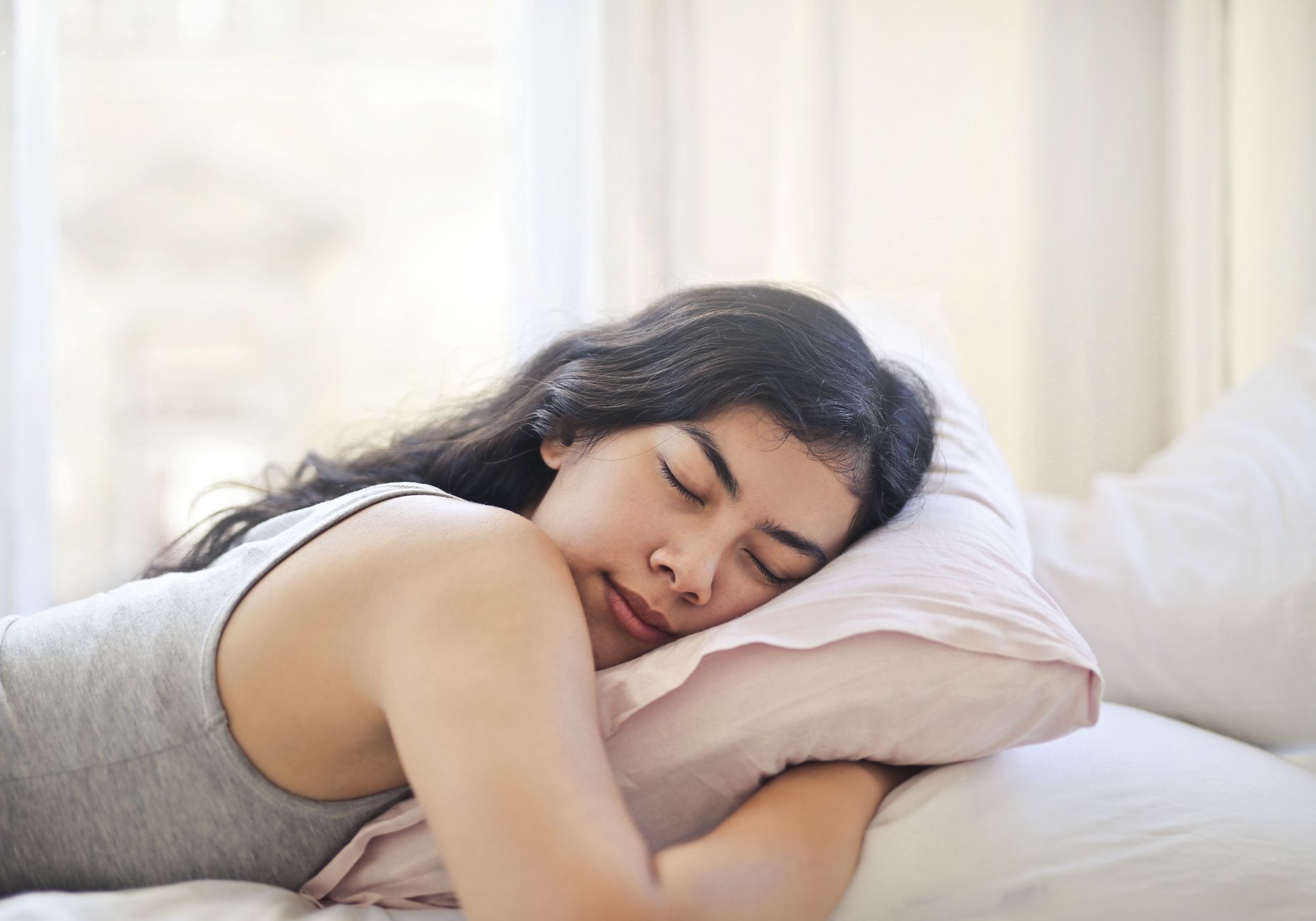
To sleep well after a late treadmill session, keep the run moderate and finish at least 90 minutes before bed. Then cool down, take a warm shower, and make the bedroom cool, dark, and quiet.
Slow-wave sleep is the deepest stage of sleep. It restores body and brain function. Johns Hopkins Medicine reports that at least 30 minutes of moderate aerobic exercise helps adults fall asleep faster and increases same-night deep sleep (Johns Hopkins guidance on exercise and sleep).
Medical information disclaimer: This article is for general educational purposes only and does not provide medical advice, diagnosis, or treatment. Always consult a physician or other qualified health professional about symptoms, medications, tests, or treatment decisions.
Table of Contents
- How late is too late to run?
- How should you end the treadmill session?
- Why take a warm shower before bed?
- How should you set the bedroom and night routine?
How late is too late to run?
For most runners, moderate effort is safe late in the evening if it ends at least 90 minutes before bed. The Sleep Foundation notes this gap lets heart rate, arousal, and core temperature return to sleep-ready levels (Sleep Foundation review of exercise timing). People who feel wired after night runs need more buffer. Johns Hopkins Medicine advises sensitive sleepers to finish 1 to 2 hours before bed so endorphin levels fall.
Use that window to dim lights and slow your mind. Intensity matters more than the clock. A 2019 meta-analysis of 23 controlled studies found evening exercise did not harm sleep overall. It raised deep sleep and lowered light stage-1 sleep. The exception was vigorous exercise ending within about one hour of bed, which can delay sleep and lower sleep efficiency in some people.
How should you end the treadmill session?
Do not finish with a hard sprint or steep hill. Shift the last few minutes to an easy walk. Let breathing slow and sweat dry before bed. Treat the hour after as a wind-down, not a second workout. Keep lights low.
Avoid work email, loud shows, and heated talk. You want arousal to fall, not climb again. If you still feel hot, restless, or wide awake after 30 minutes, you likely ran too hard or too late. Move tomorrow's hard intervals earlier. Keep the late session steady and short.
Why take a warm shower before bed?
A warm shower helps the body release heat afterward. That drop in core temperature signals sleep time. Researchers at the University of Texas at Austin found that 10 minutes in 104 to 109°F water, taken 1 to 2 hours before bed, cut sleep-onset time by roughly 10 minutes in pooled trials (UT Austin summary of the bath study). Time it with your run buffer.
Shower soon after you cool down, not right at lights-out. You get clean plus drowsy at once. Keep the shower warm, not scalding. Step into a cooler bedroom after. The contrast speeds the heat-loss effect.
How should you set the bedroom and night routine?
Make the room cool, very dark, and quiet, around 65 to 68°F. Dim lights after the run. Turn off phones, laptops, and TV at least 30 minutes before bed, a routine supported by CDC/NIOSH sleep guidance (CDC/NIOSH sleep guidance for shift work). Food and drink also shape the night.
Avoid a large meal close to bed. Skip alcohol as a nightcap. Skip caffeine in the afternoon and evening. Keep the plan simple on late-run nights: Set the thermostat to 66°F, shut off screens, and keep the late snack light.
- end the run with walking, then sit and breathe
- shower warm for about 10 minutes
- set the thermostat near 66°F and darken the room
- shut screens early and keep any snack small