
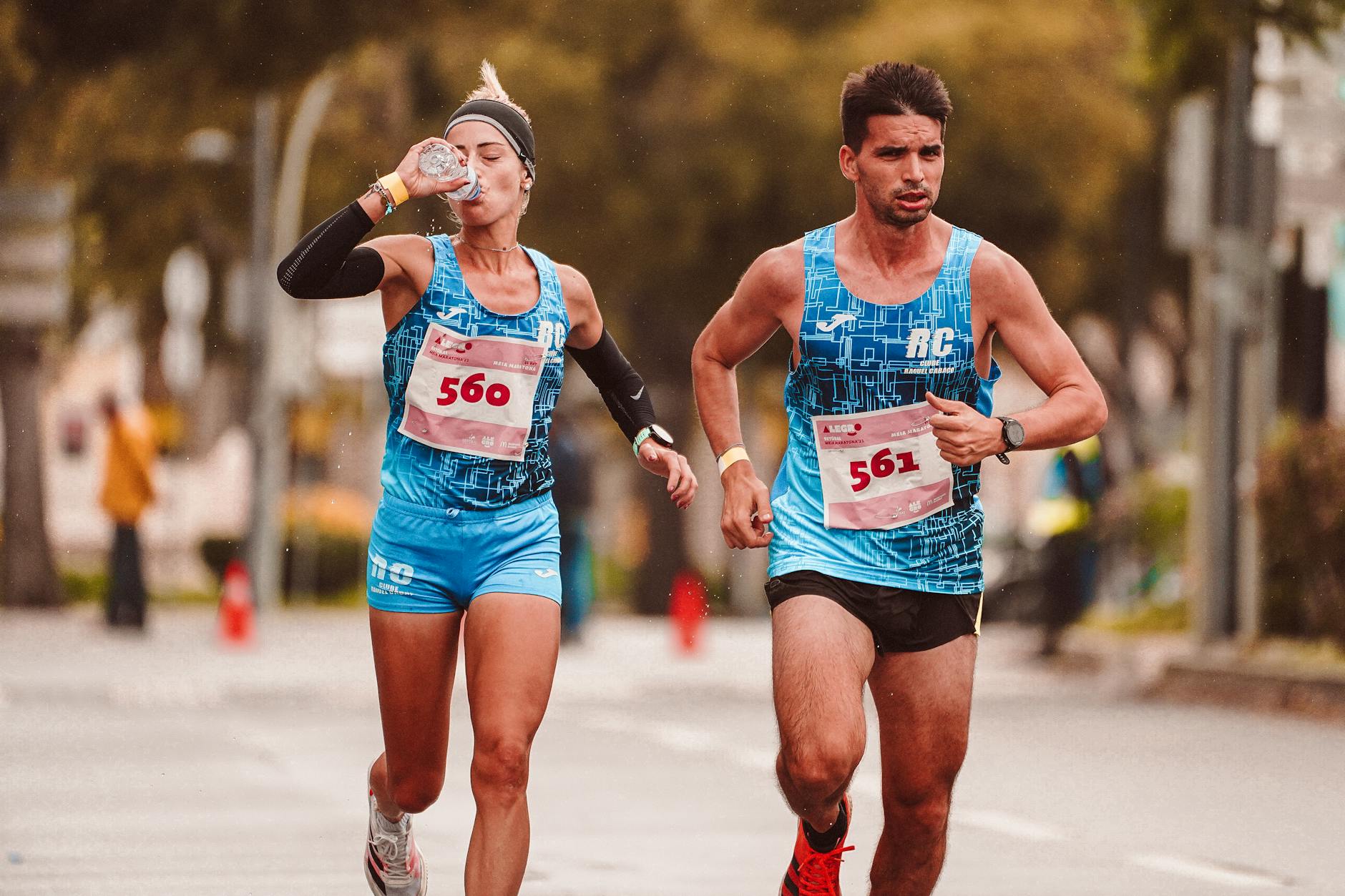
Maximizing your BQ (Boston Qualifying) time requires a strategic combination of structured training, smart pacing, and race selection. Unlike simply running faster, earning your Boston Marathon qualifying standard means meeting age-group specific time cutoffs that range from 2:29:59 for younger male runners to 3:35:59 for women aged 70 and over. A 35-year-old male runner, for example, needs to run a 2:59:59 marathon or faster, while a 55-year-old female must break 3:19:59. Achieving these standards is less about natural talent and more about systematic preparation, consistent weekly mileage, and targeted workouts that develop both aerobic capacity and speed.
The path to a BQ is fundamentally different from simply finishing a marathon. Most recreational runners complete marathons in 4 to 5 hours, but BQ times demand running at 6:45 to 7:15 per mile for extended distances. This requires your body to sustain a much higher percentage of your maximum aerobic capacity for the full 26.2 miles, which can only be developed through months of deliberate training, not just increased mileage. The good news is that BQ times are achievable for dedicated runners without elite genetics—it’s a matter of following proven training principles and avoiding common mistakes that derail most attempts.
Table of Contents
- What Does Maximizing Your BQ Standard Mean in Running?
- Building Aerobic Capacity for Faster Marathon Running
- Long Runs and Race-Specific Preparation
- Speed Work and Tempo Training Strategies
- Pacing Strategy and Race Execution for Maximum Success
- Nutrition and Fueling for Sustained Performance
- Recovery, Consistency, and Long-Term Development
- Conclusion
- Frequently Asked Questions
What Does Maximizing Your BQ Standard Mean in Running?
Your BQ standard is your target finishing time that qualifies you for entry into the Boston Marathon lottery. The Boston Athletic Association sets these cutoff times by age and gender, and they’re intentionally fast enough to be challenging but achievable for disciplined runners. For a 45-year-old male, the standard is 3:09:59; for a 50-year-old female, it’s 3:29:59. Maximizing your BQ doesn’t just mean hitting the time once—it means building the fitness level where you can reliably run that pace when it matters.
This is the critical distinction: many runners hit a BQ once through ideal race conditions and luck, but those who truly maximize their BQ can repeat it or go faster because the fitness is genuinely developed. The difference between running a 3:10 marathon and a 3:00 marathon is substantial. That 10-minute difference amounts to roughly a 0:22 per-mile pace reduction, which compounds over 26.2 miles and demands fundamentally different training. To maximize your BQ, you’re not training for a personal best in the moment—you’re training to build sustainable speed at marathon distance. A runner in proper BQ shape will feel comparatively strong in the final miles of a race rather than barely hanging on, which is the hallmark of genuine fitness versus a one-time effort.

Building Aerobic Capacity for Faster Marathon Running
The physiological foundation of a BQ is aerobic capacity—the amount of oxygen your body can utilize during sustained effort. Most BQ training programs build this through high weekly mileage (typically 50 to 70 miles per week), threshold runs at near-marathon pace, and long runs that gradually extend to 18 to 20 miles. The critical limitation here is that increasing mileage too quickly causes injury; runners often build too much volume in pursuit of a BQ and end up sidelined with stress fractures, plantar fasciitis, or tendinitis. A safe progression is no more than a 10% increase in weekly mileage per week, which means going from 50 to 70 miles takes at least 8 weeks.
Threshold runs—efforts run at 25 to 30 seconds per mile slower than marathon goal pace—are particularly valuable because they teach your body to process lactate and maintain composure at hard efforts. A runner targeting a 3:00 marathon (6:52 per mile pace) might run threshold repeats at 7:15 to 7:20 per mile. These aren’t meant to be all-out efforts; they’re run at a sustainable hard pace for 20 to 40 minutes total. The warning here is that many runners either run their threshold work too hard (which adds fatigue without the aerobic benefit) or run it too easy (which provides minimal stimulus). Getting the intensity right is what separates runners who improve significantly from those who plateau.
Long Runs and Race-Specific Preparation
Long runs serve two purposes in BQ training: they build the aerobic engine and provide practice running on tired legs. A typical long run progression for BQ training starts at 10 to 12 miles and gradually builds to 18 to 20 miles over 16 to 20 weeks. The marathon pace long runs—where you run at or slightly slower than goal marathon pace—are where race simulation happens. For a runner aiming for 3:00, these long runs at 6:55 to 7:00 per mile teach the body what it feels like to sustain marathon pace for extended distances.
By the time you reach a 18-miler at marathon goal pace, you’ve already proven to yourself that the pace is sustainable. A specific example: a 40-year-old runner with a 3:10 BQ goal might run long runs that progress like this—12 miles at 7:15 pace, 14 miles at 7:10 pace, 16 miles at 7:05 pace, and finally 18 to 20 miles at 7:00 pace (their goal marathon pace). These runs take 2 to 2.5 hours and require dedicated fueling and hydration practice. Many runners underestimate how much their stomach can handle during long efforts, and practicing nutrition on a 18-miler is far better than discovering your stomach’s limits during the actual marathon. You’ll know your BQ training is on track if your long runs feel progressively easier at marathon pace—a sign that your aerobic fitness is genuinely improving.

Speed Work and Tempo Training Strategies
While long runs build aerobic capacity, faster repeats and tempo runs develop leg speed and the ability to hold fast paces. A typical BQ training week includes one speed session (mile repeats, 5K repeats, or 800-meter repeats) and one tempo or threshold session, in addition to the long run. The tradeoff here is between volume and intensity: running 70 miles per week with mostly moderate-paced runs builds aerobic fitness but leaves you short on speed, while running 50 miles with more intense sessions improves pace but provides less aerobic stimulus.
Most successful BQ runners balance this by running 55 to 65 miles per week with approximately 20 to 25% of that volume at or faster than marathon goal pace. This might look like 60 miles per week broken down as 15 miles of easy running, 12 miles at marathon pace on a long run, 6 miles of tempo work, 6 miles of mile repeats, and the remaining 21 miles as easy recovery running. The key comparison is between runners who do all their volume at an easy pace versus those who include intentional speed work—the latter group consistently runs faster marathons because their nervous system is trained to handle faster paces. A runner who’s never done mile repeats at 6:30 pace will struggle to maintain 6:50 pace for 26 miles, while a runner who regularly hits 6:30 repeats finds 6:50 marathon pace more manageable.
Pacing Strategy and Race Execution for Maximum Success
Even well-trained runners often miss their BQ because of poor pacing strategy. The temptation to start a marathon faster than goal pace is enormous, especially when you’ve trained hard and feel good in the first miles. However, running the first half of a marathon in 1:28 when your goal is 1:30 for the full race means running 1:32 or slower in the second half—and that’s if everything goes perfectly. A limitation of marathon racing is that the second half is nearly always harder than the first, due to glycogen depletion, cumulative fatigue, and mental challenges. Your goal pace strategy should actually be slightly negative—running the first 13 miles at 15 to 30 seconds per mile slower than goal pace, then accelerating to goal pace or slightly faster in miles 13 to 20, then holding whatever you can in the final 6 miles.
A warning: runners who execute positive splits (running the second half faster than the first) often aren’t actually running faster—they’re just perceiving it as easier due to adrenaline and the finish line approaching. The physiological reality is that your glycogen stores are depleted, your legs are fatigued, and your pace is almost certainly slower. Train with a watch or pace app and practice hitting your target pace in long runs without surging early. A 3:00 marathon requires running exactly 6:52 per mile for 26.2 miles; running 6:40 for 10 miles then 6:55 for 16 miles won’t get you there. Consistent pacing throughout is what separates successful BQ attempts from near-misses.

Nutrition and Fueling for Sustained Performance
Marathon fueling is a skill that separates trained runners from those who struggle in the final miles. During a 3-hour marathon, you’ll burn roughly 2,500 to 2,800 calories, but your body can only store enough glycogen for about 90 to 120 minutes of hard running. This means you must consume carbohydrates during the race to maintain pace. A common strategy is consuming 30 to 60 grams of carbohydrates per hour through gels, sports drinks, or real food—for example, a gel every 45 minutes or a sip of sports drink every 20 minutes at aid stations.
The example here is a runner targeting a 3:00 marathon who consumes a gel at miles 3, 6, 9, 12, 15, 18, 21, and 24 (8 gels total), plus water at every aid station. This provides roughly 200 calories from gels plus additional carbs from sports drinks, totaling 60 grams per hour—right in the optimal range. The practice of fueling must happen in training; you can’t discover what your stomach tolerates or what flavor doesn’t make you nauseous during the actual race. Many runners who miss their BQ do so because they either under-fueled (hitting the wall around mile 20) or over-fueled (creating stomach distress that forced them to walk).
Recovery, Consistency, and Long-Term Development
Achieving a BQ is not a 16-week project—it’s an 18 to 24-month progression that includes base building, structured training phases, race execution, and recovery. Runners who chase a BQ in a single training cycle often burn out or get injured. The sustainable approach is building aerobic fitness across multiple years, then training specifically for BQ within a dedicated 16 to 20-week window.
This means that if you run a marathon in the spring and miss your BQ, the recovery and rebuild phases in summer and fall are just as important as the next winter’s focused training. The forward-looking insight is that running culture is increasingly recognizing that running faster marathons requires patience and consistency over years, not months. Training apps and online running communities make it tempting to follow the newest trendy workout, but proven BQ training plans have remained relatively unchanged for decades because they work. Whether you’re 35 or 65, chasing your age-group BQ will demand the same principles: adequate mileage, intentional speed work, race-specific preparation, and the mental resilience to stick with the plan even when progress feels slow.
Conclusion
Maximizing your BQ is fundamentally about building sustainable fitness through consistent, structured training over months. The combination of weekly mileage between 55 to 70 miles, strategic speed work and tempo runs, carefully executed long runs, and smart pacing during the actual race creates the conditions for success. Your BQ standard is achievable if you respect the time commitment, avoid injury, and follow a plan that balances volume with intensity.
Your next step is honestly assessing where you are in your training cycle. If you’re currently running 30 to 40 miles per week, you have at least 12 to 16 weeks of base building ahead before starting focused BQ training. If you’re already at 50+ miles per week, you can begin structured BQ training in 6 to 8 weeks. Choose a target marathon date that’s at least 16 weeks away, commit to the weekly plan, and trust that consistent execution will deliver the qualifying time.
Frequently Asked Questions
How long does it typically take to train for a BQ?
Most runners spend 16 to 20 weeks in focused BQ training, but the total timeline is often 12 to 24 months when you include the base-building phase. Rushing the process significantly increases injury risk.
Can I BQ on less than 50 miles per week?
It’s possible but challenging. Some runners with high VO2 max or running economy can BQ on 45 to 50 miles per week, but most benefit from the full aerobic stimulus of 55 to 70 miles weekly.
What if I miss my BQ on my first attempt?
Most runners take 2 to 4 marathon attempts to achieve their BQ. Missing once doesn’t mean your fitness is inadequate—it often reflects pacing errors, weather, or racing factors outside your control. Analyze what happened and adjust your next attempt.
Should I run a BQ attempt in a small local marathon or a large race?
Larger marathons often have better crowd support and aid station coverage, which helps with pacing and fueling. However, smaller marathons may have faster courses. Choose based on course profile and conditions, not size—a fast, flat course matters more than participant count.
Is cross-training necessary during BQ training?
While not required, 1 to 2 sessions of low-impact cross-training (cycling, swimming, elliptical) per week can build aerobic fitness without the impact load of running. This is optional but helpful for injury prevention.
How do I know if my goal BQ time is realistic?
Use your current marathon time or recent half-marathon times as a baseline. If your current marathon is 3:30, a goal of 3:00 requires dropping 30 minutes—a significant drop that typically needs 18 to 24 months of dedicated training.
5 thoughts on “How to Maximize Bq with Running”
Comments are closed.