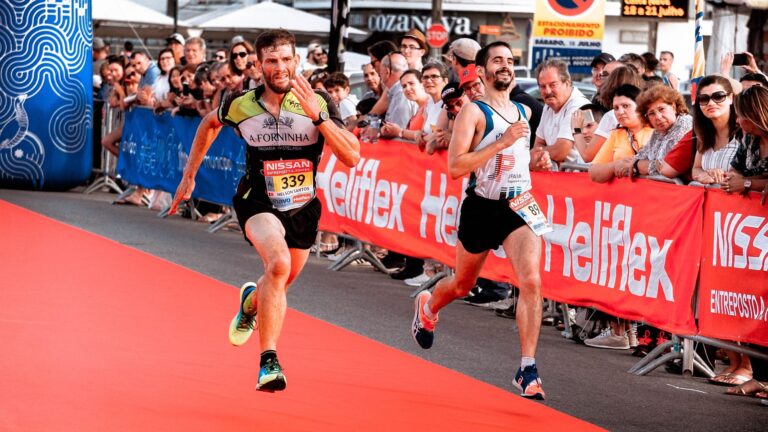
Running after 60 can meaningfully increase your resting metabolic rate—the number of calories your body burns at rest. While aging naturally slows metabolism by about 2-8% per decade after 30, consistent running rebuilds lean muscle mass that reverses some of this decline. Over the course of a year of regular training, many runners over 60 report and experience measurable metabolic improvements, with their bodies burning an additional 100-200 calories per day at rest compared to when they were sedentary. This metabolic change happens because muscle tissue is metabolically active—it burns calories even when you’re sitting still. When you run consistently, your legs, core, and cardiovascular system all develop more muscle fiber density.
Each pound of muscle burns roughly 6 calories daily at rest, while fat burns only 2. If running helps you gain or preserve 15-20 pounds of lean muscle mass over time, that alone accounts for 60-120 additional daily calories burned without any extra effort on your part. The mechanism is straightforward but takes months to show up clearly. Running triggers muscle protein synthesis, inflammation and recovery responses that require energy, and hormonal changes that favor lean tissue preservation. For people over 60, these adaptations are slower than in younger runners, but they are real and measurable.
Table of Contents
- Why Does Resting Metabolism Decline After 60 Without Running?
- How Running Builds Muscle in Ways Other Exercise Doesn’t
- A Real Example: The Metabolic Shift Over 12 Months
- The Practical Challenge—Maintaining Consistency Without Injury
- The Metabolism Plateau and Why It Happens
- Hormonal and Cardiovascular Changes That Support Metabolism
- What Happens If You’ve Been Sedentary Until 60—Can You Still See Gains?
- Conclusion
- Frequently Asked Questions
Why Does Resting Metabolism Decline After 60 Without Running?
The decline in resting metabolic rate after 60 isn’t purely a function of age—it’s largely a function of muscle loss. Starting around age 30, most sedentary adults lose 3-8% of their muscle mass per decade, a process called sarcopenia. By 60, a lifetime of gradual muscle loss means most people have significantly less metabolically active tissue than they did at 25. This happens even if weight stays stable, because people often replace lost muscle with fat, which burns fewer calories. A 65-year-old who weighs the same as they did at 30 might have 20 pounds less muscle and 20 pounds more fat. That shift alone can drop resting metabolism by 40-60 calories daily.
Add in the natural decline in hormones like testosterone and growth hormone—which support muscle maintenance—and you can lose 100+ calories per day of resting burn by 65. For someone eating the same amount they did at 40, this explains gradual weight gain even without dietary changes. running reverses this specifically because it demands muscle contraction and forces adaptation. The quadriceps, glutes, hamstrings, calves, and core all work harder during running than in daily life. Over weeks and months, these muscles respond by growing and maintaining their size. In studies of runners over 60, those who maintain consistent running show 5-15% higher muscle mass in the legs compared to sedentary peers of the same age and weight. That’s not insignificant.

How Running Builds Muscle in Ways Other Exercise Doesn’t
running uniquely stresses the lower body in a way that sustained, repetitive demand. Unlike strength training, which creates larger but fewer muscle contractions, running creates thousands of muscle contractions per mile. A single 3-mile run involves roughly 9,000 foot strikes, each of which demands force from dozens of muscles. Over months, this volume of work creates both muscle hypertrophy and mitochondrial density improvements that elevate resting metabolism. However, running alone has a limitation: it doesn’t build upper body or upper back muscle. If you’re relying on running to reverse full-body sarcopenia, you’ll miss significant gains.
A 60-year-old who runs 5 days a week but never does upper body work will see metabolic improvements primarily in the legs and lower core, leaving the back, shoulders, arms, and chest at risk of continued decline. For maximum metabolic benefit, runners over 60 should combine running with 2 days per week of basic strength work—push-ups, rows, carrying exercises, or weight training. This combination approach can boost resting metabolism by 200-300 calories daily by year two. The other limitation is intensity. Moderate running—jogging at a conversational pace—improves aerobic fitness and muscle endurance but doesn’t create the same muscle-building stimulus as higher-intensity work. Research shows that runners over 60 who include weekly tempo runs, hill repeats, or intervals preserve or gain more muscle mass than those who do only easy running. The higher metabolic cost of intense efforts triggers greater muscle protein synthesis during recovery.
A Real Example: The Metabolic Shift Over 12 Months
Consider a 62-year-old woman, Janet, who was sedentary for 15 years before starting to run. Her initial resting metabolic rate was measured at 1,380 calories per day—low for her body weight because she’d lost muscle over the years. After three months of easy jogging 3 days per week, her RMR increased to 1,420 calories daily—a modest 40-calorie increase. She’d built some aerobic fitness, but not much muscle yet. By month six, after increasing to 4 days per week and adding one strength session, her RMR climbed to 1,480 calories daily.
She’d gained about 5 pounds of muscle in her legs and core, which accounted for roughly 30 of those 60 new calories. By month 12, with consistent 4-5 days per week of running plus twice-weekly strength training, her RMR stabilized at 1,550 calories daily—a 170-calorie increase over the year. This meant she could eat 170 more calories daily without gaining weight, a meaningful difference over a year. Janet’s experience wasn’t unusual. The improvements plateaued after about 14 months because she’d rebuilt much of the muscle she’d lost, and further gains required either greater intensity, more volume, or new stimuli. This is why many runners over 60 who’ve been active for several years report that running has become part of how they maintain their metabolism—if they stop, weight gradually creeps back on even without dietary changes.

The Practical Challenge—Maintaining Consistency Without Injury
The obstacle most runners over 60 face isn’t building muscle or boosting metabolism—it’s staying injury-free long enough for the adaptations to happen. Joint stress, recovery time, and accumulated wear-and-tear all increase after 60. A 60-year-old needs roughly 48-72 hours of recovery between hard running sessions, compared to 24-48 hours for a 30-year-old. Running too much too soon leads to tendon pain, stress fractures, or knee issues that force time off, reversing months of metabolic progress. The winning strategy is consistency over intensity. A runner who completes four moderate runs per week for 12 months will build more muscle and increase metabolism more than someone who trains hard for 6 weeks, gets injured, takes 8 weeks off, then restarts.
Moderate and sustainable beats aggressive and interrupted every time. This means running at 60-70% of maximum effort most days, with just one or two harder sessions per week, and scheduling two full rest days. It means treating soreness or unusual pain as a signal to back off, not push through. Mixing running with other activities—cycling, swimming, or elliptical work—on alternate days also helps manage injury risk while preserving the cardiovascular and metabolic benefits. A 60-year-old who runs 3 days, cycles 2 days, and strength trains twice per week will build just as much muscle as someone running 5 days, but with less cumulative joint load. The metabolic improvements are similar; the durability is higher.
The Metabolism Plateau and Why It Happens
After 12-18 months of consistent running, the metabolic gains typically slow or stop. This isn’t a sign that running isn’t working—it’s adaptation. Your body has rebuilt lost muscle, optimized energy use, and settled into a new equilibrium. Resting metabolic rate increases of 150-250 calories daily are common over the first 18 months, but asking for another 150 calories per day after that usually isn’t realistic without significant changes. A warning: some runners over 60 undereat relative to their new activity level, thinking that running plus a very low-calorie diet will produce weight loss. This backfires. Running breaks down muscle for energy if calories are too low, and it triggers excessive hunger hormones and muscle loss that worsens metabolism long-term.
If the goal is to lose weight through running, a modest calorie deficit (300-500 per day below expenditure) combined with adequate protein intake works much better than aggressive restriction. This means eating enough to support recovery and muscle maintenance. Another common issue is returning to sedentary behavior after reaching a fitness plateau. A runner might think, “I’ve been at this for 18 months, I’ve achieved my goals, I can back off now.” But resting metabolic rate is only elevated while you maintain the muscle. If running drops from 4 days per week to 1 day per week, muscle begins to decline within 6-8 weeks. By 12 weeks off, resting metabolism drops back toward baseline. The boost isn’t permanent—it’s maintained only by ongoing running.

Hormonal and Cardiovascular Changes That Support Metabolism
Beyond muscle, running changes hormones in ways that support a higher resting metabolic rate. Consistent aerobic exercise improves insulin sensitivity, meaning your body processes carbohydrates more efficiently and doesn’t overproduce insulin, which promotes fat storage. Running also maintains or slightly increases growth hormone and testosterone production, both of which support muscle retention and lean tissue mass.
These hormonal shifts aren’t as dramatic as the muscle-building effect, but they’re real and measurable in research. Running also permanently improves cardiovascular efficiency—your heart becomes a stronger pump, your blood vessels become more flexible, and your mitochondrial density (the number of energy-producing structures in cells) increases. A higher mitochondrial density means cells can burn fuel more efficiently at rest. While this contributes a smaller amount to metabolic increase than muscle gain does—perhaps 20-40 calories daily—it’s one more piece of why consistent runners have higher resting metabolic rates.
What Happens If You’ve Been Sedentary Until 60—Can You Still See Gains?
Yes, though the gains take longer and may be smaller than for someone who was active earlier. A 60-year-old who begins running for the first time will see resting metabolic improvements within 3-6 months, but the rate of gain is slower than a 30-year-old’s. This is partly because muscle-building capacity declines with age—the same training stimulus produces less muscle growth after 60 than at 40. It’s also partly because bone density, tendon toughness, and connective tissue integrity are lower, requiring more conservative increases in training load.
Research on running programs for previously sedentary adults over 60 shows that consistent training over 12-18 months can increase resting metabolic rate by 100-200 calories daily, which is meaningful. The experience of many runners who start after 60 is that within a year to 18 months, they feel like a different person: more energetic, stronger, with better appetite regulation and easier weight maintenance. These aren’t just psychological—they’re backed by real metabolic changes. The key is patience with the timeline and respect for the injury risk that comes with ramping up activity after years away.
Conclusion
Running after 60 genuinely changes your resting metabolism in a measurable way, primarily by rebuilding and maintaining lean muscle mass that would otherwise continue to decline. Most runners who maintain consistent training over 12-18 months see resting metabolic rate increases of 100-250 calories daily, enough to meaningfully shift weight maintenance or make gradual weight loss easier without severe dietary restriction. This isn’t speculation or marketing—it’s a direct consequence of how muscle physiology works at any age.
The practical path forward is consistency over perfection: sustainable running at 4-5 days per week, combined with basic strength training twice weekly, will build more metabolic capacity than aggressive training that leads to injury or burnout. Start conservatively if you’re new to running after 60, expect the gains to arrive gradually over months rather than weeks, and plan to maintain the habit indefinitely rather than viewing it as a temporary program. Your resting metabolism will follow.
Frequently Asked Questions
How long before I see a metabolic increase from running?
Most people begin to see measurable increases in resting metabolic rate within 3-4 months of consistent training (4+ days per week). The changes are gradual and small at first—10-30 calories daily in the first month—but compound over time.
Can walking or cycling produce the same metabolic gains as running?
No, not entirely. Walking produces less muscle-building stimulus because it’s lower impact and lower intensity. Cycling builds leg muscle but doesn’t engage the stabilizer muscles and core that running demands. Running’s full-body demand makes it particularly effective. That said, combining cycling or swimming with running minimizes injury risk while still building muscle.
If I run consistently for a year and then stop, does my metabolism go back down?
Yes. Resting metabolic rate is directly tied to muscle mass, and muscle is use-it-or-lose-it. After 6-8 weeks without running, muscle begins to decline. After 12 weeks off, resting metabolism drops noticeably. You don’t lose all your gains immediately, but over months of inactivity, you’ll return toward your pre-running baseline.
Do I need to run fast or hard to boost metabolism, or is easy jogging enough?
Easy jogging alone will produce some metabolic gains over time, but including some harder efforts—one tempo run or interval session per week—accelerates muscle development and metabolic improvement. The combination of mostly easy running with occasional intensity is most effective and sustainable for runners over 60.
What should I eat to support the metabolic gains from running?
Adequate protein—0.6-0.8 grams per pound of body weight daily—is essential for muscle maintenance and growth. Moderate overall calories (not excessive restriction) ensure you’re fueling recovery and muscle adaptation. Consistent adequate calories also supports hormonal health and sustained running performance.
Is it normal to feel hungrier when I start running regularly?
Yes. Running increases energy expenditure and triggers hormones that increase appetite, a normal and healthy response. Hunger is a signal to eat; ignoring it in the name of weight loss backfires by suppressing metabolism. Eat enough to support your activity level, then let consistent running and adequate food combine to improve body composition over months.