
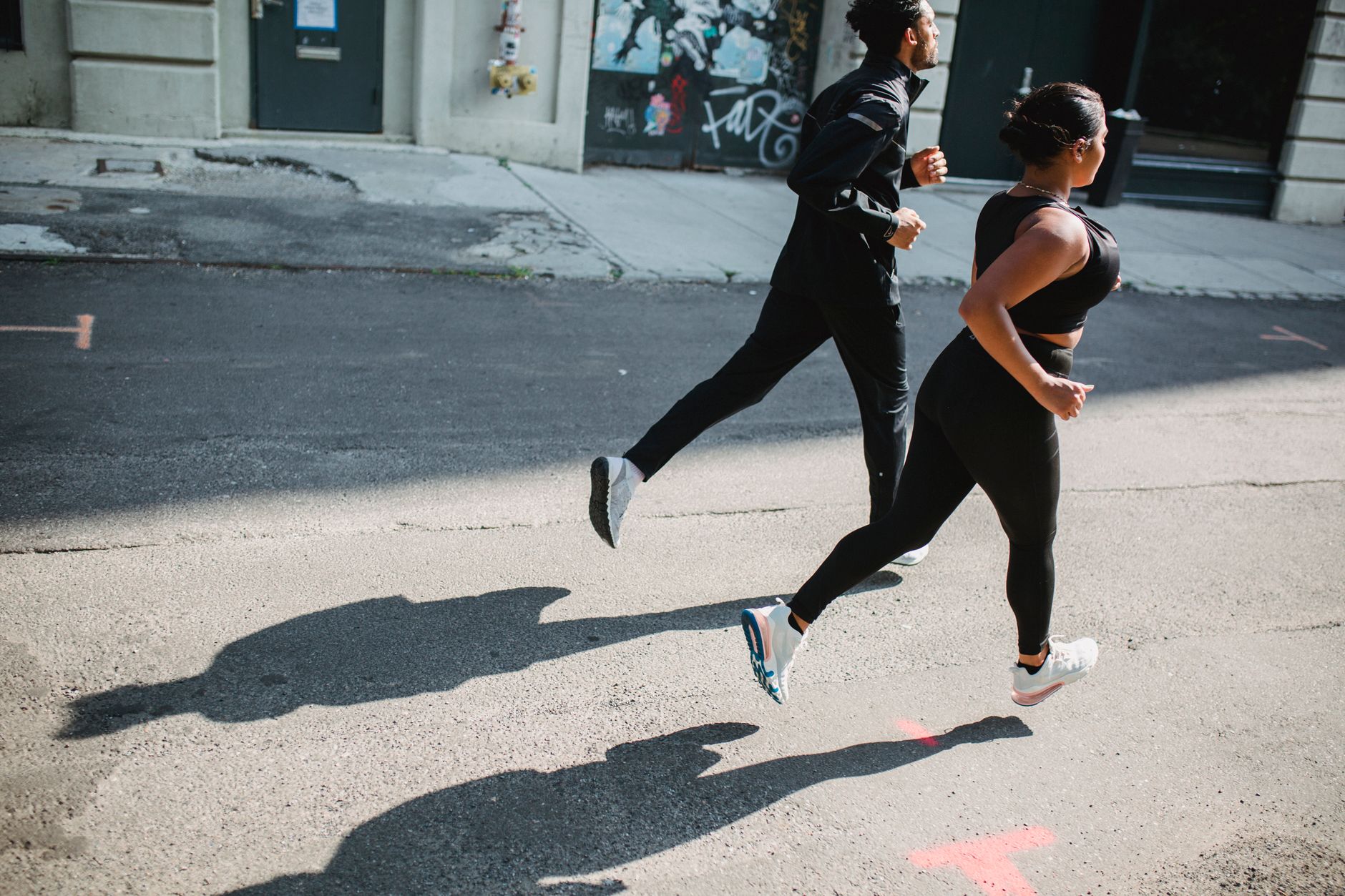
Slightly quicker steps let you hold the same pace with softer landings and less leg pounding, so you can sustain distance at the same effort. Cadence means steps per minute, and speed equals cadence multiplied by stride length. Raising cadence while holding speed forces stride length to shorten. That shift reduces overstriding and places each footfall closer under the hips.
Medical information disclaimer: This article is for general educational purposes only and does not provide medical advice, diagnosis, or treatment. Always consult a physician or other qualified health professional about symptoms, medications, tests, or treatment decisions.
Table of Contents
- Why shorter, quicker steps save your legs
- Do you need 180 steps per minute?
- How much change helps without raising effort?
- Who gains the most distance?
- How to try it on your next run
Why shorter, quicker steps save your legs
A long stride reaches far ahead of the body. It acts like a brake and sends more force through joints.
University of Wisconsin researchers found that raising step rate 5% and 10% at constant speed cut energy absorbed at the knee by roughly 20% and 40%, with substantially lower hip loading, according to the International Journal of Sports Physical Therapy outdoor cadence experiment. An outdoor experiment in the same journal confirmed that even a modest auditorily cued increase lowered peak impact force. Smaller landings mean less pounding mile after mile.
Do you need 180 steps per minute?
No single number fits every runner. The much-quoted 180 ideal came from elite runners observed at the 1984 Olympics.
Recent work puts typical optimal cadence near 160-190 steps per minute, depending on speed, height, and experience, according to the Blaubeck review of seven studies running economy and gait review. Taller, slower, or newer runners often sit lower in that range. Faster running naturally raises cadence.
How much change helps without raising effort?
Most runners already choose a near-economical cadence. Experiments show forcing cadence about 10% higher or lower than preferred increases oxygen use. That means bigger jumps raise effort rather than saving it.
A practical target is about 5% above your normal rate at an easy pace. Coaches advise building that change gradually with a watch, metronome, music, or short "too-many-steps" drills, according to Advnture guide to good running cadence. Those cues encourage midfoot landing under the hips while speed stays steady.
Who gains the most distance?
High-mileage runners gain the most from lower impact per step. Small savings repeat thousands of times per run. Iowa State researchers estimated that shortening stride about 10% lowers tibial strain and cuts stress-fracture probability by roughly 3-6%.
Runners with knee pain, shin trouble, or heavy training loads may notice the benefit first. Recreational runners can still use the same approach. Keep pace constant, focus on quick light steps, and avoid pushing into breathlessness.
How to try it on your next run
Measure your normal cadence for 30 seconds at easy pace, then double the count. Add about 5% to that number for practice intervals.
- Run 1 minute slightly quicker, then 2 minutes normal, repeating 6-8 times
- Keep speed, posture, and breathing steady
- Land quieter, with feet under hips rather than ahead
- Stop the drill if calves work much harder or form feels rushed