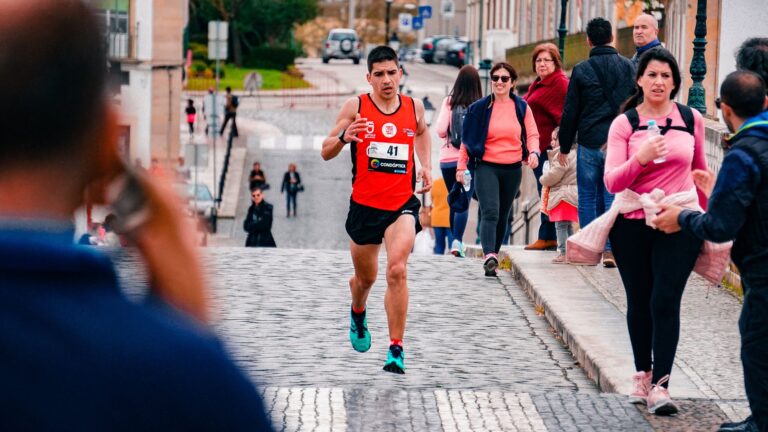
Intensity minutes improve your VO2 max by forcing your aerobic system to adapt to higher oxygen demands, making your heart and lungs more efficient at processing oxygen under stress. When you spend time running at intensities above your threshold pace—typically around 85-90% of your maximum heart rate—you trigger physiological changes that expand your aerobic capacity. Your mitochondria increase in number, capillary density improves, and your heart’s stroke volume increases, all of which directly boost the amount of oxygen your body can utilize during hard efforts. A runner who goes from zero dedicated intensity work to just two sessions per week at these higher intensities can expect VO2 max improvements of 5-15% within 8-12 weeks, depending on starting fitness and genetics.
VO2 max itself is simply the maximum amount of oxygen your body can utilize per minute, measured in milliliters of oxygen per kilogram of body weight. The reason this metric matters for runners is straightforward: runners with higher VO2 max values can sustain faster paces and endure longer before fatigue forces them to slow down. Without intensity training, your aerobic system has no reason to adapt beyond its current capacity. Your easy runs, while essential for building aerobic base, don’t create the stress stimulus needed to push VO2 max higher. Intensity minutes fill that gap by creating demand that your body must meet.
Table of Contents
- What Are Intensity Minutes and How Do They Work?
- The Science Behind Intensity Training and Aerobic Capacity
- Different Types of Intensity Training for VO2 Max Development
- Building an Intensity Training Program That Works
- Avoiding Common Mistakes in High-Intensity Training
- Measuring Your VO2 Max Improvements
- Long-Term Benefits Beyond VO2 Max
- Conclusion
- Frequently Asked Questions
What Are Intensity Minutes and How Do They Work?
intensity minutes refer to any time spent running at efforts that significantly elevate your heart rate and tax your aerobic system—typically defined as work done at 80% or higher of your maximum heart rate. This can mean tempo running, interval repeats, fartlek sessions, or threshold work. The key distinction is that these minutes create metabolic stress in your muscles and cardiovascular system, signaling an adaptation response. Your body responds to this stress by improving oxygen delivery and utilization, which is the mechanism behind VO2 max gains. The physiology works like this: when you run hard, your muscles demand more oxygen than they do at easy paces. Your body responds acutely by increasing heart rate, stroke volume, and breathing rate.
Over repeated sessions, your body makes chronic adaptations to handle this demand more efficiently. More capillaries grow around muscle fibers to deliver oxygen-rich blood. Your mitochondria—the cellular powerhouses responsible for aerobic energy production—increase in both number and size. Your heart itself becomes stronger, able to pump more blood per beat. All of these changes combine to raise your VO2 max. A runner averaging 30 intensity minutes per week will see more adaptation than one doing 15 minutes per week, though there’s a ceiling to this benefit after about 45-60 minutes of high-intensity work weekly; doing more doesn’t guarantee proportionally larger gains.

The Science Behind Intensity Training and Aerobic Capacity
The mechanism behind VO2 max improvement involves a cascade of biological adaptations that unfold over weeks. At the cellular level, intensity training increases the expression of genes that regulate mitochondrial biogenesis, essentially instructing your cells to build more aerobic machinery. This is why the 8-12 week window is commonly cited for seeing measurable VO2 max gains—that’s roughly how long it takes for these cellular changes to accumulate and become noticeable in performance. In parallel, your capillary density increases, improving the oxygen exchange between blood and muscle tissue. The central cardiovascular system also adapts: your stroke volume increases, meaning each heartbeat pumps more blood, which is why elite endurance athletes often have lower resting heart rates despite working harder than average runners.
However, there’s a critical limitation worth understanding: genetics play a substantial role in your VO2 max ceiling. If your parents both have relatively modest aerobic capacity, you likely won’t achieve the VO2 max of someone with elite endurance genetics, even with identical training. Studies show that untrained individuals can typically improve VO2 max by 25-30% with systematic training, while already-trained runners might only achieve 5-10% gains from additional intensity work. This doesn’t mean the training is worthless—those 5-10 percentage point gains translate directly to faster paces—but it’s important to understand that you’re optimizing your individual potential rather than chasing someone else’s absolute numbers. Additionally, age matters: younger athletes tend to see faster VO2 max improvements from intensity training, while older runners adapt more slowly but can still achieve meaningful gains.
Different Types of Intensity Training for VO2 Max Development
Several training formats effectively target VO2 max improvements, each with slightly different stimuli and practical applications. VO2 max intervals—typically 3-6 minute repeats at 95-100% maximum heart rate with brief recovery periods—directly target your aerobic ceiling and create the largest VO2 max adaptations per session. A runner might do 5 x 5-minute repeats at this intensity with 2-3 minutes recovery, generating significant aerobic stress. Tempo runs, performed at 80-90% maximum heart rate for 20-40 continuous minutes, improve your lactate threshold while also boosting VO2 max, though perhaps not as directly as shorter, harder intervals. Fartlek training—unstructured speed play with varied intensity—offers a more flexible approach and can be psychologically easier than structured intervals, though it requires discipline to ensure the hard portions are actually hard enough.
The tradeoff between these approaches involves injury risk versus effectiveness. Shorter, more intense intervals (2-4 minutes) create strong VO2 max stimulus with less total volume and lower injury risk, making them ideal for runners new to intensity work or those dealing with minor niggles. Longer intervals (5-8 minutes) and tempo runs accumulate more total time at high intensity, potentially providing greater adaptation but also accumulating more fatigue. A practical example: a runner with a history of knee issues might build VO2 max more safely with two sessions weekly of short intervals (6 x 3-minute repeats) rather than one longer tempo run. That said, running only short intervals indefinitely limits your sustainable speed improvements; most runners benefit from mixing interval lengths within their training cycle to develop multiple energy systems.

Building an Intensity Training Program That Works
Effective VO2 max development requires more than just running hard—it needs structure and strategic progression. A typical approach for a runner wanting to build VO2 max involves 1-2 dedicated intensity sessions per week, spaced 3+ days apart with recovery days between them. Many runners pair one VO2 max interval session with one tempo or threshold session to balance different stimulus types. For example: Monday could be 6 x 4-minute repeats at VO2 max intensity, Thursday could be a 25-minute tempo run, and the remaining days feature easy runs and rest. This structure provides adequate intensity stimulus while allowing recovery time for adaptations to occur.
Progression matters significantly for sustained VO2 max gains without overtraining. A runner might start with 4 x 4-minute repeats one week, progress to 5 x 4-minute repeats the next week, and then increase to 5 x 5-minute repeats the following week. This allows your aerobic system to adapt progressively rather than getting shocked by too much volume too soon. A common mistake is doing high-intensity sessions too close together or doing too many intensity sessions weekly—runners often reason that if one VO2 max session helps, two or three must be better. This backfires because intense training breaks down muscle tissue and depletes glycogen and neurotransmitter reserves; adaptation happens during recovery, not during the workout itself. When intensity sessions are stacked without adequate recovery, performance suffers, injury risk climbs, and VO2 max actually stagnates or decreases.
Avoiding Common Mistakes in High-Intensity Training
One of the most frequent mistakes runners make when targeting VO2 max is doing intensity work when fatigued or on an inadequate aerobic base. If you’re attempting VO2 max intervals but you’ve only been running for 2-3 weeks total, or you’re arriving at the workout with poor sleep and high stress, you won’t achieve the necessary intensity levels to stimulate adaptation. Your nervous system won’t tolerate the hard efforts, or your body simply won’t have the energy reserves. Building a solid base of 20-30 miles per week of mostly easy running should precede a dedicated VO2 max block. Without that foundation, intensity work feels terrible, produces minimal adaptation, and increases injury risk.
Another critical warning involves ignoring individual recovery capacity. Two runners with identical workouts will experience different recovery demands based on genetics, age, sleep quality, nutrition, stress levels, and training history. A runner averaging 6 hours of sleep per night needs at least twice the recovery time between intensity sessions compared to one sleeping 8 hours and managing stress well. Pushing three hard sessions into a week with a high-stress job, poor sleep, and recent illness is a recipe for overtraining. Warning signs include persistent elevated resting heart rate, persistent heaviness in the legs despite easy pace runs, declining performance despite increased training, and increased resting irritability. If you notice these, reduce intensity volume for 5-7 days and prioritize sleep and nutrition.

Measuring Your VO2 Max Improvements
The most accurate way to measure VO2 max involves a lab test with respiratory gas analysis, where you run on a treadmill at increasing speeds while wearing a mask that measures oxygen consumption. Most runners don’t have regular access to these tests, which cost $200-400 per session. A practical alternative involves using performance benchmarks: if you can run a given distance faster at a similar perceived effort or heart rate compared to weeks prior, your VO2 max has likely improved. For example, if you previously struggled to hold 8:00 per mile at 170 heart rate and now run 7:45 per mile at that same 170 heart rate, your aerobic efficiency has improved significantly.
Many running watches also estimate VO2 max based on race performance and training data, and while these estimates aren’t perfectly accurate, they provide a useful reference point to track trends over weeks and months. A simple functional test involves a 3-mile time trial effort done in controlled conditions—same time of day, after adequate rest, in similar weather—every 8-12 weeks. If your 3-mile time improves by 30-45 seconds after 8-12 weeks of dedicated VO2 max work, you’ve likely made meaningful aerobic gains. This test costs nothing and reflects real-world running ability, making it arguably more useful than an absolute VO2 max number anyway.
Long-Term Benefits Beyond VO2 Max
While VO2 max improvements provide immediate benefits to speed and endurance, the broader adaptations from intensity training create lasting performance gains. The increased capillary density and mitochondrial density from intensity work persist as long as you maintain some level of training, meaning you retain a portion of your fitness gains even if you reduce mileage temporarily. Athletes who build high VO2 max in their 30s and 40s often retain substantially higher aerobic capacity in their 50s compared to age-matched peers who never did structured intensity work, even if the elite athletes later became more casual about training.
Looking forward, personalized intensity training based on genetic testing and cardiac imaging will likely become more common, allowing runners to optimize their training more precisely. Some research suggests that certain genetic variants influence the degree to which individuals respond to intensity training, and future training programs may incorporate this data to prescribe intensity ratios more effectively. For now, the practical takeaway is that consistent, structured intensity training remains one of the most powerful tools for improving aerobic performance, and the benefits extend well beyond a single season or goal race.
Conclusion
Intensity minutes improve VO2 max through a cascade of physiological adaptations that increase your aerobic capacity and oxygen utilization efficiency. By dedicating 1-2 training sessions per week to sustained higher-intensity efforts—whether through intervals, tempo runs, or threshold work—you stimulate your cardiovascular system and mitochondria to become more efficient. Within 8-12 weeks of structured intensity training, most runners see measurable VO2 max improvements of 5-15%, which translates directly to faster sustainable paces and improved race performance.
The key to success involves balancing intensity with adequate recovery, building intensity work on top of a solid aerobic base, and understanding your individual recovery capacity rather than copying someone else’s training. Track your improvements through real-world performance benchmarks rather than chasing absolute VO2 max numbers, and recognize that genetics will determine your ultimate ceiling—but everyone can improve within their potential. If you’re ready to develop your aerobic capacity, begin with one dedicated intensity session per week, progress gradually over 3-4 weeks, and prioritize sleep and nutrition as much as you prioritize the workout itself.
Frequently Asked Questions
How much faster will I run after improving my VO2 max?
That depends on your starting point and how much you improve. A 10% VO2 max improvement typically translates to a 5-6% pace improvement across most distances, though this varies by individual. If you’re running 8:00 per mile pace and improve VO2 max by 15%, you might expect to sustain 7:40-7:45 per mile at the same perceived effort.
Can I do intensity training every day?
No. Doing hard intensity work daily leads to overtraining, increased injury risk, and paradoxically decreases VO2 max. Your body needs 48-72 hours between hard sessions to recover and adapt. Elite runners typically do 2-3 intensity sessions per week, maximum.
What if I don’t have a running watch to track heart rate zones?
Use perceived effort instead. VO2 max intensity should feel hard—around 8-9 out of 10 effort level where you can speak only a few words but can’t hold a full conversation. This roughly corresponds to 85-90% maximum heart rate without needing a watch.
How long do VO2 max improvements last if I stop training?
You begin losing aerobic adaptations within about 2 weeks of inactivity and lose approximately 10% of gains per month of no training. However, maintaining even modest intensity work—one session per week—preserves most VO2 max gains indefinitely.
Is there an age limit for building VO2 max?
No. While younger athletes adapt faster, research shows that runners in their 50s, 60s, and even 70s can still improve VO2 max with structured intensity training. The gains come more slowly and may be smaller in absolute terms, but they’re meaningful.