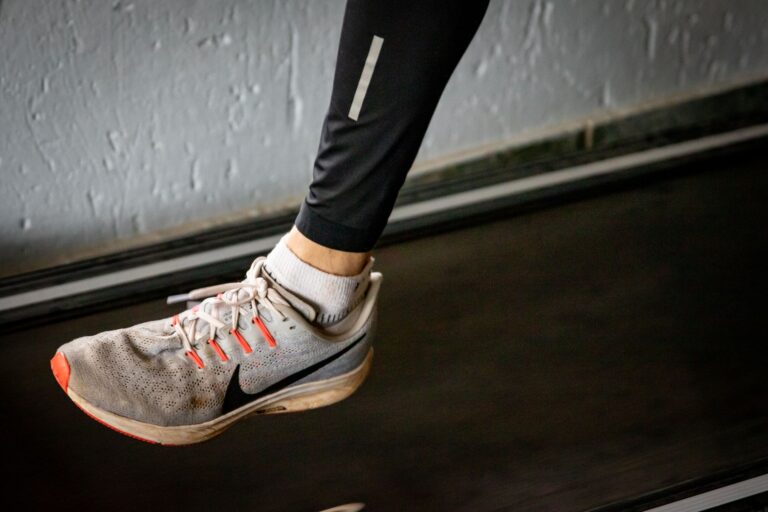
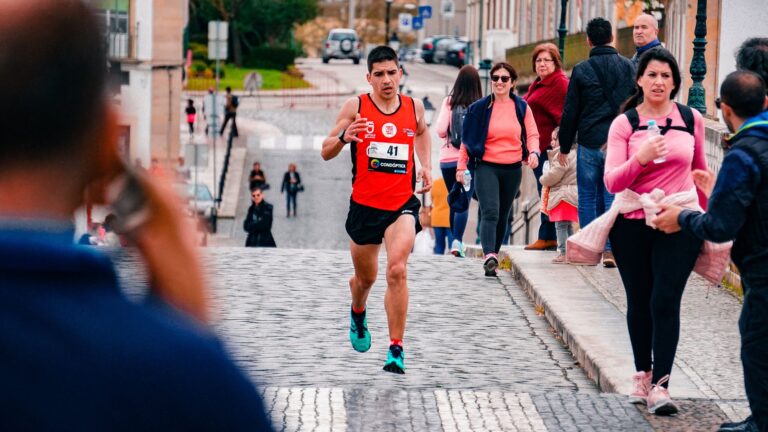
Artificial intelligence is fundamentally changing how intensity minutes are measured by moving beyond simple activity tracking to real-time, personalized workout adjustments that respond to your unique physiology in the moment. Where fitness devices once recorded intensity minutes as static data points after a workout ended, AI systems now actively manage your training intensity during exercise, continuously reading heart rate, sleep quality, recovery status, and performance trends to determine whether you should push harder or dial back effort. The shift represents a move from passive measurement to active coaching—your wearable doesn’t just count your hard efforts anymore; it decides, in real time, what hard effort means for you specifically. This transformation is happening because AI algorithms can now process multiple data streams simultaneously and make contextual decisions at scale.
A machine learning system can analyze your resting heart rate variability from last night’s sleep, compare it against your baseline, check your recovery score, and then tell your treadmill to ease off the incline halfway through your run—all within seconds. At CES 2026, Merach unveiled an intelligent treadmill equipped with an industry-first large language model-powered conversational AI coach that adjusts speed and incline in real-time based on continuous heart rate monitoring, exemplifying how this technology is moving from concept to actual hardware consumers can buy today. The implications are significant for runners serious about training. Traditional intensity minute metrics gave you a yes-or-no answer: Was your heart rate elevated enough to count? AI changes that to a dynamic question: Is this the right intensity for you, right now, given everything your wearables know about your current state? This shift affects everything from how you interpret your training data to what kinds of recommendations your fitness apps can make.
Table of Contents
- How AI Adjusts Workout Intensity in Real Time
- Heart Rate Accuracy and the Challenge of Measuring What’s Real
- Machine Learning and Recovery-Based Training Recommendations
- Multi-Sensor Technology Behind Precision Fitness Measurement
- Sensor Accuracy Variability and What It Means for Your Training
- Real-Time Ecosystem Integration and Coordinated Training
- The Future of AI and Intensity Minute Measurement
- Conclusion
How AI Adjusts Workout Intensity in Real Time
AI-driven resistance systems have moved beyond preset difficulty levels to algorithms that respond instantaneously to your body’s feedback. These systems monitor heart rate, performance metrics, and fatigue signals, then automatically adjust resistance, speed, or incline to keep you in an appropriate training zone without manual intervention. The technology works because machine learning models can identify patterns in how your body responds to stress—when your heart rate spikes too high too quickly, when your cadence falters, when you’re pushing unsustainably hard. Instead of waiting for you to notice and adjust manually, the system makes micro-corrections throughout your session. WHOOP 5.0 demonstrates this principle through its training recommendations, which are generated daily based on heart rate variability, sleep quality, and recovery scores.
The system actively suggests reducing training intensity when your HRV is depressed and resting heart rate is elevated—signals that your nervous system hasn’t fully recovered. This isn’t a generic guideline; it’s personalized feedback based on your physiological data. For a runner logging 40-50 miles per week, this kind of real-time guidance can be the difference between smart training and overtraining that leads to injury. The limitation here is that these adjustments work best when the underlying sensor data is accurate. If your device misreads your heart rate by 15-20 beats per minute during a hard effort—which can happen—the AI adjustments may be targeting the wrong intensity zone. The sophistication of the algorithm only matters if the input data is reliable, a consideration that gets less attention than it should.

Heart Rate Accuracy and the Challenge of Measuring What’s Real
The foundation of AI-driven intensity measurement is heart rate data, and this is where the technology reveals its limitations. Research on Apple Watch heart rate accuracy from 2026 shows a mean bias of -0.27 beats per minute under resting conditions—good news for resting measurements. But during exercise, accuracy can decline sharply, with mean errors exceeding 20-30 percent for calorie estimation, and accuracy varies based on skin tone, which introduces both a technical and equity issue in how these devices function across different users. Comparative testing reveals significant variation among popular wearables. The Apple Watch achieves a heart rate mean absolute percentage error of 1.14 to 6.70 percent across various conditions, while Fitbit devices range from 2.38 to 16.99 percent, and the Garmin Forerunner 225 spans 7.87 to 24.38 percent.
Garmin provides the most stable HRV readings by a significant margin compared to competitors, which matters because heart rate variability—the millisecond-to-millisecond fluctuations in your heartbeat—has become a key metric that AI systems use to assess recovery and adjust training load. If your HRV data is noisy or biased, your AI coaching will be unreliable. This accuracy problem compounds when you’re using AI to make real-time intensity adjustments. A treadmill receiving incorrect heart rate data might tell you to speed up when you’re already working hard, or conversely, might hold you back when you have more capacity. The solution isn’t to distrust these devices—they’re genuinely useful—but rather to understand that AI systems built on wearable data inherit the measurement limitations of the hardware. Premium devices tend to perform better, but none achieve laboratory-grade accuracy in field conditions.
Machine Learning and Recovery-Based Training Recommendations
Beyond real-time workout adjustments, AI is changing intensity measurement by making recovery central to how training load is calculated and recommended. Wearables now predict recovery needs based on sleep patterns and automatically alert fitness apps when recovery is suboptimal. This represents a fundamental shift: instead of asking “How hard did you work today?”, the system asks “How much hard work can you handle given your current recovery state?” Machine learning algorithms leverage real-time data including sleep quality, performance trends, energy levels, and biometrics to adjust and refine fitness plans continuously. A runner might see an intensity minute recommendation that varies from day to day based not just on what they did yesterday, but on how well they slept, their current stress levels, recent training history, and even seasonal patterns the algorithm has learned from analyzing months of data.
This is personalization at a depth that was impossible before machine learning—each user’s fitness plan adapts individually rather than following a generic weekly progression. The practical benefit is substantial for dedicated runners. Instead of rigidly following a pre-planned training schedule, you get recommendations that account for life circumstances—poor sleep nights automatically trigger suggestions for easier workouts, while a string of good sleep and low stress might suggest an opportunity for a breakthrough workout. The tradeoff is that you’re trusting an algorithm to make judgments about your training, which requires that you understand how the recommendations are generated and maintain the ability to override them based on your own knowledge of your body.

Multi-Sensor Technology Behind Precision Fitness Measurement
Modern wearables now use multiple sensor types working in combination: heart rate sensors, motion sensors, temperature sensors, and even sweat analysis in some devices. Wearable inertial measurement units use accelerometers and gyroscopes to measure acceleration and angular velocities for activity classification, allowing the device to recognize not just that you’re moving, but what type of movement you’re doing—running versus walking, sprinting versus steady-state effort, uphill versus flat terrain. Self-learning AI software built into these devices includes pre-learned fitness activities with four key capabilities: learn (identifying new movement patterns), personalize (adapting to your individual biomechanics), auto-track (recognizing activities without manual logging), and enhance (continuously improving accuracy). This multi-layered approach is why modern intensity measurements are more nuanced than older devices.
A smartwatch today can distinguish between easy running and tempo running partly through heart rate, but also through movement patterns and how quickly you’re accelerating. The AI piece assembles this information into a more complete picture of what’s actually happening during your workout. The advantage for runners is that this richer data allows more precise intensity minute calculations. A run at 7:30 pace uphill counts differently than the same pace on flat ground, and modern AI systems can make that distinction automatically. The practical limitation is that the quality of activity classification still varies between devices and depends on how well the algorithms were trained on your specific running profile.
Sensor Accuracy Variability and What It Means for Your Training
One often-overlooked limitation in AI fitness measurement is that accuracy improvements haven’t been uniform across all conditions and all users. The same wearable that accurately tracks your easy runs might underestimate intensity during high-intensity interval training when your arm is swinging hard and sweat is compromising sensor contact. Sensor accuracy also varies based on individual factors—skin tone, tattoos, skin tone, arm hair density, and how tightly you wear the device—which means the AI adjustments working perfectly for one runner might be systematically biased for another. This introduces a hidden equity issue in AI coaching systems. If a device tends to overestimate heart rate for runners with darker skin tones, then an AI system trained on that biased data will make systematically incorrect intensity recommendations for those users.
The algorithms are learning from data that already contains these biases, and without active correction, they perpetuate them. Users should be aware that their “personalized” AI coaching is only as fair as the training data and sensor performance underlying it. Another practical warning: these devices perform better when worn consistently in the same location and with consistent tightness. If you’re the type of runner who puts on your watch loosely for an easy run and then tightens it for hard workouts, you’re introducing measurement inconsistency that the AI has to account for. The system does adapt, but you’re essentially adding noise to the data that your training recommendations are built on.

Real-Time Ecosystem Integration and Coordinated Training
The future of AI-driven intensity measurement isn’t happening within single devices anymore—it’s increasingly about cross-device coordination. Imagine a smart ring communicating with a smart mirror to adjust your workout intensity in real-time, coordinating with meal planning apps for macro adjustments based on what the AI predicts you’ll burn during the session. This “precision fitness” era shifts from isolated wearables to integrated ecosystems where multiple devices are feeding data into a central AI system making coordinated decisions.
A practical example of this coordination: Your smart ring detects elevated stress hormones and depressed HRV overnight, so it signals to your training app that your daily recommendation should be an easy run. Later, when you’re on the treadmill wearing your smartwatch and that AI coach adjusts your incline downward based on your heart rate, it’s operating within the context the ring already established—the entire system knows you’re in a lower-recovery state. These kinds of integrated decisions are more nuanced and more personalized than any single device could manage alone.
The Future of AI and Intensity Minute Measurement
The direction is clear: AI will continue making intensity minute measurement increasingly personalized and predictive. Future systems will likely integrate additional data streams—genetic predisposition, chronotype information (whether you’re a morning or evening person), environmental factors like temperature and air quality, and social context like whether you’re running with others or solo. The AI will use all of this to predict not just what intensity you can handle, but what intensity will most effectively advance your specific training goals.
What’s less certain is whether this advancement will be accessible across all price points and all users. Premium wearables and AI coaching systems will undoubtedly improve faster than budget options, potentially creating a two-tier fitness tracking world where serious athletes get highly personalized, accurate recommendations while casual users work with less precise systems. The other open question is privacy—all this personalization requires collecting substantial amounts of physiological and behavioral data, which raises legitimate concerns about how that data is stored, used, and potentially sold.
Conclusion
AI is changing intensity minute measurement from a simple recording of effort after the fact to an active, real-time system that evaluates your effort in context and adapts accordingly. The technology works through a combination of improved sensors, machine learning algorithms that recognize patterns in your physiology, and increasingly integrated wearable ecosystems. However, this sophistication is built on sensor data that still has significant accuracy limitations, and users should remain aware of those limitations rather than treating AI recommendations as infallible.
For runners serious about data-driven training, the takeaway is that AI coaching is genuinely useful but requires critical engagement. Pay attention to how your devices measure your effort, test their recommendations against your own perception of how you feel, and don’t abdicate training decisions entirely to algorithms. The best use of these AI systems is as a sophisticated feedback mechanism that helps you understand your body better and make smarter training decisions, not as an autopilot that removes your agency from the process. The technology is mature enough to improve your training if used thoughtfully, but not mature enough to replace the judgment that comes from actually knowing your own body.