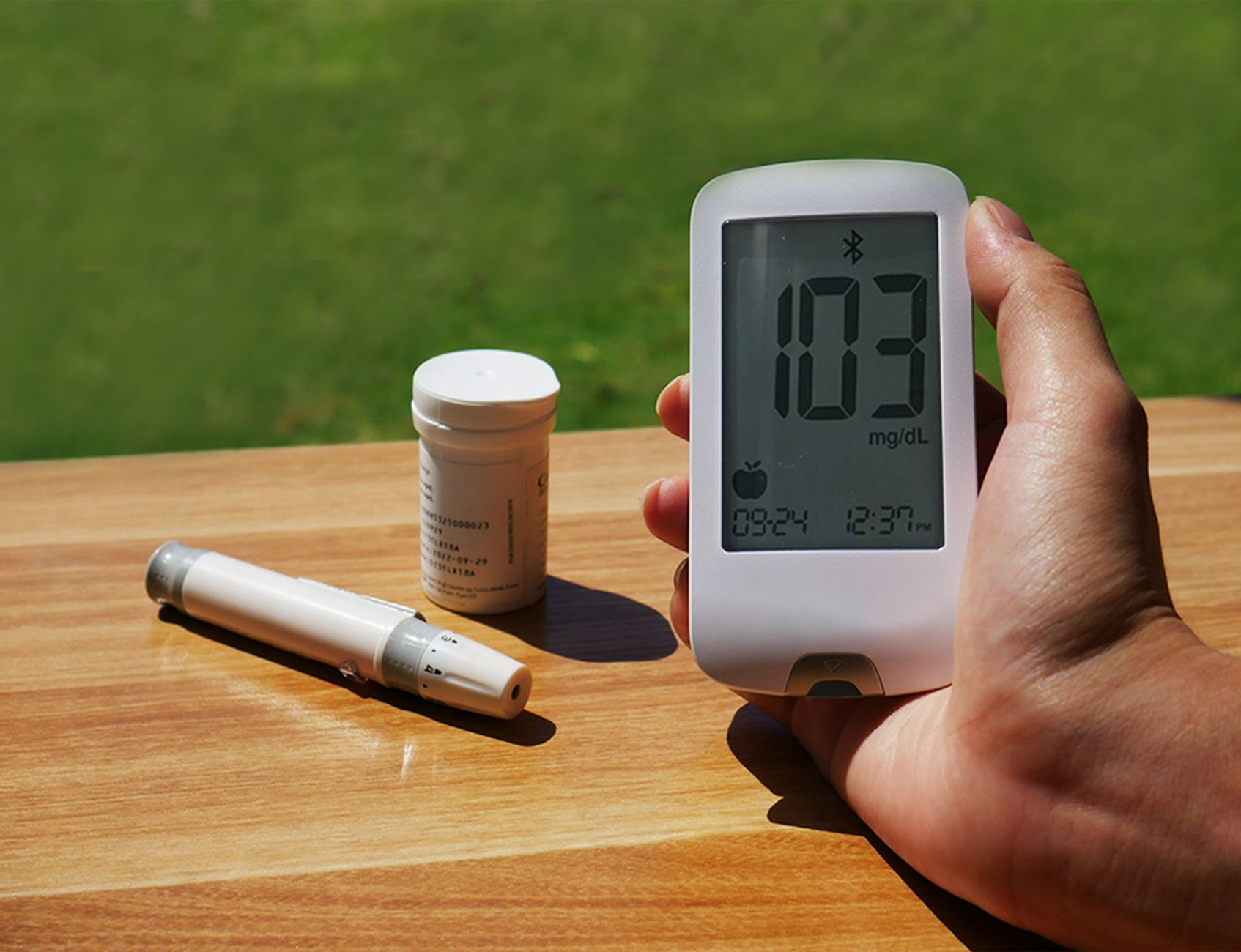
For most runners, a single hemoglobin A1C result is a weaker measure of metabolic health than it is for the general population, and fasting insulin is useful mainly as a trend you follow on one lab over time. Metabolic testing earns its place when you have a real reason to look — family history, unexplained fatigue, weight change, or a flagged result on a routine panel — and it misleads when a one-off number gets read as a diagnosis. A1C is the percentage of your hemoglobin that has sugar attached to it, used as a proxy for average blood glucose over roughly three months. That proxy depends on an assumption running quietly breaks: that your red blood cells live a normal length of time.
Medical information disclaimer: This article is for general educational purposes only and does not provide medical advice, diagnosis, or treatment. Always consult a physician or other qualified health professional about symptoms, medications, tests, or treatment decisions.
Table of Contents
- Why running distorts A1C in both directions
- What a "prediabetic" flag on your lab report actually means
- What fasting insulin can and cannot tell you
- Time the test to your training, not your calendar
- Better tools when A1C is unreliable
- When testing is genuinely worth doing
- Frequently Asked Questions
Why running distorts A1C in both directions
A1C reflects two things at once, not one. As the NGSP explains, results are falsely raised or lowered by hemoglobin variants and by any condition that changes red-cell lifespan, because the number depends on both average glucose and how long red cells circulate to accumulate it. Endurance running changes exactly that. A Scientific Reports study of 68 elite endurance runners, 58 sprinters and 62 untrained controls found that long-term training shortened red blood cell lifespan by roughly 40% in endurance runners compared with sedentary controls, leaving a higher proportion of young cells in circulation.
The authors attribute the turnover to intravascular hemolysis from foot-strike impact, with muscle contraction and renal vasoconstriction contributing in non-impact endurance sports. Younger cells have had less time to collect glucose, so a trained runner's A1C tends to read low relative to true average glucose. The opposite happens with iron deficiency, which is common in endurance athletes: as endurance-medicine author Howard Luks MD describes, low iron lengthens red-cell survival and can push A1C up despite normal glucose control. That is why an unexpectedly high A1C in a runner is a reason to check iron studies before accepting a prediabetes label.
What a "prediabetic" flag on your lab report actually means
Prediabetes is not one test. The American Diabetes Association's Standards of Care define it by any of three independent criteria: A1C 5.7–6.4%, fasting plasma glucose 100–125 mg/dL, or a two-hour glucose of 140–199 mg/dL after a 75 g oral glucose load. A runner flagged by A1C alone has met one of those three, on the measure most vulnerable to red-cell turnover.
The same logic runs the other way for fasting glucose. In a small continuous glucose monitoring study described by diabetes researcher Dr Nicola Guess, 3 of 10 young, lean endurance athletes had fasting glucose inside the prediabetes range — yet cleared a 75 g glucose load to under about 90 mg/dL by two hours, with normal fasting insulin. The fasting number misclassified them. The practical reading: one abnormal marker in an otherwise healthy runner is a prompt to check a second, independent measure, not a conclusion.
What fasting insulin can and cannot tell you
Fasting insulin measures how much insulin your pancreas needs to hold glucose steady overnight. It often moves before glucose does, which is why it appeals as an early-warning marker. The problem is the number itself. As Endotext documents, insulin assays are not standardized across laboratories and platforms.
Absolute HOMA-IR values — the fasting glucose and insulin calculation used as a rough insulin-resistance index — are not comparable between labs, and no universal cutoff exists. The usable signal is one athlete, one assay, tracked over time. Thresholds are unstable for other reasons too. The EPIRCE cross-sectional study reports that HOMA-IR cutoffs shift with ethnicity, age, body composition and menstrual-cycle phase independently of true insulin resistance. That limitation lands hardest on female and masters runners, whose single reading is most likely to be read as a diagnosis it cannot support.
Time the test to your training, not your calendar
An abnormal panel can describe your training block rather than your metabolism. Research in Applied Physiology, Nutrition, and Metabolism reports altered glycemic control and glucose tolerance in endurance-trained athletes following overtraining — so a result taken in a heavy week or after a race may be measuring load and recovery state. Before acting on a borderline number:.
- Repeat the test during a rested block, not a peak week or the days after a marathon.
- Use the same laboratory both times, especially for insulin.
- Check ferritin and iron studies if A1C is unexpectedly high.
- Note where you are in the menstrual cycle if that applies, and keep it consistent between draws.
- Bring the training context to the appointment — a clinician reading the number without it will default to population assumptions.
Better tools when A1C is unreliable
When red-cell turnover makes A1C untrustworthy, the answer is to measure glucose directly rather than infer it. The documented alternatives are fasting plasma glucose, an oral glucose tolerance test, or continuous glucose monitoring — a sensor worn on the arm that samples interstitial glucose continuously for a week or two. An OGTT is the most decisive of the three for a runner with a confusing A1C, because it tests the thing that matters: how fast you clear a glucose load. It is also the measure that reclassified the athletes in Dr Guess's CGM report as normal.
CGM is the tempting option and the most easily overread. The Gatorade Sports Science Institute positions CGM in athletes without diabetes as a training-load and pattern tool, not a diagnostic. It can show you how a long run or a pre-race breakfast moves your glucose. It cannot, on its own, tell you that you have prediabetes.
When testing is genuinely worth doing
Routine metabolic panels in an asymptomatic runner with no risk factors mostly generate ambiguous numbers that then need a second round of testing to resolve. The testing earns its cost when there is something specific to answer.
Reasons that justify a look: If you fall into the last group, decide the interval before you start — annually, or twice a year at most — and hold conditions constant. A fasting insulin drawn at the same lab, in the same phase of training, two years running tells you more than four assorted panels from four different draws.
- A first-degree family history of type 2 diabetes.
- Gestational diabetes in your own history.
- Unexplained fatigue, performance decline, or weight change that training does not explain.
- An A1C or fasting glucose already flagged on a routine panel, which needs a second, independent measure.
- A deliberate long-term trend, using the same lab and the same rested conditions each time.
Frequently Asked Questions
Should I skip my long run before a blood draw?
Testing after a rested block is the goal, not just one easy day. Overtraining alters glucose tolerance, so schedule the draw during a recovery week rather than adjusting a single session.
My A1C is 5.8% but I run 40 miles a week. What next?
That meets one of three ADA criteria on the measure most affected by red-cell turnover. Ask for iron studies and either a fasting plasma glucose or an OGTT before accepting the label.
Can I compare my fasting insulin to a friend's?
No. Insulin assays are not standardized across labs and platforms, so two results from different laboratories are not on the same scale even when the biology is identical.