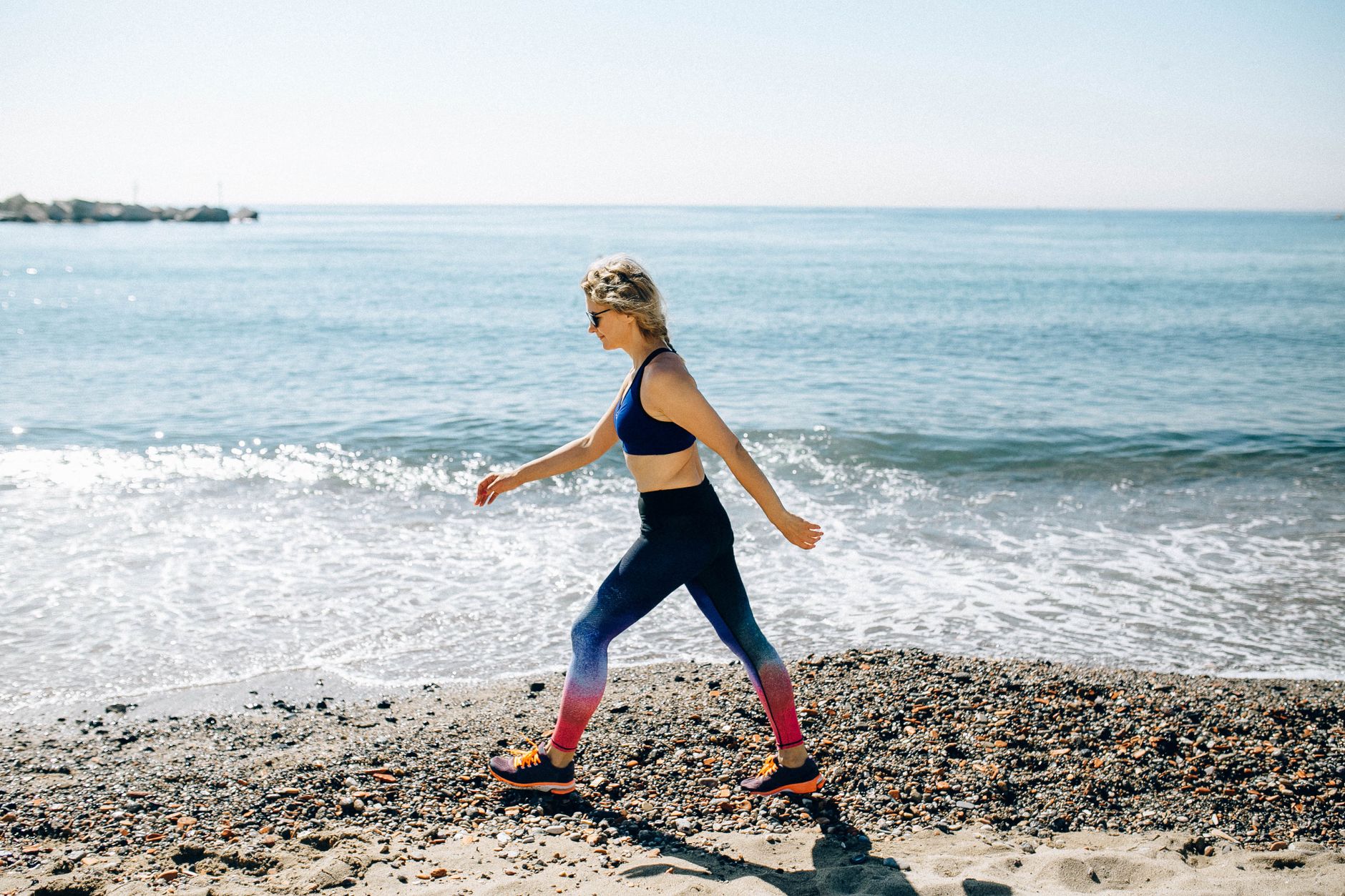
Both matter, and either choice lowers risk of early death. Faster walking can partly make up for fewer steps, while more steps give the lowest risk overall. Stepping pace means steps per minute during walking, while step count means total daily volume. For runners, the message is practical: use brisk walks to support training, recovery, and rest days.
Medical information disclaimer: This article is for general educational purposes only and does not provide medical advice, diagnosis, or treatment. Always consult a physician or other qualified health professional about symptoms, medications, tests, or treatment decisions.
Table of Contents
- What the study tracked
- Can pace make up for fewer steps?
- When does step volume still matter most?
- How runners can use pace on easy days
What the study tracked
Researchers from Monash University and the University of Sydney published the joint study in the September issue of the British Journal of Sports Medicine on Sept. 8, 2026. The team analyzed 64,743 UK Biobank participants aged 40-69, News-Medical reports, citing Monash University.
They wore wrist accelerometers for seven days in 2013-2015 and were followed for about eight years. Scimex, reporting Monash University figures, records 1,697 deaths from any cause during follow-up. It also records 502 deaths from cardiovascular disease. Those deaths provided the endpoints for pace-versus-volume comparisons.
Can pace make up for fewer steps?
Yes, within limits. Monash University reports that both combos cut risk of early death by up to 43%. The comparison group was the least-active, slowest walkers. Harvard Health Publishing describes a useful trade-off.
Adults under 5,000 steps per day could peak above about 80 steps per minute. Their mortality risk was similar to people taking 5,000-7,500 slow steps at about 60 steps per minute. For runners, that matters on constrained days. A desk-bound day with a sharp 20-minute walk can resemble a longer slow day. An injured runner limited to short walks still gains from a purposeful pace.
When does step volume still matter most?
CNN Health reports in its brisk-walking wellness coverage that the lowest death rates occurred at 7,500-10,000 steps per day regardless of pace. Total volume still mattered most at the top end.
Runners already chase volume through easy runs and daily movement. A slow recovery run plus normal daily walking often lands in that higher range. Pace helps, but it does not replace the benefit of steady time on feet.
How runners can use pace on easy days
Harvard Health Publishing and CNN describe a practical target for people under 7,500 steps per day. They link 30 minutes daily at 90-100 steps per minute to progressively lower all-cause mortality. The link was strongest for sedentary adults.
Try it as structured walking, not extra hard training: MedicalXpress, reporting the study, notes the design was observational and used wrist trackers. It studied middle-aged adults, not trained runners specifically. Set the daily walk first, then add run volume as fitness allows.
- Walk 30 minutes at a brisk rhythm you could hold while talking in short sentences.
- Place it after sitting, on a rest day, or as a warm-up before an easy run.
- Keep running workouts separate, then let the walk raise daily volume.
1 thought on “Faster Walking or More Steps? What a 2026 University of Sydney Study Means for Runners”
Comments are closed.