
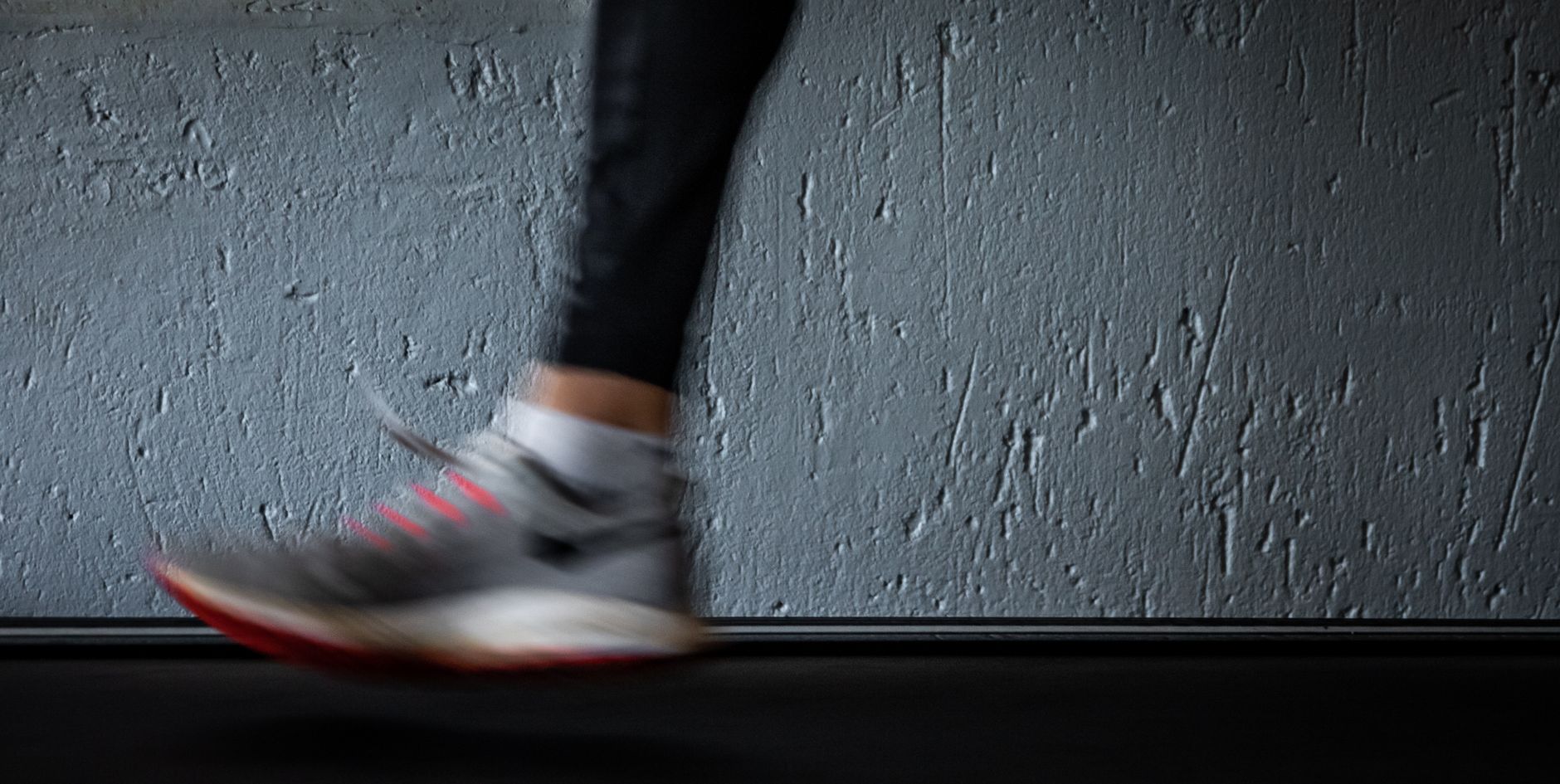
The best treadmill running shoes are lightweight neutral road trainers with breathable uppers and smooth soles. Indoors, a flat cushioned belt already supplies grip and shock absorption, so fit and smooth ride matter more than trail lugs. A neutral road trainer suits runners who do not need major stability correction. It pairs light mesh with flat road rubber made for even pavement and indoor belts.
Medical information disclaimer: This article is for general educational purposes only and does not provide medical advice, diagnosis, or treatment. Always consult a physician or other qualified health professional about symptoms, medications, tests, or treatment decisions.
Table of Contents
- Why do indoor miles feel so repetitive?
- What works best on the belt?
- Should you add more cushion?
- How should you set incline for knees and effort?
Why do indoor miles feel so repetitive?
Researchers reporting in PLOS ONE found treadmill and outdoor running share major muscle patterns in their tibia-acceleration study. Treadmill running showed lower tibia-acceleration variability and altered landing preparation. That means nearly identical loading on every step.
Outdoor air resistance is also missing indoors. IDEA, summarizing Jones and Doust's 1996 study, reports that a 1% grade best equalizes oxygen cost with outdoor running. Pace can therefore feel easier at 0% than the same speed outside.
What works best on the belt?
Fleet Feet's 2026 guide favors light neutral road models such as Pegasus, Ghost, GT-2000 and Clifton in its treadmill shoe roundup. Brooks also keeps a separate treadmill and gym shoe category for indoor workouts.
The shared idea is simple: smooth road rubber fits a uniform belt better than deep trail lugs. Try shoes with the socks you use indoors. Leave thumb-width space ahead of the longest toe to allow foot spread as heat builds.
- Pick light weight with a comfortable, secure midfoot fit
- Choose breathable mesh to release heat during long sets
- Use smooth road rubber without aggressive lugs or waterproof layers
Should you add more cushion?
Life Fitness says its FlexDeck system cuts knee and joint stress by up to 30% versus outdoor running on its T3 treadmill page. The deck already does much of the impact work shoes handle outside. A moderate-cushion shoe is often enough on that surface.
Canadian Running warns against doubling maximum outdoor cushioning on an already soft belt. That pairing can encourage harder striking and trap heat. Choose comfort and stability first, not the thickest midsole available.
How should you set incline for knees and effort?
Physicians at the Hospital for Special Surgery recommend knee-sensitive runners start near 1.5–2.0% incline and use a cushioned treadmill, described in its treadmill guide for knee problems. Slight incline shortens overstriding and spreads load.
Stable, moderate-cushion shoes pair well with that setup. Start at 1% for two easy runs to match outdoor effort. Add one half point at a time until pace feels honest and knees stay calm.