AI fitness trends are reshaping how runners train, from personalized workout recommendations that adapt to your body in real time to wearable devices that detect illness before you feel it. If you’re serious about your running, understanding these AI-powered tools and trends isn’t optional anymore—it’s becoming fundamental to staying competitive and injury-free. The changes happening right now range from coaches using AI to program workouts 50% faster to your smartwatch predicting when fatigue or illness might sideline you. The AI fitness market is exploding. The global AI in fitness and wellness market was valued at $10.68 billion in 2025 and is projected to reach $57.80 billion by 2035.
For runners specifically, this means the tools available to you are evolving faster than ever. Smart earwear—earbuds and earphones with AI capabilities—already captured more than half of the wearable AI market in 2025. These trends matter because they’re moving beyond gadgets and into practical training gains. Research shows that machine learning can successfully personalize training for up to 80% of runners by adjusting variables like weekly distance, long-run distance, and training pace. Whether you’re training for your first 5K or your hundredth marathon, these AI trends affect your options now.
Table of Contents
- How Machine Learning Is Personalizing Running Training
- Wearable AI Technology and Real-Time Biometric Monitoring
- The Rise of AI-Powered Smart Coaching
- Choosing AI Running Tools: What Actually Matters
- Data Privacy and Accuracy Concerns with AI Fitness Technology
- The Explosive Growth of AI Fitness Apps and Wearables
- Looking Forward—The Future of AI in Running
- Conclusion
How Machine Learning Is Personalizing Running Training
The most significant AI trend for runners is personalized training recommendations powered by machine learning. Instead of following a generic training plan designed for an imaginary average runner, AI systems can now analyze your specific data—your fitness level, past performance, injury history, response to different training intensities—and suggest incremental adaptations tailored to you. Recent research compared pyramidal training intensity distributions (more moderate-pace work) against polarized training (more easy and hard, less moderate) to identify which approach works best for individual marathon performance. The findings suggest there’s no one-size-fits-all answer, which is exactly why personalization matters. A machine learning model can determine whether you respond better to polarized training or a different approach by analyzing your unique response patterns.
What does this look like in practice? If you’re using an AI-powered coaching platform, the system might suggest increasing your long run by just half a mile instead of a full mile, based on your recent recovery metrics. Or it might recommend swapping one of your moderate-pace runs for a true easy run, recognizing that you personally get better results from that distribution. The capability is proven: studies tracking over 300,000 real-world runners found that machine learning successfully generated personalized recommendations covering typically three to five incremental adaptations. However, the limitation here is that AI recommendations are only as good as the data you’re feeding the system. If you’re not consistently logging your runs, sleep, or how you feel, the AI has less to work with and the recommendations become generic again.

Wearable AI Technology and Real-Time Biometric Monitoring
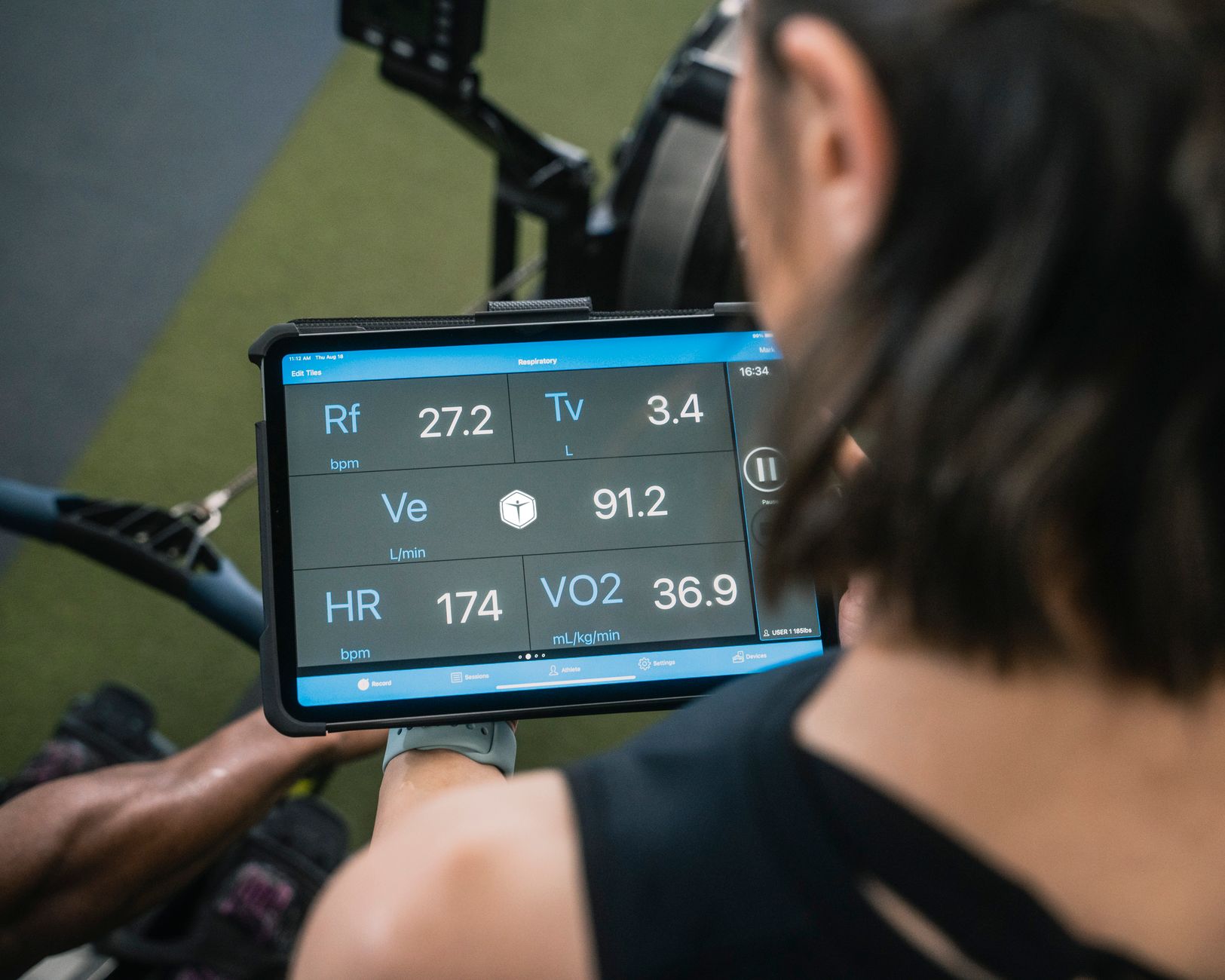
Wearable devices with AI built in are moving beyond simple step counting into sophisticated biometric analysis. Modern AI-powered wearables can analyze unique patterns in your heart rate variability, sleep stages, stress levels, and oxygen saturation to forecast potential issues before they become problems—things like fatigue, illness onset, or cardiovascular stress. This real-time analysis happens continuously, not just when you’re running. A smartwatch or AI earbuds can detect subtle changes in your resting heart rate or heart rate variability that might indicate you’re overtraining or getting sick, alerting you to back off before injury or illness strikes. Smart earwear specifically has emerged as the dominant segment in the wearable AI market, commanding over 50% of revenue share in 2025.
These devices can coach your workouts in real time, providing feedback on your pace, effort level, or form as you run. They can also coach you to rest on days when your biometric data suggests you need recovery. The warning here is a practical one: accuracy, battery life, and data privacy are the top trust factors influencing whether runners actually adopt these tools, according to industry research. If a wearable incorrectly tells you to rest when you’re fine, or drains its battery mid-run, trust evaporates. Similarly, if you’re uncomfortable with how your heart rate variability and sleep data are being stored and used, the tool becomes worthless to you—no matter how advanced the AI is.
The Rise of AI-Powered Smart Coaching
The adoption of AI coaching among runners is accelerating. In recent surveys, 46% of respondents indicated they would use AI as a smart coach for their sport, with Gen Z showing the strongest interest. This isn’t just theoretical: performance gains are being documented. AI-powered personal trainers have improved workout adherence by 71%—meaning runners stick with their training plans longer—while also enabling trainers to handle 30% more clients without sacrificing service quality. These are substantial numbers that explain why both runners and coaches are adopting the technology. Consider how this works: an AI coach can adjust your workout in real time based on how you’re performing.
If you’re struggling during a tempo run, the AI can immediately suggest backing off the pace slightly rather than pushing through and risking injury. Or if you’re fresh and the workout feels easy, it can suggest increasing the intensity. Trainers using AI tools like the ABC Trainerize AI Workout Builder report being able to program workouts 50% faster than traditional methods. More than 40% of all workouts created on the platform since the AI builder launched have been AI-generated. The limitation to understand is that AI coaching is most effective when combined with your own awareness. An AI system can tell you to run 8:00 per mile, but if that feels completely wrong for your body on that day, you still need to trust your instincts and adjust.
Choosing AI Running Tools: What Actually Matters
When evaluating AI-powered running apps and wearables, focus on three practical factors: accuracy, battery life, and data privacy—the exact factors that industry research identifies as most important for building trust. Accuracy matters most because a tool that misreads your metrics or suggests the wrong training adjustments is worse than useless. Battery life is critical because a wearable that dies mid-long-run is a broken promise. And data privacy is non-negotiable because your heart rate variability and sleep patterns are deeply personal health information. The tradeoff you’ll face is usually between breadth and depth. Some AI apps offer comprehensive tracking of running, sleep, stress, and nutrition all in one ecosystem, providing richer data for personalization.
Others focus narrowly on running alone but with more detailed metrics and simpler, faster interfaces. A comprehensive system might give you better personalization over time, but it also collects more data and requires more input from you. A focused tool might be faster to use and require less data sharing, but won’t personalize as effectively. Similarly, some wearables have weeks of battery life but less sophisticated AI analysis, while others have advanced AI but need charging every few days. Your choice depends on whether you prioritize having the most personalized recommendations or maintaining simplicity and privacy. For most runners, a good middle ground is using a focused running app paired with a separate wearable you trust, rather than trying to do everything in one ecosystem.
Data Privacy and Accuracy Concerns with AI Fitness Technology
A significant concern runners should have about AI fitness tools is data security and accuracy limitations. Your heart rate data, location data from runs, and training patterns can reveal sensitive information about your health status, where you live, and your schedule. Companies collecting this data have a responsibility to protect it, but breaches happen. Before adopting any new AI tool, review its privacy policy carefully. Some companies sell anonymized data to third parties; others keep it private but may share it with partners. Understanding what happens to your biometric data is as important as understanding the training recommendations the AI provides. The accuracy concern is equally important.
AI systems are trained on existing data, which means they may perform better for certain populations than others. If the training dataset for a personalization algorithm skewed toward younger, male, faster runners, the recommendations for older runners or women runners might be less accurate. Real-time biometric analysis is powerful, but it’s still building predictions based on patterns—not certainties. A wearable that predicts illness onset is useful, but it can generate false positives that send you spiraling into unnecessary anxiety. A workout coach that suggests backing off based on your biometrics might be right, or might be overly conservative if the AI is weighted toward injury prevention. The key is to use AI tools as input to your decision-making, not as the final authority. Your own body awareness, your coach’s experience, and your common sense still matter.
The Explosive Growth of AI Fitness Apps and Wearables
The scale of the AI fitness market is worth understanding because it reflects real momentum and investment. The AI fitness app market alone is expected to surpass $23.98 billion by 2026. The broader wearable AI market was valued at $43.64 billion in 2025 and is projected to reach $310.56 billion by 2033—a growth rate of nearly 28% annually. This investment means new tools, features, and improvements are arriving constantly. Startups are competing for your attention with increasingly sophisticated algorithms.
Established companies like Apple, Garmin, and Polar are integrating AI more deeply into their platforms. For runners, this explosion means more options, faster innovation, and also more noise to filter through. The rapid growth also means that tools you’re using right now might fundamentally change in a year or two as AI improves. A training app you’re relying on might add new features or change its algorithms. A wearable manufacturer might release a next-generation device with dramatically better battery life or more accurate sensors. The investment flowing into this space is reshaping what’s possible—but it also means staying informed and occasionally reassessing whether the tools you’re using are still the best options for your training.
Looking Forward—The Future of AI in Running
The trajectory of AI in running suggests several emerging directions. Wearables will become more accurate and more autonomous in their decision-making. Rather than suggesting that you rest, future devices might automatically adjust your workout intensity in real time without requiring your approval. The integration of multiple data sources—not just your running data, but your sleep, stress, nutrition, and even genetic information—will enable more sophisticated personalization. Heart rate variability analysis will become routine, and predictive health analytics will advance beyond simple fatigue warnings to earlier disease detection.
However, runners should approach this future skeptically. The most advanced AI tools won’t replace the fundamentals of good training: consistency, adequate rest, smart progression, and listening to your body. AI is a tool to optimize those fundamentals, not a substitute for them. The most successful runners—whether using AI or not—still rely on self-awareness, experience, and the ability to adjust training based on how they actually feel. As AI capabilities expand, maintaining that balance between data-driven decisions and body awareness will be the real differentiator for serious runners.
Conclusion
AI is reshaping running training through personalized coaching, real-time biometric monitoring, and smarter training recommendations. The trends are clear: 46% of athletes now want AI coaching, AI tools are improving trainer productivity by 50%, and wearable technology is delivering measurable improvements in adherence and performance. These aren’t futuristic possibilities—they’re happening now, and the tools available to you are rapidly improving.
Your next step is to identify one specific area where AI could genuinely help your training: whether that’s personalized workout adjustments through a coaching app, real-time monitoring through a wearable, or better recovery predictions. Start with one tool, evaluate whether it actually improves your training and aligns with your privacy preferences, and expand from there. The goal isn’t to use every AI tool available, but to thoughtfully adopt the ones that genuinely serve your running goals.