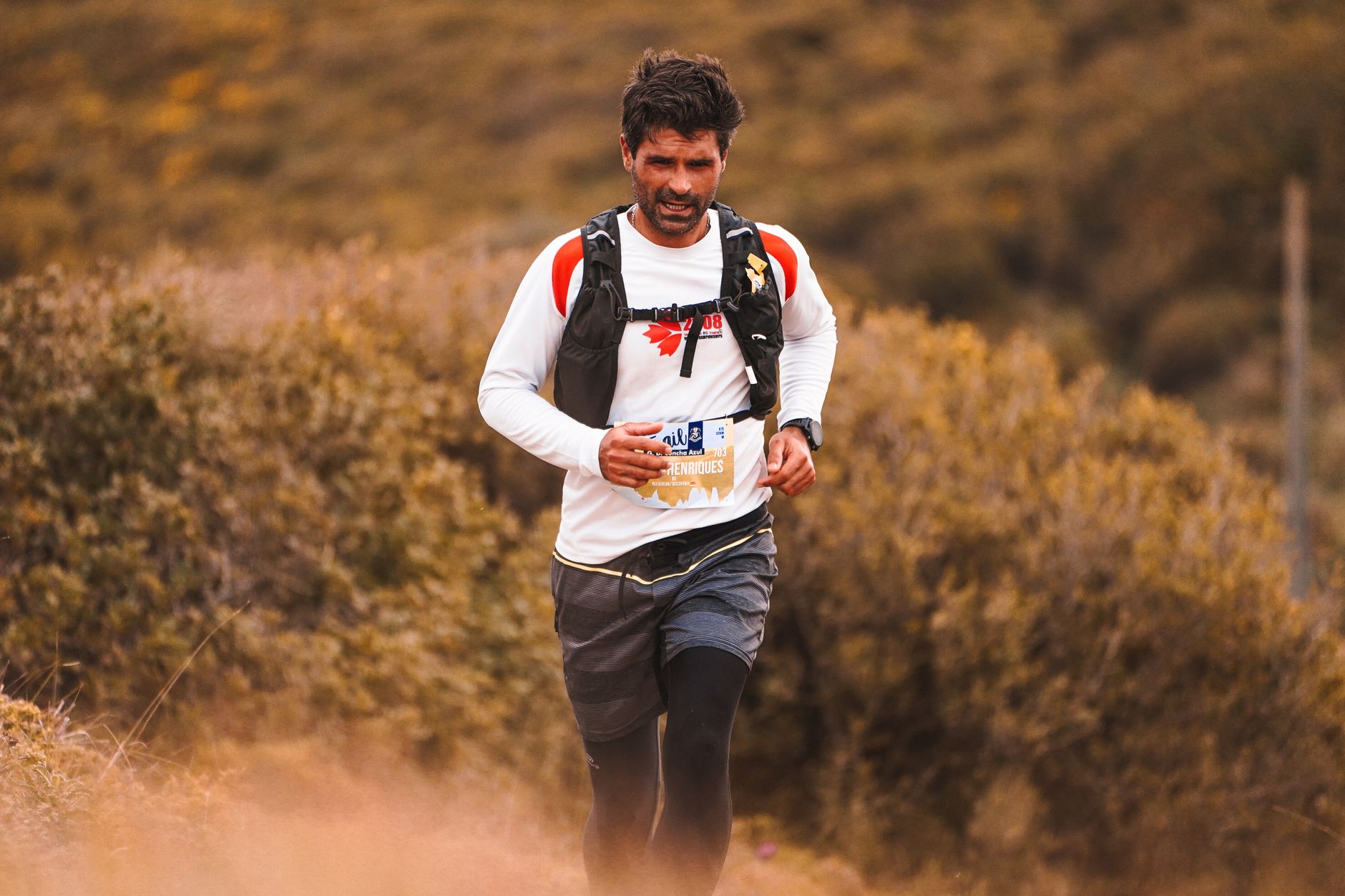
Pacing a technical climb safely means matching your effort to the grade, not your usual flat-ground rhythm, and switching between running and power-hiking based on steepness rather than pride. On moderate grades running stays efficient, but past a certain pitch walking becomes the faster, cheaper, and safer choice. That threshold is not guesswork. Research on uphill locomotion gives trail runners a clear grade-based rule for when to run and when to hike, and heart-rate guidelines add a second check so effort never outruns what the climb — or the rest of the run — can sustain.
Medical information disclaimer: This article is for general educational purposes only and does not provide medical advice, diagnosis, or treatment. Always consult a physician or other qualified health professional about symptoms, medications, tests, or treatment decisions.
Table of Contents
- When Does Walking Beat Running on a Climb?
- Running vs. Hiking the Same Climb — What Changes
- Keeping Climbing Effort in a Safe Heart-Rate Zone
- Why Technical Climbs Carry Extra Injury Risk
- What to Do If You Fall on a Technical Climb
- Frequently Asked Questions
When Does Walking Beat Running on a Climb?
Running's energy cost barely changes with grade, holding near 3.40 joules per kilogram per meter regardless of how steep the trail gets or how fast you're moving, according to a study by Minetti and colleagues that measured energy costs in 10 runners across treadmill grades from -45% to +45%. Walking is the opposite: cheapest on flat ground, then rising steeply as the grade increases. Those two curves cross at a specific point.
Above that crossover, walking (often called power-hiking on trails) costs less energy than running the same section, which is why experienced climbers switch gaits rather than forcing a run up a steep pitch. The same research found that mechanical efficiency for both gaits — muscles contracting to drive you up, or absorbing impact to control you down — reaches the level of pure muscle contraction above roughly 15% grade uphill and below 15% downhill, and the study pegs about 20-30% grade as the general optimum range for mountain paths. Below that, running often stays the better option; above it, hiking usually wins on energy cost alone.
Running vs. Hiking the Same Climb — What Changes
Grade isn't the only variable. A field test on a single athlete climbing a 380-meter section at roughly 20% grade found that running each repeat saved about 80 seconds compared with hiking it — but the runner's average heart rate was 11 beats per minute higher while running the same climb, according to the Run Motion training guide.
That trade-off is the practical decision point for cardio-focused runners: running a climb buys time at a real cardiovascular cost, while hiking it protects your heart-rate budget for later in the run. On a single short climb, the time saved may be worth it. Stacked across a long technical route, the extra strain compounds.
- If the climb is short and you need the time, running may be worth the heart-rate spike.
- If more climbing or technical terrain follows, hike to preserve effort for later.
- If you're pacing for overall cardio benefit rather than speed, hiking steep sections is rarely the wrong call.
Keeping Climbing Effort in a Safe Heart-Rate Zone
A practical ceiling comes from the CDC's guidance on target heart rate: moderate-intensity exercise sits at 64-76% of estimated maximum heart rate, and vigorous intensity runs 77-93%, with maximum heart rate estimated as 220 minus your age. That gives a concrete number to check against on a climb, rather than relying on feel alone. A COROS mountain-running training guide specifically warns against attacking the first climb of a run or race, because heart rate rises quickly on a climb while the fatigue from an early surge often isn't felt for hours afterward.
The guide recommends holding a sustainable effort instead and tracking whether your pace improves at a given heart rate over time — that trend, not a single fast climb, is the real marker of improving climbing fitness. In practice, this means checking your heart rate against the CDC's percentages early in a climb, not after you're already breathing hard. If a climb pushes you well past vigorous intensity within the first minute, that's the signal to shift from running to power-hiking rather than pushing through.
Why Technical Climbs Carry Extra Injury Risk
Technical climbs add uneven footing to the cardio demands of elevation gain, and that combination shows up in injury data. A 2021 systematic review covering 8,644 trail runners across 16 studies found injury incidence rates ranging widely — from 1.6 to 4,285.0 per 1,000 running hours — with the foot the most commonly injured site, followed by the knee and lower leg, according to Viljoen and colleagues in Sports Medicine. A more recent 2024 systematic review narrowed in on location: across 19 studies, ankle injuries made up 49.5% of reported cases by anatomical location, with tendinopathies the single most common diagnosis at 29.8%, according to the review published in Retos.
That pattern points to the ankle as the structure most exposed on uneven, technical ground — exactly the terrain a steep climb usually includes. Technique reduces that exposure. Coaching guidance from BC Living and Higher Running recommends scanning the trail 3 to 15 feet ahead rather than at your feet, so you can choose foot placement before you reach it, along with short, light steps and active arm swing for balance over rocks and roots. The same guidance reinforces power-hiking long steep sections instead of running them — tying footing safety directly back to the gait choice from Section 1.
What to Do If You Fall on a Technical Climb
Falls happen on technical ground, and how you react in that moment affects the injury you walk away with. Outdoor-safety guidance from RunRunLive advises against bracing a fall with an outstretched arm, since that motion risks wrist, elbow, or shoulder injury on impact.
Instead, the guidance recommends aiming the fall toward a softer landing spot and away from rocks and logs whenever you can pick one. That split-second choice of where to land matters more than trying to stop the fall outright, especially on the uneven, obstacle-heavy ground where most technical-climb falls occur.
Frequently Asked Questions
At what grade should I switch from running to power-hiking?
Research by Minetti and colleagues found walking becomes more energy-efficient than running as grade increases, with roughly 20-30% grade marking the general optimum for mountain terrain — a useful point to start favoring a hike over a run.
Does hiking a climb actually lower my heart rate compared to running it?
Yes — a field test on a 20%-grade climb found average heart rate ran 11 bpm higher while running the climb than while hiking it, per the Run Motion training guide, even though running saved about 80 seconds.
What's the biggest injury risk on technical climbing terrain?
Ankle injuries, including tendinopathies, are the most commonly reported by anatomical location in trail runners, according to a 2024 systematic review, reflecting the uneven footing technical climbs involve.