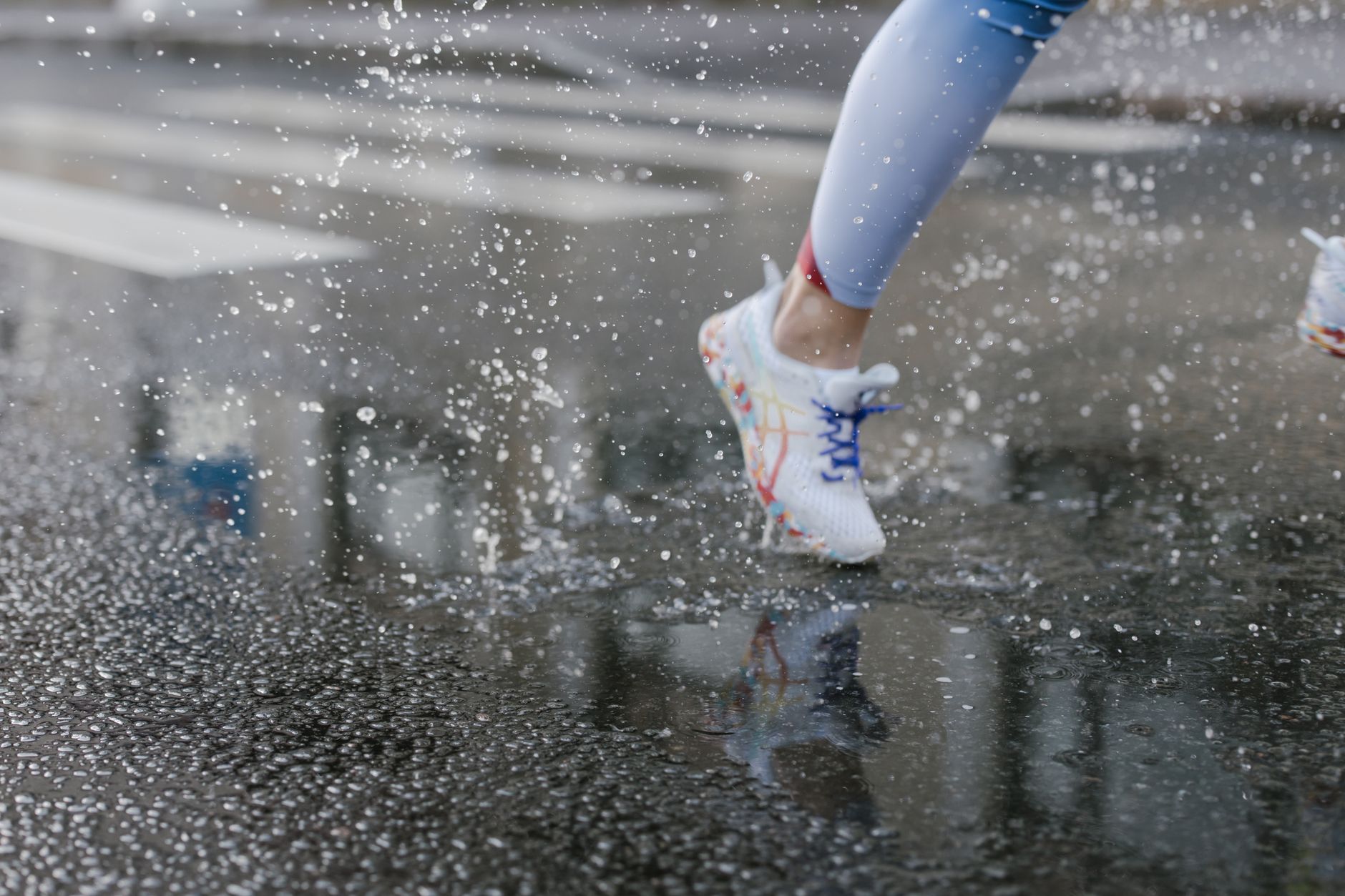
Running in the rain calls for moisture-wicking clothing, bright reflective visibility gear, and chafing prevention. Chafing is skin soreness caused by repeated rubbing from wet fabric. Avoid cotton, keep rain from your eyes, and reduce friction on risk spots. Plan to manage wetness and stay seen rather than stay dry.
Medical information disclaimer: This article is for general educational purposes only and does not provide medical advice, diagnosis, or treatment. Always consult a physician or other qualified health professional about symptoms, medications, tests, or treatment decisions.
Table of Contents
- What should you wear in the rain?
- How do you stay visible to drivers?
- How do you prevent chafing when everything gets wet?
- When should you stop or adjust the run?
What should you wear in the rain?
Norton Healthcare advises runners to avoid cotton, including socks, in rain because cotton absorbs water, gets heavy, and stays wet. Choose lightweight synthetic or merino moisture-wicking layers that stay lighter, as described in rain-running clothing guidance. That swap reduces weight and clammy fabric early in a wet run. Norton Healthcare also recommends a hat or visor with a brim.
The brim keeps rain out of the eyes. That improves forward visibility during wet runs. For an outer layer, the GymFreakz guide carrying Verywell Fit advice recommends a wind- and water-resistant, breathable and vented shell. Do not choose a non-breathable waterproof slicker. That type traps heat and sweat and causes overheating.
How do you stay visible to drivers?
Mayo Clinic advises runners in poor light and rain to wear bright colors plus reflective or LED gear so drivers can see them, as explained in running visibility safety guidance. Useful options include vests, wrist bands, shoe clips, knuckle lights, or headlamps.
Light plus motion helps drivers notice you sooner. Put reflective pieces where arms, torso, and feet move. Keep the light source clear of hoods and brims.
- Wear a bright base layer plus a reflective vest
- Add wrist bands or shoe clips to show motion
- Carry knuckle lights or a headlamp in dim rain
How do you prevent chafing when everything gets wet?
Cleveland Clinic explains that wet fabric increases friction that causes chafing on thighs, underarms, and nipples, as detailed in chafing causes and prevention guidance. Risk rises on longer runs and with loose seams. Close fit matters as much as fabric choice. Wear close-fitting, seamless, moisture-wicking apparel for rain.
Check thigh seams, sports-bra edges, waistbands, and sock cuffs before leaving. Remove or cover any rough seam that already rubs when dry. Before running, apply petroleum jelly, dimethicone balm, or zinc oxide to hot spots. Use tape or nipple patches where shirts rub. Reapply for long races because rain washes product away.
When should you stop or adjust the run?
The Runstreet coaching guide notes that running in rain is generally safe for most runners, with clear exceptions. Go indoors for lightning, severe wind, or hail. Shorten stride on wet roads and avoid slick metal grates and painted lines. The CDC Lightning FAQ, reflecting U.S. National Weather Service and CDC guidance, states that there is no safe place outdoors during a thunderstorm, as explained in lightning safety guidance.
If you hear thunder, immediately enter a substantial building or hard-topped metal vehicle. Do not wait under trees, shelters, or awnings. Canadian Running Magazine notes the key limit: even the best breathable jacket and wicking layers get wet in sustained rain. Make the practical goal warmth and reduced friction, not staying dry. Change out of damp clothes promptly after finishing.