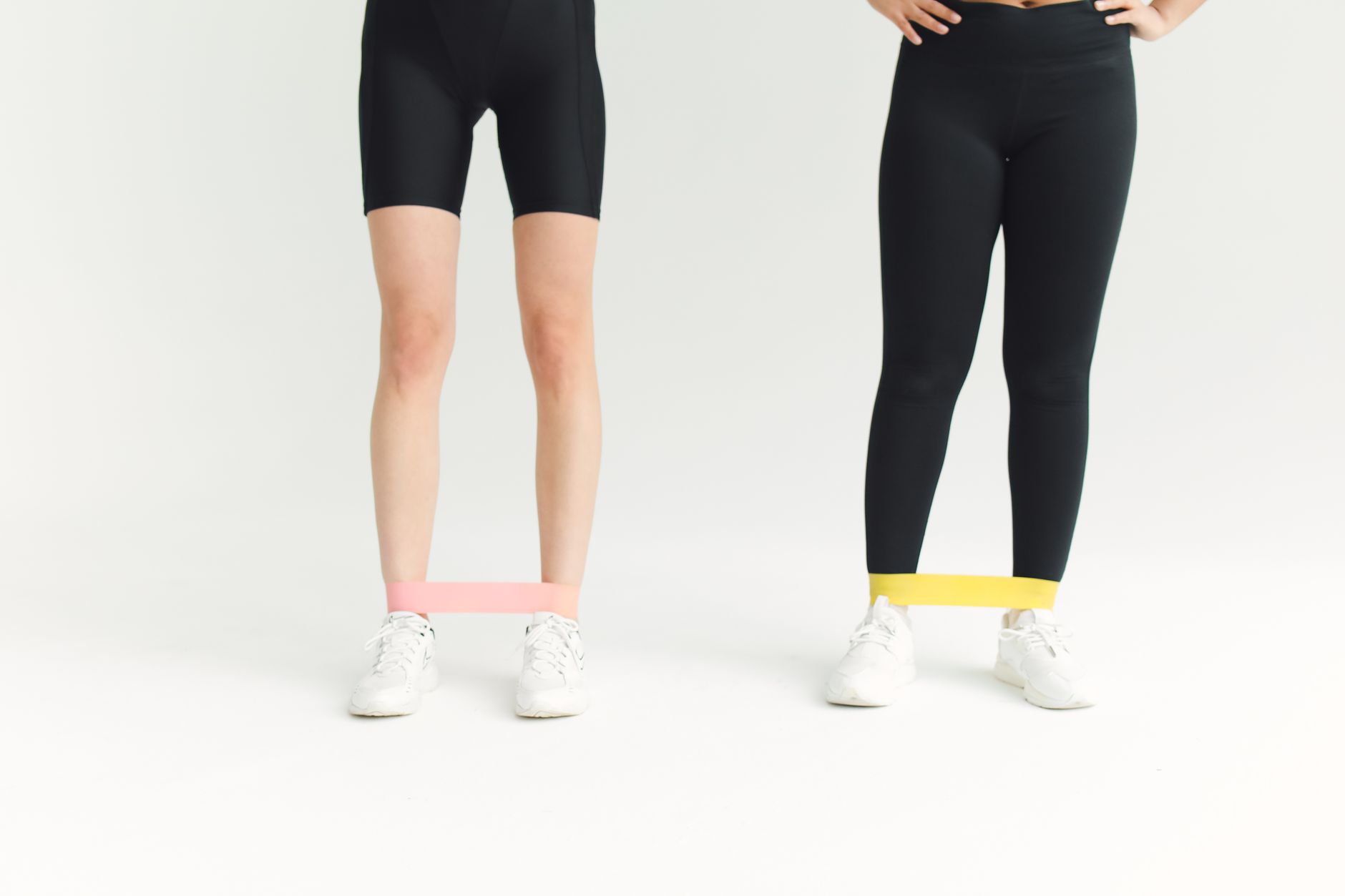
The iliotibial (IT) band, a dense fascia strip along the outer thigh, gains the most stretch from a standing side-bend with overhead arm reach. That move needs only body weight, while hip strengthening provides the recovery benefit and direct rolling over the sore knee adds the most risk.
Iliotibial band syndrome causes outer knee pain and ranks as the second most common pain problem in runners. Rehab Science reports it also affects cyclists, hikers and court-sport athletes who repeat knee bending and straightening Rehab Science IT band guide. Stretching alone cannot fix it, so this guide compares benefit, effort and risk to point toward combined hip work and load control.
Medical information disclaimer: This article is for general educational purposes only and does not provide medical advice, diagnosis, or treatment. Always consult a physician or other qualified health professional about symptoms, medications, tests, or treatment decisions.
Table of Contents
- Which standing stretch pulls the most?
- Why does hip strength drive recovery?
- What makes rolling risky?
- How do you build a safer weekly plan?
Which standing stretch pulls the most?
Rehab Science describes the IT band as dense fascia anchored firmly to the femur. That anchor means typical ITB-targeted stretches produce only small length change and no lasting flexibility gain.
Expect modest help, not a permanent looseness fix. Kinematic testing of three standing ITB stretches measured 9.8-11.2% stretch of the ITB-tensor fasciae latae complex. The narrative review by Opara and Kozinc found overhead arm extension plus lateral trunk bend gave the largest effect and required only body weight 2023 stretch comparison review.
Why does hip strength drive recovery?
Stanford runner studies found injured runners had weaker hip abductors than healthy controls, according to the American Academy of Physical Medicine and Rehabilitation. A six-week program of daily ITB stretching plus gluteus-medius strengthening let 22 of 24 athletes return to running pain-free.
The pattern points to strength plus load control, not stretch alone. The 2023 review notes benefit depends on combined load management and hip strengthening. Treat the side-bend as support work and the hip program as the main treatment.
What makes rolling risky?
The Hospital for Special Surgery says foam rolling and massage directly over the IT band give only short-term soreness relief. It does not remodel or lengthen the band.
Clinicians advise rolling the quadriceps, glutes and TFL instead as lower-irritation effort HSS guidance on IT band pain. Sports-Health warns that aggressively rolling or stretching across the already inflamed lateral femoral epicondyle can increase irritation. Risk rises during high-volume training, so keep pain mild and transient and stop pressure over the sore bump.
How do you build a safer weekly plan?
The Mass General rehab protocol prescribes hip-flexor, quadriceps, hamstring and careful ITB work plus bridges, clamshells and planks Mass General ITBS rehab protocol. It explicitly avoids the trochanteric bursa and lateral femoral condyle.
Do the strength circuit most days and trim run volume until symptoms settle. Stop any move that causes more than mild, brief ache at the outer knee.
- side-bend ITB stretch with overhead reach, body weight only
- hip-flexor, quadriceps and hamstring stretches
- bridges, clamshells and planks for hip and trunk
- roll quadriceps, glutes and TFL, skip the sore outer knee